Milos Archaeology and Sarakiniko Guided Island Tour
- Duration4 hours
- Daily
- Group
- Pickup available
- Fair, honest prices
- Real people, not bots
- Confirm, then pay
- Secure payment

Overview
This guided island tour combines the natural wonders of Milos with its long history, in about four hours by air-conditioned vehicle. After hotel pickup, an English-speaking guide takes the group to Papafragas, a narrow sea inlet between pale cliffs, then to Phylakopi, a Bronze Age town that grew rich on the island's obsidian. Next comes Sarakiniko, the famous white moonscape on the north coast, followed by the hilltop capital Plaka and the terrace of Panagia Korfiatissa. The tour ends at the marble Roman theatre overlooking the great bay, close to where the island's most famous ancient statue was found. A map and bottled water are included. It is a shared tour that suits first-time visitors, couples, families and anyone curious about ancient Greece.
Highlights
- Papafragas, a dramatic sea inlet between tall pale cliffs
- Phylakopi, a prehistoric town of the Bronze Age Cyclades
- Sarakiniko, the white volcanic moonscape of Milos
- Cobbled lanes of Plaka and the terrace of Panagia Korfiatissa
- The marble Roman theatre above the bay of Milos
- English-speaking guide who brings the island's history to life
- Hotel pickup and drop-off by air-conditioned vehicle
- Map of the island and bottled water included
Full Description
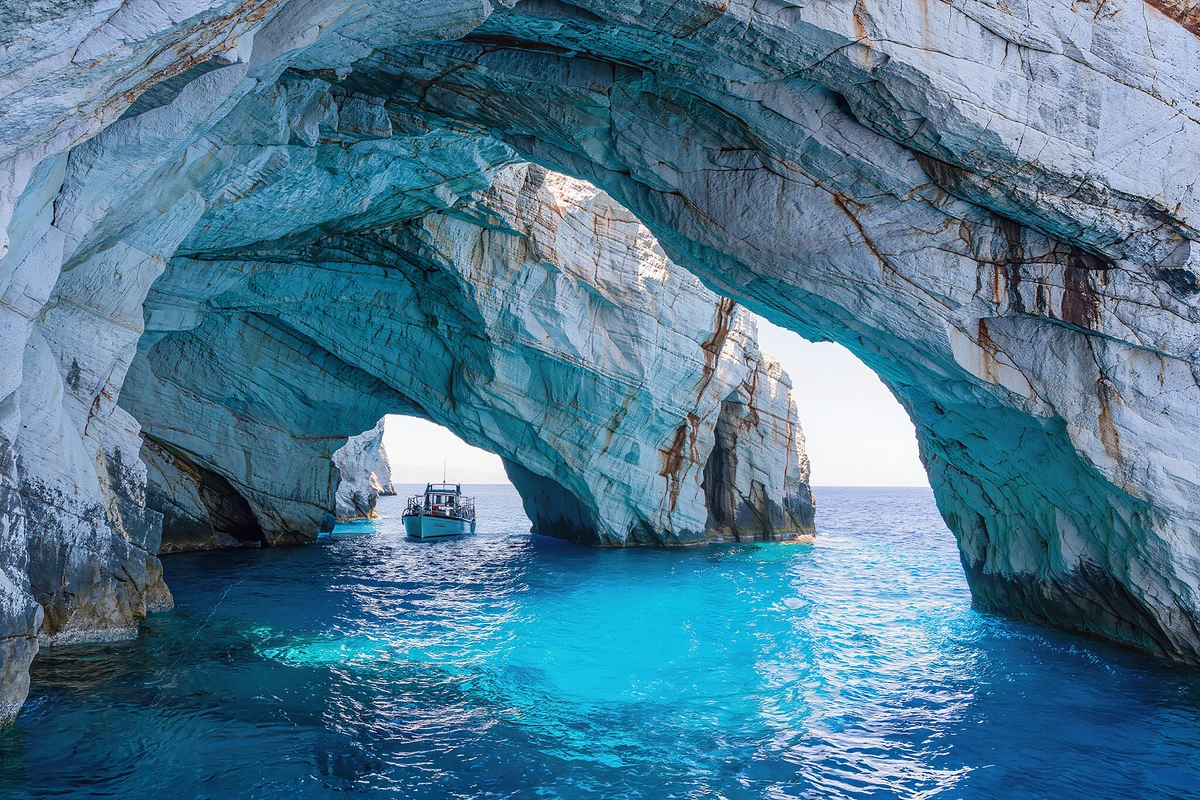
Papafragas, the volcanic swimming pool
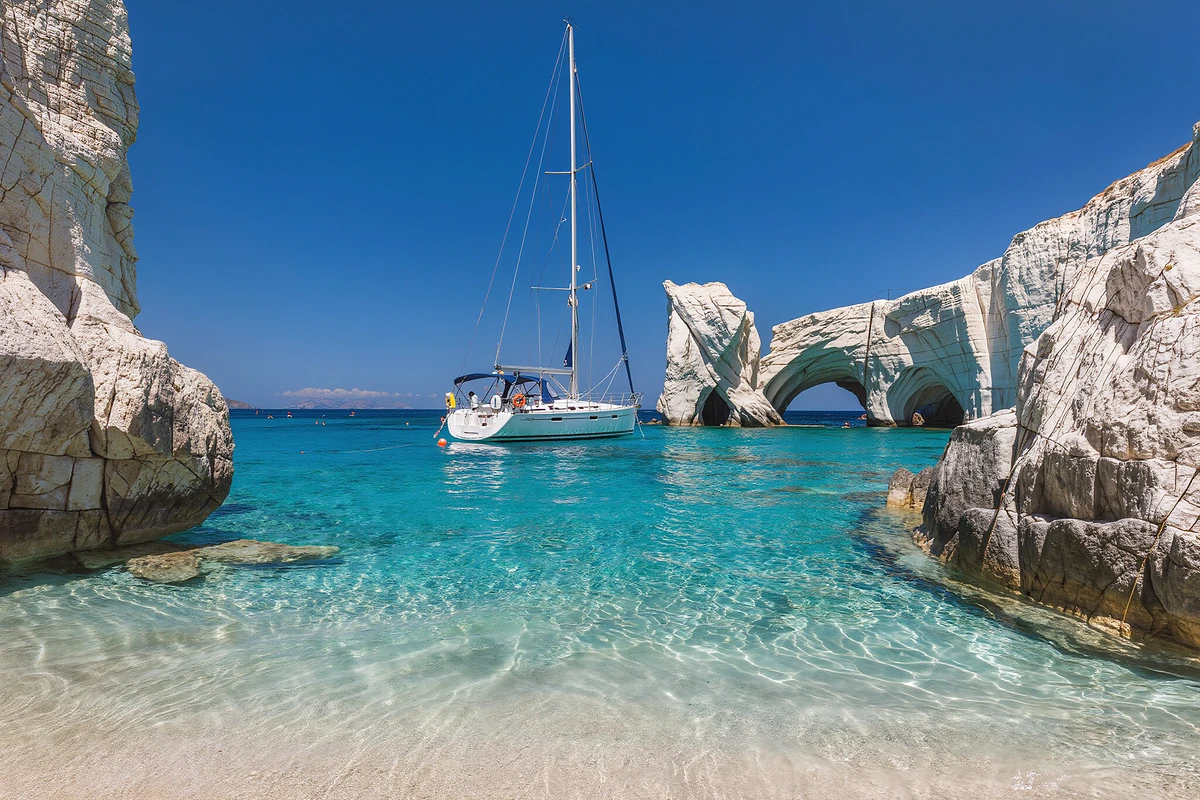
The tour begins at Papafragas, on the north coast near Pollonia. Here the sea has cut a long, narrow inlet into soft volcanic rock, enclosed by pale cliffs and joined to the open sea by a low arch. Inside, the water is calm and clear, and from the top of the cliffs you look straight down into its turquoise depths, which is why locals call it a volcanic swimming pool.
Your guide explains how eruptions, ash and the sea shaped Milos, giving the island its strange colours and its many caves and coves. In the past fishermen and pirates used Papafragas as a hiding place. A short path and steps lead down towards the water, and the group spends some time admiring the view and taking photos before driving the short distance to Phylakopi.
Phylakopi, a Bronze Age town of the Cyclades
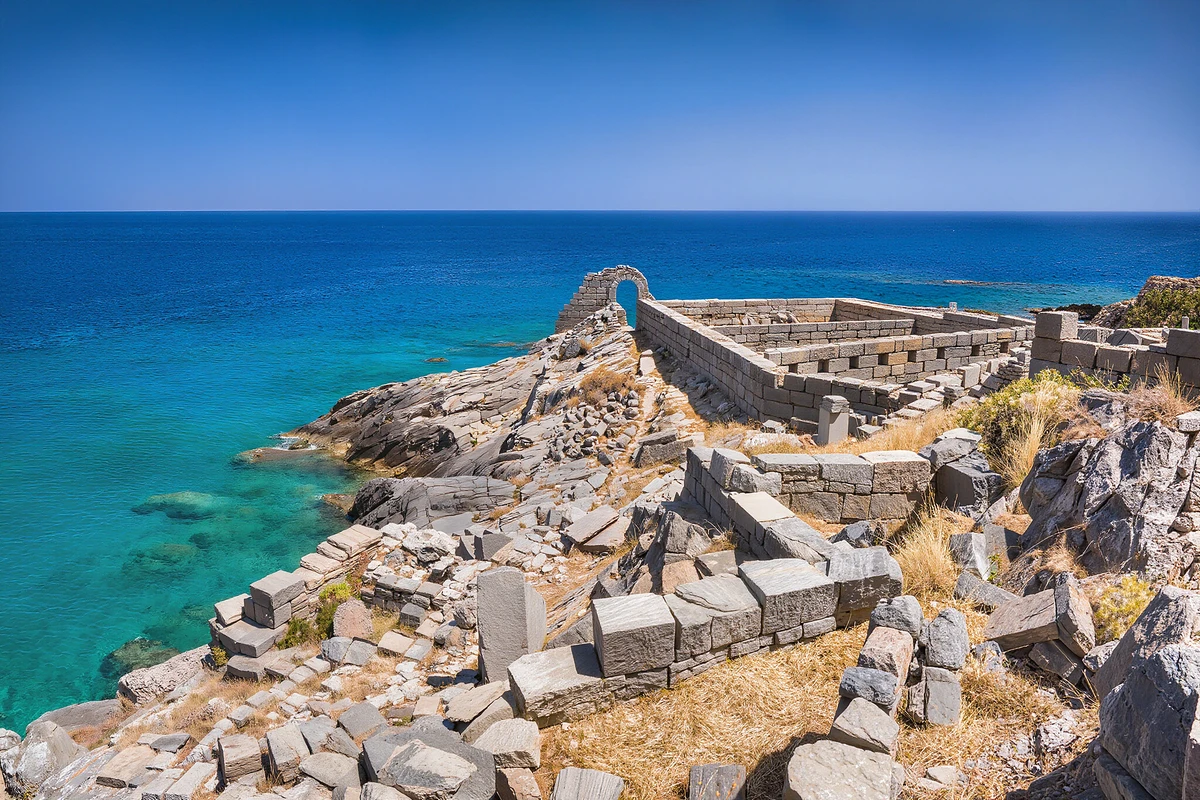
Phylakopi is one of the most important prehistoric sites of the Aegean. On a low headland by the sea, people built three successive towns here from the early Bronze Age, and the settlement stayed active until around 1000 BC. Excavations revealed houses, streets, a fortification wall and a shrine with clay figurines, showing close links with Minoan Crete and the Mycenaean mainland.
The wealth of Phylakopi came from obsidian, a sharp black volcanic glass found on Milos and traded across the Aegean for thousands of years to make tools and blades. Today part of the site has been washed away by the sea, but walkways help you read the remains. The guide brings the ancient town to life, explaining why tiny Milos played such a big role in the prehistory of the Cyclades.
Sarakiniko, the lunar landscape
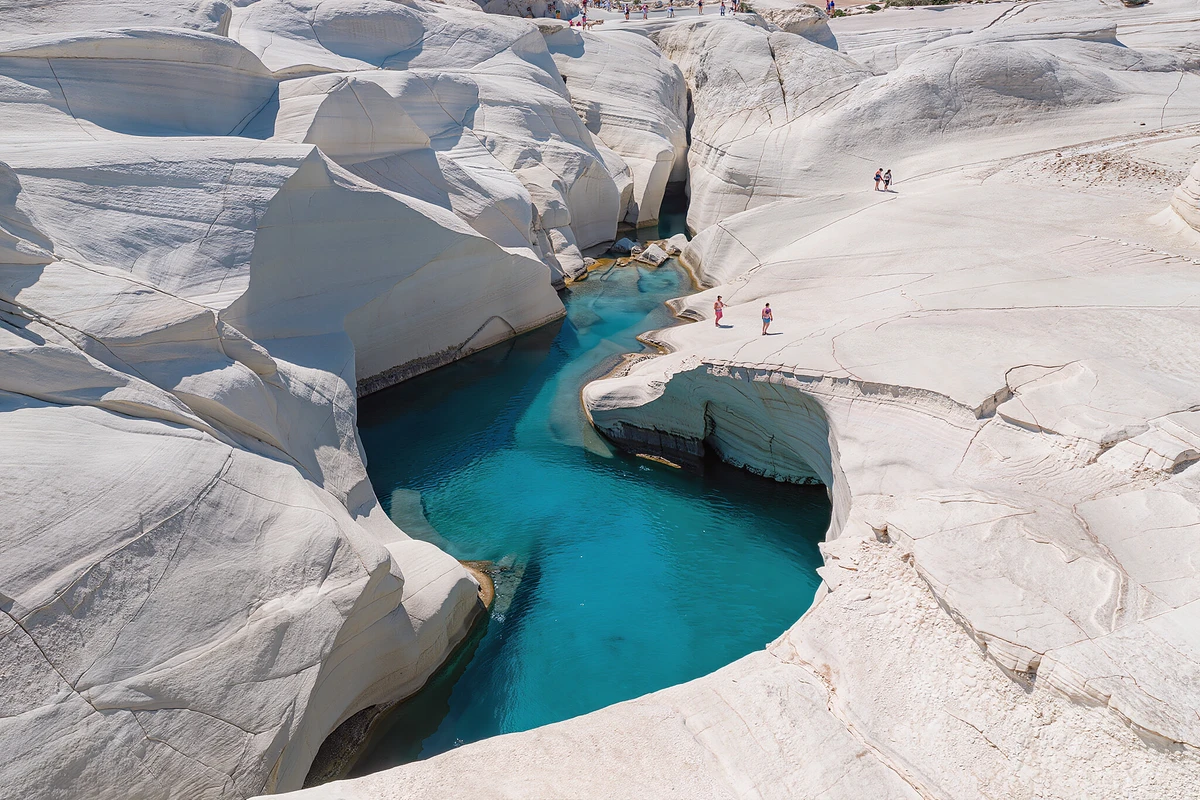
A short drive takes you to Sarakiniko, perhaps the most photographed landscape in the Cyclades. Layers of white volcanic ash and pumice have been carved by the wind and the sea into smooth waves, ledges and gullies, so the shore looks like the surface of the moon. A deep blue inlet cuts through the rock, and the brilliant white makes the water look even more intense.
The group walks down into the inlet to experience this unique place and take photos from the best spots. Sarakiniko is open at all hours, but the light is softest early or late in the day, and there is no shade, so a hat and water are essential. Many visitors call Sarakiniko the reason Milos is worth visiting, and seeing it with a guide adds the geological story behind the beauty.
Plaka and the terrace of Panagia Korfiatissa
From Sarakiniko the road follows the north coast to Plaka, the capital of Milos, spread over a hilltop high above the bay. Its narrow cobbled lanes, whitewashed houses, small chapels and flowering courtyards are a fine example of traditional Cycladic architecture. Cars stay outside the centre, so the village is pleasant to explore on foot.
The highlight is the church of Panagia Korfiatissa, set on the edge of the cliff with a wide paved terrace overlooking the west coast and the sea. From here you can see why Plaka is the favourite sunset spot of the island. Your guide also points out the old Kastro hill above the village and the location of the archaeological museum, which you may want to visit on your own later.
The marble Roman theatre above the bay
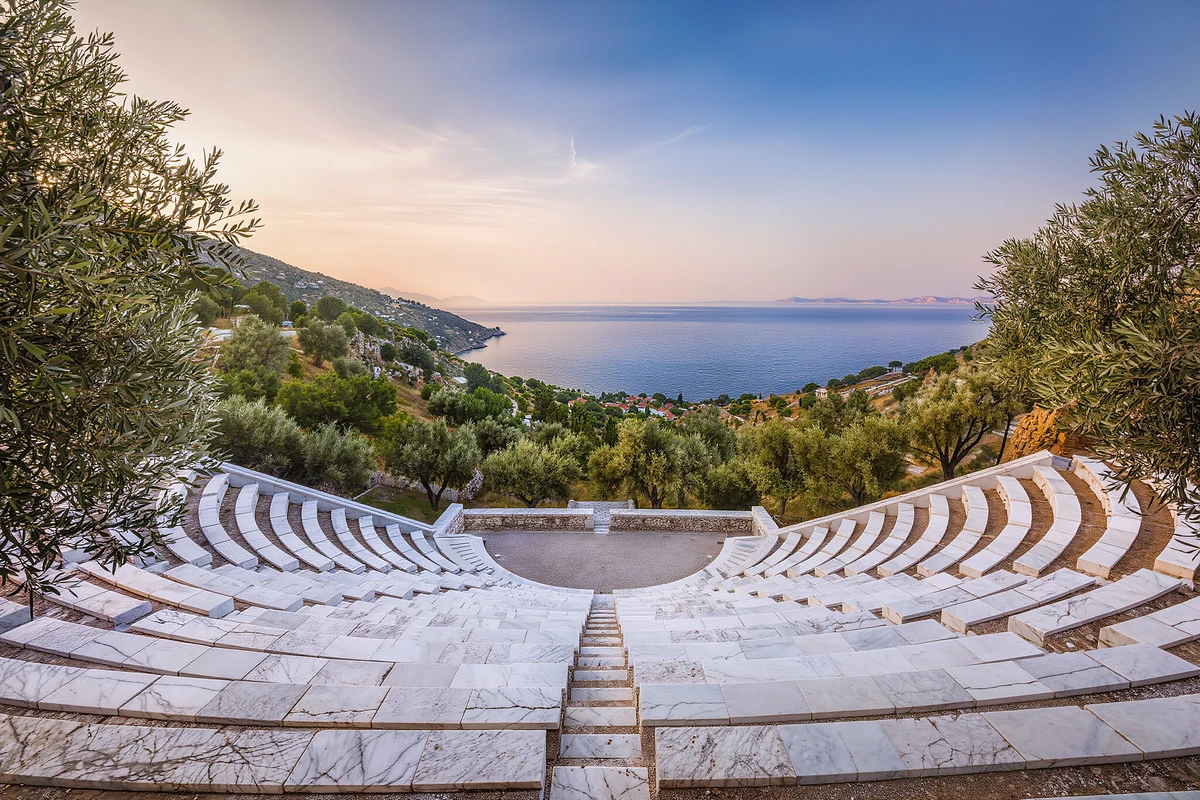
The last stop is the ancient theatre, on the hillside between Tripiti and the fishing village of Klima, where the ancient city of Milos once stood. First built in the Hellenistic period and rebuilt in marble in Roman times, it looks out over the great bay, a superb setting for performances then and for photos today. Nearby, a sign marks the field where a farmer found the island's famous marble statue of Aphrodite in 1820.
Close by are the early Christian catacombs of Milos, among the most important in the Mediterranean, which can be visited separately. The best time to visit Milos is from May to October, and the island is reached by ferry from Piraeus in about three to seven hours or by short flight. After the theatre, the vehicle brings you back to your hotel.
Itinerary
- Hotel pickupWe collect you from your hotel, or a nearby central point if the road is narrow, at around 09:00; the exact time is sent by email.
- PapafragasAbout 20 minutes at the cliff-top viewpoint over the volcanic sea inlet.
- PhylakopiAround 30 to 40 minutes at the Bronze Age site with explanations from the guide.
- SarakinikoAbout 30 to 40 minutes to walk down into the white inlet and take photos.
- Plaka and Panagia KorfiatissaAround 45 minutes in the cobbled lanes and on the panoramic church terrace.
- Roman theatre and returnVisit the marble theatre above the bay, then drive back to your hotel; the tour lasts about four hours.
What's included
- Pickup and drop-off from your hotel or a nearby meeting point
- Transport by air-conditioned vehicle
- English-speaking guide
- Map of the island
- Bottled water
Not included
- Entrance fees
- Food and snacks
- Tips
Is this right for you?
Great for
- Families with children — a child price for ages 0–17
- Travellers without a car — hotel pickup is included
- A half-day plan — about 4 hours
- Travellers who want a proven choice — rated 4.9/5 by past travellers
Think twice if
- You want a private tour — this one is shared with other travellers
Meeting point
We pick you up from your hotel anywhere in the Milos pickup area, or from a central meeting point if your hotel is hard to reach by vehicle; the exact pickup time and place are sent to you by email. The tour usually starts at around 09:00, but the start may move to the afternoon, around 13:30, in which case you are informed in advance.
Important information
- Entrance fees, where charged, are not included
- Wear comfortable shoes and clothes; some paths are uneven or rocky
- Bring a hat, sunglasses and sunscreen; there is little shade at the sites
- Food and snacks are not included; bottled water is provided
- Children under 2 join free of charge
- The start time may move to the afternoon; you are informed in advance
- Halal food is limited on Milos; seafood and vegetarian dishes are easy to find
Good to know
Frequently Asked Questions
Straight answers to what travellers ask us most, before they book.
Is this a shared or a private tour?
It is a shared guided tour by air-conditioned vehicle with other travellers. If you prefer a vehicle and guide only for your party, see our private Milos island tour.
Can we change the itinerary or the pace?
No, the guide follows a set route for the group, but there is time at each stop for photos and questions.
How many people join the tour?
Group size varies by day. The tour runs by air-conditioned vehicle, and the guide keeps the group together and explains each site at every stop.
Is the price per person or per group?
The price is per person; children pay the same as adults, and under-2s join free. The booking panel on this page shows the current price.
Is hotel pickup included?
Yes, pickup and drop-off from your hotel or a nearby central meeting point are included.
What is included?
Transport by air-conditioned vehicle, an English-speaking guide, a map of the island and bottled water.
Are entrance fees included?
No, entrance fees at the sites, where charged, are paid separately.
How long is the tour?
About four hours, usually starting at around 09:00.
Is it suitable for children or people with reduced mobility?
Children are welcome. Some paths at Sarakiniko, Papafragas and Phylakopi are uneven, so it may be difficult for people with reduced mobility; contact us before booking.
What should I bring?
Comfortable shoes and clothes, a hat, sunglasses, sunscreen and a camera.
What is the best time to visit Milos?
May to October, with June and September offering warm weather and fewer visitors. Morning tours are cooler at Sarakiniko.
How do I book and confirm?
Choose your date in the booking panel on this page and send your request. Our team confirms on WhatsApp within minutes.
More in Milos
Popular across Greece
-
-
-
-
-
-