Naxos Half-Day History and Villages Tour
- Duration4 hours
- Daily
- Group
- Fair, honest prices
- Real people, not bots
- Confirm, then pay
- Secure payment

Overview
This guided half-day tour shows you the heart of Naxos in a single afternoon. An air-conditioned coach leaves from just outside Naxos port and climbs into the green Tragea valley while an English-speaking local guide tells the island's story. You visit the restored Temple of Demeter, a family pottery workshop in Damalas, the old capital Halki with free time in its lanes, the early Byzantine church of Panagia Drosiani and the marble Kouros lying in the Flerio valley, with a photo stop at the modern marble quarries. It is a shared tour at a brisk pace, one of the best things to do in Naxos when time is short, and luggage storage makes it easy on ferry days.
Highlights
- The Temple of Demeter, a 6th-century BC marble sanctuary restored on its hilltop
- Halki, the former capital of Naxos, with about 45 minutes of free time
- Panagia Drosiani, among the oldest churches in the Balkans, with very early frescoes
- The unfinished Kouros of Flerio, still lying where ancient sculptors left it
- A family pottery workshop in the olive-grove village of Damalas
- Photo stop at the gleaming marble quarries near Kinidaros
- English-speaking local guide and air-conditioned coach from Naxos port
- Luggage storage during the tour, handy if you arrive or leave by ferry
Full Description
Temple of Demeter near Sangri
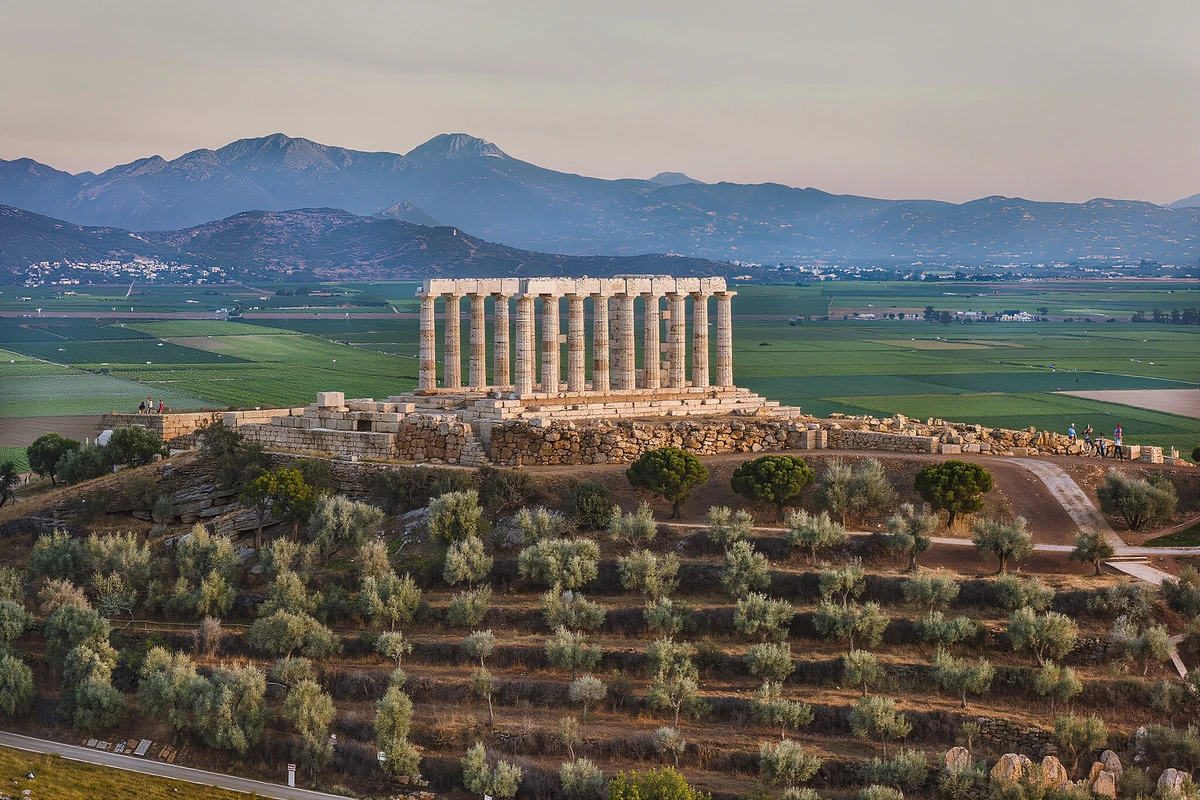
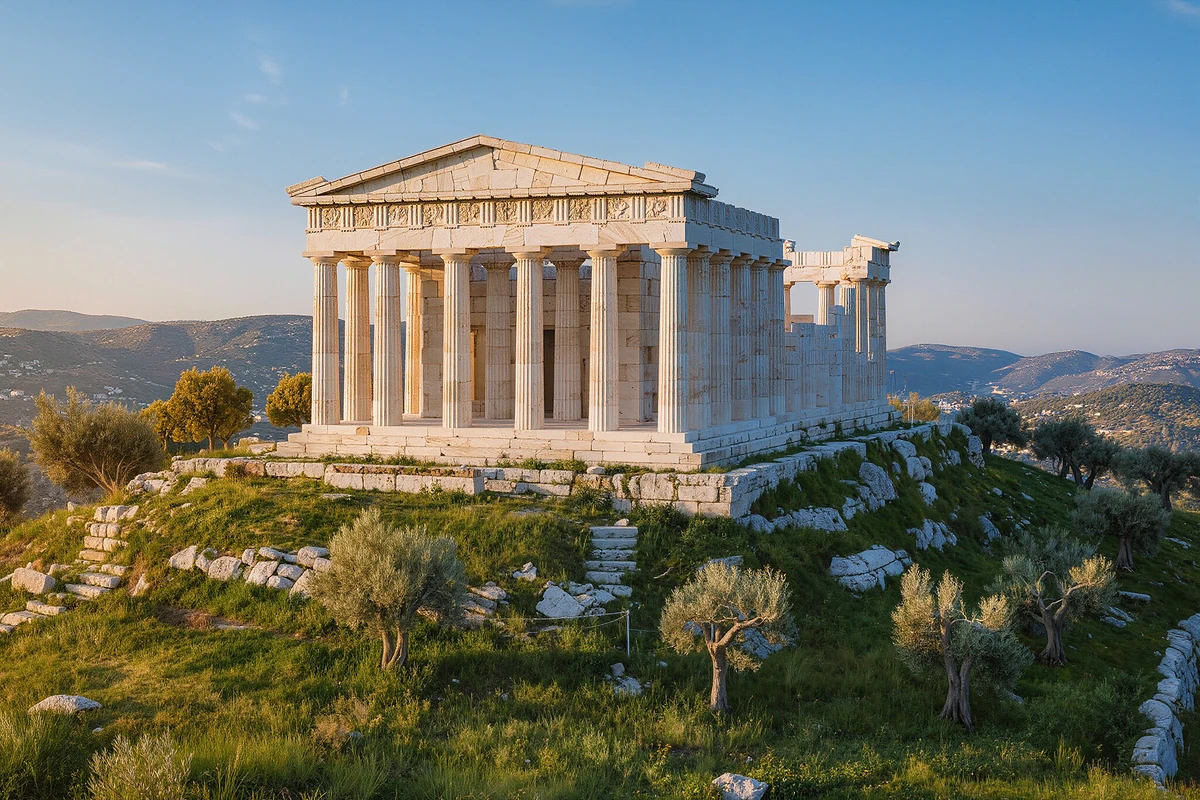
The first stop, about 30 minutes inland from Naxos town, is the Temple of Demeter at Gyroulas, near the village of Sangri. Built around 530 BC entirely of local Naxian marble, it was dedicated to the goddess of grain and harvest, fitting for the fertile plain below. In early Christian times the temple was turned into a church, which is why so much of its stone survived; archaeologists later re-erected part of its columns and roof beams.
You have about 40 minutes to climb the short uphill path, walk around the temple and see the small on-site museum with architectural fragments and finds. The guide explains everything before you enter, as guiding inside the site is not permitted. Check the Temple of Demeter opening hours: it is closed on Tuesdays and on 1 May and may close at noon in a heat wave, and on those days the tour visits the mountain village of Filoti instead. A small entrance fee is paid on site in cash.
Damalas and the olive groves of Tragea
Damalas is a tiny village set among the olive groves of Tragea, the broad green valley in the centre of Naxos. Tragea is crossed by old mule paths and dotted with small Byzantine chapels, and its olive trees have been tended by the same families for generations, giving the area a quiet, timeless feel very different from the busy harbour.
Here you step into a family pottery workshop passed down from parent to child, where the potter shows traditional techniques on the wheel and explains how local clay is shaped, dried and fired. The visit lasts about 30 minutes and is a good chance to buy a handmade bowl, plate or jug directly from the maker, a far more personal souvenir than anything sold in the port shops, and to ask questions about village life in inland Naxos.
Halki, the old capital of Naxos
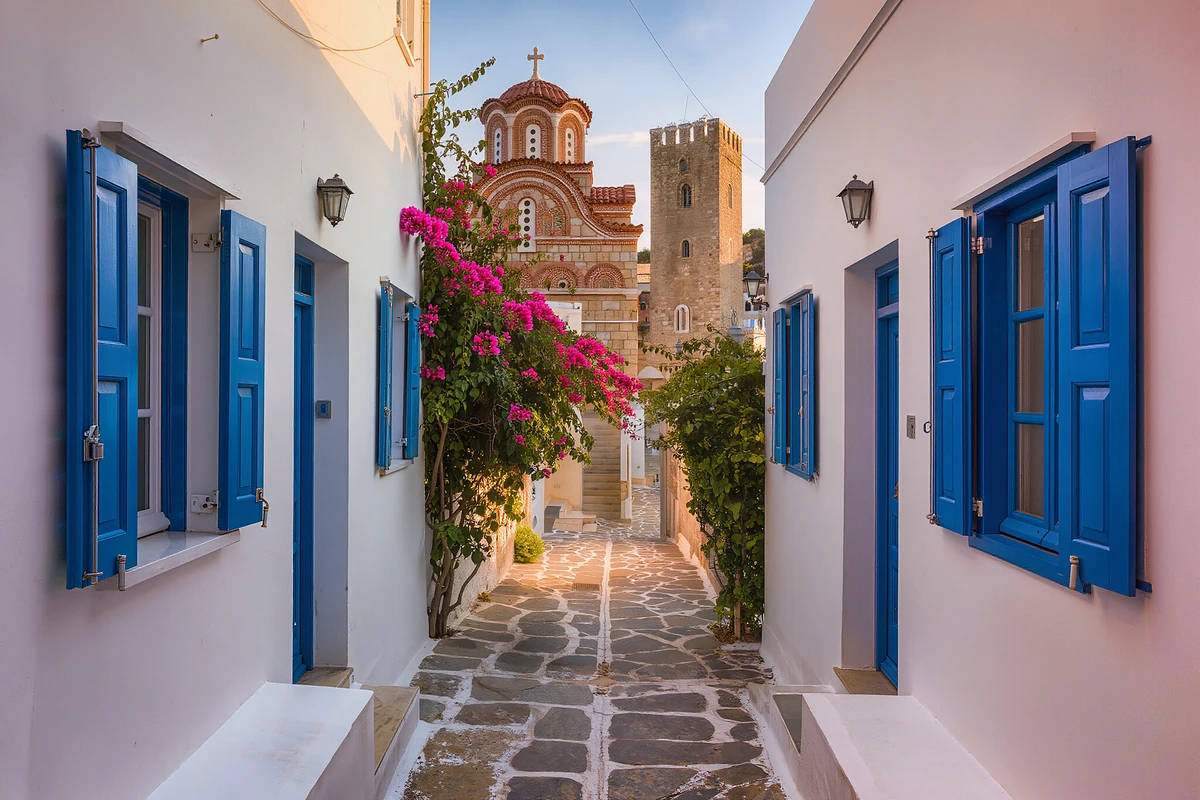
Halki, also written Chalki, was for long periods the capital and main trading centre of Naxos, when island life moved inland away from pirate raids along the coast. Its past wealth shows in the neoclassical mansions with painted shutters, the stone Venetian tower house on the edge of the village and the Byzantine church of Panagia Protothronos, whose wall paintings span several centuries.
You have about 45 minutes of free time to wander the colourful lanes, browse craft and textile shops, sit for a coffee under the trees or try local sweets. Many travellers ask whether Halki is worth visiting, and our guests' answer is a clear yes: it is often called the prettiest village on the island. There is no fixed lunch break on this tour, so Halki is the best moment for a snack before the coach continues through the olive groves.
Panagia Drosiani church near Moni
Set among olive trees just below the village of Moni, Panagia Drosiani is considered one of the oldest churches in the Balkans, with parts dating from the 6th and 7th centuries. Its unusual shape, a cluster of small domed chapels built from rough local stone, looks almost carved out of the landscape, and inside are some of the earliest Christian frescoes preserved in Greece.
The tour stops here for about 10 minutes for photos and a short explanation from the guide. If the church is open, you can step inside quietly to see the frescoes; shoulders and knees should be covered, and it is customary to leave a small coin donation. Keep a light scarf or long-sleeved shirt in your bag so you are ready for church visits during the afternoon.
The Kouros of Flerio and the marble quarries
Naxos was famous in antiquity for its white marble, and on the road past Kinidaros you pause for about five minutes at the vast modern quarries cut into the mountainside, still worked today and gleaming in the sun. The route then descends into the lush Flerio valley near Melanes, where springs feed gardens of fig, lemon and plane trees.
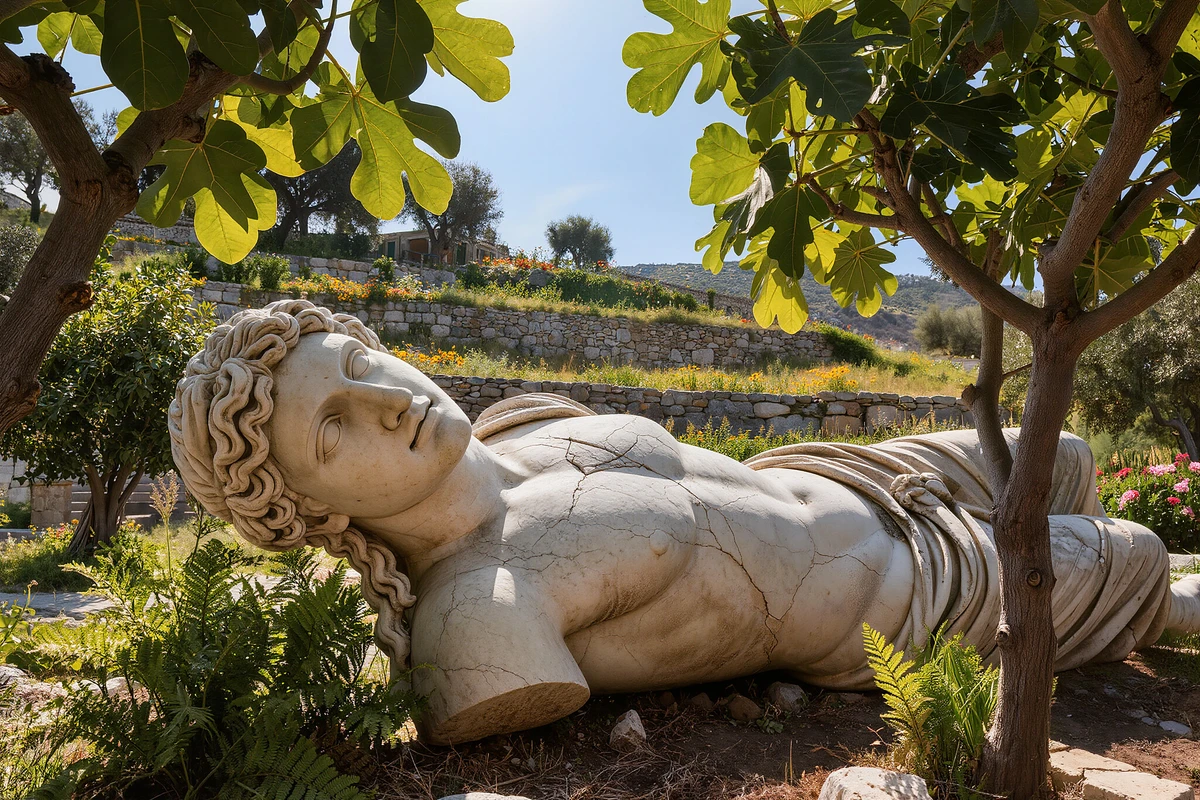
In one of these gardens lies the Kouros of Flerio, a marble statue of a young man more than 5 metres long, carved in the 6th century BC and abandoned in the ancient quarry, probably after it cracked or broke a leg during work. Seeing it lying exactly where the sculptors left it shows how such statues were roughed out on site before being moved. You spend about 20 minutes here before the coach returns to Naxos port.
Itinerary
- Meeting point outside Naxos portMeet the guide at 13:00 at the bus transfer office just outside the port and board the air-conditioned coach; the drive inland takes about 30 minutes.
- Temple of DemeterAbout 40 minutes at the hilltop sanctuary and its small museum (entrance fee paid on site in cash). On Tuesdays, 1 May and heat-wave days the tour visits Filoti village instead.
- Damalas pottery workshopAbout 30 minutes watching the potter at the wheel and browsing handmade pieces.
- Halki villageAbout 45 minutes of free time for the lanes, shops and a coffee or snack.
- Panagia DrosianiAbout 10 minutes for photos and, if the church is open, a quiet look at the frescoes.
- Marble quarries near KinidarosA five-minute roadside photo stop above the working quarries.
- Kouros of FlerioAbout 20 minutes in the garden beside the ancient statue.
- Return to Naxos portAbout 15 minutes' drive back to the meeting point, arriving around 17:00.
What's included
- English-speaking local guide
- Air-conditioned coach with driver
- Visits to the Temple of Demeter, Halki, Panagia Drosiani and the Kouros of Flerio
- Pottery workshop visit in Damalas
- Free time in Halki village
- Luggage storage during the tour
Not included
- Temple of Demeter entrance fee (paid on site in cash)
- Meals and snacks
- Church donations
- Hotel pickup and drop-off
- Tips
Is this right for you?
Great for
- Families with children — a child price for ages 5–12
- A half-day plan — about 4 hours
- Travellers who want a proven choice — rated 4.7/5 by past travellers
Think twice if
- You want a private tour — this one is shared with other travellers
Not suitable for
- People with mobility impairments
- Travellers who prefer a slow pace (the tour is brisk and has no lunch break)
Meeting point
The tour starts at 13:00 from the bus transfer office just outside Naxos port in Chora (Naxos town), a few minutes on foot from the ferry quay and from most hotels in town. Please arrive about 15 minutes early. Hotel pickup is not included with this afternoon departure. If you are arriving or leaving by ferry on the same day, you can leave your luggage at the office during the tour.
Important information
- Wear comfortable shoes: there are steps and an uphill path at the Temple of Demeter
- Bring a hat, sunscreen and water, especially from June to September
- Carry cash for the Temple of Demeter entrance fee and for small church donations
- Cover shoulders and knees to enter Panagia Drosiani
- The Temple of Demeter is closed on Tuesdays and 1 May and may close at noon in a heat wave; Filoti village replaces it on those days
- The guide explains each monument before you enter, as guiding inside the temple and the church is not permitted
- This is a fast-paced tour with no lunch break; have a snack in Halki
- Pets are not allowed, and the tour runs in rain or shine
Good to know
Frequently Asked Questions
Straight answers to what travellers ask us most, before they book.
Is this a shared or a private tour?
It is a shared guided tour by air-conditioned coach with other travellers. It is the only departure we offer on this route at the moment, leaving in the early afternoon from Naxos port.
Can we change the itinerary or the pace?
No. The stops and timings are fixed so the group can see as much as possible in four hours. You decide how to spend your free time in Halki.
How many people join the tour?
It is a coach tour, so the group size changes with the season. The guide uses the drives between stops to explain each site, so everyone gets the full story.
Is the price per person or per group?
The price is per person, with a reduced price for children. The booking panel on this page shows the current price of each option.
Is hotel pickup included?
No. The tour starts at the bus transfer office just outside Naxos port, within easy walking distance of most hotels in Naxos town.
What is included?
An English-speaking local guide, the air-conditioned coach with driver, the visits to the Temple of Demeter, Damalas, Halki, Panagia Drosiani and the Kouros of Flerio, the pottery workshop visit and luggage storage. The temple entrance fee, meals, church donations and tips are not included.
How long is the tour?
About 4 hours, from 13:00 to around 17:00.
Is it suitable for children or people with reduced mobility?
Children are welcome and usually love the pottery workshop and the giant Kouros. The uphill path and steps at the temple and the brisk pace make it unsuitable for people with mobility impairments.
What should I bring?
Comfortable shoes, a hat, sunscreen, water, cash for the temple fee and donations, and a scarf or shirt to cover your shoulders in the church.
What is the best time of year for this tour?
Spring (April to June) and autumn (September and October) are ideal, with green countryside and pleasant temperatures. July and August afternoons are hot, so drink plenty of water.
Is the Temple of Demeter open every day?
No. It is closed on Tuesdays and 1 May and can close early in a heat wave. On those days the tour visits Filoti instead, a large mountain village on the slopes of Mount Zas, the highest peak of the Cyclades.
How do I book and confirm?
Choose your date in the booking panel on this page and send your request. Our team confirms on WhatsApp within minutes.
More in Naxos
Popular across Greece
-

-
-
-
-
-