
Giethoorn Day Trip from Amsterdam
Overview
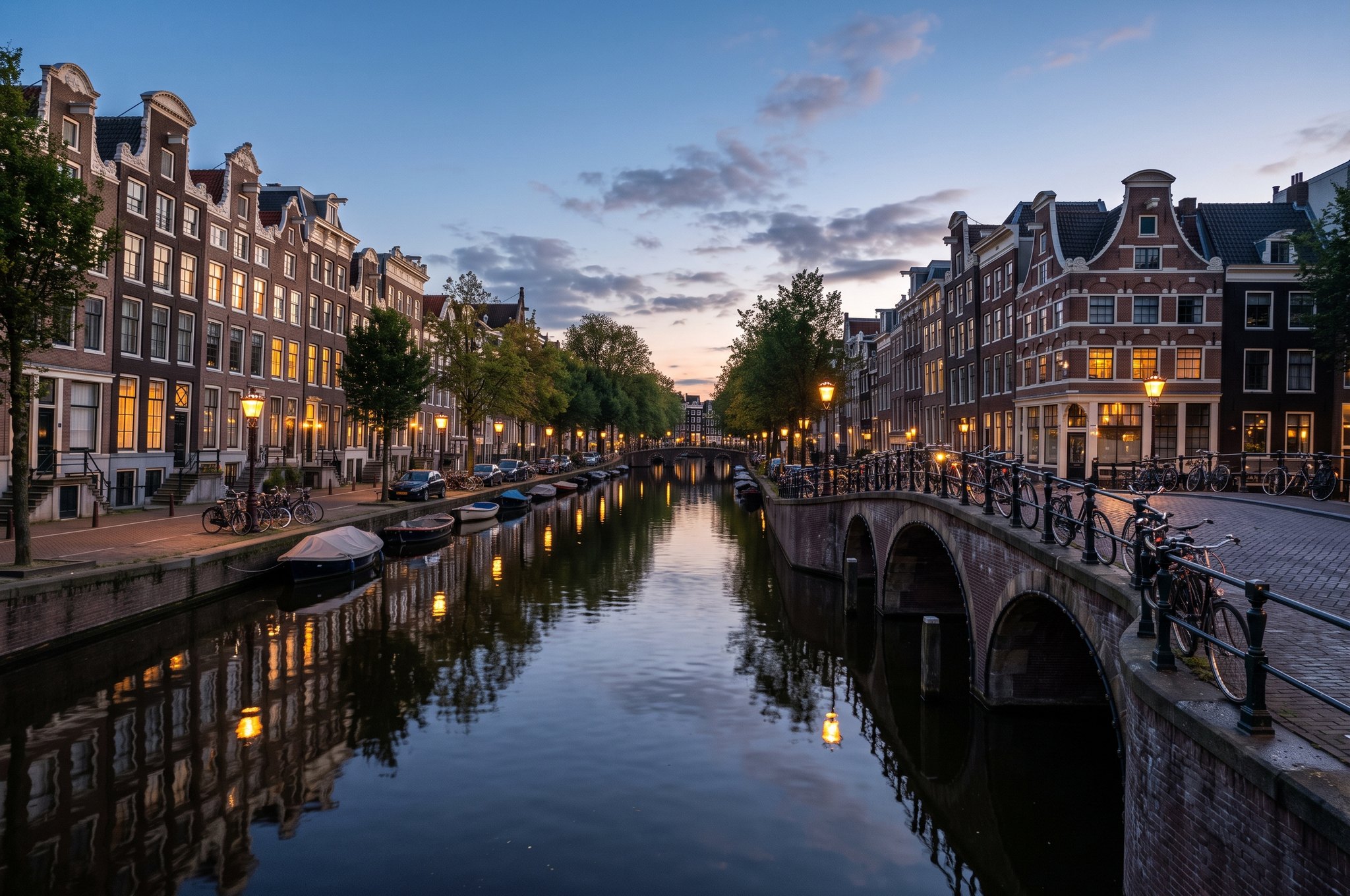
Giethoorn Day Trip from Amsterdam takes you out of the city to one of the Netherlands' best-known villages, where canals replace streets and wooden footbridges link thatched farmhouses on both banks. Guests join a small group departing from Amsterdam for a scenic drive through the Dutch countryside before boarding a quiet electric boat to glide along Giethoorn's waterways at water level. Anyone who wants to trade Amsterdam's crowded museum queues for wooden footbridges and quiet water for a few hours will find this outing an easy fit. Haqqi Tours runs the day with an English- and Arabic-speaking guide, a fixed itinerary agreed before departure, and transport in comfortable group vehicles, so the whole outing is arranged from pickup to return.
Highlights
- Cruise Giethoorn's quiet canals by electric boat away from traffic
- Cross wooden footbridges linking thatched farmhouses across the waterways
- Drive through open Dutch countryside and polder landscapes en route
- Photograph the car-free village famous for its canal-side houses
- Free time to wander village paths and waterside cafes at leisure
- Arabic- and English-speaking guide with the group throughout the day
- Return transfer back to Amsterdam included in the same outing
Full Description
A Day Away From Amsterdam's Canals
Amsterdam's own waterways are familiar to most visitors within a day of arriving, but further into the province of Overijssel sits a village where canals do not decorate the streets, they stand in for them completely. This excursion collects travellers from central Amsterdam in the morning and heads out of the capital on quieter provincial roads, leaving trams, cyclists and city traffic behind. The change of pace is noticeable once the group vehicle turns off the motorway onto rural lanes lined with farms and grazing cattle. By the time the group reaches the village, passengers have already left urban Holland behind for something calmer and greener, setting the tone for the hours ahead.
The Village With No Roads
What sets this destination apart from other countryside stops is that cars were never part of its design. Footpaths, small bridges and water are how residents and visitors alike move between the farmhouses, shops and gardens that line the banks. Boats, bicycles and walking are the only ways around, which keeps the village unusually calm compared with most day-trip destinations near a major capital. Visitors often remark on how quiet it feels, with the loudest sound being the water lapping against wooden hulls. The layout makes it easy to see most of the village within a comfortable few hours, which fits neatly into a single day out from Amsterdam.
Gliding Along the Waterways
The centrepiece of the day is a spell on the water itself, aboard a quiet electric boat that carries small groups along the narrow channels threading between properties. Sitting close to the waterline gives a different view of the gardens, private jetties and reed-lined banks than a walk along the paths would allow. The guide points out details of village life as the boat passes: a converted farmhouse, a floating flower bed, a family still using their own rowing boat for daily errands. It is an unhurried way to see the layout of the village and understand why it grew up around water rather than roads.
Thatched Farmhouses and Wooden Bridges
Many of the farmhouses lining the canals still carry thick thatched roofs, some dating back generations, kept in traditional style even as the interiors have been modernised. Small wooden footbridges arch over the water at regular intervals, allowing residents to cross between plots without a car in sight. Photographers tend to linger at these crossings, where the reflection of a thatched roof on still water makes for one of the most recognisable images of the trip. Wildflower gardens, orchards and neat vegetable patches border many of the houses, adding colour to the scene depending on the season of travel.
The Dutch Countryside En Route
The journey there and back is part of the experience rather than simply transit time. The route runs through open Dutch farmland, passing windmills, grazing livestock and the flat, carefully managed polder landscape that the Netherlands is known for beyond its cities. Canals and drainage ditches criss-cross the fields, a reminder of how much of the land here has been reclaimed from water over centuries. The guide uses the drive to give context on the region's history and how villages like this one came to rely so heavily on boats long before cars existed anywhere in the country.
Walking the Village on Foot
Alongside the boat ride, guests have time to explore on foot, crossing the wooden bridges and following footpaths past cottage gardens, small farm shops and quiet corners away from the water's edge. Walking allows a closer look at architectural details that are easy to miss from a boat, from carved wooden gables to the neat thatching technique itself. Local cafes and small shops selling cheese, preserves and handicrafts sit along the main paths, giving guests a chance to browse or simply sit and take in the view before regrouping with the guide for the return journey.
Who This Day Trip Suits
This outing works well for families travelling with children who enjoy being on the water without a long journey, for couples looking for a quieter contrast to Amsterdam's busier attractions, and for older travellers who prefer a gentle pace with plenty of seating on the boat itself. Photography enthusiasts are drawn to the reflections and rural scenery, while first-time visitors to the Netherlands appreciate seeing a side of the country that looks nothing like the capital. Because the boat ride requires no particular fitness and walking sections are short and flat, it suits a wide range of ages within one travelling party.
Meeting Point and Group Size
Guests are collected from a central Amsterdam meeting point agreed at the time of booking, travelling together in one of Haqqi Tours' own vehicles rather than a public coach shared with unrelated bookings. The guide confirms the exact pickup location and approximate return time in writing before the day, so families know what to expect from the outset. Group sizes are kept manageable so that everyone can comfortably board the boat together and hear the guide's commentary without needing to split into separate sittings, keeping the day feeling personal rather than crowded.
What to Bring for the Day
Comfortable shoes suit the walking sections, since paths can be uneven in places, and a light jacket is worth packing given how open the boat is to the breeze coming off the water. Sunglasses and sun protection help on brighter days, while guests visiting in cooler months are better off dressing in layers, as temperatures on the water tend to feel lower than on land. A camera or phone with charge to spare is worth having ready, since the combination of water, bridges and thatched rooflines gives plenty worth photographing throughout the outing.
Booking Your Place With Haqqi Tours
As a licensed Turkish tour operator extending its trusted service to destinations popular with Gulf and Arab travellers, Haqqi Tours confirms every booking in writing with a fixed itinerary before payment, so families know exactly what the day includes. Questions that come up before departure, such as which Amsterdam street corner is the actual meeting spot or whether the canal boat has room for a pram, get answered the same day over WhatsApp in Arabic or English. Once confirmed, guests simply meet the guide at the agreed time in Amsterdam and let the day unfold from there.
Good to know
- Wear flat, comfortable shoes since village paths cross several small footbridges
- Pack a light jacket even in summer, as the boat catches the breeze off the water
- Keep your camera or phone charged for the reflections on the canals
- Bring cash in small denominations for cafes and craft shops in the village
- Sit near the front of the boat for the clearest photos of the farmhouses
- Confirm your Amsterdam pickup point with the WhatsApp desk the evening before
- Dress in layers between autumn and spring, as temperatures drop over open water