Rossio, Chiado and Alfama Guided Walking Tour with Pastry Lisbon
- Duration3 hours
- Daily
- Group
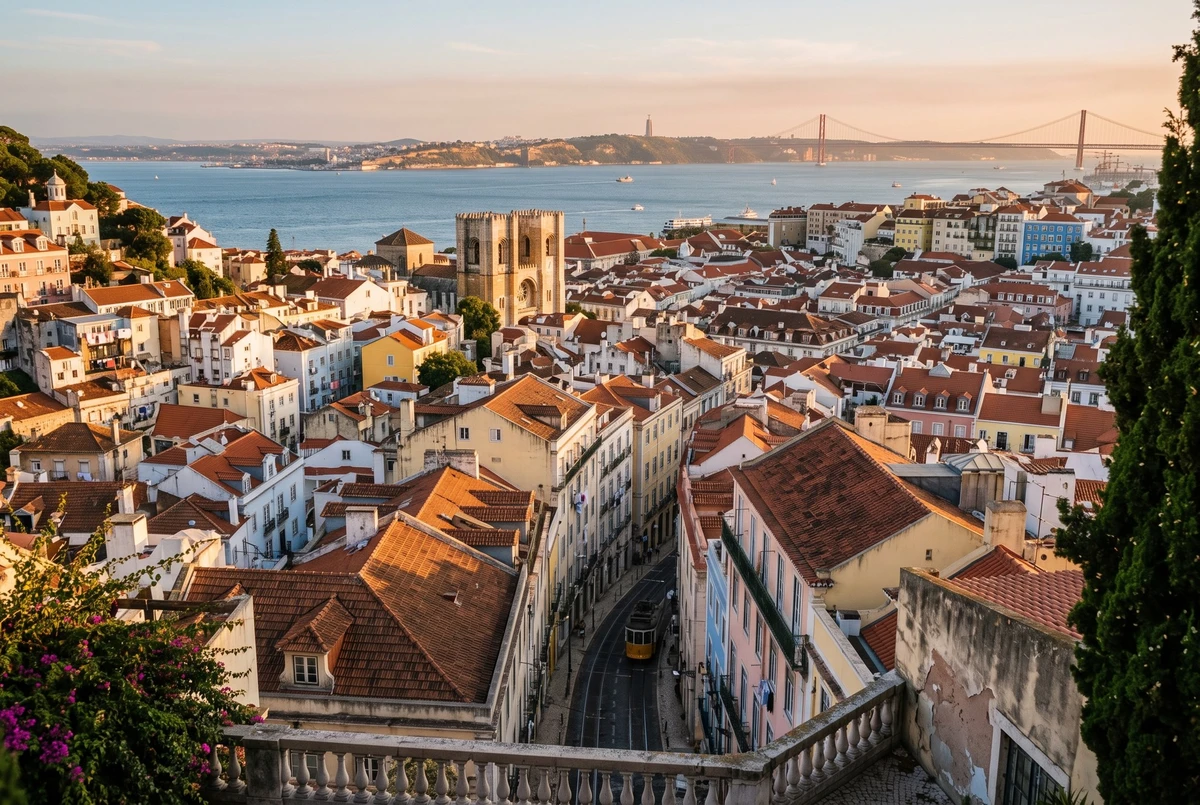
Some images are AI-generated for illustration. While we confirm your booking, just ask and we will send you the original photos.
- Fair, honest prices
- Real people, not bots
- Confirm, then pay
- Secure payment

Overview
This shared guided walking tour covers the heart of Lisbon on foot in about three hours. Starting in Rossio Square, a local English-speaking guide leads you past Rossio Station's carved façade and the independence obelisk of Restauradores, up to Largo do Carmo where the 1974 Carnation Revolution played out, and on through elegant Chiado. In the Baixa, rebuilt on a grid after the 1755 earthquake, you taste a warm pastel de nata; in Alfama, the oldest quarter, you try a local snack and hear the story of fado. The walk ends by the river at Praça do Comércio. It suits first-time visitors, families and anyone who likes history told well. There is no hotel pickup; we meet in Rossio Square.
Highlights
- Three-hour walk through Rossio, Chiado, the Baixa and Alfama with a local guide
- A warm pastel de nata custard tart in the Baixa
- A local snack in the lanes of Alfama and the story of fado
- Largo do Carmo, where the 1974 Carnation Revolution reached its climax
- Rossio Station's neo-Manueline façade and the obelisk of Restauradores
- Viewpoints over the red roofs of the old town and the river
- Stories of the 1755 earthquake and how Lisbon was rebuilt
- Morning and afternoon departures from Rossio Square
Full Description
Rossio Square, Restauradores and Rossio Station
Rossio has been Lisbon's main square since the Middle Ages, a place of markets, festivals and public gatherings. Its pavement of black and white limestone laid in a wave pattern is one of the best-known examples of Portuguese cobbled paving, and the square is framed by baroque fountains, the National Theatre and cafés that have served customers for generations. Just off it, St. Dominic's Square keeps a quieter, older atmosphere around its church.
A few steps north, Rossio Railway Station shows off a neo-Manueline façade from the 1890s with two horseshoe-shaped doorways, and Restauradores Square centres on an obelisk raised to honour the restoration of Portuguese independence in 1640. These first stops of the Lisbon walking tour take about forty minutes and give you the layout of the lower town.
Largo do Carmo and the city viewpoint
Climbing towards Chiado, the tour reaches Largo do Carmo, a leafy square shaded by jacaranda trees. On one side stand the roofless Gothic arches of the Carmo Convent, left open to the sky since the 1755 earthquake. On 25 April 1974 this square was the stage for the final hours of the Carnation Revolution, when crowds gathered outside the barracks here and the old regime surrendered without bloodshed.
Your guide tells how soldiers put carnations in their rifles and why the date still names a bridge and countless streets. Nearby, a viewpoint opens over the Baixa, the castle hill and the river, an ideal spot for photos and for understanding how the city spreads across its seven hills.
Chiado, Lisbon's elegant district
Chiado has long been the meeting place of Lisbon's writers, artists and shoppers. Its sloping streets hold historic cafés with carved wooden interiors, theatres, the São Carlos opera house and bookshops, including one of the oldest working bookshops in the world, open since the eighteenth century. Much of the area burned in a fire in 1988 and was carefully restored, keeping its old façades.
On this stretch of the walk the guide points out the details that make Chiado special: the iron balconies, tiled shopfronts and the mosaic pavements that slope down towards the river. It is a great district to return to after the Lisbon old town tour for coffee, shopping or simply people-watching on its squares.
The Baixa and the pastel de nata
The Baixa is the flat lower town between Rossio and the river. After the earthquake, tsunami and fires of 1 November 1755 destroyed it, the area was rebuilt on a strict grid of straight streets with uniform buildings. Inside the walls, a flexible wooden frame known as the gaiola, or cage, was designed to resist future tremors, making the Baixa one of the first earthquake-resistant districts in Europe.
Here you stop to taste a pastel de nata, Portugal's famous custard tart with crisp layered pastry and a caramelised top, created by monks in Belém before the nineteenth century. Your guide explains the recipe's story and how locals eat it, with a sprinkle of cinnamon. The Baixa section includes about fifteen minutes for the tasting.
Alfama, the oldest quarter, and the story of fado
Alfama clings to the hillside below São Jorge Castle and is the oldest neighbourhood in Lisbon. Its tangle of steep lanes, stairways and tiny squares follows a layout dating back to the Moorish period, and because it sits on solid rock much of it survived the 1755 earthquake. Laundry hangs between windows, tiled façades glow in the sun and viewpoints such as Santa Luzia look over the rooftops to the river.
Alfama is also one of the birthplaces of fado, the soulful song of Lisbon listed by UNESCO as intangible cultural heritage. On the Alfama walking tour section your guide shares its story while you taste a local snack, then spends about thirty minutes leading you through the quarter's most atmospheric corners.
Praça do Comércio by the river
The walk ends at Praça do Comércio, also called Terreiro do Paço, the vast riverside square where the royal palace stood until 1755. Rebuilt as the city's grand entrance from the water, it is lined on three sides by yellow arcaded buildings and opens to the Tagus on the fourth, with marble steps leading down to the river.
The triumphal arch of Rua Augusta, completed in 1873, connects the square with the Baixa, and there is a viewing platform on top. Your guide finishes here, leaving you at one of the best-connected spots in Lisbon, close to cafés, the river promenade, trams and the ferry terminal, so you can continue exploring at your own pace.
Itinerary
- Rossio SquareMeet your guide by the tall central column and start with the history of Lisbon's main square, about 15 minutes.
- St. Dominic's Square and Rossio StationA short walk past the church square and the carved station façade, with photo stops, about 25 minutes.
- Restauradores and Largo do CarmoThe independence obelisk, then the climb to the square of the Carnation Revolution and the Carmo ruins, about 15 minutes there.
- City viewpointPanoramic views over the Baixa, the castle and the river, about 15 minutes.
- ChiadoA stroll past historic cafés, theatres and bookshops, about 15 minutes.
- Baixa and the pastel de nataA custard tart tasting and the story of the rebuilding after 1755, about 25 minutes.
- AlfamaA local snack, the story of fado and a walk through the oldest lanes and viewpoints, about 45 minutes.
- Praça do ComércioThe tour ends at the riverside square, about 3 hours after the start.
What's included
- English-speaking local guide
- 3-hour walking tour through Rossio, Chiado, Baixa and Alfama
- One pastel de nata (custard tart)
- One local snack
- Stops at viewpoints over the old town
- Stories of the 1755 earthquake and the Carnation Revolution
Not included
- Entrance fees and guiding inside attractions
- Hotel pickup and drop-off
- Extra food and drinks
Is this right for you?
Great for
- Families with children — a child price for ages 3–11
- First-time visitors who want the highlights
- A half-day plan — about 3 hours
- Travellers who want a proven choice — rated 4.9/5 by past travellers
Think twice if
- You want a private tour — this one is shared with other travellers
- Walking is difficult for you — expect active parts
Not suitable for
- Wheelchair users, as the route has steep cobbled streets and stairs
- Pets are not allowed
Meeting point
Meet your guide in Rossio Square, close to the statue standing on the tall column in the middle of the square, 10 minutes before your chosen start time (morning or afternoon, shown in the booking panel). Rossio has its own metro station on the green line and is a short walk from Baixa-Chiado and Restauradores stations. Hotel pickup is not included, and the tour finishes at Praça do Comércio.
Important information
- Wear comfortable walking shoes with a good grip; Lisbon's cobbles can be slippery and the route includes hills and stairs.
- Wear comfortable clothes and bring a hat, sunscreen and water in summer, or a light rain jacket in winter.
- The tour runs in English with a local guide.
- Entrance fees and guided visits inside monuments are not included; the tour visits outdoor sites.
- One pastel de nata and one local snack are included; extra food and drinks are at your own cost.
- Tell us about any food allergies when you book so the guide can suggest alternatives.
- Pets are not allowed on the tour.
Good to know
Frequently Asked Questions
Straight answers to what travellers ask us most, before they book.
Is this a shared or a private experience?
It is a shared guided walking tour in a group with other travellers, led by a local English-speaking guide.
How long does the walking tour take?
About 3 hours, from Rossio Square to Praça do Comércio, including the tasting stops.
Is hotel pickup included?
No. The tour starts in Rossio Square, which is easy to reach by metro, tram, bus or on foot from most central hotels.
What is included?
A local English-speaking guide, the 3-hour walk through Rossio, Chiado, the Baixa and Alfama, one pastel de nata, one local snack and stops at viewpoints.
Is the price per person or per group?
The price is per person. The booking panel on this page shows the current price for the date and time you choose.
Is it suitable for children or travellers with reduced mobility?
Children who are happy to walk are welcome. The route has steep cobbled streets and stairs, so it is not suitable for wheelchair users or people who find long walks difficult.
What should I bring?
Comfortable shoes, comfortable clothes, water, sun protection in summer and a light jacket in the cooler months.
Is the morning or the afternoon tour better?
The morning tour is cooler in summer and the streets are quieter; the afternoon tour has warm light in Alfama. Both follow the same route.
What is the best time of year for a Lisbon walking tour?
Spring and autumn are ideal, with mild temperatures. Summer is hot on the hills, and winter can bring rain, but the tour runs all year.
What happens if it rains?
The tour goes ahead in light rain, so bring a jacket or umbrella. The cobbles get slippery, so shoes with a good grip are important.
What is a pastel de nata?
A small Portuguese custard tart with crisp, flaky pastry and a creamy filling, baked in a very hot oven until the top caramelises. It was first made by monks in Belém.
How do I book and confirm?
Choose your date and start time in the booking panel and send your request. Our team confirms your booking on WhatsApp within minutes.
More in Lisbon




Getting to & around Lisbon
Popular across Portugal
-
-
-
-

-

-