Gyeongju Day Trip from Busan with Rice Cake Making & Night Views
- DurationAbout 12 hours
- Daily
- Group
Some images are AI-generated for illustration. While we confirm your booking, just ask and we will send you the original photos.
- Fair, honest prices
- Real people, not bots
- Confirm, then pay
- Secure payment

Overview
This Gyeongju day trip from Busan packs the highlights of the ancient Silla capital into one well-paced day with a professional English-speaking guide. After meeting at Busan, Seomyeon or Haeundae subway station, you travel north through the quiet bamboo groves of Ahopsan forest to Bulguksa Temple, a UNESCO World Heritage masterpiece. In the afternoon you explore Gyochon Traditional Village and the historic Choi family house, pound your own rice cakes in a hands-on tteok experience, walk among the giant royal burial mounds of Daereungwon and browse hanok-lined Hwangnidan-gil. Choose between Gyeongju National Museum or Donggung Palace and Wolji Pond, then cross the lantern-lit Woljeonggyo Bridge before heading back to Busan. It is a shared group tour with round-trip transport, main entrance fees and no shopping stops.
Highlights
- Bulguksa Temple, a UNESCO-listed jewel of Silla Buddhist architecture
- Hands-on rice cake (tteok) pounding in Gyochon Traditional Village
- Walk among the grassy royal tombs of Daereungwon
- Café-lined hanok lanes of Hwangnidan-gil
- Gyeongju National Museum or Donggung Palace and Wolji Pond, your choice
- Woljeonggyo Bridge glowing at dusk
- Meeting at three Busan subway stations, round-trip transport included
- Professional English-speaking guide and no shopping stops
Full Description
Bulguksa Temple, the jewel of Gyeongju
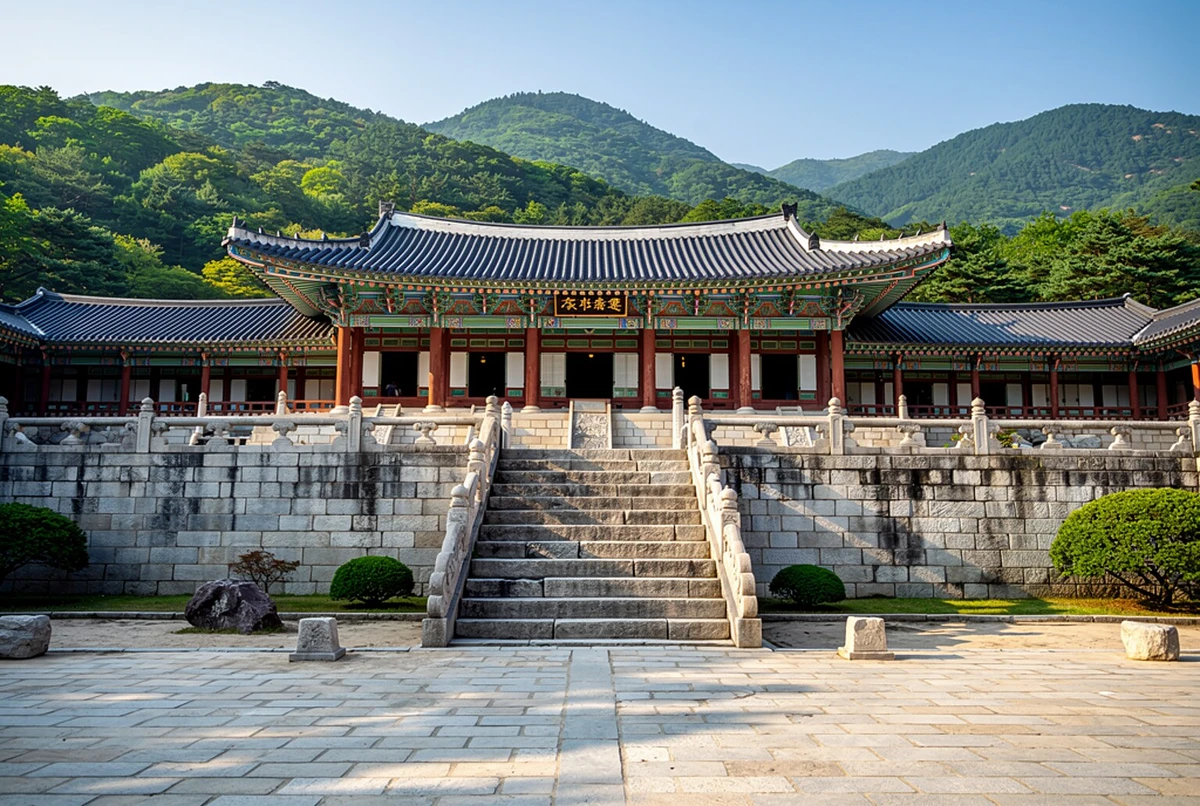
Bulguksa Temple was completed in the 8th century, when Gyeongju was the capital of the Silla kingdom, and together with the nearby Seokguram Grotto it was listed by UNESCO in 1995. The temple stands on stone terraces built from fitted natural boulders, reached by the famous double stone staircases of Cheongungyo and Baegungyo. In the main courtyard stand two celebrated stone pagodas, the ornate Dabotap and the simple, elegant Seokgatap, both national treasures of Korea.
Your guide explains the Buddhist symbolism of the layout and how the wooden halls were rebuilt after being burned in the 16th century, while the stonework survives from Silla times. The visit takes about an hour, enough to walk the courtyards and the quieter rear halls. Spring cherry blossoms and autumn maples make it the best time to visit Bulguksa, but the temple is beautiful in every season.
Gyochon Traditional Village, the Choi family house and rice cake making
Gyochon Traditional Village takes its name from the Confucian school, or hyanggyo, that has stood here for centuries, on the site of Silla's royal academy. Its restored hanok houses, earthen walls and tiled roofs make it one of the most pleasant places to stroll in Gyeongju. The highlight is the Choi family house, seat of a clan that stayed wealthy for some twelve generations and became famous across Korea for its rules of generosity towards the poor.
Here you join a traditional rice cake pounding experience: steamed glutinous rice is placed in a wooden trough and pounded with a heavy wooden mallet until it turns smooth and elastic, then shaped and coated in roasted soybean powder. It is fun, a little physical and great for photos, and you get to taste the results. Expect about an hour in the village.
Daereungwon Tomb Complex and Hwangnidan-gil
In the middle of Gyeongju rise the great grassy mounds of Daereungwon, the burial place of Silla kings, queens and nobles. There are 23 tombs in the park, the largest being the twin mound of Hwangnamdaechong. One tomb, Cheonmachong, has been opened to visitors and shows how the graves were built, along with copies of the gold crown and the painted saddle flap that gave it the name "Heavenly Horse Tomb". Walking the paths between the mounds is one of the most unusual experiences in Korea.
Right beside the tombs runs Hwangnidan-gil, a street of old hanok houses turned into cafés, bakeries and small design shops. It is Gyeongju's liveliest lane and a good spot to try the city's famous red bean bread. Your guide leaves time for a short wander and photos before the next stop.
Gyeongju National Museum or Donggung Palace and Wolji Pond
Late in the afternoon you choose between two classic sights. Gyeongju National Museum holds the finest collection of Silla art in the world: glittering gold crowns and belts from royal tombs, Buddhist sculpture and the huge bronze Divine Bell, cast in the 8th century and decorated with flying celestial figures. The museum gives context to everything you have seen during the day.
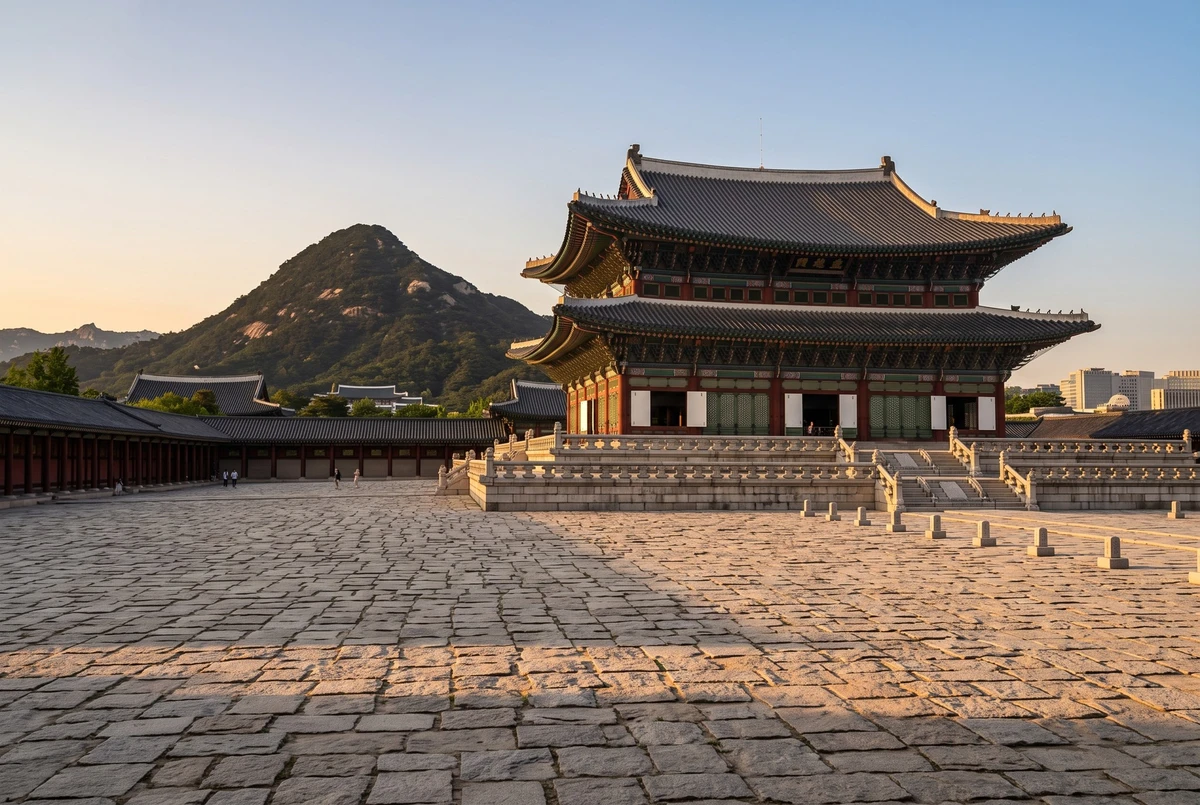
Alternatively, you can visit Donggung Palace and Wolji Pond, a secondary palace of the Silla court built in the 7th century beside an artificial lake with three small islands. Its reconstructed pavilions reflect beautifully in the water, especially as the lights come on. Entry to Donggung and Wolji is paid separately on the day, while the museum is included.
Woljeonggyo Bridge at dusk
The day ends at Woljeonggyo, a covered wooden bridge over the Namcheon stream that recreates a Silla-era crossing first built in the 8th century. Reconstructed with great care and opened in 2018, it has painted beams, tiled roofs and gate pavilions at each end. As evening falls, warm lights trace its outline and it reflects in the still water below, the classic Gyeongju night view.
Your guide walks you across the bridge and points out the best angles for photos from the riverbank. In autumn and winter the lights are on by the time you arrive; on long summer evenings the sky may still be bright. Then you board the vehicle for the drive back to Busan, arriving from about 19:00.
Ahopsan bamboo forest
On the way north from Busan the tour stops at Ahopsan forest in Gijang, a private woodland cared for by the same family for more than 400 years. Tall stands of bamboo and old cedars create cool, quiet paths that feel far from the city, a peaceful start before the big sights of Gyeongju.
Entry to the forest is optional and paid on site; if you prefer not to go in, you can relax at the café nearby while others walk. The stop lasts around 40 minutes and is one of the most photogenic bamboo groves near Busan, at its greenest from late spring to early autumn and quiet early in the morning.
Itinerary
- Meeting in BusanMeet at Busan Station Exit 4 (08:10), Seomyeon Station Exit 4 (08:30) or Haeundae Station Exit 5 (09:10).
- Ahopsan forestWalk among bamboo and old cedars (optional entry) for about 40 minutes.
- Bulguksa TempleGuided visit of the UNESCO-listed temple and its stone pagodas, about 1 hour.
- LunchLunch stop at a local restaurant away from the tourist crowds, at your own expense.
- Gyochon Village and rice cake makingStroll the hanok village, see the Choi family house and pound rice cakes, about 1 hour.
- Daereungwon and Hwangnidan-gilWalk among the royal tombs and browse the hanok café street, about 1 hour.
- Museum or Donggung PalaceChoose Gyeongju National Museum or Donggung Palace and Wolji Pond, about 1 hour.
- Woljeonggyo BridgeCross the illuminated wooden bridge at dusk, about 30 minutes.
- Return to BusanDrop-off at Busan Station from about 19:00, Seomyeon around 19:30 and Haeundae around 19:50.
What's included
- Round-trip transport from Busan in an air-conditioned vehicle
- Professional English-speaking guide
- Entrance fees to the main sights, including Bulguksa Temple
- Traditional rice cake (tteok) pounding experience
- Toll, parking and fuel fees
- Woljeonggyo Bridge visit at dusk
Not included
- Lunch and personal expenses
- Entry to Ahopsan forest (optional)
- Entry to Donggung Palace and Wolji Pond if you choose it instead of the museum
- Travel insurance
Is this right for you?
Great for
- Travellers who want a proven choice — rated 4.9/5 by past travellers
Think twice if
- You need hotel pickup — you meet at the meeting point
- You want a private tour — this one is shared with other travellers
Not suitable for
- Wheelchair users
- Children aged 0–3
Meeting point
Meet your guide at one of three Busan subway stations: Busan Station Exit 4 at 08:10 (the subway station, not the KTX train building), Seomyeon Station Exit 4 at 08:30, or Haeundae Station Exit 5 at 09:10. Before the tour we add you to a WhatsApp group with your guide for easy contact. The tour returns to the same points, from about 19:00 at Busan Station, 19:30 at Seomyeon and 19:50 at Haeundae; times may vary with traffic.
Important information
- Please give us a valid WhatsApp number for the guide group chat
- Children aged 0–3 cannot join this tour
- Lunch is at your own expense; tell the guide about allergies or dietary needs in advance
- Ahopsan forest and Donggung Palace entries are optional and paid on site
- Wear comfortable walking shoes; the day includes several walks
- The order and timing of stops may change with weather, traffic or season
- Bring some cash in Korean won for optional entries and snacks
Good to know
Frequently Asked Questions
Straight answers to what travellers ask us most, before they book.
Is this a shared or a private experience?
It is a shared group tour with an English-speaking guide and other travellers.
How long does the Gyeongju day trip from Busan take?
About 12 hours including travel, from around 08:10 to 19:00–20:00 depending on your meeting point.
Is hotel pickup included?
There is no hotel pickup; you meet at Busan, Seomyeon or Haeundae subway station, and round-trip transport to Gyeongju is included.
What is included?
Transport, a professional English-speaking guide, the main entrance fees including Bulguksa, the rice cake experience, and toll, parking and fuel fees.
Is the price per person or per group?
The price is per person, with a child rate for ages 4 to 12. The booking panel on this page shows the current price.
Is lunch included?
No. The tour stops at a carefully chosen local restaurant and you pay for your own meal there.
Is it suitable for children and people with reduced mobility?
Children from age 4 are welcome; children aged 0–3 cannot join. The tour is not suitable for wheelchair users because of steps and walking.
How do I get from Busan to Gyeongju?
On this tour you travel by air-conditioned vehicle with the group; independently the trip takes about an hour by train or bus plus local transfers.
What is the best time to visit Gyeongju?
Spring for cherry blossoms and autumn for red maples are the most beautiful, but the tour runs year-round and the night lights look best from autumn to early spring.
What should I bring?
Comfortable shoes, a light jacket for the evening, a camera, some cash in won and a charged phone for the WhatsApp group.
What happens in bad weather?
The tour runs in light rain and the guide may adjust the order of stops; bring an umbrella.
How do I book and confirm?
Choose your date on this page and book; our team confirms on WhatsApp within minutes and shares the meeting details.
More in Busan