DMZ Tour with North Korean Defector Meeting & Hotel Pickup Seoul
- Duration7 hours
- Daily
- Group
- Pickup available
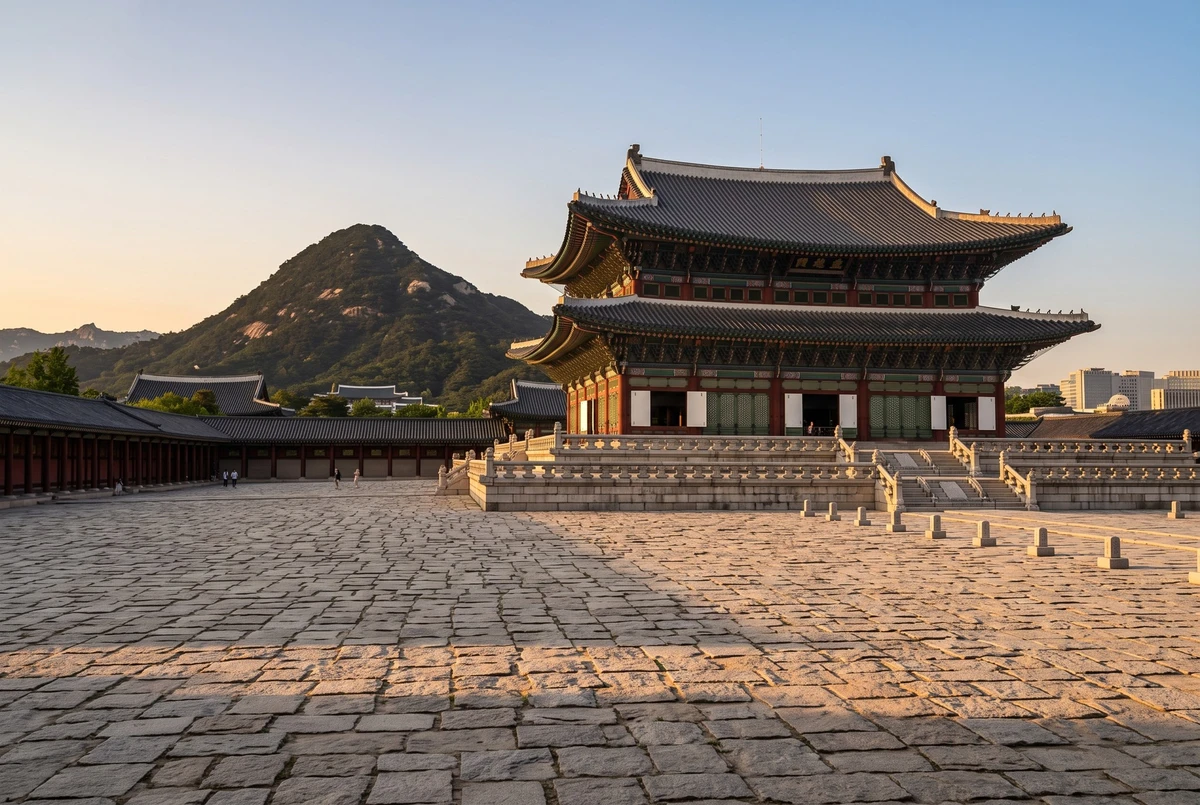
Some images are AI-generated for illustration. While we confirm your booking, just ask and we will send you the original photos.
- Fair, honest prices
- Real people, not bots
- Confirm, then pay
- Secure payment

Overview
This DMZ tour from Seoul takes you to the border that has divided the Korean Peninsula since 1953 and adds what most border trips cannot: a meeting with a North Korean defector who tells a personal story of life in the North and escape, then answers your questions. With a licensed English-speaking guide you visit Imjingak Park, Mangbaedan Altar and Freedom Bridge, cross the Unification Bridge checkpoint, walk down into the Third Infiltration Tunnel and look across to North Korea from Dora Observatory. The default option is a shared group tour by air-conditioned coach from Myeongdong Station, with DMZ admission included. Other options add hotel pickup, a suspension bridge walk, a private vehicle or a Monday border route.
Highlights
- Meet a North Korean defector and ask your own questions in a live Q&A
- Walk down the sloping passage into the Third Infiltration Tunnel
- Look across the border to North Korean villages from Dora Observatory
- Imjingak Park with Mangbaedan Altar, Freedom Bridge and the war-damaged steam locomotive
- Pass the Unification Bridge military checkpoint into the Civilian Control Zone
- Licensed English-speaking guide and DMZ admission tickets included
- Choice of 07:25 or 09:25 departure from Myeongdong Station
- Options with hotel pickup, a suspension bridge walk or a Monday border route
Full Description
Imjingak Park, Mangbaedan Altar and Freedom Bridge
Imjingak Park sits on the south bank of the Imjin River in Paju, about an hour's drive north of Seoul and just outside the Civilian Control Line, so it is the one corner of the border area anyone can enter freely. Opened in 1972, it was created for the Koreans separated from their families by the war. At Mangbaedan Altar, displaced families still gather on Lunar New Year and Chuseok to bow toward ancestral villages they cannot reach, and the fences nearby are covered in ribbons carrying wishes for reunion.
A few steps away, Freedom Bridge is the old railway bridge that prisoners of war walked across when they were exchanged after the armistice. Next to it stands a rusted steam locomotive, riddled with bullet holes, that was derailed near Jangdan Station in 1950 and left inside the DMZ for more than half a century. The hour spent here is where your guide explains how the division began.
Meeting a North Korean Defector
The part of the day travellers remember most is the meeting with a North Korean defector at the North Korea Experience Hall in Imjingak, which opened in 2025. In a calm, seated session, a person who grew up in the North describes everyday life there: school, food, work, the strict control of information and, finally, the decision to leave and the long, dangerous route out, often through third countries.
An open question-and-answer session follows, so you can ask what you have always wondered about the country, while respecting the speaker's privacy and safety. Many guests say this conversation turns the border sites from history lessons into something personal. The hall's displays and short documentaries help you picture the land you will look at later from Dora Observatory, and your guide adds context before and after the meeting.
Unification Bridge Checkpoint and the Civilian Control Zone
North of Imjingak the coach crosses the Imjin River on the Unification Bridge, where soldiers of the Republic of Korea board to check every passport against the passenger list. That is why a passport is essential on any DMZ day trip from Seoul: without it you cannot pass. Beyond the checkpoint lies the Civilian Control Zone, a band of farmland and forest where access is limited and photography is restricted at certain points.
The Demilitarized Zone itself was created by the Armistice Agreement of 27 July 1953. It runs about 250 kilometres across the peninsula and is roughly 4 kilometres wide, 2 kilometres on each side of the Military Demarcation Line. Decades without settlements have turned parts of it into a refuge for wildlife such as red-crowned cranes, and your guide points out guard posts, fences and rice fields that reach right up to the wire.
The Third Infiltration Tunnel
Discovered in October 1978 after a tip from a defector, the Third Infiltration Tunnel was dug from the North toward Seoul and stops about 435 metres south of the demarcation line. It is about 1.6 kilometres long and around 2 metres high and wide, large enough, it is said, for thousands of armed soldiers to pass in an hour. Visitors leave bags and cameras in lockers, put on a hard hat and walk down a long, steep access passage to reach the original tunnel some 70 metres below ground.
Inside, the granite still shows the drill holes, and the ceiling is low enough that taller visitors stoop. You walk as far as a blockade wall, beyond which North Korean territory begins only a short distance away. Allow about an hour including the short film and exhibition hall at the entrance. The climb back up is the most tiring moment of the day, so take it at your own pace.
Dora Observatory and Unification Village
Dora Observatory stands on Dorasan, a hill at the northern edge of South Korean territory, and its current building opened in 2018. From the viewing deck and the fixed binoculars you look across the DMZ to North Korea: the tall flagpole of Kijong-dong village, the hills around the city of Kaesong and, on a clear day, the buildings of the former Kaesong Industrial Complex. Photography is allowed only in marked areas, and your guide explains each landmark on the horizon.
On the way back the coach passes Unification Village, one of the rare civilian villages inside the Civilian Control Zone, where farmers grow rice and the local Jangdan soybeans under special residency rules. If you are wondering about the best time to visit the DMZ for views, choose a crisp, dry day in autumn or winter; summer haze can soften the horizon, but the story of the place is just as strong.
Suspension Bridges and the Monday Border Route
To add nature to the history, two options on this page begin with a suspension bridge walk before the DMZ sites. The red Gamaksan Suspension Bridge hangs between forested slopes of Mt. Gamaksan, a 675-metre peak north of Seoul, while the Majang Lake Suspension Bridge, opened in 2018, crosses a reservoir ringed by lakeside trails. Both add about an hour and a half to the day and suit anyone comfortable with a little height and sway.
The classic DMZ sites close on Mondays, so a separate Monday option follows a different border route west of Seoul: Aegibong Peace Ecopark in Gimpo, the Aegibong Suspension Bridge and Jogang Observatory, where only the Han River estuary separates you from the North Korean shore. A private option with your own guide and vehicle, and hotel pickup at a time you choose, is also available.
Itinerary
- Meet at Myeongdong Station Exit 9Meet your guide at 07:25 or 09:25, depending on your departure, and board the air-conditioned coach.
- Drive north to PajuAbout one hour along the Han River while your guide introduces the history of the division.
- Imjingak ParkAround an hour at Mangbaedan Altar, Freedom Bridge and the bullet-scarred steam locomotive.
- North Korean defector meetingA personal account of life in North Korea and escape, followed by an open Q&A.
- Unification Bridge checkpointSoldiers check passports before the coach enters the Civilian Control Zone.
- Third Infiltration TunnelAbout an hour for the exhibition and the walk down into the tunnel and back.
- Dora ObservatoryAround an hour looking across the border to North Korea from the viewing deck.
- Unification VillageA short pass by the farming village inside the Civilian Control Zone.
- Return to central SeoulAbout one hour's drive back, ending near City Hall in central Seoul.
What's included
- Licensed professional English-speaking guide
- Round-trip transport from Seoul by air-conditioned coach
- Aegibong Peace Ecopark
- Walk across the Aegibong Suspension Bridge
- Views of North Korea from Jogang Observatory
Not included
- Hotel pickup and drop-off
- Third Infiltration Tunnel and Dora Observatory (closed on Mondays)
- Food and drinks
- Travel insurance
- Tips (optional)
Is this right for you?
Great for
- Families with children — a child price for ages 3–11
- Travellers without a car — hotel pickup is included
- Groups who want privacy — a private option is available
- Nature and wildlife lovers
Not suitable for
- Travellers without their original passport
- Wheelchair users, as the tunnel passage is steep
- People with serious heart, back or breathing conditions
- Travellers uncomfortable in narrow underground spaces
Meeting point
The default option meets outside Myeongdong Station Exit 9 (subway Line 4) in central Seoul, with departures at 07:25 or 09:25. Please arrive 10 minutes early so your guide can check names and passports before boarding. Hotel pickup is not part of this option; if you would like to be collected from your hotel in central Seoul, choose the hotel pickup option or the private option in the booking panel. The tour ends in central Seoul near City Hall.
Important information
- Private tour: the round trip from your hotel to the DMZ and back is private (your own car and guide). Inside the DMZ military area private cars are not allowed — groups under 30 people use the shared official DMZ bus there, and your private guide stays with you
- Bring your original passport (residents of Korea: Alien Registration Card or military ID); without it you cannot pass the military checkpoint
- The classic DMZ sites close on Mondays; the Monday option follows an alternative border route
- The DMZ is a military area and can close at short notice; your guide then follows an alternative DMZ-related route, and this is not refunded
- Wear comfortable, non-slip shoes for the steep tunnel passage
- No photos inside the Third Infiltration Tunnel and only in marked areas at Dora Observatory
- Lunch is not included; there are cafeterias and snack stands at Imjingak
- Follow the instructions of soldiers and your guide at all times
- Tours in other languages need a minimum group size; otherwise they run in English
Good to know
Frequently Asked Questions
Straight answers to what travellers ask us most, before they book.
Is this a shared or a private experience?
The default option is a shared group tour by air-conditioned coach with a licensed guide. The private option is private both ways: your own car and your own guide pick you up at your hotel, take you to the DMZ and bring you back to your hotel. Only inside the DMZ itself does the military require everyone to use the shared official DMZ bus (private groups of fewer than 30 people included) — your private guide rides with you and stays with your group the whole time.
Can our private car drive into the DMZ?
No. The DMZ is a military-controlled area and private vehicles are not allowed inside. On the private option the round trip is private — your own car and guide from your hotel to the DMZ checkpoint and back to your hotel. Inside the DMZ you move between the sites on the shared official DMZ bus with other visitors, and your private guide accompanies you there too.
How long does it take?
The classic route with the defector meeting takes about 7 hours. Options with the Gamaksan or Majang Lake suspension bridge take about 8.5 hours.
Is hotel pickup included?
Not in the default option, which meets at Myeongdong Station Exit 9. The hotel pickup option and the private option collect you from hotels in central Seoul.
What is included?
A licensed English-speaking guide, round-trip coach transport, DMZ admission tickets, the North Korean defector meeting with Q&A, Imjingak Park, the Unification Bridge checkpoint, the Third Infiltration Tunnel, Dora Observatory and a pass by Unification Village. Food, drinks and insurance are not included.
Is the price per person or per group?
The group options are priced per person and the private option per group. The booking panel on this page shows the current price of each option.
Is it suitable for children or travellers with reduced mobility?
Children are welcome and also need their own passport. The tunnel passage is long and steep, so the tour is not suitable for wheelchair users or people who find steep walking difficult.
What should I bring?
Your original passport (residents of Korea may use their Alien Registration Card or a military ID), comfortable shoes, a light jacket for the cool tunnel, water and some snacks, as lunch is not included.
What is the best time of day or season for a DMZ tour?
The 07:25 departure gives quieter visits and clearer morning views. Autumn and clear winter days usually offer the sharpest views into North Korea, while spring brings mild weather for walking.
What happens in bad weather or if the DMZ is closed?
The tour runs in rain. If the military closes a site on the day, your guide follows an alternative route and we let you know the details straight away. Because a military closure is outside anyone's control, the alternative DMZ route replaces the visit and the tour is not refunded.
How do I book and confirm?
Choose your option, date and departure time in the booking panel and send your request. Our team confirms your booking on WhatsApp within minutes.
Does this tour visit the JSA at Panmunjom?
No. The Joint Security Area is a separate visit with its own rules. This tour covers the main DMZ sites around Paju: Imjingak, the Third Infiltration Tunnel and Dora Observatory.
Is a DMZ tour safe?
Yes. Visits are tightly controlled by the military, you stay with your guide at all times and the sites receive visitors every day they are open.
More in Seoul