Seoul Nighttime Hidden Gems Walking Tour with a Local Historian
- Duration2 hours
- Daily
- Group
Some images are AI-generated for illustration. While we confirm your booking, just ask and we will send you the original photos.
- Fair, honest prices
- Real people, not bots
- Confirm, then pay
- Secure payment

Overview
This Seoul night walking tour is a slow two-hour walk through the old eastern quarter of the city with a local guide who knows its history inside out. Starting at Hyehwa Station, you stroll through Marronnier Park and the Daehak-ro theatre district, climb the painted lanes of Ihwa Mural Village, learn at Naksan Park why the royal capital was placed between four guardian mountains, and follow the Hanyang City Wall as the lights of Seoul come on below. Along the way the guide explains how Korean society works today, from university life to family and neighbourhood customs. It is a shared walking tour priced per person, with no hotel pickup, and hot packs are handed out in winter.
Highlights
- A slow evening walk with a local historian guide in English
- Marronnier Park and the old national university campus in Daehak-ro
- Murals, sculptures and stairways of Ihwa Mural Village
- The feng shui story of Naksan, the eastern guardian hill of old Seoul
- Night views over the city from the illuminated Hanyang City Wall
- Stories about Korean society, education and daily life
- Hot packs provided in the winter season
- Easy meeting point at Hyehwa Station Exit 2 on subway Line 4
Full Description
Marronnier Park and Daehak-ro
The walk begins in Daehak-ro, whose name means 'University Street'. From 1924 until 1975 this was the campus of the country's leading university, founded under colonial rule as Keijo Imperial University and reborn after liberation as Seoul National University. When the university moved south of the Han River, most of the grounds became Marronnier Park, named after the horse chestnut trees that still shade it, and the brick main building of 1931 was kept as a protected historic site.
Today Daehak-ro is the theatre district of Seoul, with small stages tucked into basements and side streets and street performers in the park on warm evenings. Your guide uses this setting to talk about Korean university culture: the intense entrance exam, the weight of a degree from a top school and how student life shapes friendships and careers. Allow about 20 minutes here before the route starts to climb.
Ihwa Mural Village
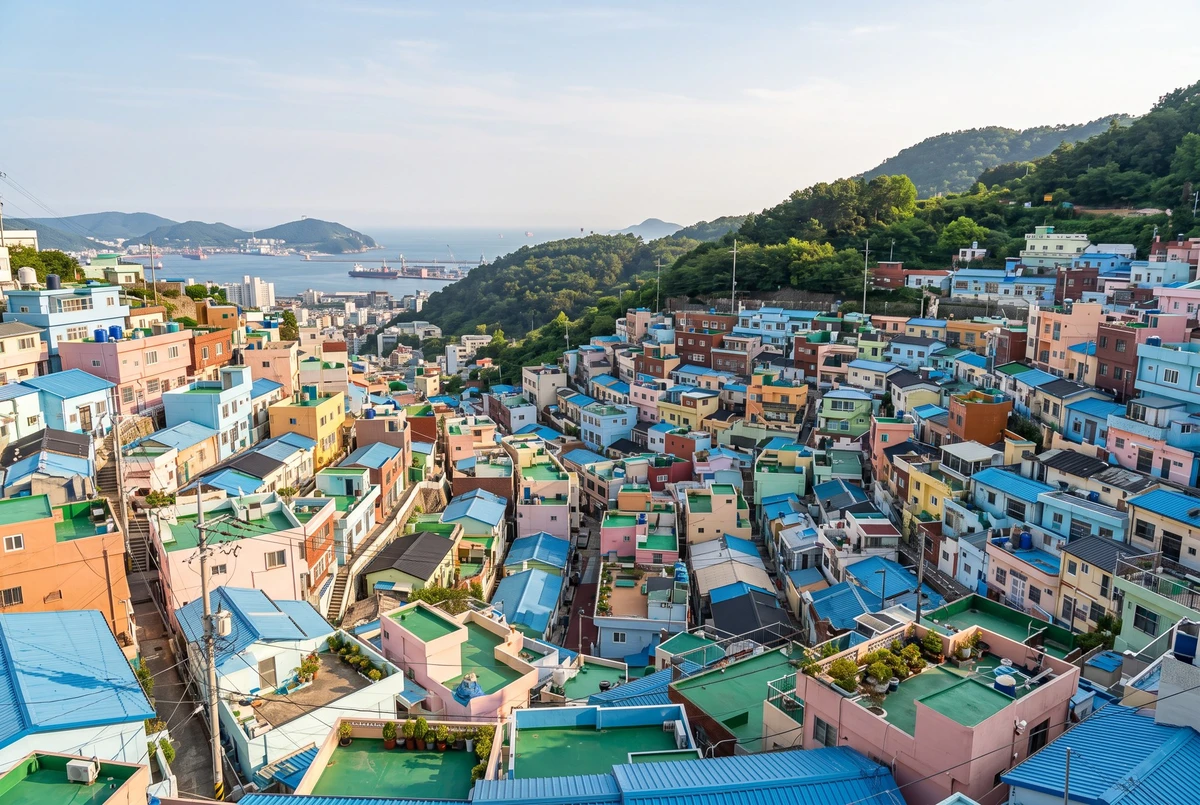
Ihwa Mural Village spreads over the lower slopes of Naksan, a modest hillside neighbourhood of narrow stairways and low houses that changed in 2006, when a public art project invited artists to paint murals and place sculptures along its lanes. The painted stairways soon became some of the most photographed spots in Seoul, and many visitors still ask whether Ihwa Mural Village is worth visiting.
The crowds brought problems for residents, and in 2016 some of the best-known stairway paintings were covered over as a request for calm. Many murals, small sculptures and playful details remain, and in the evening the lanes are quiet and full of atmosphere, which is the best time to see them. Your guide shows you the finest corners for photos and explains the balance between art, tourism and everyday life on the hill. Please keep your voice low: people live behind every door.
Naksan Park and the Feng Shui of Seoul
Naksan, 'camel mountain', takes its name from its rounded shape, said to resemble a camel's hump. It is one of four inner mountains that frame the historic city: Bugaksan to the north, Inwangsan to the west, Namsan to the south and Naksan to the east. When the founders of the Joseon dynasty moved their capital to this valley in 1394, they followed pungsu, the Korean form of feng shui, which saw Naksan as the Blue Dragon guarding the east.
At Naksan Park your guide unfolds this map of mountains, water and palaces so that the layout of central Seoul suddenly makes sense, from the position of Gyeongbokgung Palace to the course of the Cheonggyecheon stream. The hill rises to about 125 metres, and its terraces give the first wide view over the rooftops of Jongno and the towers beyond. The park is open around the clock and is a favourite evening spot for local families and couples.
Hanyang City Wall at Night
The Hanyang City Wall, also called the Seoul City Wall, was built in 1396 to protect the new capital and runs for about 18.6 kilometres along the ridges of the four inner mountains. Repaired and rebuilt over five centuries, it tells its history in the stones themselves: rough natural blocks from the first construction, neater stones from the 1420s and large, precisely cut granite blocks from the early 1700s.
The Naksan section is one of the most rewarding stretches of the wall to walk after dark. A path runs right beside the illuminated stones, and as you climb the city opens below you: the lights of Dongdaemun, the dark ridge of Bugaksan and the tower on Namsan glowing in the distance. This is the high point of the walk and where most photos are taken. Expect some steep steps; the guide keeps a gentle pace and stops often to tell the story of the wall.
Itinerary
- Meet at Hyehwa Station Exit 2Meet your guide outside the exit at 16:30 for a short introduction to the walk.
- Marronnier Park and Daehak-roAbout 20 minutes on the old university grounds and the theatre streets.
- Ihwa Mural VillageAbout 20 to 30 minutes on the painted lanes and stairways, walking quietly through the neighbourhood.
- Naksan ParkAbout 20 minutes for the view and the story of how the site of Seoul was chosen.
- Hanyang City WallAbout 40 minutes walking beside the illuminated wall with night views over the city.
- End of the walkThe tour finishes on the city wall route after about two hours, and your guide shows you the way back to the subway.
What's included
- Guided walk with a local historian guide in English
- Marronnier Park and the old Seoul National University area
- Ihwa Mural Village
- Naksan Park and the story of Seoul's location
- Hanyang City Wall with night views over Seoul
- Stories about Korean history and society
- Hot packs in the winter season
Not included
- Hotel pickup and drop-off
- Food and drinks
- Tips (optional)
Is this right for you?
Great for
- Families with children — a child price for ages 3–11
- First-time visitors who want the highlights
- A short visit — about 2 hours
- Travellers who want a proven choice — rated 4.9/5 by past travellers
Think twice if
- You want a private tour — this one is shared with other travellers
- Walking is difficult for you — expect active parts
Not suitable for
- People with mobility impairments
- People over 70 years
- Travellers who find long or steep stairs difficult
Meeting point
Meet your guide outside Hyehwa Station Exit 2 (subway Line 4) in the Daehak-ro area; the guide waits just outside the exit. The current start time is 16:30, and we ask you to arrive 10 minutes early. There is no hotel pickup, but Hyehwa is easy to reach on Line 4 from Myeongdong, Seoul Station or Dongdaemun. The walk finishes on the city wall route, and your guide points you to the nearest subway station.
Important information
- The route includes steep stairs; wear flat, comfortable walking shoes
- High-heeled shoes are not allowed
- Ihwa Mural Village is a residential area: speak quietly and stay out of private doorways
- Bring a light jacket, as evenings on the hill are cooler and windier
- Hot packs are provided in winter, but dress warmly from December to February
- Food and drinks are not included; carry a bottle of water
- Bring an umbrella and non-slip shoes if rain is forecast, as the stone steps get slippery
Good to know
Frequently Asked Questions
Straight answers to what travellers ask us most, before they book.
Is this a shared or a private experience?
It is a shared group walking tour: you join other travellers with a local historian guide who leads the walk in English.
How long does it take?
About two hours from Hyehwa Station Exit 2. The pace is slow, with regular stops for stories and photos.
Is hotel pickup included?
No. You meet the guide outside Hyehwa Station Exit 2, which is easy to reach by subway Line 4.
What is included?
A local historian guide in English, the walk through Marronnier Park, Ihwa Mural Village, Naksan Park and along the Hanyang City Wall, stories about Korean history and society, and hot packs in winter. Food, drinks and hotel transfers are not included.
Is the price per person or per group?
The tour is priced per person. The booking panel on this page shows the current price.
Is it suitable for children or travellers with reduced mobility?
Children who can manage steep stairs are welcome with an adult. Because of the climbs, the walk is not suitable for people with mobility impairments or travellers over 70.
What should I bring?
Flat walking shoes, a light jacket, water, a phone or camera for night photos and an umbrella if rain is forecast.
What is the best time of year for this walk?
Autumn and winter are ideal, because darkness falls during the walk and the city lights shine below the wall. Spring evenings are mild and pleasant. In midsummer the sky is still light at the end, so you see Seoul in soft evening light rather than full darkness.
What happens in bad weather?
The walk goes ahead in light rain, so bring an umbrella and shoes with good grip. If severe weather makes the route unsafe, we contact you to arrange another date.
Is Ihwa Mural Village worth visiting at night?
Yes. In the evening the lanes are calm, the murals and sculptures are easy to photograph without crowds, and the climb leads straight to the best viewpoints on the city wall.
How do I get to Naksan Park and the Hanyang City Wall?
Naksan Park is a short uphill walk from Hyehwa Station Exit 2. On this tour your guide leads the way, so you reach the park and the illuminated wall without searching for the paths yourself.
How do I book and confirm?
Choose your date in the booking panel and send your request. Our team confirms your booking on WhatsApp within minutes.
More in Seoul