Half-Day Gyeongbokgung & Bukchon Walking Tour with Hanbok Option Seoul
- Duration4 hours
- Daily
- Group
- Pickup available
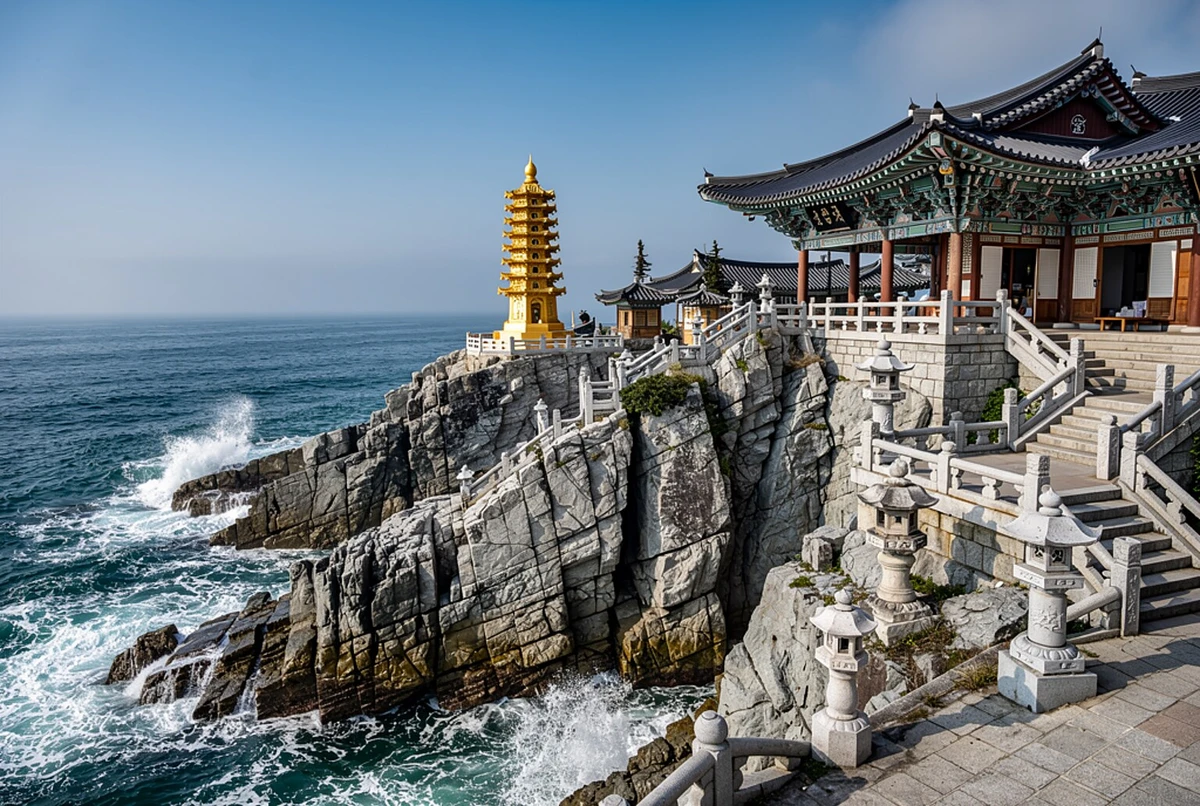
Some images are AI-generated for illustration. While we confirm your booking, just ask and we will send you the original photos.
- Fair, honest prices
- Real people, not bots
- Confirm, then pay
- Secure payment

Overview
This half-day Seoul walking tour lets you explore the royal heart of the city dressed for it. You start by changing into a traditional hanbok at a rental shop near the palace, then visit Gyeongbokgung Palace with a historical guide, watch the Changing of the Guard ceremony and stop briefly at the National Palace Museum of Korea. A short vehicle transfer takes you up to Bukchon, where you rest over traditional tea and a yakgwa honey cookie above the hanok rooftops, wander the lanes of Bukchon Hanok Village and step inside a preserved early 20th-century upper-class house. The default option is a shared small-group tour of up to 15 people with all entrance fees included and no hotel pickup. Other options skip the hanbok or go private with hotel pickup.
Highlights
- Dress in a traditional hanbok for the whole tour
- Guided visit to Gyeongbokgung, the main royal palace of the Joseon dynasty
- Watch the colourful Changing of the Guard ceremony at the palace gate
- Short stop at the National Palace Museum of Korea
- Traditional tea and a yakgwa honey cookie in a hanok café above Bukchon
- Stroll the lanes of Bukchon Hanok Village with a historian guide
- Step inside the Baek In-je House, a preserved early 20th-century hanok
- Small group of up to 15, with all entrance fees included
Full Description
Hanbok Rental near Gyeongbokgung
The tour begins with something many visitors to Seoul look forward to: choosing a hanbok, the traditional Korean dress, at a rental shop a few minutes from the palace. Women's hanbok pair a short jacket called jeogori with a full, high-waisted skirt, the chima, while men's sets combine a jacket with loose trousers called baji and often a long vest. Staff help you pick colours and fit, and about 30 minutes are set aside for changing.
Wearing hanbok is not a costume game in Seoul but a much-loved way to visit the palaces, and you will see local students and families dressed the same way. It turns every courtyard into a photo backdrop and makes the morning feel like a step into the Joseon era. Makeup and hair styling are not part of the package. If you prefer your own clothes, another option follows the same route without hanbok.
Gyeongbokgung Palace and the Changing of the Guard
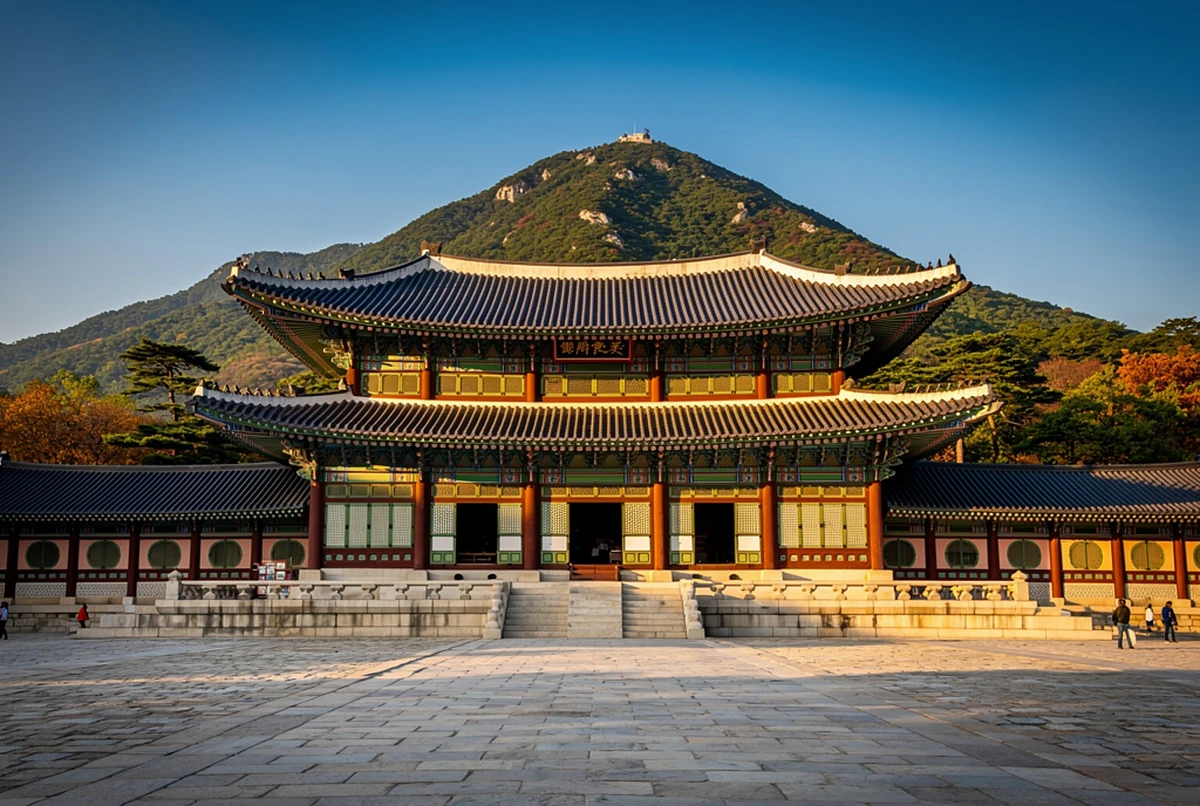
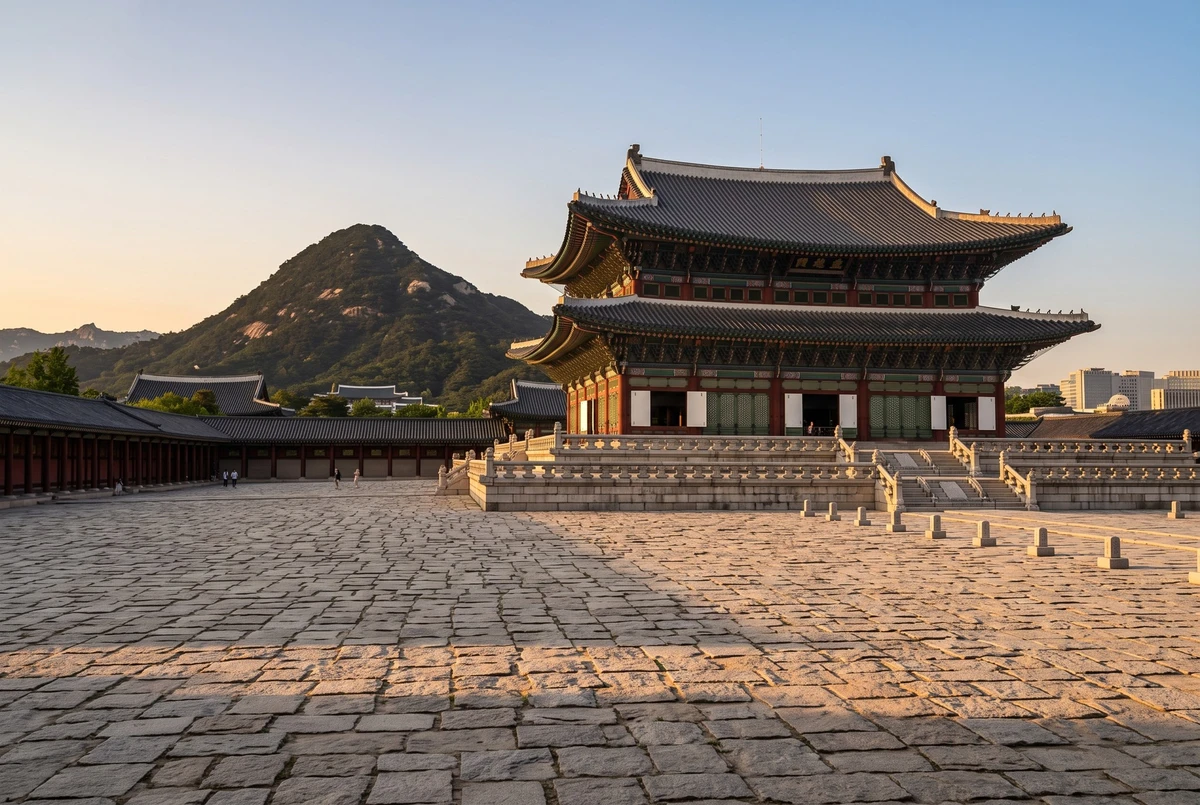
Gyeongbokgung, the 'Palace Greatly Blessed by Heaven', was built in 1395 as the main royal palace of the Joseon dynasty. It burned during the invasions of 1592, lay in ruins for more than two centuries and was rebuilt in 1867, only to be largely demolished again under colonial rule. A restoration programme running since 1990 has brought back many of its halls, including the stately throne hall Geunjeongjeon and the Gyeonghoeru pavilion standing on stone pillars in its lotus pond.
Your guide explains how the king ruled, lived and received envoys as you pass through Gwanghwamun and Heungnyemun gates into the inner courtyards, where rows of stone markers show where officials of each rank stood. For many the highlight is the Royal Guard Changing Ceremony, performed at the main gate in bright Joseon uniforms with drums and banners. Around an hour and a half is spent in and around the palace, which is closed on Tuesdays.
National Palace Museum of Korea
Beside the palace grounds, the National Palace Museum of Korea keeps the treasures of the Joseon royal court: royal seals and documents, the painted screens of the sun, moon and five peaks that stood behind every throne, court robes, scientific instruments such as water clocks and sundials, and the royal palanquins used on ceremonial processions. It is one of the best places in Seoul to understand how the court looked and worked.
On this tour the museum is a short stop on the way out of the palace, enough for your guide to show a few key pieces that bring the palace story to life. On Mondays, when the Baek In-je House is closed, the group spends longer here instead. The museum is also easy to revisit on your own later, as it lies only a few minutes' walk from Gyeongbokgung Station.
Bukchon Hanok Village
Between Gyeongbokgung and Changdeokgung palaces lies Bukchon, the 'northern village', where high officials and nobles of the Joseon court lived close to the king. Most of the hanok houses you see today date from the 1920s and 1930s, when old estates were divided into smaller plots and builders created a denser urban hanok with tiled roofs, wooden beams and inner courtyards. The best-known views are along the sloping lanes of Bukchon-ro 11-gil, which frame tiled roofs against the towers of central Seoul.
A short vehicle ride takes you up from the palace, and the first stop is a relaxing break in a hanok café inside a small culture museum, with traditional Korean tea and yakgwa, a honey cookie fried and then soaked in syrup, while you look out over the rooftops. Then you wander the lanes for about 30 minutes. Bukchon is a living neighbourhood: in its busiest lanes visitors are welcome only from 10:00 to 17:00, which this tour respects, and your guide asks for quiet voices.
Baek In-je House
The visit ends at the Baek In-je House, one of the finest surviving upper-class houses in Bukchon. Built in 1913, it blends a traditional hanok plan with new ideas of its time: a two-storey wing, long glazed corridors linking the rooms and Japanese-influenced details, all set around a garden with a separate annex on higher ground. It carries the name of a physician who owned it from the 1940s, and the city of Seoul opened it to the public as a house museum in 2015.
Your guide shows how wealthy families lived in the early 20th century, when Korean, Japanese and Western ways met, from the men's and women's quarters to the heated ondol floors. Allow about 30 minutes. The house is closed on Mondays, when the tour spends extra time at the museum instead. From here it is a short walk down to Insa-dong, where the tour finishes, an easy area for crafts, galleries and lunch.
Itinerary
- Meet at Gyeongbokgung Station Exit 4Meet your guide at 08:40 or 12:40 in front of the bench outside the exit; the guide holds a sign with the tour name.
- Hanbok rentalAbout 30 minutes to choose your hanbok and get dressed at a nearby rental shop.
- Gyeongbokgung PalaceAbout an hour and a half of guided visit, including the Changing of the Guard ceremony and photos in hanbok.
- National Palace Museum of KoreaA short stop for a few royal treasures; longer on Mondays.
- Vehicle transfer to BukchonAbout 20 minutes up the hill to Bukchon.
- Hanok café breakAbout 30 minutes with traditional tea and yakgwa, overlooking the rooftops.
- Bukchon Hanok VillageAbout 30 minutes walking the hanok lanes with your guide.
- Baek In-je HouseAbout 30 minutes inside the preserved early 20th-century house (closed on Mondays).
- End in Insa-dongThe tour finishes in Insa-dong, close to the subway.
What's included
- Historical guide speaking English
- Gyeongbokgung Palace with the Changing of the Guard ceremony
- Short stop at the National Palace Museum of Korea
- Break at a hanok café in Bukchon with traditional tea and yakgwa honey cookie
- Walk through the lanes of Bukchon Hanok Village
- Visit to a preserved early 20th-century upper-class hanok house
- Vehicle transfer from the palace to Bukchon
- All entrance fees
Not included
- Hanbok rental
- Hotel pickup and drop-off
- Makeup and hair styling
- Shopping
Is this right for you?
Great for
- Families with children — a child price for ages 3–11
- Travellers without a car — hotel pickup is included
- Groups who want privacy — a private option is available
- History and culture lovers
Think twice if
- Walking is difficult for you — expect active parts
Not suitable for
- Wheelchair users, as the route includes steps, gravel paths and steep lanes
- Travellers who cannot walk for about two hours in total
Meeting point
Meet in front of the bench outside Gyeongbokgung Station Exit 4 (subway Line 3), where your guide holds a sign with the tour name. The hanbok option starts at 08:40 or 12:40; please arrive 10 minutes early, as dressing takes time. Hotel pickup is not part of the default option; the private option collects you from your Seoul hotel. The tour ends in Insa-dong, a short walk from Anguk and Jonggak subway stations.
Important information
- Gyeongbokgung Palace is closed on Tuesdays
- Baek In-je House is closed on Mondays; Monday tours spend more time at the National Palace Museum
- Allow time for putting on and returning the hanbok
- Makeup and hair styling are not included
- Wear comfortable flat shoes for the palace gravel and the slopes of Bukchon
- Bukchon is a residential area: keep voices low and stay out of private doorways
- The transfer to Bukchon may be made by taxi when the group is small
- The tour runs in rain or snow, and the schedule may shift slightly with local conditions
Good to know
Frequently Asked Questions
Straight answers to what travellers ask us most, before they book.
Is this a shared or a private experience?
The default option is a shared small-group walking tour of up to 15 people. A private option for your group adds hotel pickup and a private vehicle, visiting Gyeongbokgung and Namsangol Hanok Village (Bukchon on Mondays).
How long does it take?
About 4 hours, from the meeting at Gyeongbokgung Station to the end in Insa-dong.
Is hotel pickup included?
Not in the default option, which meets at Gyeongbokgung Station Exit 4. The private option includes hotel pickup and drop-off in Seoul.
What is included?
Hanbok rental, an English-speaking historical guide, Gyeongbokgung Palace with the Changing of the Guard, a short stop at the National Palace Museum of Korea, tea and yakgwa in a hanok café, the Bukchon walk, the Baek In-je House, the vehicle transfer from the palace to Bukchon and all entrance fees.
Is the price per person or per group?
The shared options are priced per person and the private option per group. The booking panel on this page shows the current price of each option.
Is it suitable for children or travellers with reduced mobility?
Children are welcome with an adult; tell us their sizes when booking so a suitable hanbok can be ready. The palace gravel, steps and steep Bukchon lanes make the tour unsuitable for wheelchair users.
What should I bring?
Comfortable flat shoes, a small bag, your phone or camera, sunscreen in summer and a warm layer to wear under the hanbok in winter.
What time is the Changing of the Guard at Gyeongbokgung?
The ceremony is held at Gwanghwamun Gate at 10:00 and 14:00 on the days the palace is open, and lasts about 20 minutes. Both tour departures are timed so you can watch it.
When is the best time to visit Gyeongbokgung Palace?
Spring blossom in April and autumn colours in late October and November are the most beautiful seasons. Mornings are quieter and cooler, while the afternoon tour suits late risers.
Can I visit Bukchon Hanok Village at any time?
In the busiest lanes of Bukchon visitors are welcome only from 10:00 to 17:00, to protect residents. This tour visits within those hours.
What happens in bad weather?
The tour runs in rain or snow. Bring an umbrella; the hanok café and the house museum offer shelter along the way.
How do I book and confirm?
Choose your option, date and start time in the booking panel and send your request. Our team confirms your booking on WhatsApp within minutes.
More in Seoul