
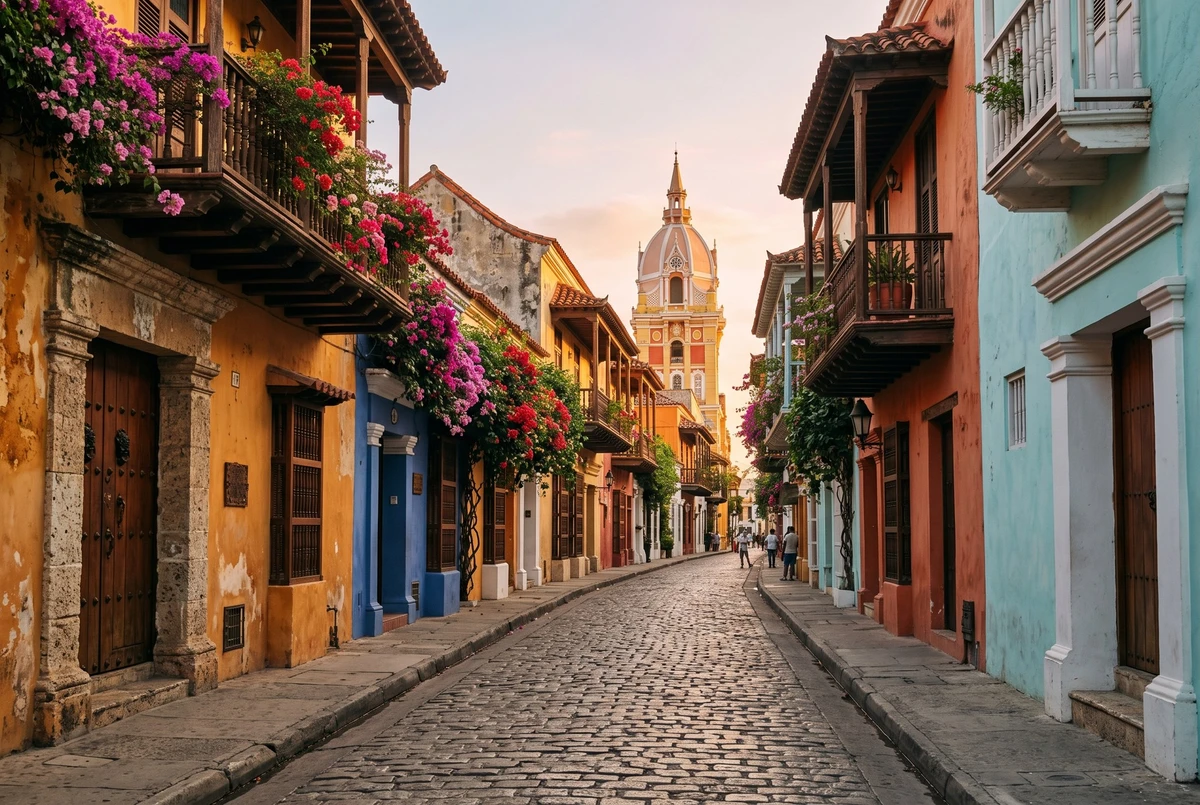
Cartagena
Plan Cartagena with Haqqi Tours: day tours, private airport transfers, attraction tickets and packages, run by our own team and confirmed on WhatsApp in Arabic or English.
In Cartagena the past is never far beneath your feet. Walk down the marble-paved Calle Mayor in the morning and you pass elegant modernist façades with glass balconies, then turn a corner to find the tiers of a Roman theatre rising from the hillside. Naval cadets cross the square in white uniforms, ferries slip out of the deep natural harbour between brown hills crowned by forts, and the scent of fresh bread and coffee drifts from the cafés.
Nothing matches those filters yet. Widen your search or message us on WhatsApp.
Cartagena Attraction Tickets
View allCartagena at first sight
Cartagena was founded around 227 BC by the Carthaginian general Hasdrubal as Qart Hadasht, the New City, and conquered by Rome soon after to become Carthago Nova, a great port of Roman Spain. Over the centuries it served Byzantines, Muslims and the Spanish crown, becoming the main naval base of the Mediterranean coast. Rediscovered treasures and careful restoration have turned this city in the Region of Murcia into one of Spain's most rewarding open-air history books.
Why include Cartagena in your itinerary?
- Three thousand years in one walk. The Roman Theatre, the Forum district, the Punic Wall, a Roman villa and Civil War shelters lie within a compact old town, each brought to life by excellent museums and interpretation centres.
- A naval city full of character. The Arsenal, the harbour forts and an early submarine tell the story of a city shaped by the sea, with handsome modernist buildings from its mining boom.
- Beaches and lagoons nearby. The Mar Menor, the protected coves of Calblanque and the clear waters of Cabo de Palos are all within around half an hour.
Signature experiences in Cartagena
The Roman Theatre and its Museum
Hidden for centuries beneath houses and the ruins of the old cathedral, Cartagena's Roman Theatre was rediscovered only in 1988. Built at the end of the first century BC, it seated around six thousand spectators. Today a striking museum by the architect Rafael Moneo leads you through galleries and underground passages before you step out onto the stage itself, looking up at the restored seating carved into the hill. It is the highlight of any visit.
The Concepción Castle and the Panoramic Lift
Crowning the highest hill of the old town, the medieval Concepción Castle offers the finest views over the city, the Roman Theatre and the natural harbour with its ring of fortified hills. A modern panoramic lift whisks visitors up in seconds from street level, and inside the keep an interpretation centre tells the history of Cartagena from Carthaginian times. Peacocks wander the gardens of the park around the walls.
The Roman Forum District and the Punic Wall
On the slopes of the Molinete hill, archaeologists have uncovered a whole Roman neighbourhood of streets, public baths, a meeting hall and colourful painted walls, now protected under a light modern roof. Nearby, the Punic Wall interpretation centre preserves a section of the original Carthaginian fortifications. Together with the Roman villa known as the House of Fortune and the Augusteum, they reveal daily life in ancient Carthago Nova.
The Arsenal, the Naval Museum and the Harbour
Cartagena's long naval history comes alive along the harbour. The Naval Museum displays the Peral submarine, one of the first electrically powered submarines, launched in 1888, while the National Museum of Underwater Archaeology shows treasures from ancient shipwrecks in a bright modern building. Stroll the waterfront promenade past the Arsenal walls and take a short harbour boat ride to see the forts guarding the entrance.
Modernist Streets and the Civil War Shelter
A mining boom around 1900 filled Cartagena's streets with elegant modernist buildings, from the wedge-shaped Town Hall to the decorated façades along Calle Mayor and the Plaza de San Francisco. Beneath the castle hill, a former air-raid shelter dug during the Spanish Civil War has become a moving museum about life in the city under bombing. Our private guides weave these stories into a walk through the centre.
Neighbourhoods and quarters to know in Cartagena
Calle Mayor and the Old Town
The pedestrian heart of Cartagena around Calle Mayor, the Town Hall square and the harbour promenade is the best base for first-time visitors, with hotels, cafés, shops and the main museums all within a few minutes' walk. It is lively by day, especially when cruise ships are in port, and calm and pleasant in the evening.
The Roman Quarter and the Molinete
The streets around the Roman Theatre, the Forum district and the Molinete hill mix ancient ruins with restored houses, small squares and local eateries. Staying here puts you right among the archaeological sites and close to the castle lift, with a quieter, more residential feel after the museums close.
The Ensanche
North of the old walls, the Ensanche is the modern city of wide avenues, shopping streets and parks, around the Alameda de San Antón and the railway station. It suits travellers who want practical hotels, easy parking and a local atmosphere, with the old town a short walk or taxi ride away.
Cabo de Palos and La Manga
About thirty minutes east, the fishing village of Cabo de Palos and the long sandy strip of La Manga between the Mediterranean and the Mar Menor lagoon offer beach hotels and apartments. It is the choice for a sun-and-sea stay, with snorkelling and diving in the marine reserve and easy day trips into Cartagena.
How long to stay in Cartagena and how to pair it
Recommended stay
We recommend two nights in Cartagena. One day for the Roman Theatre, the Forum district, the castle and the panoramic lift, and a second for the Naval Museum, the Museum of Underwater Archaeology and the modernist streets. Add one or two more nights to enjoy the beaches of Calblanque, Cabo de Palos and the Mar Menor, or combine the city with Murcia.
How to pair it
Cartagena pairs naturally with Murcia, around forty-five minutes inland, for its Baroque cathedral and orchard landscape. The Mar Menor lagoon and the beaches of La Manga and Calblanque are close by, and Alicante lies about an hour and a half to the north. A week can combine Alicante, Cartagena, Murcia and the Costa Cálida beaches, with private transfers arranged by our team.
Best time to visit Cartagena and the rhythm of the day
Best months
The best time to visit Cartagena is spring and autumn, from March to June and September to November, when the weather is warm and sunny, ideal for walking and sightseeing. Summer is hot and the beaches are at their best. Winters are mild and bright. Holy Week brings some of Spain's most famous processions, and late September the colourful festival of Carthaginians and Romans.
The daily rhythm
Cartagena follows a Mediterranean rhythm. Mornings are the best time for the Roman Theatre and the castle, before the heat and the cruise passengers. Many shops close for a long lunch break in the afternoon, when the locals rest. In the early evening the city comes alive again, families stroll Calle Mayor and the harbour promenade, and dinner is served late, rarely before nine.
On-the-ground logistics in Cartagena
Arrival
Región de Murcia International Airport (RMU) is the closest airport to Cartagena, about thirty minutes by road. Alicante-Elche Airport (ALC), with many more international flights, is around one hour and fifteen minutes away along the coastal motorway. We arrange private transfers that meet you at arrivals and drive you directly to your hotel in Cartagena or on the coast at La Manga and Cabo de Palos.
Getting around
The old town of Cartagena is compact and flat around the harbour, so most sights are easy to reach on foot, with the panoramic lift saving the climb to the castle. A tourist bus and boat run between the main sights in season. Local buses link the city with Cabo de Palos and La Manga. For Calblanque, the Mar Menor, the coastal batteries or Murcia, a private car with driver arranged by our team is the most comfortable choice.
Local etiquette tip
Cartagena is friendly and relaxed, with deep pride in its history and navy. Greet people with buenos días or buenas tardes, and expect late meal times. Dress modestly when visiting churches and Holy Week processions, which are deeply religious events. Swimwear is for the beach only. Tipping is not obligatory in Spain, but rounding up or leaving a few coins for good service is appreciated.
Must-do things in Cartagena
- Step onto the stage of the Roman Theatre
- Ride the panoramic lift up to the Concepción Castle
- Walk among the ruins of the Roman Forum district
- See the Carthaginian stones of the Punic Wall
- Visit the Peral submarine at the Naval Museum
- Explore ancient shipwreck finds at the underwater museum
- Stroll Calle Mayor past its modernist façades
- Descend into the Civil War air-raid shelter
- Swim in the protected coves of Calblanque
- Watch the sunset over the harbour from the waterfront
Do’s and don’ts in Cartagena
Do
- Do visit the museums early in the morning
- Do check opening days of the sites
- Do wear comfortable shoes for the hills
- Do carry water and sunscreen in summer
- Do try the local rice dish called caldero
Don’t
- Don't expect shops open during siesta hours
- Don't wear swimwear away from the beach
- Don't miss the view from the castle
- Don't plan dinner before nine in the evening
- Don't rush Cartagena as a cruise stop only
Cartagena at a glance
Plan Cartagena with Haqqi Tours
Every option is confirmed by our team on WhatsApp before you pay, and delivered by our own people or by trusted local partners we work with in every city. Because we send travellers from all over the world, our partners give us special rates and priority, so you always receive the best. Prices are per person unless marked per vehicle.
About Haqqi Tours: About us Contact us Legal NoticePrivacy PolicyCookies & Marketing PreferencesTerms & ConditionsBooking, Payment & Refunds
More services in Cartagena
Where we operate in Spain
- Barcelona
- Mallorca
- Tenerife
- Malaga
- Madrid
- Seville
- Gran Canaria
- Valencia
- Lanzarote
- Fuerteventura
- Granada
- Bilbao
- Benidorm
- Córdoba
- Ibiza
- Salou
- Alicante
- Marbella
- La Palma
- Menorca
- Nerja
- Sant Feliu de Guíxols
- Almería
- Jerez de la Frontera
- Lloret de Mar
- San Sebastián
- Santiago de Compostela
- Toledo
- Cádiz
- La Herradura
- Montserrat
- O Grove
- Santander
- Tarifa
- Torrevieja
- Blanes
- Cangas de Onís
- Comillas
- Dénia
- Figueres
- Fuengirola
- Gijón
- Jávea
- L'Estartit
- Murcia
- Oviedo
- Roses
- Santa Pola
- Tossa de Mar
Good to know
Frequently Asked Questions
Straight answers to what travellers ask most about Cartagena.
Where should I stay in Cartagena?
Most visitors stay in the old town around Calle Mayor and the harbour, close to the Roman Theatre, the museums and the cafés. The Roman quarter is atmospheric and quieter at night, the Ensanche is practical with modern hotels, and Cabo de Palos or La Manga suit a beach holiday. Our team suggests the best area for your plans and arranges your private transfer from Murcia or Alicante Airport.
Is Cartagena worth visiting?
Yes. Cartagena is one of Spain's most underrated cities, with a spectacular Roman Theatre, a whole Roman neighbourhood, Carthaginian walls, a medieval castle and fascinating naval history, all in a compact and walkable centre. It is far calmer than the big cities of the coast, with beautiful beaches nearby. We arrange private tours and transfers.
What is the dress code and etiquette in Cartagena?
Dress is casual and light for the warm climate, with comfortable shoes for hills and stairs. Cover shoulders and knees in churches and during religious processions, and keep swimwear for the beach. Spaniards are warm and sociable, meal times are late, and a friendly greeting when entering shops is appreciated.
Is Cartagena suitable for families and Muslim travellers?
Yes. Children enjoy the castle lift, the submarine, the Roman ruins and the shallow waters of the Mar Menor. The region has a sizeable Moroccan community, so there are mosques and halal butchers in Cartagena and Murcia, though halal restaurants are fewer. Fresh fish, rice dishes and vegetables are easy to find, and our team can recommend suitable restaurants.
Is it safe to travel to Cartagena now?
Cartagena and Spain are generally considered very safe for travellers. Take normal care with belongings in busy areas and on beaches, use sun protection in summer and drink plenty of water. Check your own government's official travel advice before departure, and keep our WhatsApp line handy throughout your stay.
What are the must-do things in Cartagena?
The must-do things in Cartagena include the Roman Theatre and its museum, the Concepción Castle and the panoramic lift, the Roman Forum district, the Punic Wall, the Naval Museum, the Museum of Underwater Archaeology, Calle Mayor and the Civil War shelter, plus the beaches of Calblanque and Cabo de Palos. Our private tours combine these in the best order and timing.
How many days do you need in Cartagena?
Two days is ideal for Cartagena: one for the Roman Theatre, the Forum district and the castle, and one for the naval and underwater museums and the modernist streets. One full day covers the highlights at a quicker pace, while three or four days allow time for the beaches, the Mar Menor and a visit to Murcia.
What can I book in Cartagena with Haqqi Tours?
Attraction tickets. Each has its own page, and the WhatsApp desk combines any of them into one plan with one written price.
How do I get from the airport to my hotel in Cartagena?
With a private transfer: a driver at arrivals, flight tracking and a fixed price for the whole vehicle, door to door. Tell the desk the flight number and the hotel.
Is there public transport from the airport to Cartagena?
Cartagena has no train; buses and shared minivans serve the airport, but the terminal is so close to the Walled City that a private car is quick and simple, and it is the practical choice for Bocagrande, the cruise port, the Rosario pier or the long drives to Playa Blanca and Santa Marta. With luggage, a family or a late flight, the private car is the simpler choice.
Which tours are available in Cartagena?
Tours in Cartagena are arranged on request by the desk - tell us what you want to see and how many days you have.
Are the tours private or in a group?
Both exist, and each tour page says which. A private tour has a vehicle and guide for your party alone; the desk can make most group tours private on request.
How do I book?
Fill in the form on any page or message us on WhatsApp with the date, the number of travellers and the hotel. A member of our team confirms the price and the details in writing within minutes.
Are the prices fixed?
Yes - every price is agreed in writing on WhatsApp before you travel and does not change on the day.
Do the drivers and guides speak Arabic or English?
It depends on the city and the day, so we do not promise a particular language; tell us your preference and we do our best. The WhatsApp desk always works in Arabic and English.
Can I change or cancel a booking in Cartagena?
Yes, in the same WhatsApp conversation. The terms depend on the product and on how close to the date the change comes; the desk states them before you pay.