
Seville
Plan Seville with Haqqi Tours: day tours, private airport transfers, attraction tickets and packages, run by our own team and confirmed on WhatsApp in Arabic or English.
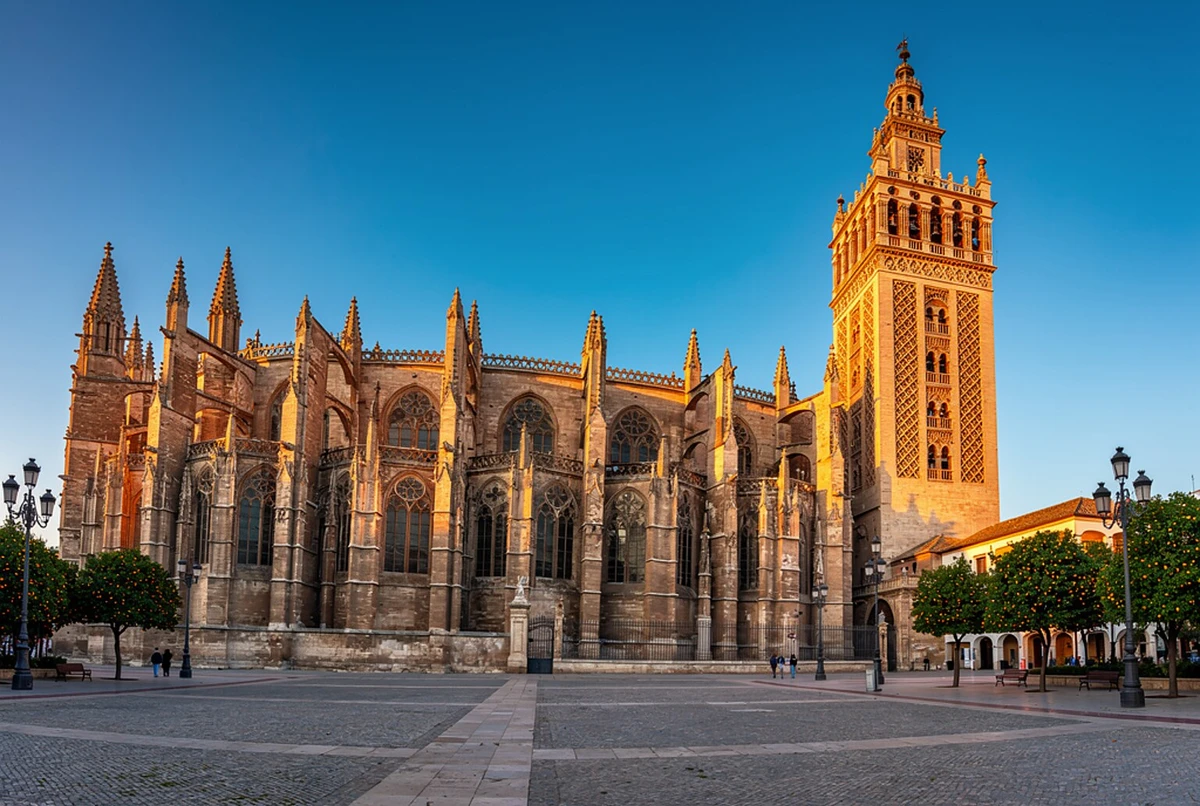
Step out of your Seville hotel on a spring morning and the scent reaches you first: orange blossom, the azahar, drifting from the thousands of trees that line the plazas. Church bells answer each other across terracotta rooftops, a café owner rattles up his shutter, and in the narrow lanes of Santa Cruz the whitewashed walls still hold the coolness of the night. Above it all rises the Giralda, glowing honey-gold in the early sun.
Nothing matches those filters yet. Widen your search or message us on WhatsApp.
Seville Day Tours
View all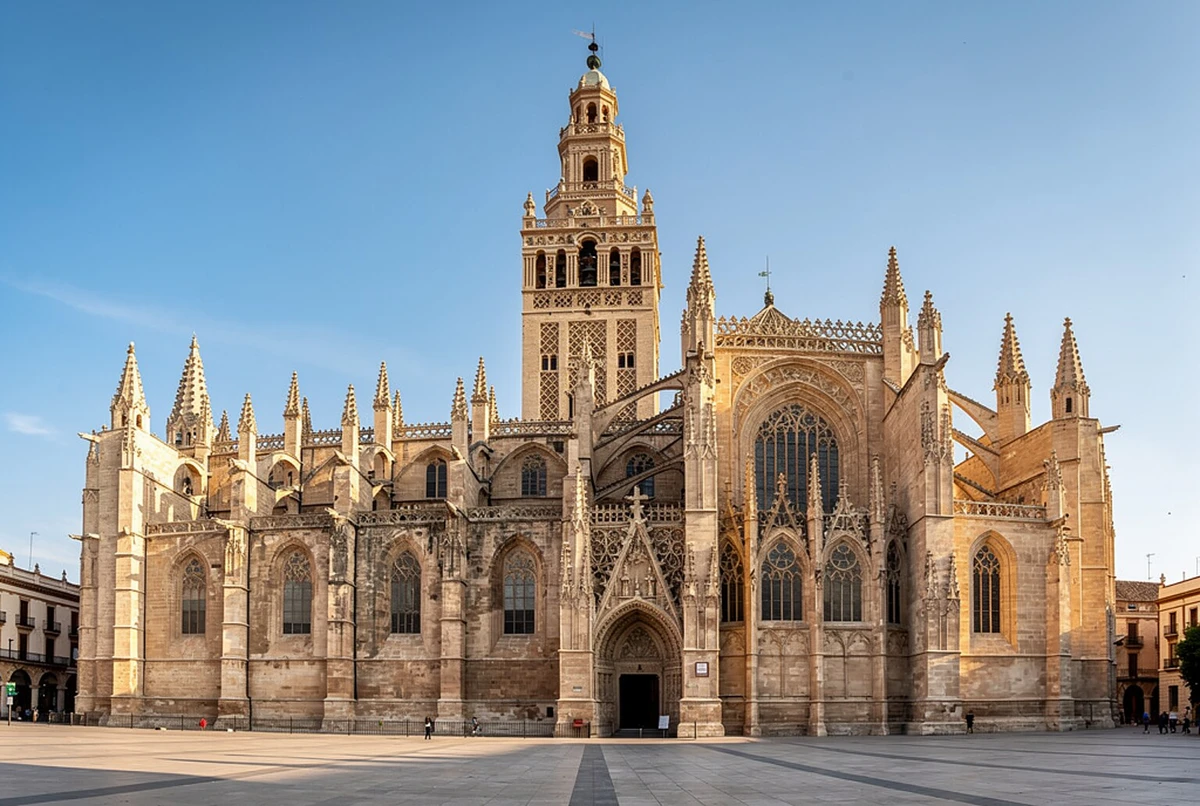

Seville Attraction Tickets
View all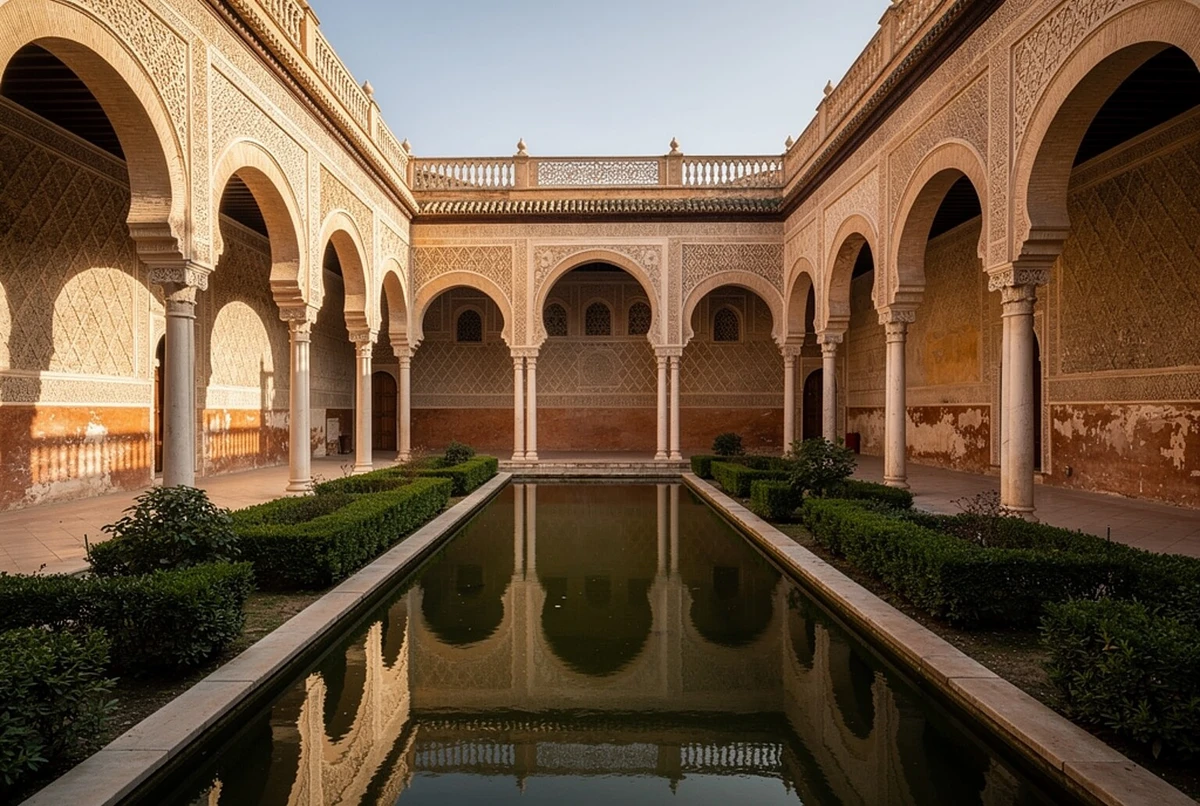
Seville Airport Transfers
View all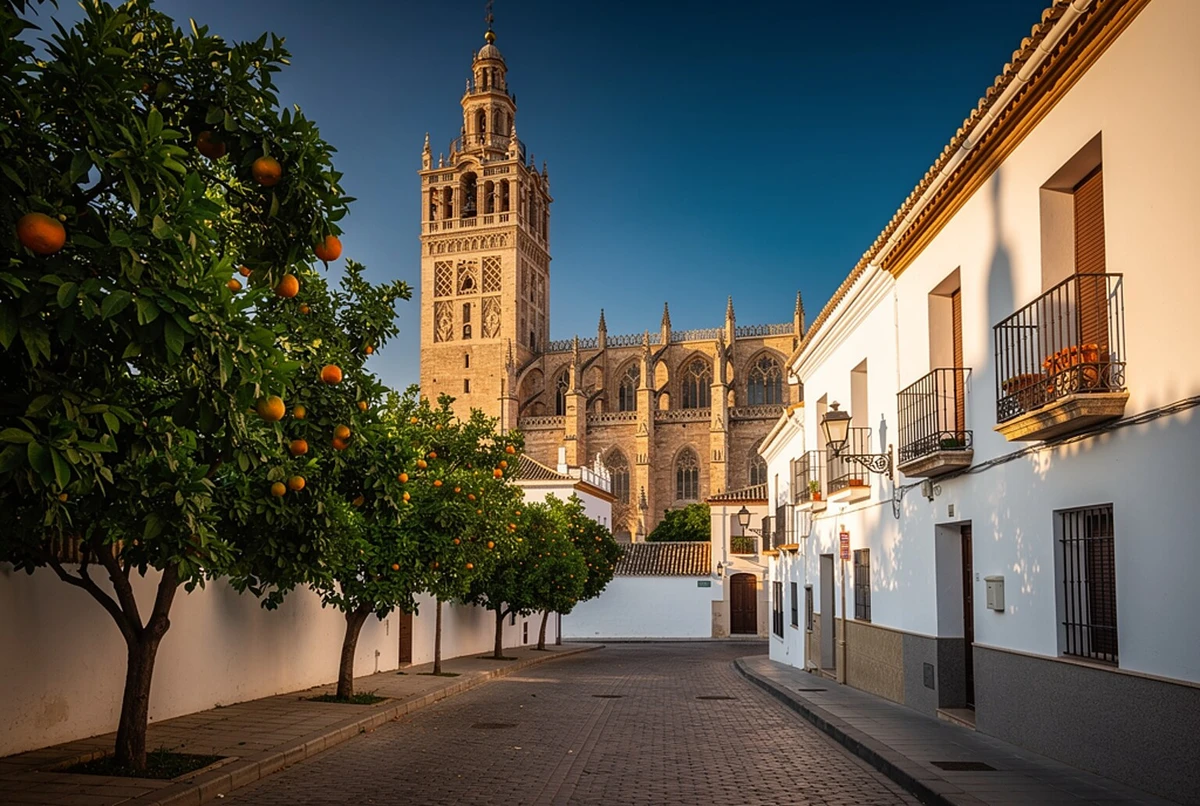



Seville Flight Tickets
View all


Seville Train Tickets
View all 

Seville at first sight
Seville is the soul of Andalusia: once the Almohad capital of al-Andalus, then the river port that controlled Spain’s trade with the Americas, today the city of flamenco, painted tiles and passionate festivals. Its story is written in stone, from Moorish palaces to baroque churches, and few European cities wear their layered history so gracefully.
Why include Seville in your itinerary?
- Seville holds three UNESCO World Heritage monuments side by side: the Real Alcázar, still a royal residence; the vast Gothic Cathedral with its Giralda tower, once an Almohad minaret; and the Archive of the Indies, which records Spain’s empire in the Americas.
- Seville is the beating heart of flamenco. In Triana and the old quarters you can feel the raw emotion of cante jondo and thunderous footwork in intimate venues, a passion that defines Andalusia and is woven into everyday city life.
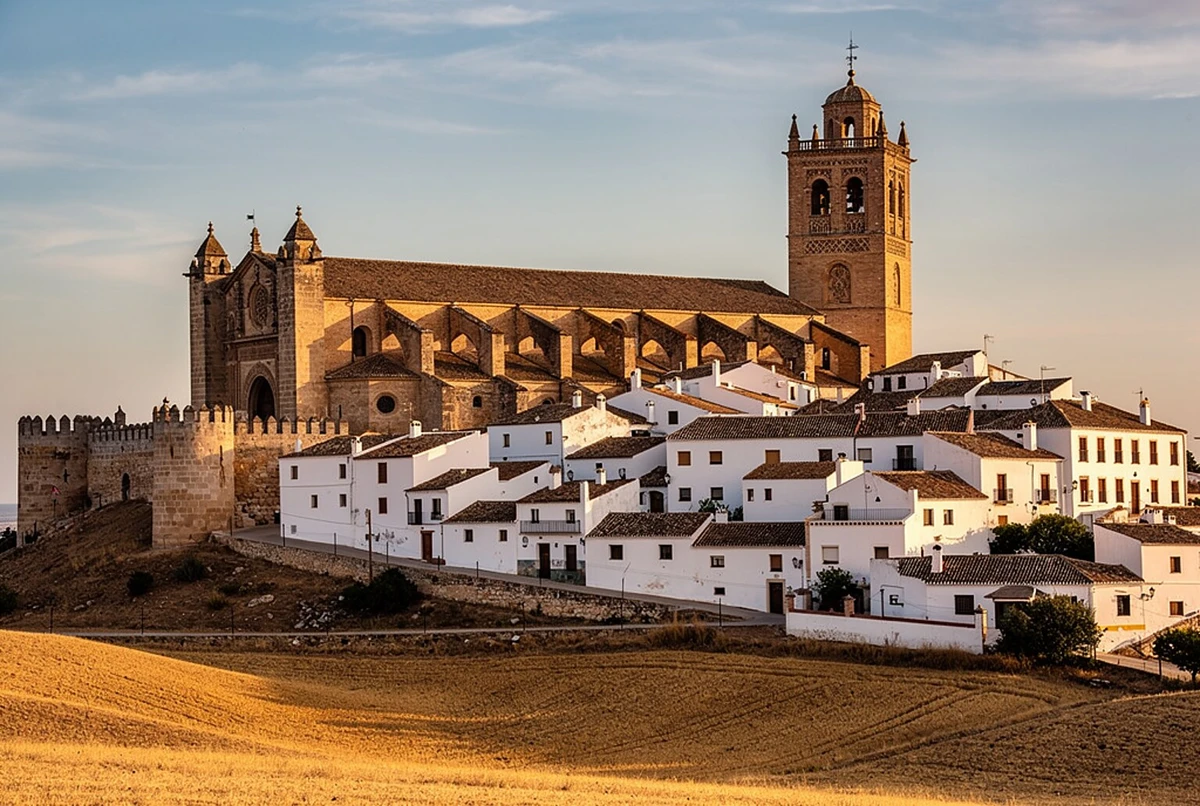
- Seville is a superb base for southern Spain, linked by high-speed train to Madrid and Córdoba and by fast roads to Granada, Malaga and the white villages, making it the perfect hub for an Andalusian loop.
Signature experiences in Seville
The Real Alcázar and the Cathedral
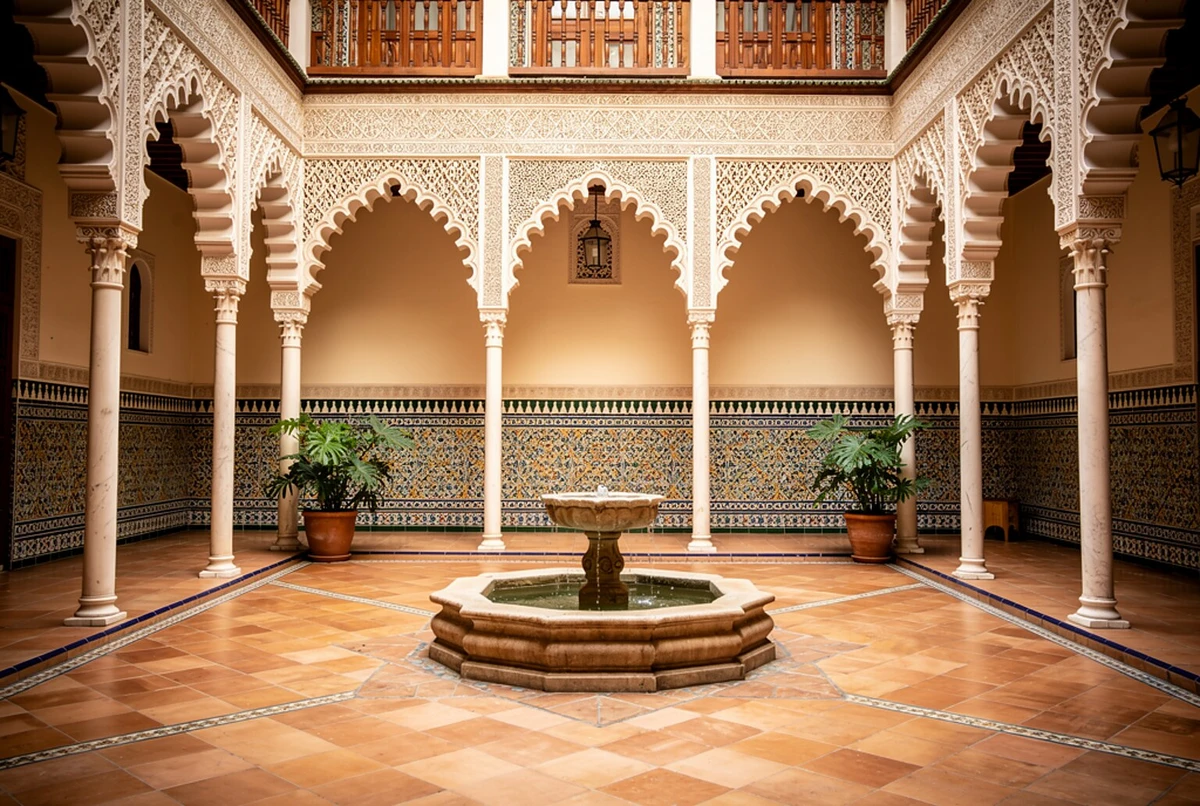
The Real Alcázar is the oldest royal palace still in use in Europe, a dreamlike blend of Mudéjar arches, carved stucco, tiled courtyards and gardens of palms, fountains and orange trees. Next door, Seville Cathedral, the largest Gothic cathedral in the world, holds the tomb of Columbus, and the gentle ramps of the Giralda lead to sweeping views. Our guided day tour and the timed attraction tickets we issue let you skip the long queues and grasp the stories behind each hall.
Flamenco, Tiles and Andalusian Flavours
Seville’s culture is lived through the senses. Watch an intimate flamenco performance in a historic venue, where guitar, clapping and fierce footwork fill the room, then browse the ceramic workshops of Triana, home of the painted azulejo tiles seen across the city. Taste chilled salmorejo, spinach with chickpeas, crisp fried fish and warm churros dipped in thick chocolate. We issue tickets to leading flamenco shows, so you secure the best seats on the night you choose.
Barrio Santa Cruz and Triana
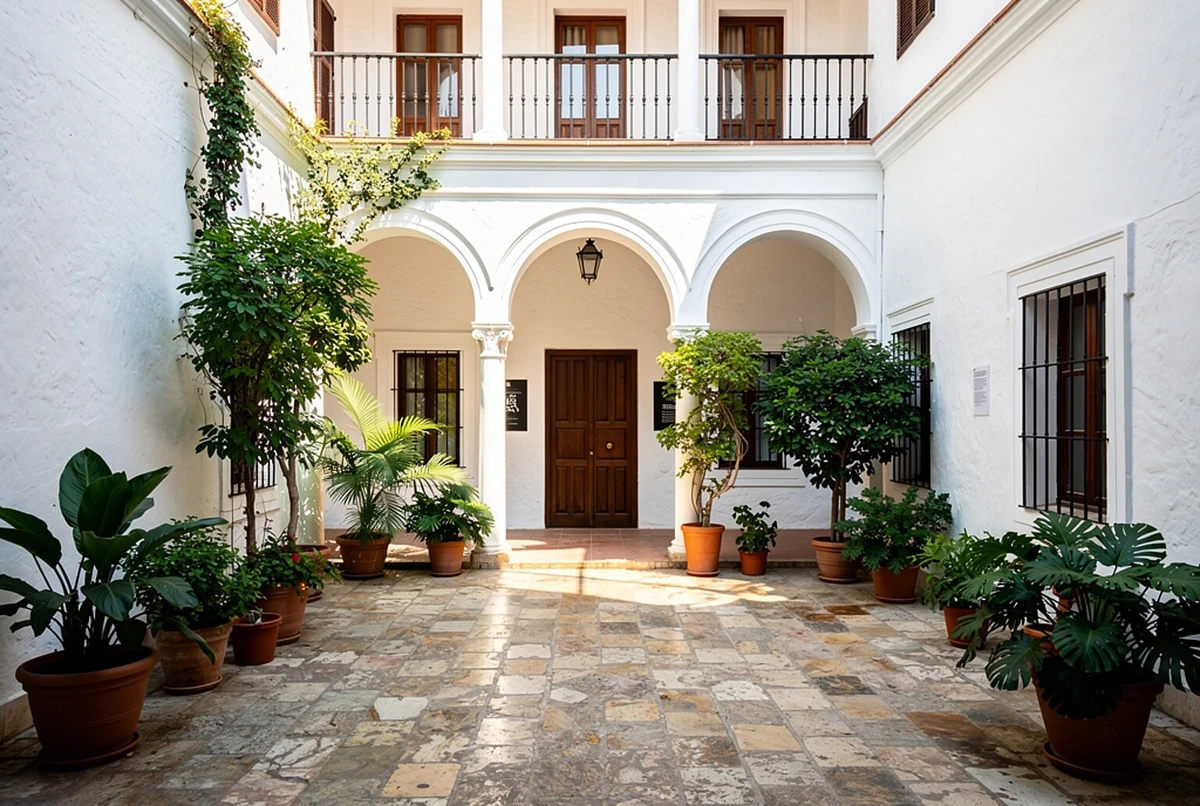
The old Santa Cruz quarter is a labyrinth of whitewashed lanes, flower-filled patios and tiny squares shaded by orange trees, perfect for exploring on foot and getting gently lost. Across the Guadalquivir, Triana has a different soul: the riverfront Calle Betis, the bustling Triana Market built over the ruins of a medieval castle, and potters’ workshops. Our guided day tour reveals the legends and hidden courtyards you would never find alone.
A Day in Córdoba and the Mezquita
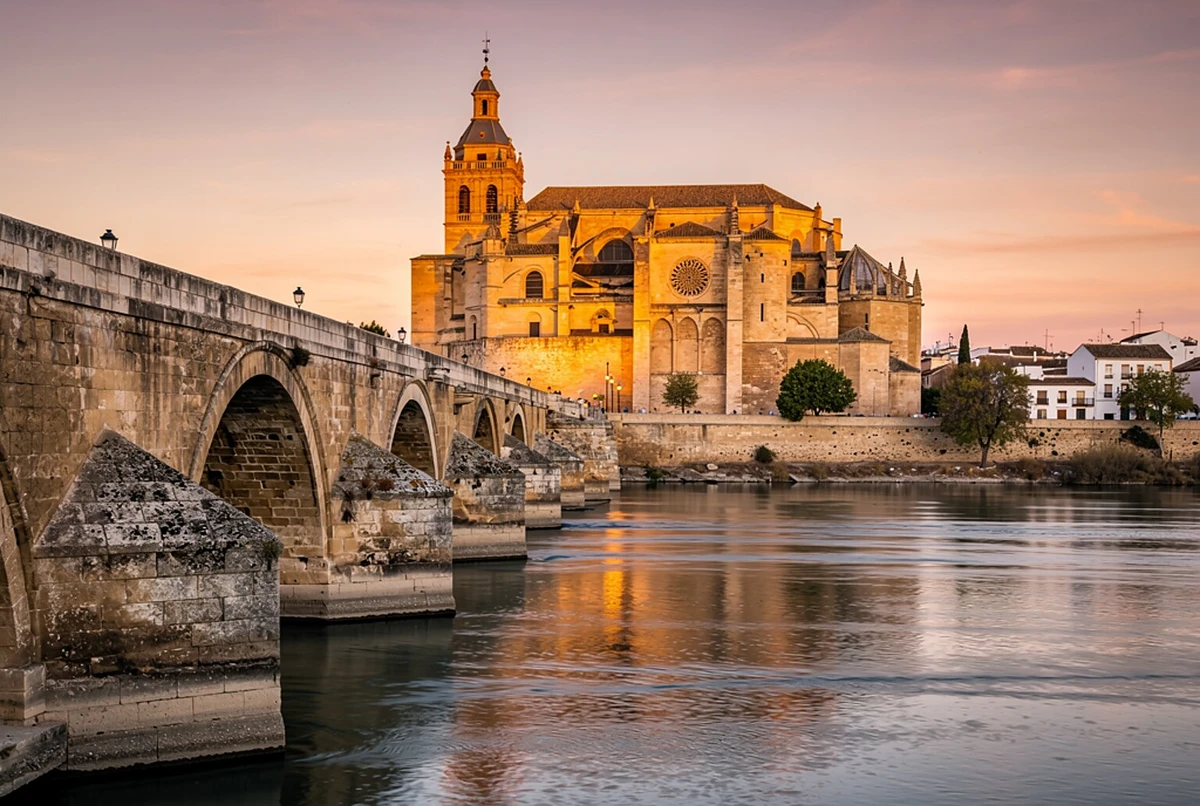
Just forty-five minutes away by high-speed train, Córdoba holds one of the world’s most extraordinary buildings: the Great Mosque, the Mezquita, with its forest of red-and-white horseshoe arches and the cathedral later built at its heart. Wander the old Jewish quarter, the Roman bridge and flower-decked patios. Our guided day tour from Seville includes transport and expert guiding, and we can also issue the train tickets for a flexible independent visit.
Plaza de España and Roman Itálica
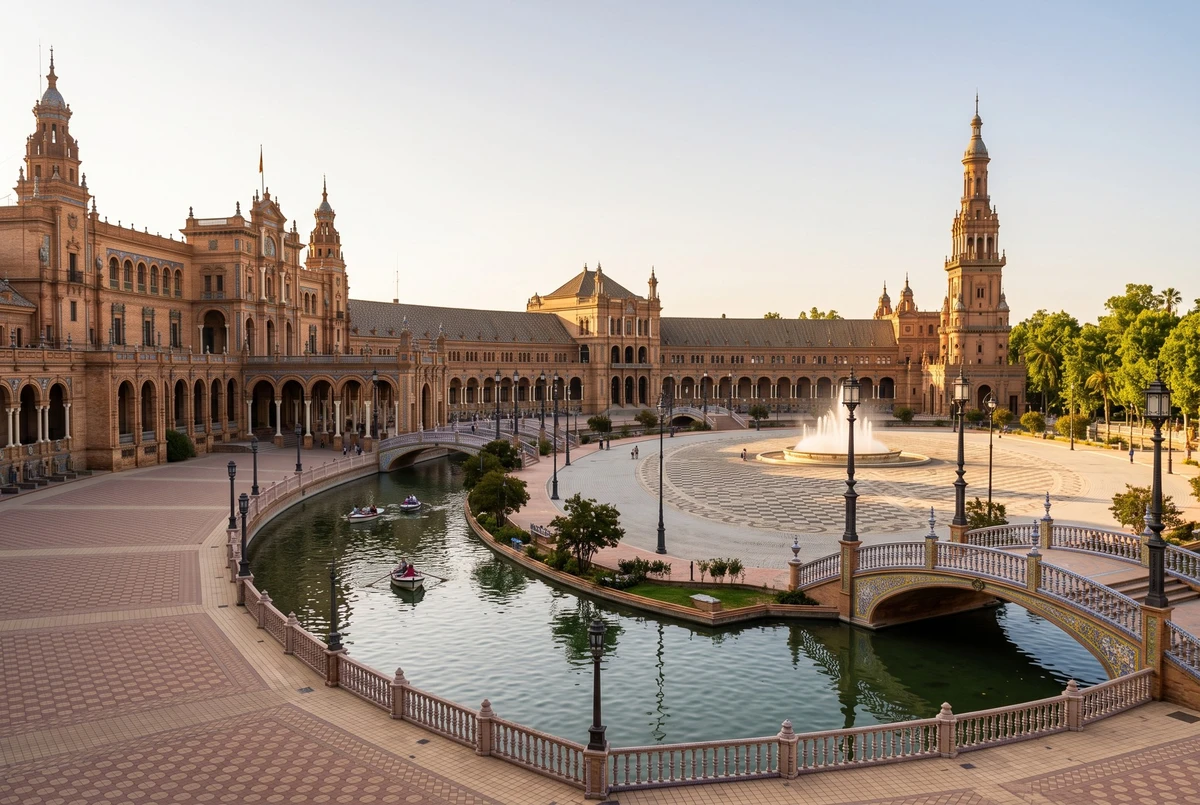
Built for the 1929 Ibero-American Exposition, Plaza de España sweeps in a vast semicircle of brick and tiled alcoves, one for each Spanish province, beside the shady María Luisa Park. Just north of the city, the Roman ruins of Itálica, home town of the emperor Trajan, preserve mosaic floors and one of the largest amphitheatres of the Roman world. A private car with driver arranged by our team combines both in a relaxed half day.
Neighbourhoods and quarters to know in Seville
Santa Cruz and the Cathedral Quarter
The historic heart beside the Cathedral and the Alcázar is Seville at its most romantic, with boutique hotels in old mansions, orange-scented squares and the main monuments right on your doorstep. It is very safe and lively until late, though busy by day with visitors. Ideal for first-timers and couples who want to step straight into the old city.
Triana
Across the river, Triana is Seville’s proudly independent barrio of sailors, potters and flamenco artists. Its tiled facades, covered market and riverside promenade along Calle Betis offer wonderful views back to the Torre del Oro. It feels authentic, safe and neighbourly, perfect for travellers who want local life and evening strolls over the Isabel II Bridge.
Arenal and the Riverside
Between the Cathedral and the Guadalquivir, the Arenal district holds the Torre del Oro, elegant old streets and leafy riverside promenades. It is central yet calmer than Santa Cruz, with good hotels and easy access on foot to the main sights and to Triana across the bridge. A smart choice for families and travellers who want space and convenience.
Alameda and the Setas
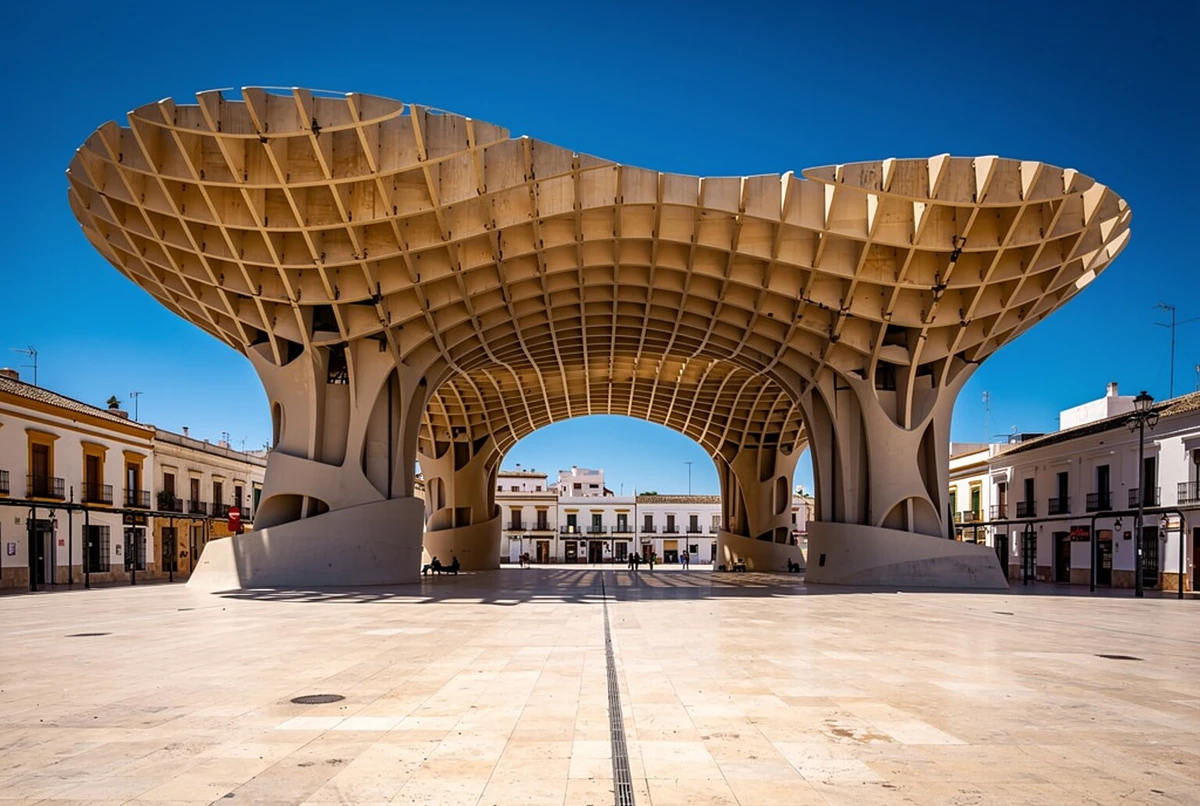
North of the centre, the area around the Metropol Parasol, the giant wooden canopy locals call Las Setas, and the long Alameda de Hércules is Seville’s creative, youthful quarter, full of independent shops, cafés and lively squares where families gather in the evening. It is relaxed and safe, with a strong local feel, suiting repeat visitors and design lovers.
How long to stay in Seville and how to pair it
Recommended stay
Three nights in Seville is ideal for a first visit: one day for the Alcázar, the Cathedral and Santa Cruz, one for Plaza de España, Triana and a flamenco evening, and one for a day trip to Córdoba or the white villages. Four nights lets you slow down and savour the city’s late, unhurried rhythm.
How to pair it
Seville is the natural anchor of an Andalusian loop. In seven days, combine three nights in Seville with two in Granada for the Alhambra and two in Malaga on the Mediterranean coast. For ten days, add Madrid by high-speed train, with tickets we issue. A fourteen-day journey can link Madrid, Seville, Granada, Malaga, Valencia and Barcelona, with flights, trains and private airport transfers coordinated by our team.
Best time to visit Seville and the rhythm of the day
Best months
The best months to visit Seville are March to May and October to November, when days are warm and sunny and evenings are mild. Spring brings orange blossom, the Holy Week processions and the colourful April Fair. July and August are fiercely hot, among the hottest in Europe, so sightseeing shifts to early morning and late evening, while winter is mild, bright and quiet.
The daily rhythm
Seville runs on a late clock. Mornings start with coffee and toasted bread with olive oil and crushed tomato, followed by monuments before the heat builds. Lunch is the main meal, rarely before two, and the afternoon rest still matters in summer. Life returns at dusk, when families stroll the squares and dinner begins around nine or even later.
On-the-ground logistics in Seville
Arrival
Seville Airport lies about ten kilometres north-east of the centre, and the drive to hotels near the Cathedral takes around twenty to thirty minutes. Many travellers instead arrive at Santa Justa station by high-speed train from Madrid or Córdoba. Our private airport transfer meets you on arrival and navigates the old town’s narrow lanes right to your door.
Getting around
Seville’s historic centre is compact, flat and best explored on foot, and many lanes in Santa Cruz are pedestrian only. A tram line and a metro serve longer distances, and buses link the outer districts. Licensed taxis and ride-hailing apps are easy to find. For day trips to Córdoba, Itálica or the white villages, a private car with driver arranged by our team is ideal.
Local etiquette tip
The key custom in Seville is respecting its late timetable and its sacred moments. Restaurants rarely serve dinner before half past eight, and arriving early marks you as a visitor. During Holy Week the processions are deeply religious: stay silent as the floats pass and never cut through a procession line. Cover your shoulders when visiting churches and the Cathedral.
Must-do things in Seville
- Wander the tiled courtyards and orange-scented gardens of the Real Alcázar.
- Climb the ramps of the Giralda for views across Seville’s terracotta rooftops.
- See the tomb of Columbus inside Seville’s vast Gothic Cathedral.
- Admire the tiled provincial alcoves and graceful bridges of Plaza de España.
- Watch an intimate flamenco performance in a historic Seville venue.
- Get happily lost in the whitewashed lanes and patios of Barrio Santa Cruz.
- Cross the Isabel II Bridge to explore Triana’s ceramics and covered market.
- Walk the undulating rooftop of the Metropol Parasol at sunset.
- Take a day trip to Córdoba to marvel at the arches of the Mezquita.
- Explore the Roman mosaics and amphitheatre of Itálica, just outside the city.
Do’s and don’ts in Seville
Do
- Secure Alcázar and Cathedral tickets in advance, especially in spring.
- Adopt the local timetable: late lunch, rest in the heat, late dinner.
- Carry water and a hat from May to September.
- Learn a few Spanish phrases; a cheerful “buenos días” goes a long way.
- Visit monuments at opening time to enjoy them in cool, quiet light.
Don’t
- Don’t plan long midday sightseeing walks in July or August.
- Don’t expect dinner service before half past eight in the evening.
- Don’t cut through a Holy Week procession or talk loudly as it passes.
- Don’t accept sprigs of rosemary from strangers near the Cathedral; payment is expected.
- Don’t leave bags unattended in crowded squares and around the monuments.
Seville at a glance
Plan Seville with Haqqi Tours
Every option is confirmed by our team on WhatsApp before you pay, and delivered by our own people or by trusted local partners we work with in every city. Because we send travellers from all over the world, our partners give us special rates and priority, so you always receive the best. Prices are per person unless marked per vehicle.
About Haqqi Tours: About us Contact us Legal NoticePrivacy PolicyCookies & Marketing PreferencesTerms & ConditionsBooking, Payment & Refunds
More services in Seville
Where we operate in Spain
Good to know
Frequently Asked Questions
Straight answers to what travellers ask most about Seville.
Where should first-time visitors stay in Seville?
First-time visitors usually love Santa Cruz and the streets around the Cathedral, where the Alcázar and main monuments are a short stroll away. Arenal offers a slightly calmer central base near the river, while Triana suits travellers who want a local, neighbourly feel. Our team can suggest hotels in each area to fit your style.
Can Seville be done as a day trip, or does it need an overnight stay?
Seville can be glimpsed in a day from Córdoba or Malaga, but it truly deserves at least two nights. The city comes alive in the evening, with flamenco, illuminated monuments and late dinners, and the Alcázar alone can fill a morning. An overnight stay lets you enjoy it all without rushing.
What is the dress code and etiquette in Seville?
Sevillanos dress smartly but comfortably, and light, breathable clothing is best for the heat. Cover your shoulders and avoid beachwear in the Cathedral and churches. Greet shopkeepers with “buenos días”, keep to the late meal times, and show quiet respect during religious processions, especially in Holy Week, when the whole city pauses for its faith.
Is Seville tourist friendly?
Very. Seville welcomes visitors with genuine warmth, its compact centre is easy to navigate and the main monuments have clear signage and multilingual information. English is spoken in hotels and at major sights, though a few words of Spanish are always appreciated. Our team and trusted local partners keep tickets, tours and transfers effortless.
Is it safe to travel to Seville now?
Seville is generally a safe and relaxed city for visitors. As in any popular destination, watch for pickpockets in crowded areas and around the major monuments, and stay hydrated in the summer heat. Check your own government’s official travel advice before departure, and keep our WhatsApp line handy throughout your stay.
What are the must-do things in Seville?
Must-do things in Seville include the Real Alcázar, the Cathedral and Giralda tower, Plaza de España and María Luisa Park, a flamenco performance, the lanes of Santa Cruz, Triana’s ceramics and market, the Metropol Parasol at sunset and a day trip to Córdoba’s Mezquita or the Roman ruins of Itálica.
How many days do you need in Seville?
Three days is ideal for Seville: enough to explore the Alcázar, the Cathedral and Santa Cruz, enjoy Plaza de España, Triana and a flamenco evening, and take a day trip to Córdoba. With two days you will see the highlights, while four days allows a slower, more local experience.
What can I book in Seville with Haqqi Tours?
Day tours, attraction tickets, private airport transfers, flight tickets and train tickets, including Doñana National Park Day Trip from Seville, Seville Cathedral Giralda and Alcazar Skip-the-Line Tour and Guadalquivir River Sightseeing Cruise Seville. Each has its own page, and the WhatsApp desk combines any of them into one plan with one written price.
How do I get from the airport to my hotel in Seville?
Seville Airport (SVQ), also called San Pablo, lies about 10 km north-east of Seville centre, about 130 km from Córdoba by the A-4 and about 85 km from Jerez. Our private transfer meets you at arrivals with a name board, tracks your flight and takes you door to door at a fixed price for the whole vehicle; the transfer pages list every route.
Is there public transport from the airport to Seville?
The airport bus reaches the centre in about 35 minutes and suits a central hotel with a cabin bag; a private car is simpler for the narrow lanes of Santa Cruz, a late arrival, a family with luggage, or a trip on to Jerez, Córdoba or the coast. With luggage, a family or a late flight, the private car is the simpler choice.
Which tours are available in Seville?
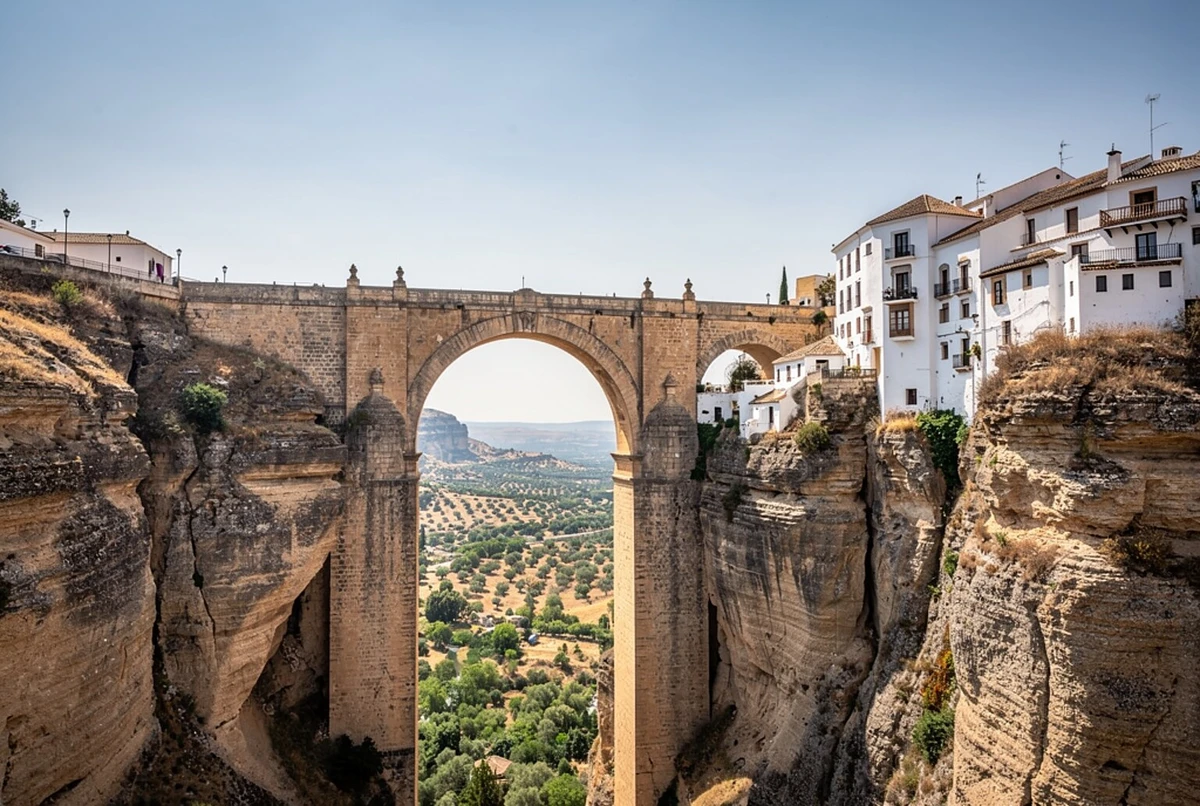
Among them: Doñana National Park Day Trip from Seville, Seville Cathedral Giralda and Alcazar Skip-the-Line Tour, Guadalquivir River Sightseeing Cruise Seville, Ronda and Setenil de las Bodegas Day Trip from Seville and Cordoba Mosque-Cathedral and Carmona Day Trip from Seville. Each page says whether the day is private or small-group, what it includes and how long it lasts.
Are the tours private or in a group?
Both exist, and each tour page says which. A private tour has a vehicle and guide for your party alone; the desk can make most group tours private on request.
How do I book?
Fill in the form on any page or message us on WhatsApp with the date, the number of travellers and the hotel. A member of our team confirms the price and the details in writing within minutes.
Are the prices fixed?
Yes - every price is agreed in writing on WhatsApp before you travel and does not change on the day.
Do the drivers and guides speak Arabic or English?
It depends on the city and the day, so we do not promise a particular language; tell us your preference and we do our best. The WhatsApp desk always works in Arabic and English.
Can I change or cancel a booking in Seville?
Yes, in the same WhatsApp conversation. The terms depend on the product and on how close to the date the change comes; the desk states them before you pay.