
Santiago de Compostela
Plan Santiago de Compostela with Haqqi Tours: day tours, private airport transfers, attraction tickets and packages, run by our own team and confirmed on WhatsApp in Arabic or English.
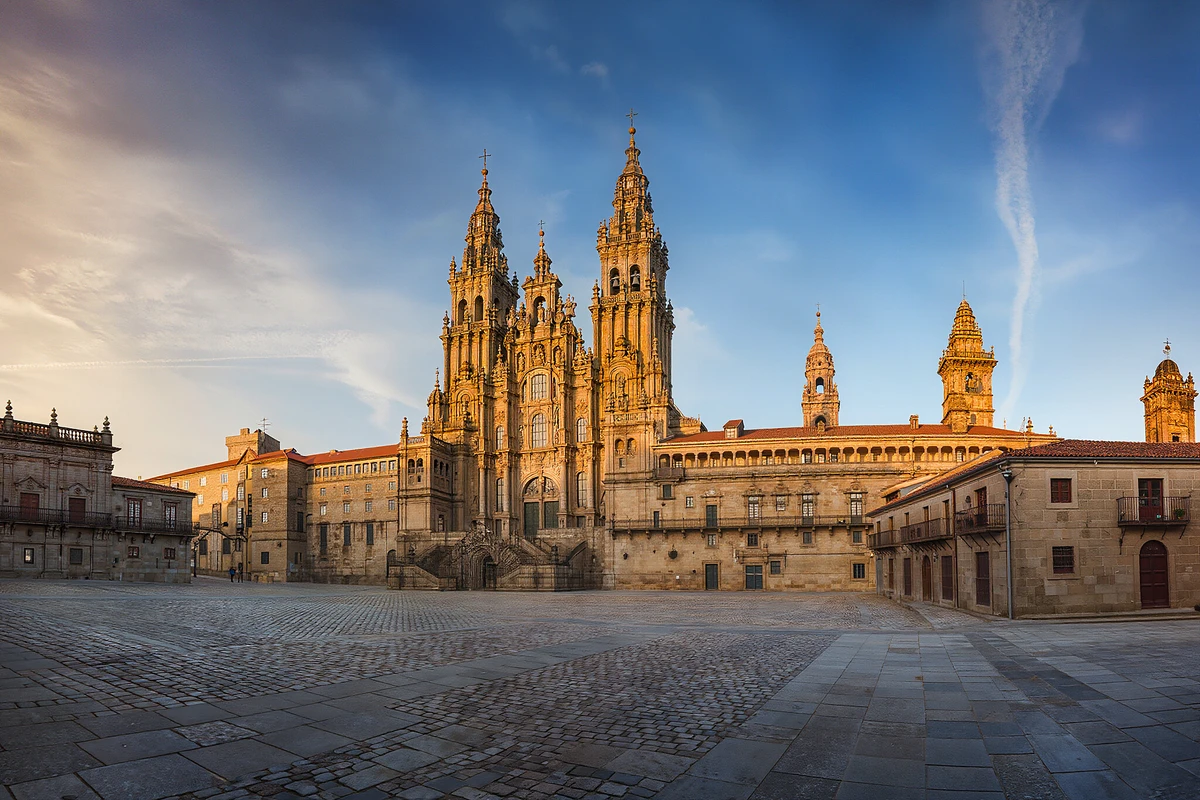
Morning in Santiago de Compostela often begins with a soft Galician drizzle. The granite streets of the old town shine like polished stone, bagpipe notes echo under a stone archway, and the first pilgrims of the day limp into the Praza do Obradoiro, drop their backpacks and simply sit, gazing up at the baroque towers of the cathedral. Then the clouds break, the stone turns gold, and the whole square seems to exhale.
Nothing matches those filters yet. Widen your search or message us on WhatsApp.
Santiago de Compostela Day Tours
View all Santiago de Compostela at first sight
For more than a thousand years, Santiago de Compostela has been the goal of the Camino de Santiago, the great pilgrimage to the tomb of the apostle Saint James. Its old town, a maze of arcaded lanes, monasteries and quiet squares built almost entirely in granite, is a UNESCO World Heritage Site. Yet it is also a lively university city in the green heart of Galicia, with a superb market and a deep love of good food.
Why include Santiago de Compostela in your itinerary?
- A cathedral like no other. The Cathedral of Santiago de Compostela combines a soaring baroque façade, a Romanesque interior and the restored Pórtico da Gloria, and on special days the giant silver censer, the Botafumeiro, swings in a great arc above the congregation.
- The end of a legendary journey. Every day pilgrims arrive on foot from across Europe and beyond, and sharing their emotion in the Obradoiro square is one of the most moving travel moments anywhere, whether or not you walked the Camino yourself.
- Gateway to wild Galicia. From Santiago de Compostela, the dramatic Costa da Morte, the cape of Finisterre and the green estuaries of the Rías Baixas are all within easy reach, alongside one of Spain's finest regional kitchens.
Signature experiences in Santiago de Compostela
The Cathedral and Its Museum
Step inside the cathedral to see the Romanesque nave, the gilded high altar where pilgrims embrace the statue of the apostle, and the crypt that holds his silver reliquary. The restored Pórtico da Gloria is a masterpiece of medieval carving. Our skip-the-line visits with an expert guide include the Cathedral Museum, with its cloister, tapestries, library and a balcony overlooking the Obradoiro square.
Finisterre, Muxía and the Costa da Morte
West of Santiago de Compostela, the Costa da Morte is a wild coastline of cliffs, lighthouses and Atlantic surf. Stand at the cape of Finisterre, once believed to be the end of the known world, see the sanctuary of Muxía on wave-battered rocks, and watch the Ézaro waterfall tumble straight into the sea. Our guided day trips cover the whole coast comfortably in one long, unforgettable day.
The Squares and Lanes of the Old Town
The old town is best explored slowly. Move from the grand Obradoiro to the Praza da Quintana with its Holy Door, the silversmiths' Praterías square and the quiet cloisters of San Martiño Pinario. Wander the arcaded Rúa do Vilar and Rúa Nova, pause at the Alameda park for the classic view of the cathedral towers, and return after dark when the granite glows under lamplight.
The Market and Galician Flavours
The Mercado de Abastos, housed in long granite halls, is the city's living pantry, full of shellfish, octopus, fresh fish, Galician cheeses and vegetables from local farms. Nearby kitchens serve pulpo á feira, octopus dusted with paprika, alongside Padrón peppers, scallops, empanada pies and the famous almond cake, tarta de Santiago. Our guides happily point you to the most authentic local places.
The Camino and the Pilgrims' Arrival
Even without walking the full route, you can share the spirit of the Camino. Start at Monte do Gozo, the hill where pilgrims first glimpse the cathedral spires, and follow the final stretch into the old town, about an hour and a half on foot. Visit the Pilgrim's Reception Office, watch walkers arrive in the Obradoiro, and attend the midday pilgrims' mass in the cathedral.
Neighbourhoods and quarters to know in Santiago de Compostela
The Old Town (Zona Vella)
The UNESCO-listed old town around the cathedral is where most visitors want to stay, with small hotels in historic stone houses, arcaded streets, monasteries and family-run restaurants. Everything is walkable and car-free, and the atmosphere is magical early in the morning and after dark. It is safe and lively, though quiet once the last restaurants close.
The Ensanche
Just south of the old town, the Ensanche is the modern centre of Santiago de Compostela, with wide streets, shops, cafés and larger hotels. It is practical and good value, close to the railway station and only a few minutes on foot from the cathedral. It suits travellers who want everyday city life, easy parking and quick access to the trains.
San Pedro and Bonaval
To the east, the Rúa de San Pedro carries the French Way into the city through the Porta do Camiño. This area has a local, neighbourhood feel, with bakeries, guesthouses and the green park of Bonaval beside the Museum of the Galician People. It is calm, authentic and within a short stroll of the cathedral.
Monte do Gozo and San Lázaro
On the eastern edge of the city, around five kilometres from the centre, Monte do Gozo and San Lázaro hold large pilgrim lodgings, the congress centre and modern hotels. It is quieter, more spacious and closer to the airport, ideal for groups and travellers with a car, with buses and taxis reaching the old town in about fifteen minutes.
How long to stay in Santiago de Compostela and how to pair it
Recommended stay
We recommend two or three nights in Santiago de Compostela. One day for the cathedral, its museum and the old town, one full day for Finisterre, Muxía and the Costa da Morte, and a third for the market, the parks and a slower pace. With four nights, add a trip to the Rías Baixas or the Roman walls of Lugo.
How to pair it
Santiago de Compostela pairs naturally with A Coruña, about half an hour north by train, for its glass-balconied seafront and Roman lighthouse, the Tower of Hercules. In a week, add Vigo and the Rías Baixas for estuary islands and beaches, and Lugo for its complete Roman walls. High-speed trains reach Madrid in a little over three hours, while León and Oviedo extend a longer journey across northern Spain.
Best time to visit Santiago de Compostela and the rhythm of the day
Best months
The best time to visit Santiago de Compostela is from May to June and in September, when days are mild, the countryside is green and rain is less frequent. July and August are the busiest months, especially around the Feast of Saint James on the twenty-fifth of July. From October to April, rain is common, but the old town is quiet and atmospheric.
The daily rhythm
Santiago de Compostela wakes gently. Mornings are best for the cathedral and museum before the crowds, followed by the market before it closes in the early afternoon. Lunch is late and long, the afternoons suit parks and museums, and evenings are for wandering the lamplit old town and dinner after nine. Halal restaurants are rare here, but fresh fish, seafood and vegetable dishes are easy to find everywhere.
On-the-ground logistics in Santiago de Compostela
Arrival
Santiago de Compostela Airport (SCQ) lies at Lavacolla, about fifteen kilometres east of the city and usually around twenty minutes from the old town. A Coruña (LCG) and Vigo (VGO) airports are about an hour away. High-speed trains from Madrid arrive at Santiago station, a short drive from the centre. We arrange private transfers from the airport or the station straight to your hotel.
Getting around
The old town is compact, pedestrian and best explored on foot, though its granite lanes are steep in places and slippery after rain. City buses link the railway station, the Ensanche and the outer districts, and taxis are easy to find. For Finisterre, the Costa da Morte or the Rías Baixas, a private car with driver arranged by our team is the most comfortable choice.
Local etiquette tip
The cathedral is an active place of worship, so dress respectfully, keep your voice low and avoid sightseeing during mass. Large backpacks are not allowed inside, and flash photography is discouraged. Galicians are warm but reserved; a polite greeting goes a long way. Meals are late, tipping is modest and optional, and an umbrella or light raincoat is wise in every season.
Must-do things in Santiago de Compostela
- Stand in the Praza do Obradoiro facing the cathedral's baroque façade
- Visit the cathedral, the crypt and the restored Pórtico da Gloria
- Explore the Cathedral Museum and its balcony over the square
- See the giant Botafumeiro swing on a feast day
- Watch pilgrims arrive at the end of the Camino
- Browse the granite halls of the Mercado de Abastos
- Taste pulpo á feira and a slice of tarta de Santiago
- Enjoy the view of the cathedral towers from the Alameda park
- Stand at the cape of Finisterre above the Atlantic
- See the Ézaro waterfall plunge into the sea on the Costa da Morte
Do’s and don’ts in Santiago de Compostela
Do
- Do pack a light raincoat or umbrella in every season
- Do visit the cathedral early to avoid the busiest hours
- Do dress respectfully and keep quiet during mass
- Do wear comfortable shoes with good grip for the granite lanes
- Do check the cathedral's schedule if you hope to see the Botafumeiro
Don’t
- Don't bring a large backpack into the cathedral
- Don't use flash or talk loudly during services
- Don't expect lunch before two o'clock or dinner before nine
- Don't try to fit the city and the Costa da Morte into one day
- Don't miss the old town after dark, when it is at its most beautiful
Santiago de Compostela at a glance
Plan Santiago de Compostela with Haqqi Tours
Every option is confirmed by our team on WhatsApp before you pay, and delivered by our own people or by trusted local partners we work with in every city. Because we send travellers from all over the world, our partners give us special rates and priority, so you always receive the best. Prices are per person unless marked per vehicle.
About Haqqi Tours: About us Contact us Legal NoticePrivacy PolicyCookies & Marketing PreferencesTerms & ConditionsBooking, Payment & Refunds
More services in Santiago de Compostela
Where we operate in Spain
Good to know
Frequently Asked Questions
Straight answers to what travellers ask most about Santiago de Compostela.
Where should first-time visitors stay in Santiago de Compostela?
First-time visitors usually stay in the old town, within a few minutes' walk of the cathedral, the market and the best restaurants. The Ensanche is a practical, good-value alternative close to the railway station, while San Pedro offers a calm local feel. Our team can suggest a suitable hotel and arrange your private airport or station transfer.
Can Santiago de Compostela be done as a day trip, or does it need an overnight stay?
A day trip from A Coruña or Vigo is possible, but Santiago de Compostela truly deserves at least two nights, to see the cathedral early, enjoy the old town after dark and spend a full day on the Costa da Morte. We arrange cathedral visits, day trips and private transfers to fit your schedule.
What is the dress code and etiquette in Santiago de Compostela?
Everyday clothing is fine in the city, but inside the cathedral cover shoulders and avoid beachwear, keep your voice low and respect services. Large backpacks must be left outside. Bring rainwear in every season. Meals are taken late, tipping is modest, and a friendly greeting is always welcome. Our guides explain local customs on the way.
Is Santiago de Compostela tourist friendly?
Yes. Santiago de Compostela has welcomed pilgrims and travellers for centuries, and its hotels, restaurants and guides are used to visitors from every corner of the world. The old town is compact and easy to navigate, signs are clear, and English is widely understood in tourist places. Our team is always on hand to help.
Is it safe to travel to Santiago de Compostela now?
Santiago de Compostela is generally considered a very safe city, calm by day and by night. As in any busy destination, watch your belongings in crowded squares and during big festivals, and take care on wet granite. Before departure, check your own government's official travel advice, and keep our WhatsApp line handy during your stay.
What are the must-do things in Santiago de Compostela?
The must-do things in Santiago de Compostela include the cathedral and its museum, the Pórtico da Gloria, the Praza do Obradoiro, the Mercado de Abastos, the view from the Alameda park, watching pilgrims arrive, and a day on the Costa da Morte with Finisterre and Muxía. We help you combine them in the best order.
How many days do you need in Santiago de Compostela?
Two or three days is ideal for Santiago de Compostela: one for the cathedral, the museum and the old town, one for Finisterre and the Costa da Morte, and one for the market, parks and a slower pace. One day covers the essentials quickly, while four allows a trip to the Rías Baixas or Lugo.
What can I book in Santiago de Compostela with Haqqi Tours?
Day tours, including Santiago Cathedral and Museum Skip-the-Line Tour and Finisterre, Muxia and Costa da Morte Day Trip from Santiago. Each has its own page, and the WhatsApp desk combines any of them into one plan with one written price.
How do I get from the airport to my hotel in Santiago de Compostela?
With a private transfer: a driver at arrivals, flight tracking and a fixed price for the whole vehicle, door to door. Tell the desk the flight number and the hotel.
Is there public transport from the airport to Santiago de Compostela?
Buses run from the airport to the Pajaritos and Los Heroes metro stations and are the budget option; a private car saves changing at the metro with luggage and is the simple choice for Las Condes, Vitacura, Valparaiso and Vina del Mar, or the ski resorts. With luggage, a family or a late flight, the private car is the simpler choice.
Which tours are available in Santiago de Compostela?
Among them: Santiago Cathedral and Museum Skip-the-Line Tour and Finisterre, Muxia and Costa da Morte Day Trip from Santiago. Each page says whether the day is private or small-group, what it includes and how long it lasts.
Are the tours private or in a group?
Both exist, and each tour page says which. A private tour has a vehicle and guide for your party alone; the desk can make most group tours private on request.
How do I book?
Fill in the form on any page or message us on WhatsApp with the date, the number of travellers and the hotel. A member of our team confirms the price and the details in writing within minutes.
Are the prices fixed?
Yes - every price is agreed in writing on WhatsApp before you travel and does not change on the day.
Do the drivers and guides speak Arabic or English?
It depends on the city and the day, so we do not promise a particular language; tell us your preference and we do our best. The WhatsApp desk always works in Arabic and English.
Can I change or cancel a booking in Santiago de Compostela?
Yes, in the same WhatsApp conversation. The terms depend on the product and on how close to the date the change comes; the desk states them before you pay.