Pamukkale & Hierapolis Tour from Bodrum
Overview
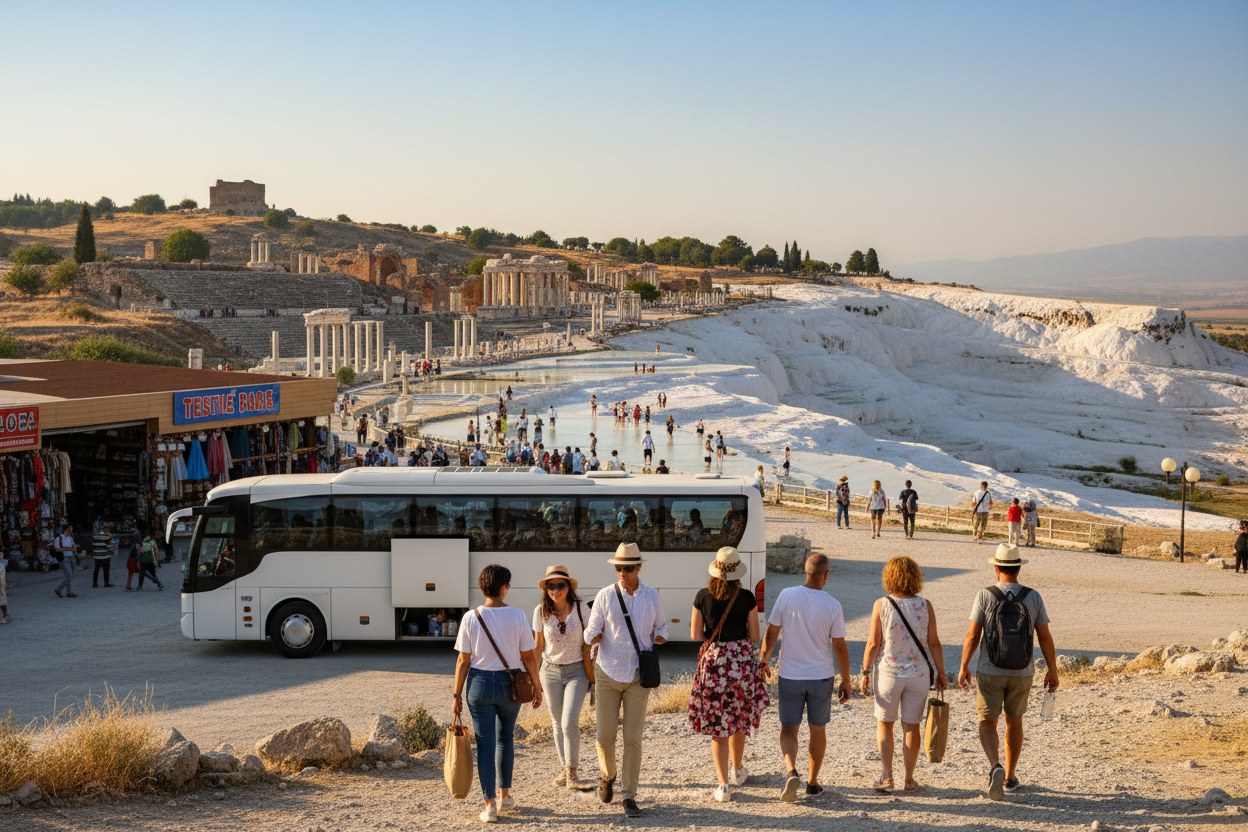
Marvel at ancient and natural wonders with the Pamukkale & Hierapolis Tour, where Haqqi Tours orchestrates an unforgettable journey from the coast to the heartland. We offer a scenic drive featuring a comfortable breakfast stop in Mugla. We guide you through the fascinating Roman amphitheater and necropolis of Hierapolis. The day's route also leads onto Pamukkale's travertine terraces, where the chalky white basins invite guests to go barefoot and feel the mineral water pooling around their feet. We ensure a comprehensive exploration, complete with a buffet lunch, perfectly capturing the historical grandeur and unique geological beauty of this remarkable UNESCO World Heritage site.
Highlights
- We arrange a comfortable journey from Bodrum with a scenic breakfast stop in Mugla.
- We guide you through the extensive ruins of Hierapolis, including its Roman amphitheater and Necropolis.
- Feel the mineral-rich water underfoot while crossing Pamukkale's white terraces barefoot.
- We offer the unique opportunity to swim among ancient ruins in Cleopatra's Antique Pool.
- We serve a delicious and hearty buffet lunch to recharge your energy in Denizli.
- We ensure a comprehensive exploration of these magnificent UNESCO-listed natural and historical wonders.
Full Description
Breakfast on the Road to Mugla
The Pamukkale & Hierapolis Tour leaves Bodrum early, well before the coastal heat sets in, and the first proper stop comes at a restaurant in or around Mugla, where the group breaks for breakfast and a chance to stretch after the initial stretch of driving. This comfort stop marks the shift from coastal scenery to the inland landscape that leads toward Denizli province, and it gives everyone a chance to settle in for the rest of the journey. The pause is brief but useful, since the road ahead covers a considerable distance before the ancient city of Hierapolis and the white terraces of Pamukkale come into view.
Walking Through Hierapolis's Roman Amphitheatre
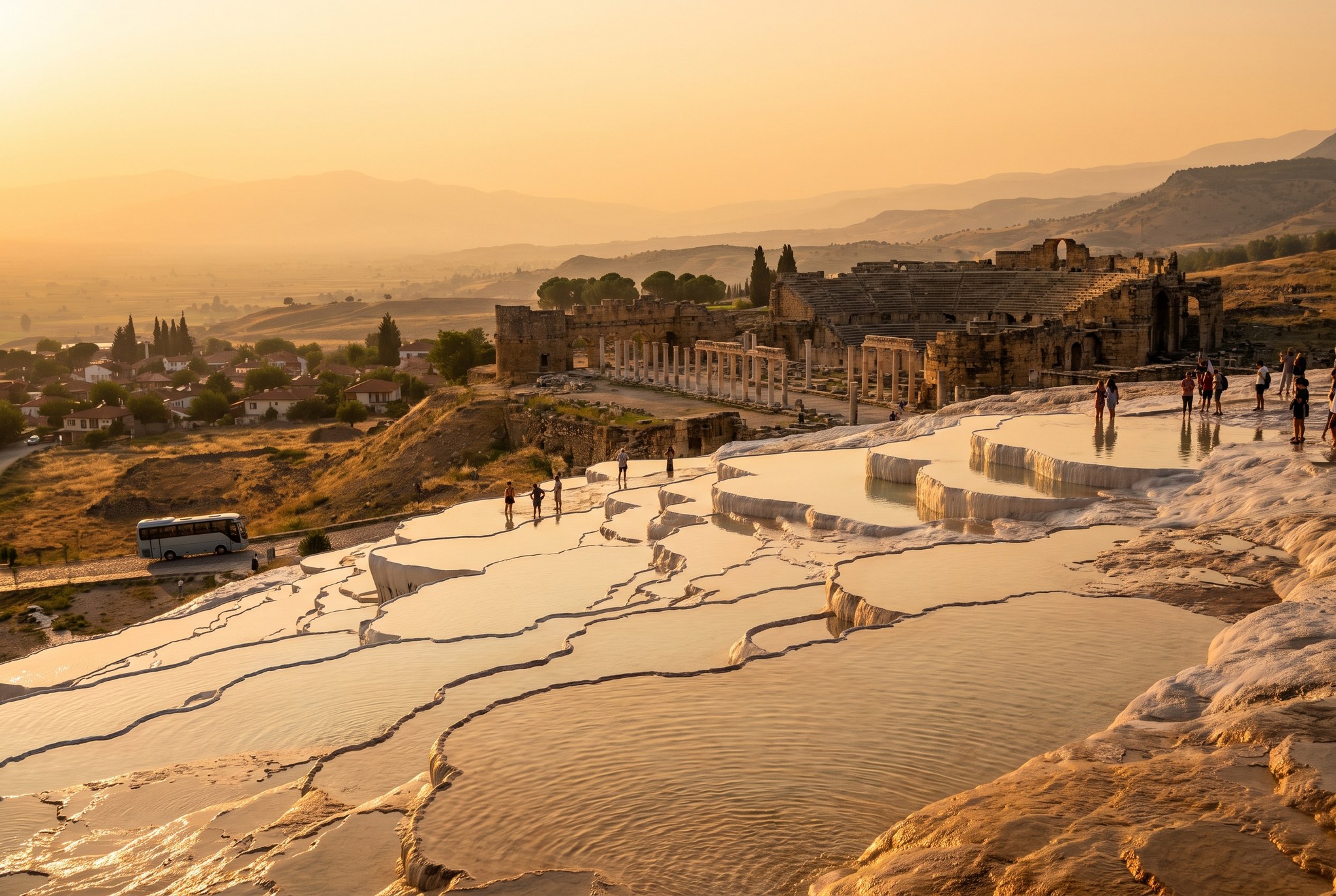
Hierapolis unfolds first around its Roman amphitheatre, a steeply raked structure built into the hillside that once seated large audiences for performances and games. The guide walks the group through the surviving tiers and stage area, pointing out the carved details that have survived centuries of exposure on this ridge above the Lycus valley. Because the amphitheatre sits at height, it also offers one of the clearest views over the wider archaeological site, including the pale terraces of Pamukkale in the distance. Guests who enjoy classical architecture tend to spend longest here, though the pace of the visit leaves room to move at a comfortable speed.
The Temple of Apollo and the Necropolis
From the amphitheatre, the walk continues to the remains of the Temple of Apollo, once the religious centre of the ancient city and linked to a nearby site associated with a sacred spring. Close to the Temple, the ancient necropolis climbs the slope beside the old road, one of Anatolia's largest surviving burial grounds, its tombs ranging from plain stone coffins to more elaborate family vaults. Walking between them gives a sense of Hierapolis as a living city rather than a single monument, since the necropolis alone stretches for a considerable distance along the old road leading out of town. The guide sets the historical context for both sites as the group moves between them.
The Colonnaded Street of the Ancient City
The colonnaded street forms the spine of Hierapolis, a long paved avenue once lined with columns and shopfronts that connected the city's public buildings. Walking its length gives a clear sense of scale, since the street runs through what was once the commercial and civic heart of the settlement. Sections of column bases and paving survive well enough to trace the original layout, and the guide points out where key structures such as gates and public buildings would have stood. This part of the visit works as a natural bridge between the more monumental amphitheatre and temple areas and the walk toward the travertine terraces that follow.
Barefoot on the Travertine Terraces
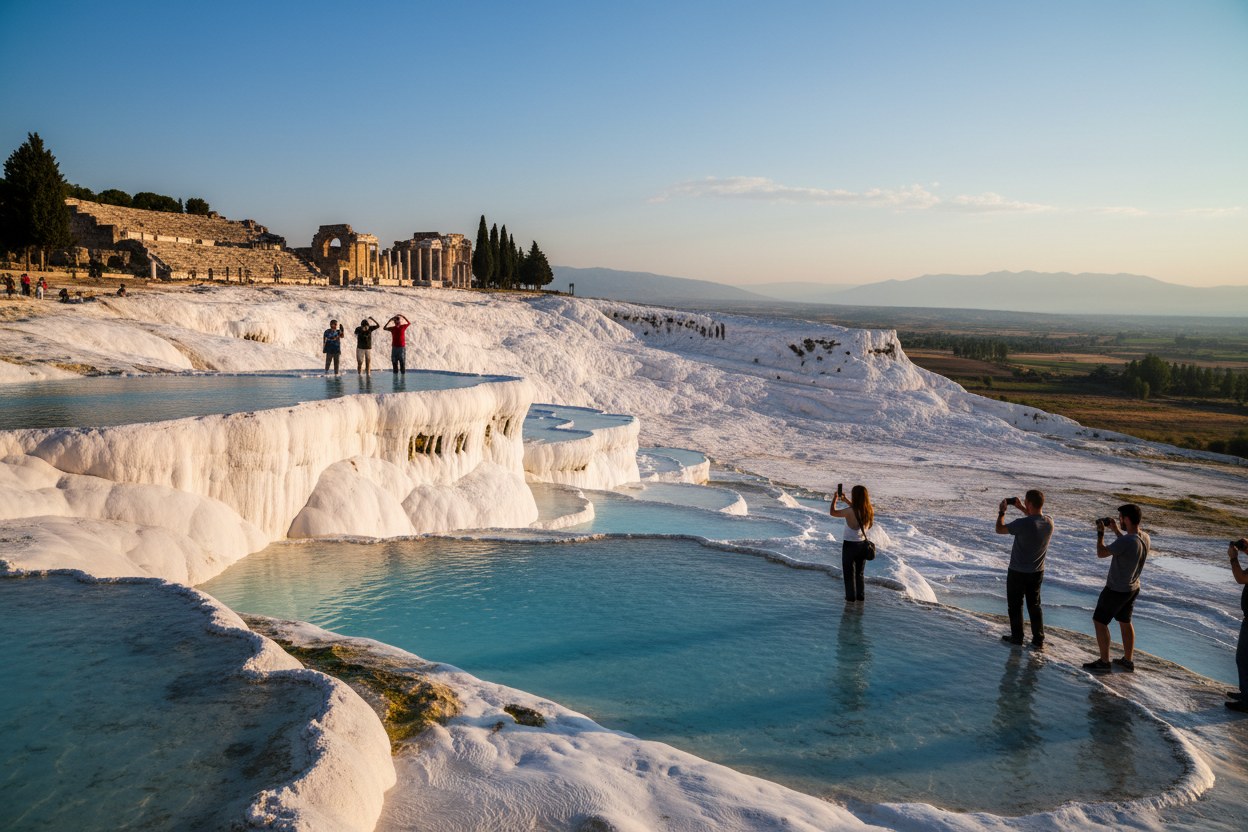
Pamukkale's travertine terraces begin where Hierapolis ends, and the path down requires shoes to come off, since the mineral-rich surface is both a natural landmark and part of what keeps it forming. Walking barefoot across the wet, pale terraces down toward the town below is the part of the day most guests remember most clearly, the shallow pools catching the light differently at each turn. The terraces formed from calcium-rich water flowing down the hillside over a long period, leaving the layered white formations visible today. The guide sets a pace that allows time to pause at several of the pools along the descent.
Cleopatra's Antique Pool
Cleopatra's Antique Pool sits close to the terraces and is included as a stop for every group on this tour, though entry to swim is usually arranged and paid on the spot rather than in advance. The pool is notable for the ancient marble columns visible beneath the water, remnants of a structure that once stood on the site before an earthquake brought it down. Guests who want to swim among the submerged columns can do so here, while those who prefer to stay dry can still walk around the pool and take in the setting. Either way, this stop rounds out the Pamukkale portion of the day.
Buffet Lunch in Pamukkale
After the morning spent walking through Hierapolis and across the terraces, the group sits down to a buffet lunch at a restaurant in the Pamukkale or Denizli area. The meal gives everyone a proper break before the return drive to Bodrum, with a spread that typically covers a range of Turkish dishes suited to a group setting. This is also a natural point to compare notes on the morning's sights, since by this stage the group has covered both the ancient city and the white terraces. The lunch stop is included as part of the tour and marks the shift from sightseeing to the journey home.
The Return Journey and Optional Stops
Depending on the day's plan, the route back to Bodrum can include a stop at the Hierapolis Archaeology Museum, the red-tinted springs at Karahayit, or a visit to an onyx, marble or leather-textile workshop along the way. These additions are not fixed on every departure and vary with the group and the time available, but they offer a way to see more of the region without extending the core Pamukkale and Hierapolis visit. The drive back to the coast takes up much of the afternoon and evening, with the tour finishing back in Bodrum by the scheduled return time.
Who This Long Day Suits
This tour suits travellers who are comfortable with an early start and a full day on the move in exchange for covering one of Turkey's best-known combinations of ancient ruins and natural scenery in a single outing. The amount of walking, both around Hierapolis and across the travertine terraces, makes it more suited to guests who can manage uneven ground and some sun exposure than to those seeking a relaxed beach day. Families travelling with older children who enjoy history and open-air walking tend to get the most from the itinerary, as do first-time visitors keen to see Pamukkale without arranging transport themselves.
Hotel Pickup and Booking
Pickup and drop off are arranged directly from city centre hotels in Bodrum, so guests do not need to reach a separate meeting point before the 05:30 departure. Once your fixed price is confirmed in writing, our desk stays reachable on WhatsApp around the clock, in Arabic or English, for anything from timing questions to last-minute changes. Given the length of the tour and the early start, booking a little in advance helps guarantee a place on a preferred date, and once confirmed, guests receive full details of the pickup arrangements ahead of the long day to Pamukkale and Hierapolis.
Inclusions
- Guide
- Lunch
- Hotel pickup up and drop off from city centre hotels
Good to know
- Wear clothes you can move in easily, since Hierapolis and the travertine terraces both involve long stretches of walking on uneven ground.
- Pack swimwear and a towel in case you decide to enter Cleopatra's Antique Pool, since that entry fee is collected on site.
- Pack a hat, sunglasses and sunscreen, since much of the day at Hierapolis and Pamukkale is spent under open sky with little shade.
- The group departure leaves Bodrum at 05:30, so set an early alarm and have your bag ready the night before.
- Carry some cash for the archaeology museum, Karahayit springs or any factory stop, as these extras are not always included.
- Bring a camera or phone with plenty of storage, since the white terraces and ancient ruins offer countless photo moments.
- The reduced child rate applies to ages three to six, so let us know their ages while arranging your hotel pickup.
- Comfortable sandals that can get wet are ideal, since you will walk barefoot across the wet travertine terraces.