Istanbul Museums Tour
Overview
The Istanbul Museums Tour brings together the city's best-kept collections in one shared-coach day, moving from Topkapi Palace's courtyards to Hagia Sophia and on to the Istanbul Archaeology Museums, where finds from across Anatolia are laid out room by room. A Haqqi Tours guide walks the group through each hall, explaining what the Ottoman sultans kept behind these walls and what earlier civilisations left buried beneath the city. It suits travellers who want context rather than a quick photo stop, including families travelling with older children who enjoy asking questions. Seats are shared with a small group, and our desk confirms pickup, order of stops and timing in writing before the day starts.
Highlights
- Walk through Topkapi Palace's courtyards, kitchens and treasury rooms
- Stand beneath the vast dome of Hagia Sophia
- See Anatolian finds up close at the Istanbul Archaeology Museums
- Hear the stories behind Ottoman relics and Byzantine mosaics alike
- Compare three very different chapters of Istanbul's long history
- Move between sites on a shared coach with the group
- Ask questions freely with a guide fluent in Arabic and English
Full Description
A Day Among Istanbul's Great Collections
Istanbul holds more history than most travellers can absorb on a single walk through its streets, and this tour gathers three of its richest sites into one organised day. Instead of choosing between a palace, a mosque-turned-museum and an archaeology collection, the group moves through all three with a guide setting the scene at each door. The pace is unhurried enough to look properly at labels and displays, yet structured enough that nobody is left working out where to go next. It is designed as a shared experience, with transport, entry order and commentary handled by Haqqi Tours from the first stop to the last.
Topkapi Palace's Courtyards and Treasury
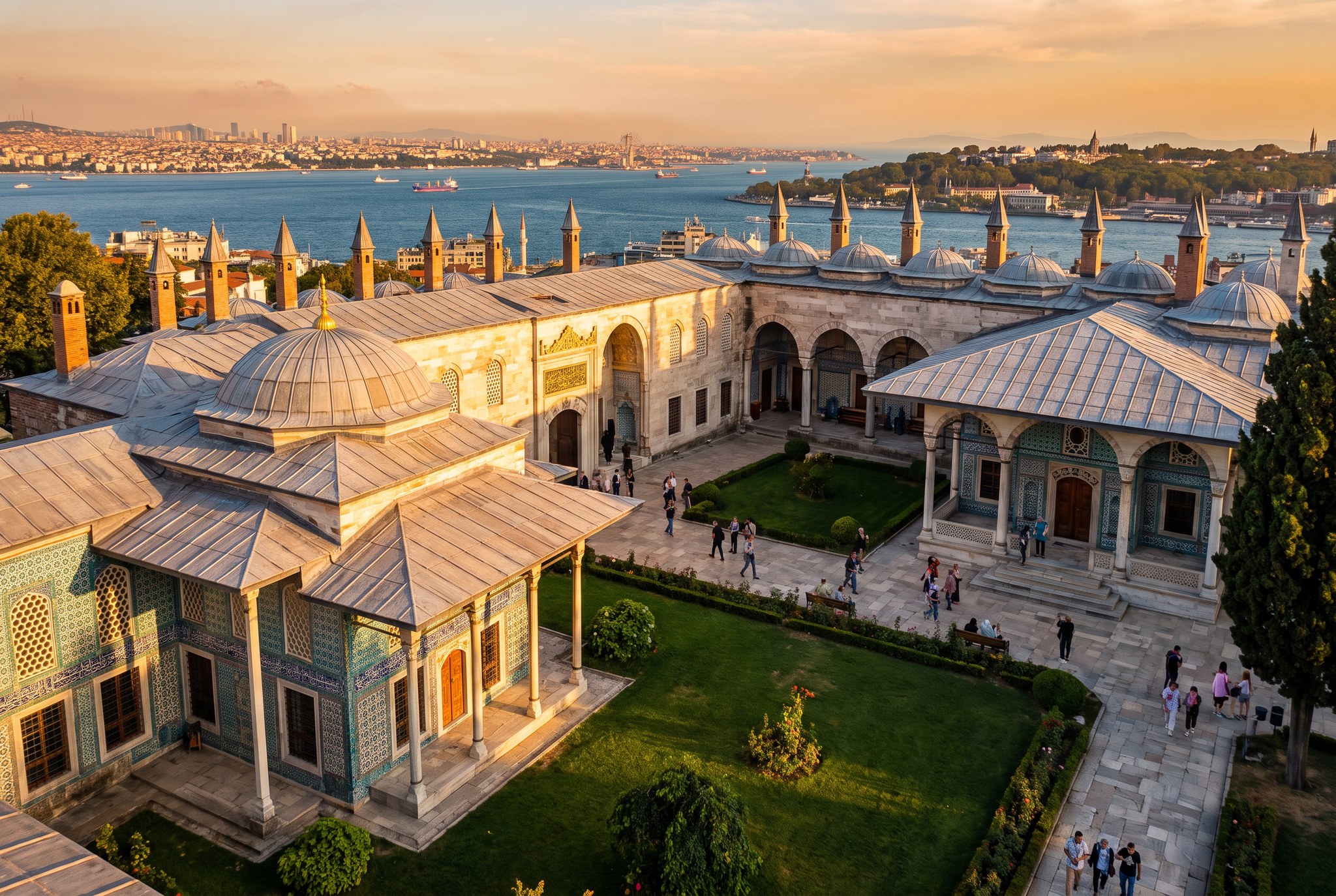
Topkapi Palace was the residence and administrative centre of Ottoman sultans for roughly four centuries, and its courtyards still carry that scale. The group passes through gated courtyards that once separated public business from private royal life, glancing into kitchens that once fed thousands of the palace household and halls where treasury pieces are displayed behind glass. Guides point out which rooms held council meetings, which were reserved for the sultan's family, and how the palace layout reflects Ottoman ideas about rank and privacy. Visitors leave with a clearer picture of how an empire actually ran its daily affairs from within these walls, rather than a general sense of grandeur alone.
Hagia Sophia's Dome and History
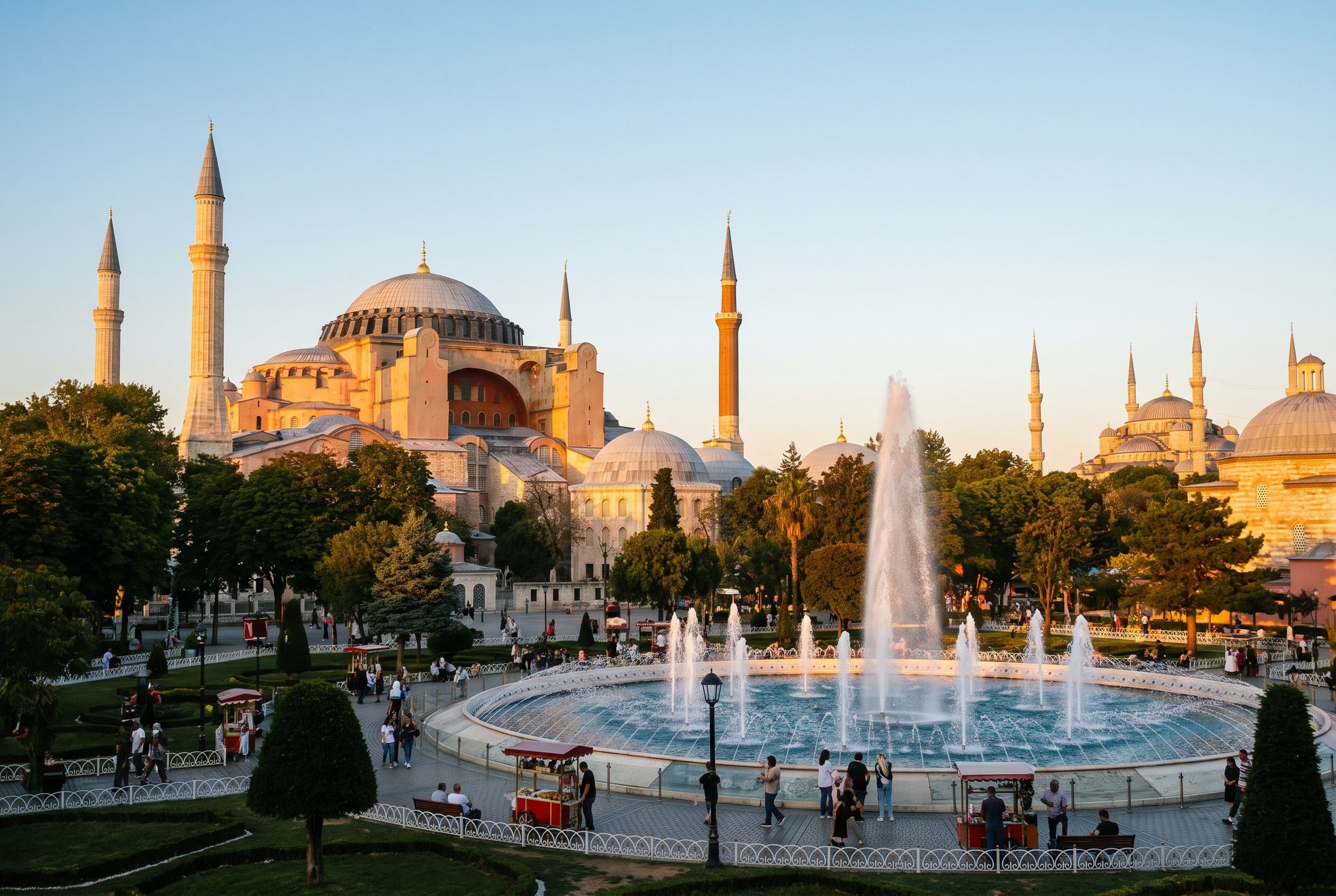
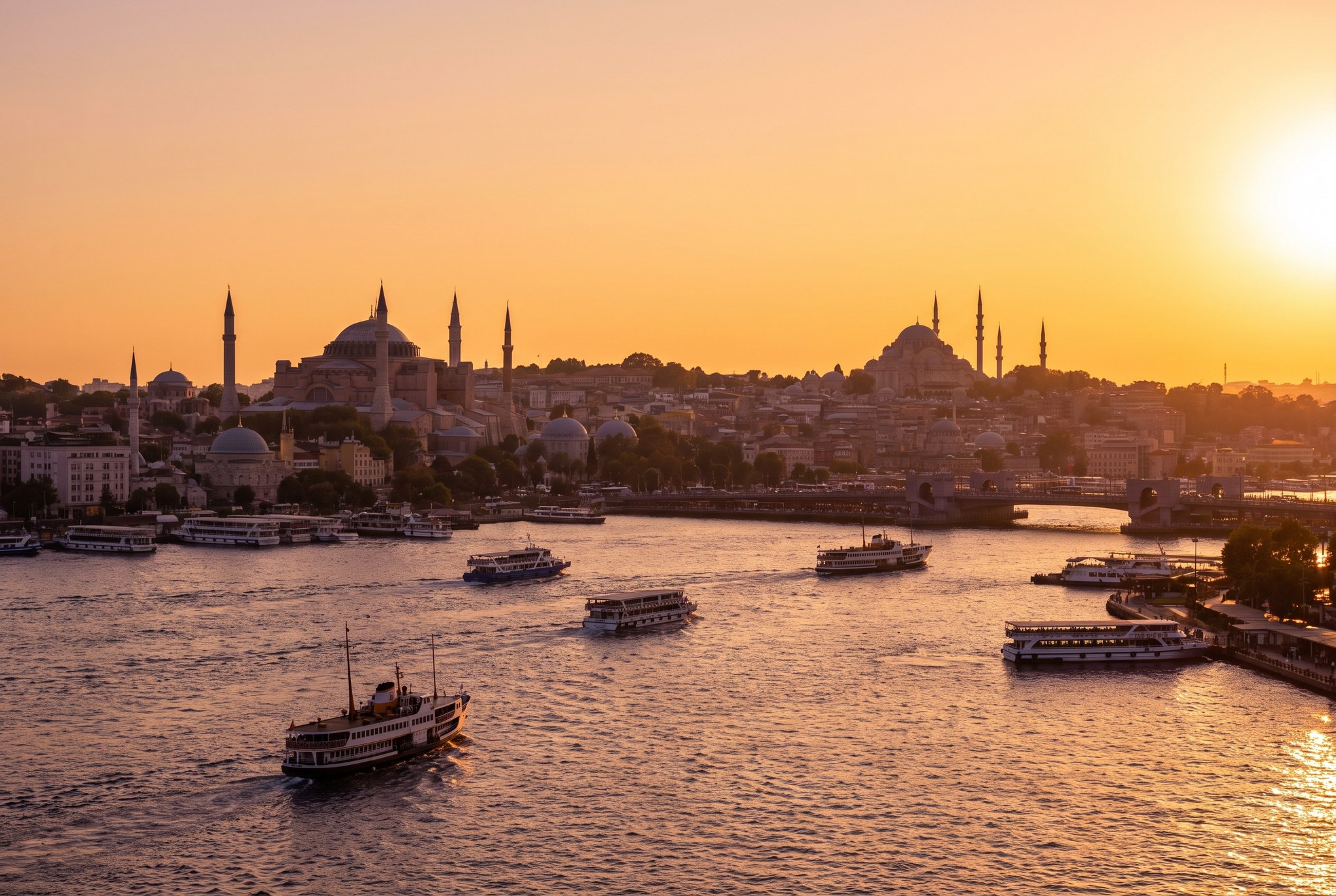
Hagia Sophia has served as a church, a mosque, a museum and a mosque again, and every phase of that history is visible somewhere in its structure. Beneath its dome, the group looks up at a span that stunned engineers for centuries and out at surfaces where Byzantine mosaics and Ottoman calligraphy panels now share the same walls. The guide explains how the building changed use over time and what was added, covered or uncovered at each stage. Few sites in the city compress so many centuries into one room, and seeing it as part of a guided sequence helps the layers make sense.
The Istanbul Archaeology Museums
The Istanbul Archaeology Museums hold material gathered from digs across the wider region, arranged in galleries that move from early antiquity through to the late Ottoman period. Sarcophagi, inscriptions and everyday objects sit alongside larger architectural fragments, giving a sense of daily life long before the Ottoman palaces were built. The guide selects the pieces worth slowing down for rather than attempting to cover every case, which keeps the visit focused. For travellers who enjoyed Topkapi and Hagia Sophia, this stop adds a deeper layer beneath both, showing what the city looked like in the centuries before either was built.
Reading Ottoman and Byzantine Istanbul Side by Side
Seeing these three sites in one day lets a traveller compare them directly rather than recalling one from a trip made weeks apart. Ottoman court life at Topkapi, the shifting religious history at Hagia Sophia and the archaeological record underneath both come together into a single, connected picture of the city. The guide draws these threads together as the day goes on, pointing out where one site's history explains something seen at the next. Many visitors say this order, rather than any single stop, is what made the difference between an interesting palace visit and a real understanding of the city's past.
A Guide Who Explains What You Are Looking At
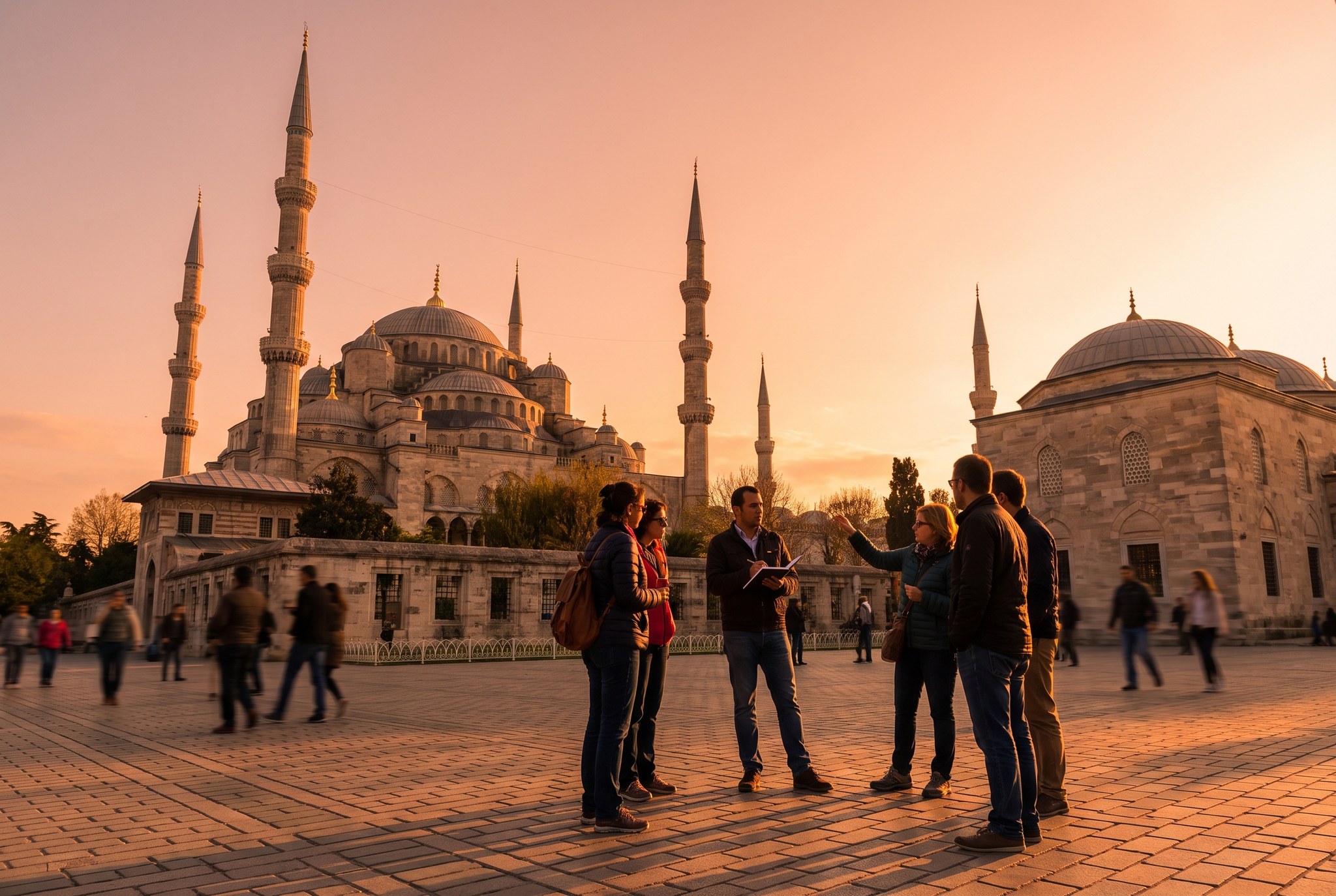
Every stop on this tour is accompanied by a Haqqi Tours guide who works in Arabic and English and has spent years explaining these same halls to visiting families. Rather than reciting dates, the commentary focuses on what daily life looked like for the people who used these spaces, and it leaves room for questions as they come up. Children are welcome to ask why a room looks the way it does, and adults can ask about details a guidebook would skip. The result is a day that feels explained rather than merely narrated, with someone on hand throughout to fill in the gaps.
Who This Tour Suits
This tour suits travellers who prefer to understand a place rather than simply photograph it, including families with older children who enjoy asking questions along the way. It works well as an indoor option on a hot afternoon or a wet day, and as a first full day in Istanbul before moving on to markets, the Bosphorus or the newer districts. Because it runs as a shared group tour, it also suits solo travellers and couples who would rather join others than arrange a private guide for a single day of museum visits.
Meeting Point and Timing
Once your date is set, the desk sends the pickup point and meeting time in writing, and the order in which we visit Topkapi, Hagia Sophia and the Archaeology Museums is planned to work around opening hours where possible. Queues at major sites can still vary regardless of planning, and the guide adjusts the day accordingly. The group stays together between stops rather than splitting into separate timings, so being ready when the guide calls the group matters more than a fixed clock time at each individual site along the route.
Dress and What to Bring
Comfortable, closed shoes make the difference on this tour, since all three sites involve walking on stone floors and, in places, uneven courtyards. Hagia Sophia in particular calls for shoulders and knees covered, so anyone in the group who might want to cover their hair as well should carry a light scarf for that one stop. A bottle of water, a small bag for tickets and documents, and a portable charger for photos are worth carrying, since the day covers a fair amount of ground on foot between galleries and courtyards without a long break at any single point.
Booking With Haqqi Tours
Haqqi Tours confirms your seat, pickup point and the order of museum visits in writing before any payment changes hands, and questions can go to our WhatsApp desk in either Arabic or English at any point before the tour date arrives. We run our own vehicles and employ our own guides rather than subcontracting the day out to a third party, which keeps the plan for Topkapi, Hagia Sophia and the Archaeology Museums firmly in our hands from the first morning pickup to the final drop-off back at your accommodation in the evening.
Good to know
- Wear closed, comfortable shoes since all three museums involve stone floors and uneven courtyards.
- Carry a light scarf for Hagia Sophia in case you want to cover your shoulders or hair.
- Bring a bottle of water, as the day covers a fair distance on foot between halls.
- Keep your phone charged for photos, since displays and architecture both invite plenty of pictures.
- Arrive at the pickup point a few minutes early so the group can start on time.
- Expect queues at busy periods and treat the guide's pacing as the plan for the day.
- Pack tickets and any confirmation message somewhere easy to reach rather than deep in a bag.