Acropolis & Parthenon Guided Tour in Spanish Athens
- Duration2 hours
- Daily
- Group
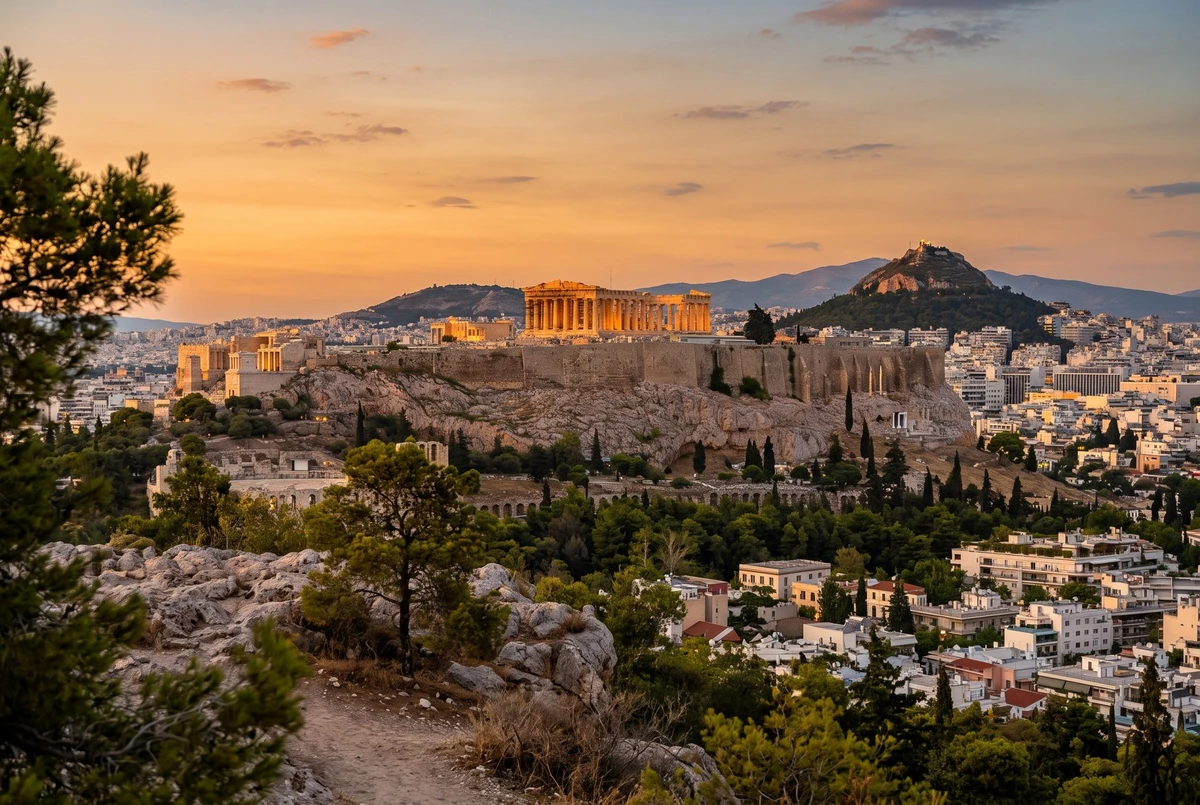
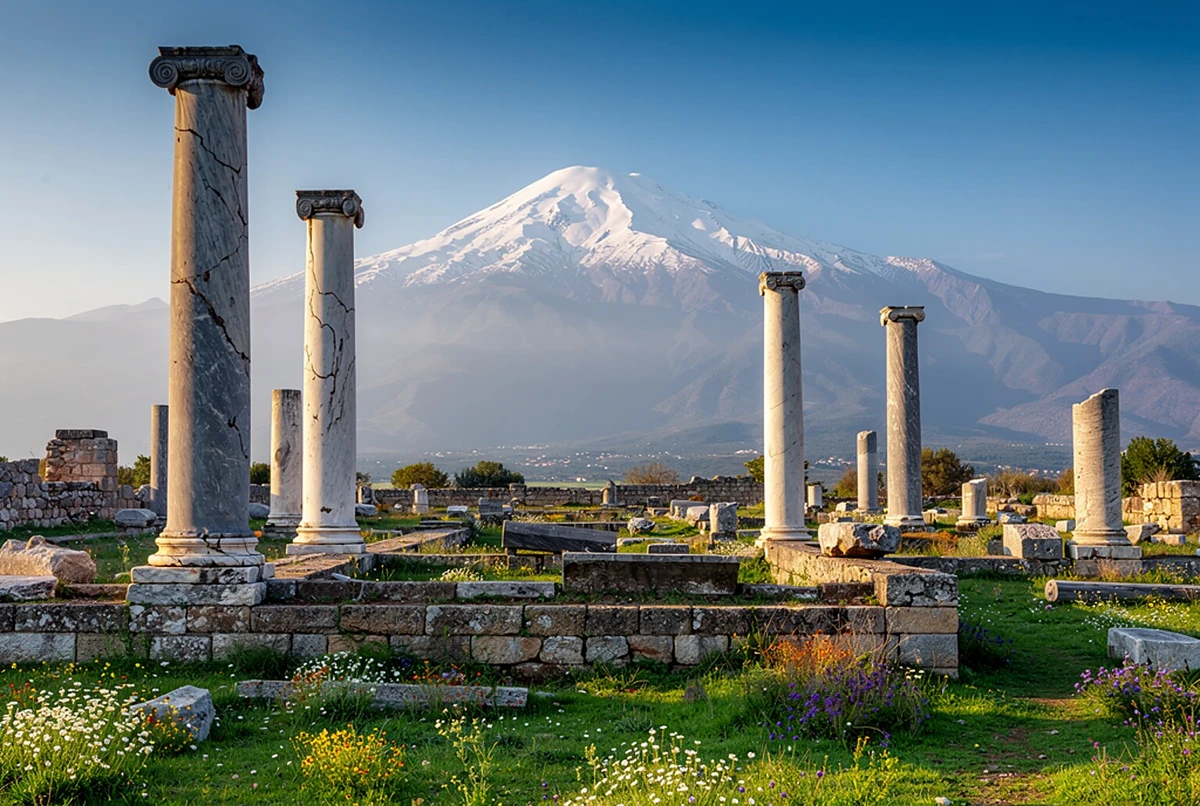
Some images are AI-generated for illustration. While we confirm your booking, just ask and we will send you the original photos.
- Fair, honest prices
- Real people, not bots
- Confirm, then pay
- Secure payment

Overview
This guided visit of the Acropolis is led entirely in Spanish by an officially qualified guide, ideal for travellers who want every detail in Spanish (visita guiada en español). The default option includes your Acropolis entrance ticket with early entry, so there is nothing to buy on the day. Starting at 09:30 from the southern entrance, opposite the Acropolis Museum, the 2-hour walk climbs the south slope past the Theatre of Dionysus, the Asklepieion, the Stoa of Eumenes and the Odeon of Herodes Atticus, then passes through the Propylaea to the Temple of Athena Nike, the Parthenon and the Erechtheion with its Caryatids. Headphones are provided, and the tour ends at the top with free time for photos. An option without a ticket is also available.
Highlights
- Officially qualified guide speaking only Spanish, with headphones
- Acropolis entrance ticket with early entry included
- Theatre of Dionysus, the oldest theatre in the world
- Asklepieion, the Stoa of Eumenes and the Odeon of Herodes Atticus
- Propylaea gateway in Doric and Ionic styles and the Temple of Athena Nike
- The Parthenon, Erechtheion and the Porch of the Caryatids
- The legend of Athena and Poseidon told where it happened
- Free time at the summit for 360-degree views and photos
Full Description
The Theatre of Dionysus on the South Slope
The tour starts at the southern entrance, a calmer way into the archaeological site than the main western gate, and its first stop is the Theatre of Dionysus. Built in the 5th century BC and enlarged in stone in the 4th, it held around 17,000 spectators and is considered the oldest theatre in the world. It was dedicated to Dionysus, god of theatre and festivity, whose spring festival saw new plays staged in competition.
Your Spanish-speaking guide shows you the marble seats of honour in the front row, the carved stage front and the remains of the temple of the god beside it. Arriving early means you see the theatre before the large groups, with soft morning light on the stone. Allow about 10 minutes here, and keep your headphones on to follow every story as you walk.
The Asklepieion, the Stoa of Eumenes and the Odeon of Herodes Atticus
Following the path west, you pass the Asklepieion, the sanctuary of Asclepius, god of medicine, founded in 420 BC beside a sacred spring. Pilgrims came here to be healed, and finds from the site tell a fascinating story about ancient health and medicine. Below runs the Stoa of Eumenes, a long covered colonnade built in the 2nd century BC by a king of Pergamon as a gift to Athens, where theatregoers sheltered from sun and rain.
At the end of the walkway rises the spectacular Odeon of Herodes Atticus, built in AD 161 as a roofed concert hall for about 5,000 people. Restored in the 1950s, it is still in use today and hosts some of the most important concerts and performances in Greece during the summer festival. From the path above, you look straight down into its marble semicircle.
The Propylaea and the Temple of Athena Nike
You enter the summit, as the ancient Athenians did, through the Propylaea, the grand gateway built between 437 and 432 BC. Your guide points out how the architects combined two styles: sturdy Doric columns on the outside and tall, slender Ionic columns inside, a clever solution for a building set on a steep slope. Even unfinished, it was admired as a masterpiece in its own time.
To the right, on a high bastion, stands the Temple of Athena Nike, a small Ionic temple to Athena as goddess of victory, built around 420 BC. It is one of the first sights you see on any visit, and its delicate proportions contrast with the power of the gateway beside it. From its terrace the view opens to the west towards the sea and the hills beyond the city.
The Parthenon, Athena's Temple
The Parthenon is the most harmonious temple of the ancient world, built between 447 and 432 BC in honour of Athena, protector of the city. Every column leans very slightly inwards and every step curves gently upwards, refinements that make the building look perfect to the eye. Inside once stood a huge gold and ivory statue of the goddess, and the marble was brightly painted.
Later the temple became a church and then a mosque, until an explosion in 1687 destroyed its roof and centre. Today restoration teams work carefully to put fallen pieces back in place. Your guide spends about 20 minutes here, explaining the sculptures and the reasons this monument is recognised by UNESCO as a symbol of classical civilisation. Is the Acropolis worth visiting with a guide in your own language? Here the answer becomes clear.
The Erechtheion and the Porch of the Caryatids
The visit ends at the Erechtheion, the temple that still bears the marks of the gods who fought for the city. According to legend, Poseidon struck the rock with his trident and gave a salt water spring, while Athena offered the first olive tree, and the Athenians chose her. An olive tree still grows beside the temple, and your guide shows you where the mark of the trident was honoured.
The south porch is supported by the six Caryatids, elegant female figures used as columns; those on site are copies, with the originals kept in the nearby museum. After the explanations you are free to stay at the top as long as you like, enjoying 360-degree views over Athens, from Lycabettus Hill to the port of Piraeus, and taking the best photos of the day.
Itinerary
- Southern entrance of the AcropolisMeet your Spanish-speaking guide opposite the Acropolis Museum and receive your headphones and ticket (about 10 minutes).
- Theatre of DionysusFirst stop at the oldest theatre in the world (about 10 minutes).
- Asklepieion and Stoa of EumenesThe sanctuary of the god of medicine and the long colonnade of the south slope (about 10 minutes).
- Odeon of Herodes AtticusView of the Roman concert hall still used today (about 10 minutes).
- PropylaeaEnter the summit through the monumental gateway (about 10 minutes).
- Temple of Athena NikeThe small temple of victory on its bastion (about 5 minutes).
- ParthenonExplanation of the great temple of Athena (about 20 minutes).
- Erechtheion and CaryatidsThe legend of Athena and Poseidon and the Porch of the Caryatids, then free time at the summit (about 20 minutes).
What's included
- Officially qualified guide speaking exclusively Spanish
- Headphones to hear the guide clearly
- Early-morning walking visit of all the Acropolis monuments: Theatre of Dionysus, Asklepieion, Odeon of Herodes Atticus, Propylaea, Temple of Athena Nike, Parthenon and Erechtheion with the Porch of the Caryatids
- Historical and mythological explanations for the whole site
- Free time at the top for photos and 360-degree views
Not included
- Acropolis entry ticket (buy it in advance for the tour's time slot)
- Hotel pickup and transfer
- Food and drinks
Is this right for you?
Great for
- Families with children — a child price for ages 5–17
- History and culture lovers
- A short visit — about 2 hours
- Travellers who want a proven choice — rated 4.9/5 by past travellers
Think twice if
- You want a private tour — this one is shared with other travellers
Not suitable for
- Wheelchair users
- Travellers who cannot climb steep, uneven paths
Meeting point
Meet your guide right next to the southern entrance of the Acropolis, across from the Acropolis Museum and a few metres from Acropolis metro station on line 2; the guide holds a sign with the tour name. The default tour starts at 09:30, so please arrive 15 minutes early with your passport or ID ready. There is no hotel pickup, and the starting point is an easy walk from Plaka, Koukaki and Makrigianni. The tour ends at the top of the Acropolis, and you walk down at your own pace.
Important information
- The guide speaks only Spanish throughout the tour
- Bring a passport or ID card; children and young EU citizens may qualify for free entry
- Strollers, bags and large backpacks are not allowed on the Acropolis
- Electric and non-folding wheelchairs are not allowed on this tour
- Wear comfortable shoes with good grip, as the marble is slippery
- Bring a hat and sunscreen; the early start helps avoid the midday heat
- Expect a security check at the entrance, especially in high season
- Child prices apply to ages 5 to 17
Good to know
Frequently Asked Questions
Straight answers to what travellers ask us most, before they book.
Is this a shared or a private experience?
It is a shared group tour, led entirely in Spanish by an officially qualified guide, with headphones so everyone hears clearly.
How long does the Acropolis tour in Spanish take?
About 2 hours of guided walking, after which you can stay at the summit as long as you like for photos and views.
Is hotel pickup included?
No. You meet next to the southern entrance of the Acropolis, opposite the Acropolis Museum and a few metres from Acropolis metro station.
What is included?
In the default option: the Acropolis entrance ticket with early entry, an officially qualified Spanish-speaking guide, headphones and a full visit of all the monuments with historical and mythological explanations. Hotel transfers, food and drinks are not included.
Is the price per person or per group?
The price is per person, with a reduced rate for ages 5 to 17. The booking panel on this page shows the current price of each option.
Is it suitable for children or travellers with reduced mobility?
Children who understand Spanish enjoy the myths and the views. The climb is steep and the marble uneven, so it is not suitable for wheelchair users, and strollers are not allowed on the site.
Is the whole tour really in Spanish?
Yes. The guide speaks exclusively Spanish from start to finish, so there is no switching between languages and you get the full explanation.
What happens with the option without a ticket?
If you choose the option without a ticket, you must buy your own Acropolis ticket in advance for the tour's time slot. The default option includes the ticket, so there is nothing else to arrange.
What should I bring?
A passport or ID card, comfortable non-slip shoes, a hat, sunscreen and a small bottle of water. Leave large bags at your hotel.
Why does the tour start early in the morning?
The 09:30 start with early entry lets you visit before the heat of the day and before the busiest hours, which makes the climb far more pleasant, especially from May to September.
What happens in bad weather?
The tour runs in light rain, so bring a rain jacket and shoes with good grip. If the authorities close the site because of storms or extreme heat, our team contacts you to discuss your options.
How do I book and confirm?
Choose your date and option in the booking panel and send your request. Our team confirms your booking on WhatsApp within minutes, with the meeting point and start time.
More in Athens

Getting to & around Athens
Popular across Greece
-

-
-
-
-
-