
Hippo & Crocodile Estuary Cruise, St Lucia
4.6 (961 reviews) from travellers who booked this experience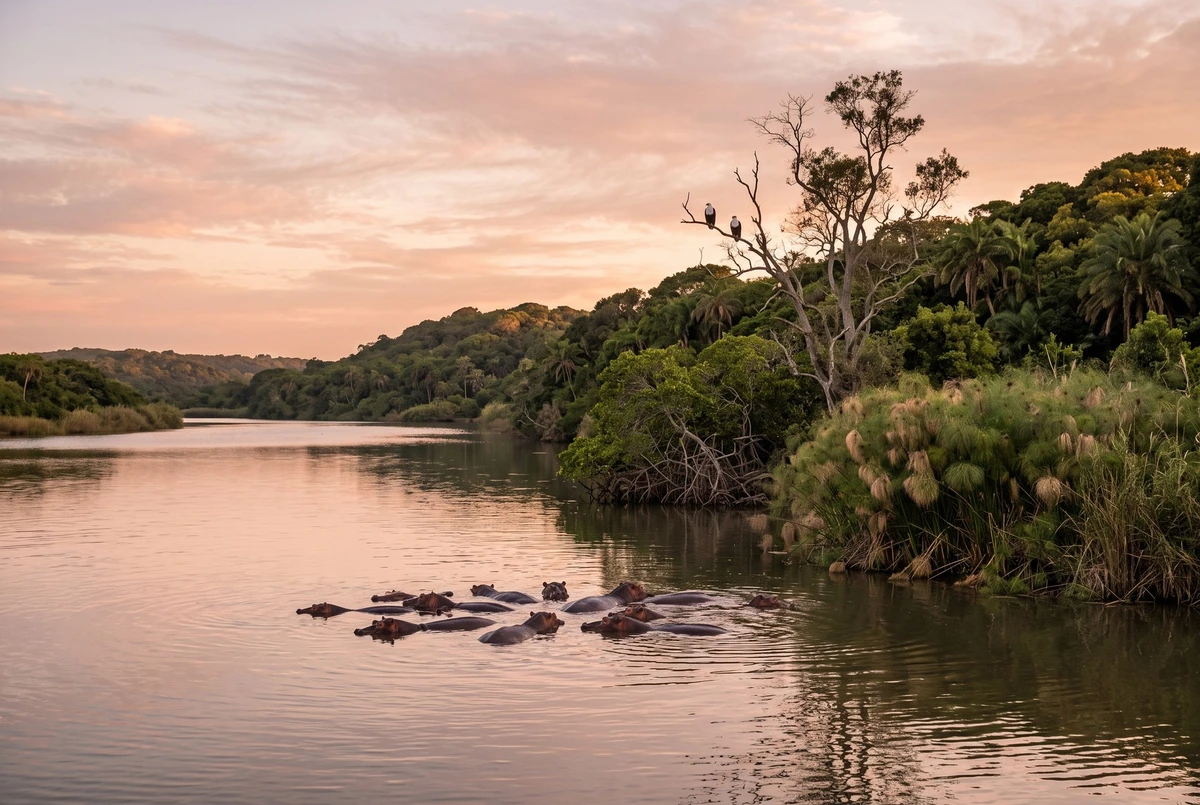
Overview
This St Lucia hippo and crocodile cruise is a two-hour boat safari on the St Lucia Estuary in iSimangaliso Wetland Park, South Africa's first UNESCO World Heritage Site. You board a small, comfortable boat at the jetty in St Lucia village with a skipper and a ranger, then drift along the channels and reed beds of one of Africa's largest estuary systems, stopping beside pods of hippos, crocodiles basking on the banks and a remarkable variety of birds, from fish eagles and kingfishers to pelicans and herons. The ranger explains the wetland and its wildlife throughout. Departures run through the day, including a late-afternoon sailing in the best light. It suits families, photographers and anyone exploring the KwaZulu-Natal coast. Sightings are never guaranteed.
Highlights
- Two hours on the St Lucia Estuary inside iSimangaliso Wetland Park, a World Heritage Site
- Pods of hippos resting, yawning and surfacing close to the boat
- Nile crocodiles basking on the sandbanks and sliding into the water
- Fish eagles, kingfishers, pelicans, herons and flamingos in season
- Small comfortable boat with a skipper and a ranger who explains the wetland
- Several departures a day, including the late afternoon for the softest light
- Life jackets on board; bring your own snacks and drinks if you like
- Departs from the jetty in St Lucia village, a short walk from most accommodation
Full Description
iSimangaliso Wetland Park and the St Lucia Estuary
iSimangaliso Wetland Park stretches along the KwaZulu-Natal coast from the St Lucia Estuary north to the Mozambique border, protecting lakes, coastal forest, dunes, coral reefs and grassland in a single reserve. It was South Africa's first UNESCO World Heritage Site, listed in 1999, and its name in Zulu means a place of wonder. At its southern end, Lake St Lucia and its estuary form one of the largest estuarine systems in Africa, a shallow sheet of water fringed by reeds, mangroves and forest.
The estuary holds the largest hippo population in South Africa and a dense population of Nile crocodiles, which is why a St Lucia hippo cruise is the signature activity of the village. The boat leaves from the jetty beside the estuary bridge on the road into town, a short walk from most guesthouses, so the cruise fits easily into any day.
Hippos of St Lucia
Hippos are the reason most people come. They spend the day in the water to keep cool, surfacing to breathe, yawning widely to show their tusks and grunting to one another, and the skipper approaches each pod slowly from the side so the animals stay calm and the boat stays safe. The ranger explains their behaviour, from the dominant bulls that guard a stretch of water to the mothers that keep calves between themselves and the boat.
At night the same hippos leave the water to graze, and they are a familiar sight on the lawns and streets of St Lucia village, which is why residents and visitors give them a wide berth after dark. Seeing them from the water by day, with the ranger's commentary, is both the safest and the most rewarding way to understand them. Sightings are never guaranteed, but hippos are seen on almost every cruise.
Nile crocodiles on the banks
Nile crocodiles share the estuary with the hippos, and the cruise usually finds several basking on the sandbanks and muddy edges with their mouths open to cool down, or lying motionless in the shallows with only eyes and nostrils showing. Large adults can exceed four metres, and the ranger points out how to tell their age and sex and how they hunt at the water's edge.
The boat keeps a respectful distance, which is also the best distance for photographs, with the animals framed against the reeds and the forest behind. Winter mornings, when crocodiles need the sun most, are often the best time to see them out of the water; in the heat of summer they spend more time submerged. Keep hands inside the boat at all times.
Birdlife of the wetland
The St Lucia Estuary is one of the richest birding areas in South Africa, and even guests who come for hippos leave talking about the birds. African fish eagles call from the dead trees along the bank and swoop for fish, pied and malachite kingfishers hover over the shallows, goliath herons stand in the reeds, and pelicans, cormorants, spoonbills and, in season, flamingos gather on the open water. Weavers build their nests over the channels and the ranger identifies each call.
Binoculars make a real difference, so bring a pair if you have one. The late-afternoon cruise is the favourite of photographers, with golden light on the water and birds returning to roost, while the morning cruises are cooler and often calmer. Whichever you choose, two hours pass quickly on this quiet water.
St Lucia village and how to get there
St Lucia is a small, relaxed village at the mouth of the estuary, about two and a half to three hours' drive north of Durban along the N2 and the R618, and under an hour from the gates of Hluhluwe-iMfolozi Park. Among the things to do in St Lucia, the estuary cruise, the beach and Cape Vidal inside the park, turtle tours in summer and a safari in Hluhluwe-iMfolozi make a full two or three days. Hotel pickup is not included for the cruise, but the jetty is within walking distance of most of the village.
The cruise runs year-round. The cooler, dry winter from May to September brings clear skies and animals out in the sun; summer is hot and humid with lush greenery and more birds. Bring a jacket for the breeze on the water, a hat and sunscreen, and your own snacks and drinks if you wish.
Itinerary
- Check-in at the jettyArrive at the boat jetty on the St Lucia Estuary about fifteen minutes before departure, collect your life jacket and board the small boat.
- Into the estuaryThe skipper heads up the estuary channels past reed beds and mangroves while the ranger introduces the wetland.
- Hippo pods and crocodilesSlow approaches to several hippo pods and to crocodiles basking on the banks, with time for photographs and the ranger's commentary.
- Birdlife and the returnFish eagles, kingfishers, herons and pelicans along the way back, arriving at the jetty about two hours after departure.
What's included
- Guided cruise along the St Lucia Estuary
- Small comfortable boat with a skipper and ranger
- Commentary on hippos, crocodiles and birdlife
- Life jackets on board
Not included
- Food and drinks (you may bring your own)
- Hotel pickup and drop-off
- Tips
Not suitable for
- Children under about two years old
- People unable to board a small boat from a jetty
Meeting point
Meet at the boat jetty on the St Lucia Estuary, beside the bridge on the road into St Lucia village, about fifteen minutes before your chosen departure time. Hotel pickup is not included, but the jetty is a short walk from most accommodation in the village. We send the exact location with your confirmation.
Important information
- Wildlife sightings are never guaranteed, though hippos and crocodiles are seen on almost every cruise.
- Bring a jacket for the breeze on the water, a hat, sunscreen and binoculars; a camera with a zoom lens is useful.
- Food and drinks are not included, but you are welcome to bring your own snacks and drinks on board.
- Keep hands and arms inside the boat at all times and follow the ranger's instructions.
- If the cruise is cancelled for weather, you receive a full refund or a new departure.
- Children pay a reduced rate; please supervise small children on board.
- After dark, give hippos on the village streets a wide berth and never walk between a hippo and the water.
- Restrooms are available at the jetty before departure.
Good to know
Frequently Asked Questions
Straight answers to what travellers ask us most, before they book.
Is this a shared or a private tour?
It is a shared cruise on a small boat seating around fifteen guests, with a skipper and a ranger on board. If you want the boat for your own group, write to our team and we will check availability.
Is the price per person or per group?
The cruise is priced per person, with a reduced rate for children. The booking panel on this page shows the current price.
How long is the cruise?
About two hours on the water, plus a few minutes for check-in at the jetty.
Will we see hippos and crocodiles?
Hippos and crocodiles are seen on almost every cruise because the estuary has the largest hippo population in South Africa, but they are wild animals and no sighting can be guaranteed.
Is hotel pickup included?
No. The jetty is within walking distance of most accommodation in St Lucia village, and there is parking nearby.
What is included?
The guided two-hour cruise, the small comfortable boat with skipper and ranger, commentary on the wildlife and life jackets. Food and drinks are not included, but you may bring your own.
Which departure time is best?
The late-afternoon cruise has the softest light for photographs and birds returning to roost; morning cruises are cooler and calmer. All departures see hippos.
Is it suitable for children and people with reduced mobility?
Yes, children love it and the boat is calm and stable. Boarding is from a jetty with a short step; tell us about any mobility needs and we will advise.
What should I bring?
A jacket, hat, sunscreen, binoculars, a camera and your own snacks and drinks if you wish.
When is the best time of year?
The cruise runs all year. Winter from May to September is dry and clear with animals basking in the sun; summer is hot and green with the richest birdlife.
What happens if the weather is bad?
If the skipper cancels the cruise for weather you receive a full refund or we move you to another departure.
How do I book and confirm?
Choose your date and departure time in the booking panel and send the request; our team confirms on WhatsApp within minutes with the meeting point.
You might also like
Tours
View all 
Airport Transfers
View allExplore more in St Lucia
More tours in St Lucia
See all tours in St Lucia Other things to do in St Lucia


More tours across South Africa
-
-
-
-
-
-