Ephesus & Selcuk Tour
Overview
Journey into the ancient world with the Ephesus & Selcuk Tour, where Haqqi Tours curates a profound historical exploration from the coast. We offer a scenic drive to the sacred House of the Virgin Mary, a revered pilgrimage site. We guide you through the remarkably preserved ruins of Ephesus, including the magnificent Library of Celsus and the Great Theatre. We provide a delightful buffet lunch in Selcuk and a visit to the legendary Temple of Artemis. We ensure a deeply enriching day, perfectly capturing the grandeur of classical antiquity.
Highlights
- We organize a comprehensive journey to the heart of classical antiquity from your location.
- We begin with a serene visit to the sacred House of the Virgin Mary on Mount Koressos.
- We guide you through the monumental ruins of Ephesus, including the magnificent Library of Celsus.
- We serve a delicious open-buffet lunch in the culturally rich town of Selcuk.
- We include a brief but impactful photo stop at the legendary Temple of Artemis ruins.
- We provide free time to browse the local Selcuk market and visit specialized craft factories.
Full Description
A 05:30 Start from Marmaris
The coach collects guests from city centre hotels in Marmaris before 05:30, since Ephesus sits inland on the far side of the peninsula and the group has real ground to cover. A first stop in Mugla lets everyone stretch, use the facilities and eat something before the ruins begin. The guide uses this stretch of road to run through the rest of the day, from the House of the Virgin Mary to the closing factory visit. Because the tour departs daily, families can choose whichever date suits their Marmaris stay. The Mugla stop marks where the coastal road gives way to the inland route toward Selcuk and the Ephesus valley.
The House of the Virgin Mary on Mount Koressos
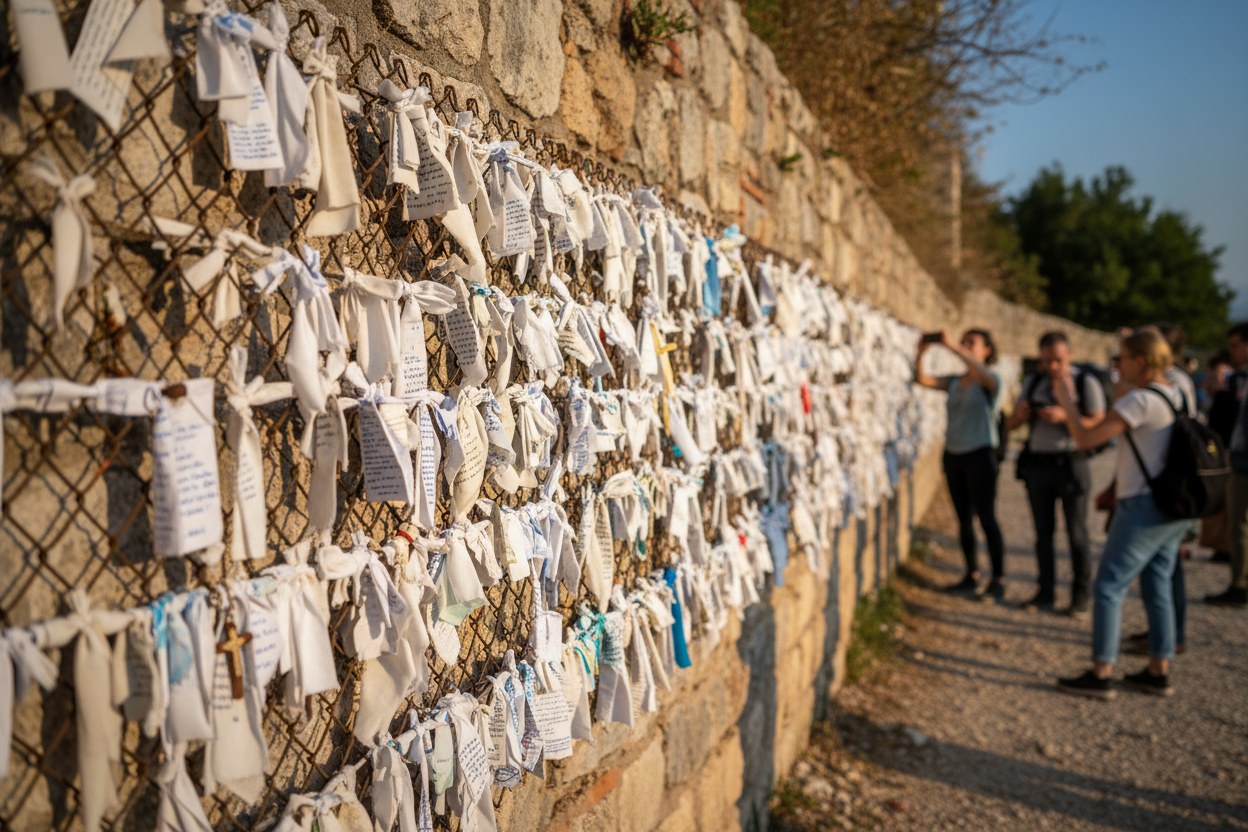
Past Mugla, the coach climbs Mount Koressos to the small stone house venerated as the final home of the Virgin Mary. Visitors spend one to two hours here, moving quietly through the chapel and pausing at the spring said to have healing properties just outside. The setting among pine trees is calm rather than crowded, and the guide explains how the site was identified and why it draws pilgrims of several faiths each year. A wall nearby is covered in written wishes left by visitors, tied or pinned in place. This stop sets a reflective tone before the busier ruins of Ephesus, and most guests find twenty minutes enough to see the house itself and the surrounding terrace.
Entering Ephesus Through the Hercules Gate
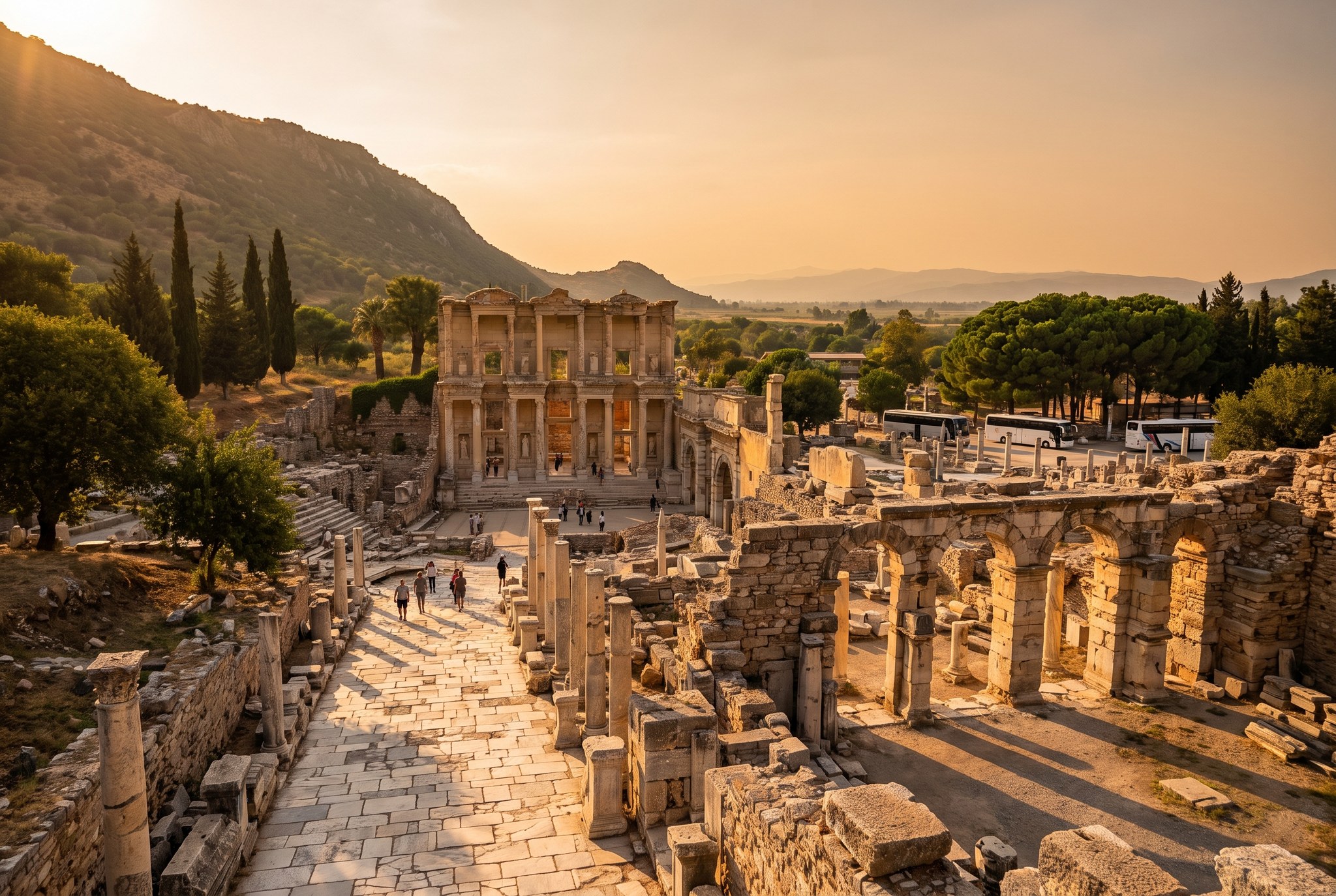
The group enters the ancient city through the Hercules Gate, named for the relief carvings of Hercules still visible on its narrow stone posts. From here, Ephesus opens out across two to four hours of walking, enough time to take in the scale of a city that once held a quarter of a million people. The guide points out where the street narrows deliberately, thought to have stopped carts from passing through what was a pedestrian route into the upper town. Marble paving, worn smooth by two thousand years of foot traffic, runs underfoot for most of the visit. This gate marks the natural starting point of the walking route that continues downhill through the rest of the site.
Along Curetes Street to the Temple of Hadrian
Curetes Street slopes gently downhill past the row of temples, fountains and statue bases that once lined the main route through Ephesus. Partway down, the Temple of Hadrian stands out for its carved arch and detailed frieze, one of the better-preserved facades on the site. The guide points out the terraced houses of the wealthy set back from the street, where a separate ticket allows entry to the Terrace Houses for those who wish to see the mosaics inside. Shop fronts and mosaic floors survive at intervals along the paving, giving a sense of a working street rather than only a ceremonial one. This stretch is usually the busiest part of the walk, with regular pauses for photographs.
The Library of Celsus and the Great Theatre
The street opens onto the two-storey facade of the Library of Celsus, rebuilt from its original pieces and instantly recognisable from almost any photograph of Ephesus. The guide explains the four statues set into its niches and the underground tomb built into the structure for the Roman governor it honours. A short walk further leads to the Great Theatre, cut into the hillside and large enough to hold twenty-five thousand spectators in its day. Visitors are free to climb partway up the stone seating for a view back down Harbour Street toward where the ancient port once stood. These two points anchor most people's memory of the visit and mark roughly the midpoint of the walking route through the site.
The Odeon and the Ancient Public Latrines
Away from the two best-known landmarks, the Odeon offers a smaller, quieter theatre once used for council meetings and musical performances rather than large public events. Its compact rows of stone seating are usually far less crowded than the Great Theatre, making it a good place to rest briefly in the shade. Nearby, the ancient public latrines draw curious questions from most groups: rows of stone seats set over a channel of running water, once a genuinely social space where Ephesians met to talk. The guide explains how the system worked and what it reveals about daily Roman life beyond the temples and monuments. Together these two stops round out the picture of Ephesus as a functioning city rather than only a ceremonial one.
Optional Extras: Terrace Houses, the Museum, Basilica of St John, Sirince
Depending on the day and the group's interest, the guide may offer time for the Ephesus Archaeological Museum in Selcuk, home to finds including the famous statues of Artemis removed from the ancient city. The ruined Basilica of St John, built over the traditional burial site of the apostle, is another occasional stop for those keen to see more of the region's early Christian history. Some departures also allow a short detour to Sirince, a hillside village of stone houses known for fruit wines and handicrafts, though this depends on time on the day. None of these extras is guaranteed on every date, so travellers with a particular interest should mention it to the guide at the start of the tour.
Lunch and Market Time in Selcuk
Back down from Ephesus, the group has an open buffet lunch in Selcuk, a working market town rather than a resort, with a spread that usually includes hot dishes, salads and dessert. After lunch, there is time to walk the town at a personal pace, browsing stalls selling spices, textiles and local produce near the base of Selcuk's Byzantine aqueduct. Storks nest on the old aqueduct columns through spring and summer, a detail most visitors notice only once it is pointed out. Travellers can sit with tea, shop, or simply rest before the return leg of the day. The guide sets a clear meeting point and time before releasing the group to explore on their own.
A Last Look at the Temple of Artemis
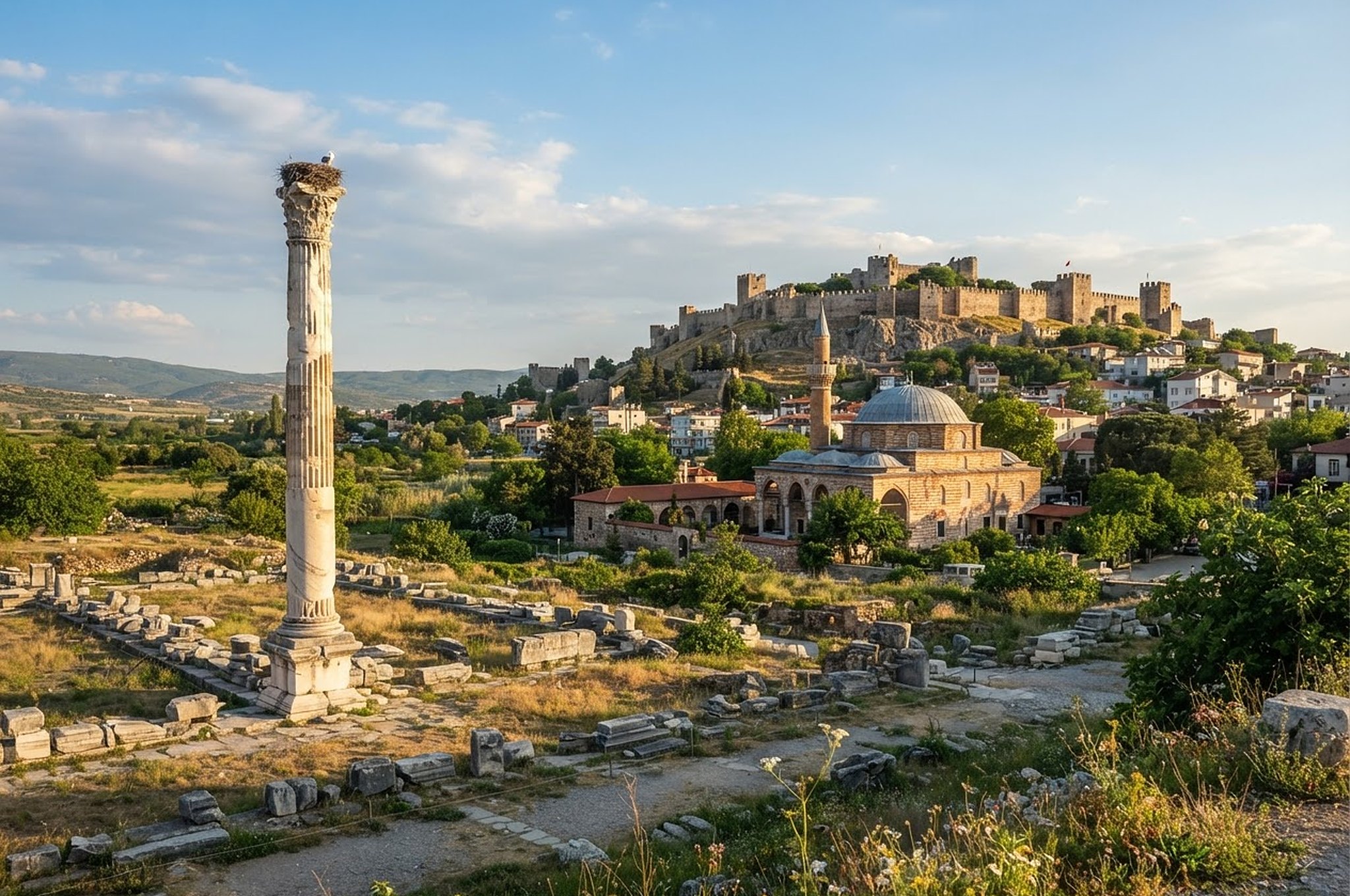
Selcuk's final stop before the return drive is a marshy field holding just one re-erected column, all that marks where the Temple of Artemis, one of antiquity's Seven Wonders, once stood. There is little left to see structurally, but the guide uses the short stop to explain the scale the temple once had and why so little survives compared with Ephesus itself. It works as a quiet, reflective pause rather than a full site visit, usually no more than ten or fifteen minutes. From here the route continues to a leather, ceramic or jewellery workshop, where craftspeople demonstrate techniques used in Turkish design before the coach turns back toward Marmaris.
Who Joins This Tour and How Booking Works
This is a shared group tour with a fixed coach and one guide for everyone on board, well suited to families and couples comfortable moving through the day alongside other travellers rather than at a private pace. The walking distance across Ephesus and Selcuk is significant, so it favours guests able to manage several hours on their feet with breaks in between. Booking runs through our Marmaris office, which puts your chosen date and the exact hotel collection point in writing ahead of payment, then answers Arabic and English messages on WhatsApp for the rest of the day. Because the tour runs daily, rebooking around weather or a change of hotel is usually straightforward with enough notice.
Inclusions
- Guide
- Lunch
- Hotel pickup up and drop off from city centre hotels
Good to know
- We collect guests early, so please be ready at your Marmaris hotel lobby by 05:30 for prompt pickup ahead of our shared departure.
- Ephesus has uneven marble streets, so we recommend sturdy, comfortable walking shoes rather than sandals or heels.
- The ancient site offers little shade, so we suggest a hat, sunscreen and a refillable water bottle, especially in summer months.
- Children between ages 3 and 6 qualify for a reduced child rate, so please mention their ages when joining the group.
- We include lunch in Selcuk, so let your guide know in advance about any dietary needs or allergies.
- Modest shoulders and knees are appreciated when entering the House of the Virgin Mary, a site of quiet pilgrimage.
- Bring your camera, as the Library of Celsus and Great Theatre offer some of the most photographed views in Turkey.
- The day runs on a fixed group schedule, so we ask everyone to stay close to the guide at each stop to keep the day on time.