Pamukkale & Hierapolis Tour from Marmaris
Overview
Discover geological marvels with the Pamukkale & Hierapolis Tour, where Haqqi Tours seamlessly transports you to one of Turkey's most iconic landscapes. We offer a comfortable, scenic journey with a breakfast stop in Mugla. We guide you across the surreal, white travertine terraces of Pamukkale, inviting you to wade in the mineral-rich thermal waters. We provide ample time to explore the fascinating Roman ruins of Hierapolis, including the grand theatre and necropolis. We ensure a deeply enriching historical and natural exploration, creating a truly unforgettable day trip.
Highlights
- We start the excursion with a relaxing breakfast stop in the scenic province of Mugla.
- We guide you through the ancient Roman theater and the vast necropolis of Hierapolis.
- We give you the chance to walk barefoot on the famous, gleaming white Pamukkale terraces.
- We offer the option to swim in the mineral-rich, historical waters of Cleopatra's Antique Pool.
- We provide a dedicated comfort and shopping break in the bustling city of Denizli.
- We conclude the historical exploration with visits to local onyx and textile workshops.
Full Description
Leaving Marmaris Before Dawn
The Pamukkale & Hierapolis Tour begins early, with pickup from Marmaris hotels well before sunrise so the group can cover the distance inland and still have a full day among the terraces and ruins. The route runs through the Marmaris hinterland and across Mugla province, giving early risers a view of the countryside waking up as the coach heads toward the interior of the region. Because Pamukkale sits well away from the coast, this length of transit is built into the day from the start rather than treated as an afterthought. Settling in for the ride with a coffee or a nap before the first stop is a sensible way to begin.
Breakfast in Mugla
A little over an hour into the journey, the group stops in Mugla for breakfast, a chance to stretch after the early start and eat before the busier part of the day begins. Mugla's town centre, with its old stone houses and tiled roofs, offers a glimpse of a Turkish provincial town that most Marmaris holidaymakers never otherwise see. The stop is kept practical rather than leisurely, since the terraces and ruins still lie ahead, but it breaks up what would otherwise be a long unbroken stretch of driving. From here the road continues toward Denizli, the city that sits closest to Pamukkale itself.
A Comfort Stop in Denizli
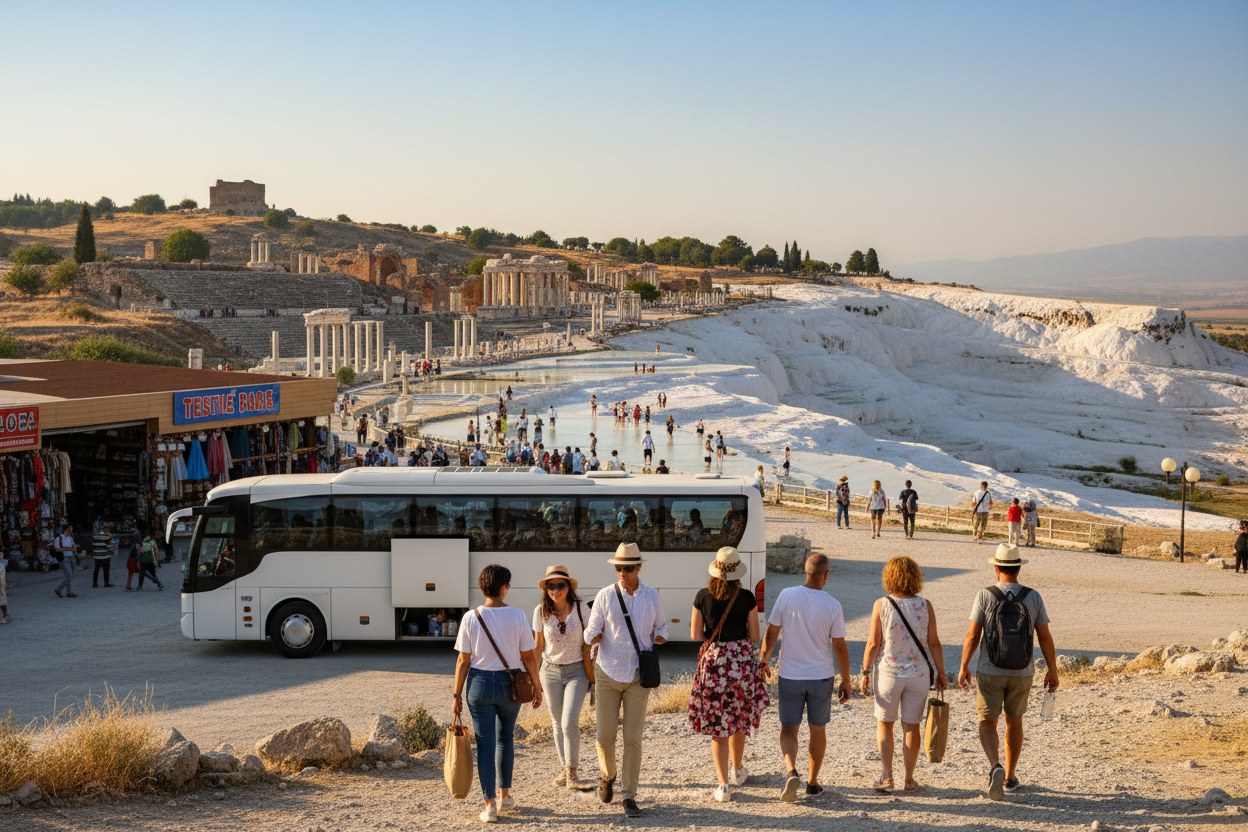
Before reaching the terraces, the coach pauses again in Denizli, a working city rather than a resort, where toilets, shops and a chance to walk around offer a second break from the road. This stop also functions as a shopping pause for anyone wanting local snacks or supplies before the sightseeing begins in earnest. Denizli's position at the base of the Pamukkale plateau makes it the natural last stop before the terraces come into view, and the short rest here helps riders arrive ready for a day that includes a good deal of walking across the ancient site above.
Bare Feet on the Pamukkale Terraces
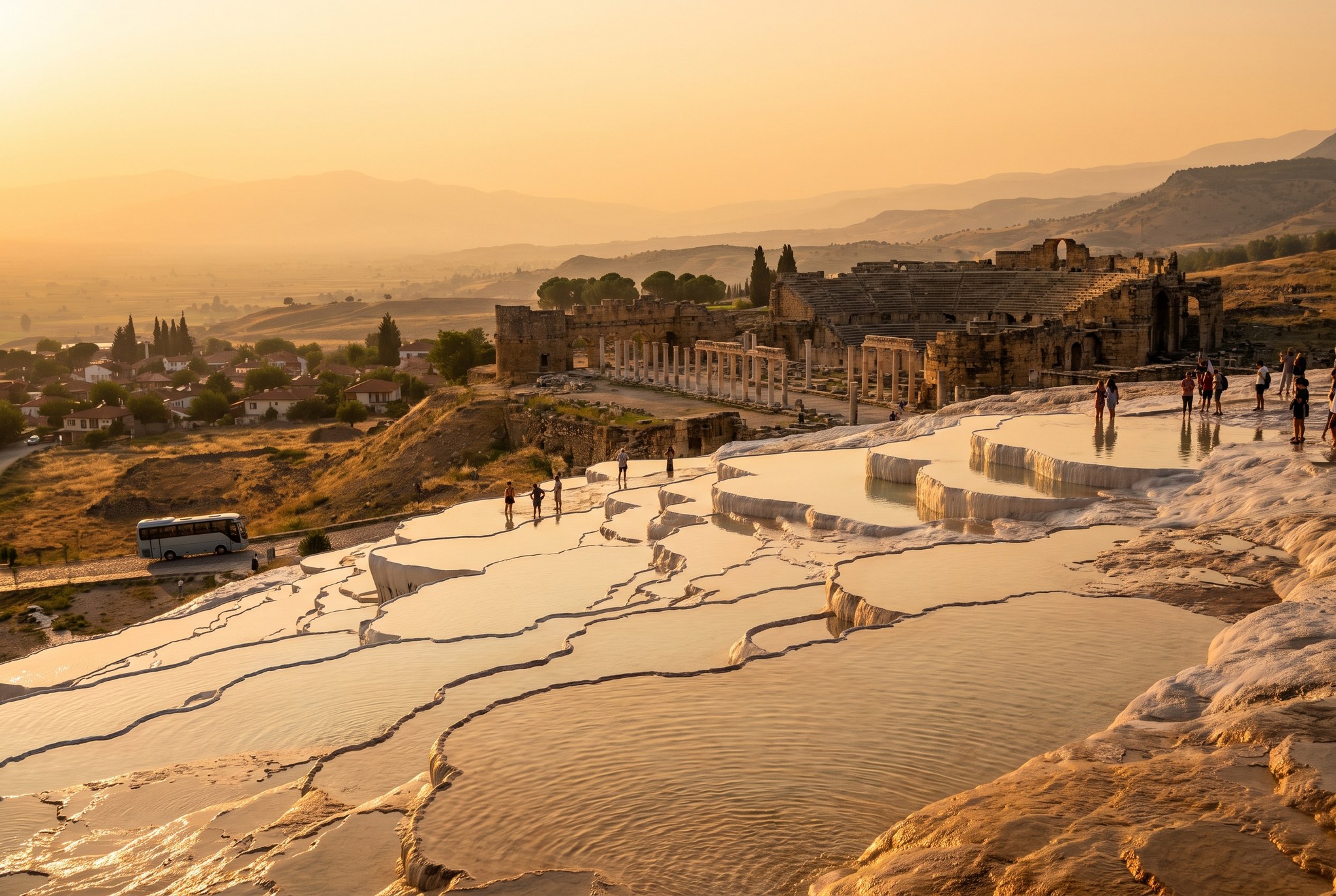
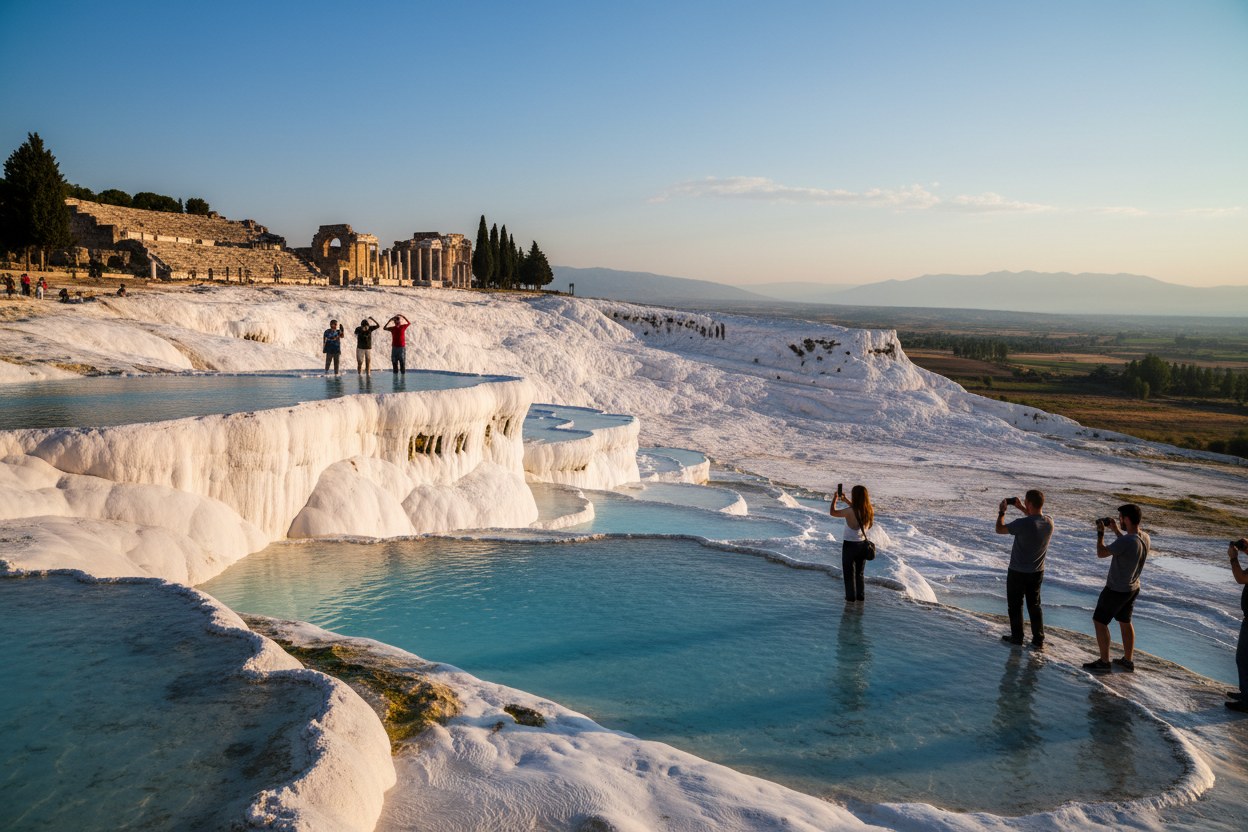
Pamukkale means cotton castle in Turkish, and the name becomes obvious on arrival, when the white, calcium-rich terraces rise in tiers against the hillside like frozen waterfalls. Shoes come off before stepping onto the formations, since walking barefoot protects the mineral surface and gives better grip on the wet stone underfoot. Shallow pools of thermal water sit in the terraces themselves, warm enough to wade through as you make your way up the slope. The white terraces have drawn visitors for centuries, and walking across them barefoot, with the plain stretching out below, is the moment most people associate with this excursion.
Hierapolis and Its Roman Theatre
At the top of the travertine slope lies Hierapolis, an ancient spa city built by the Romans to take advantage of the same thermal springs that feed the terraces below. Its theatre, cut into the hillside and still largely intact, held thousands of spectators and offers a clear view back down over the white terraces and the plain beyond. Walking among the stone seating rows gives a sense of scale that photographs from below the terraces do not convey. The theatre sits within easy walking distance of the other ruins on the plateau, making it a natural first stop once the group reaches the ancient city.
The Necropolis and Domitian Gate
Hierapolis is ringed by one of the largest necropolises in Anatolia, a sprawling field of tombs, sarcophagi and burial mounds that stretches along the old road into the city. Walking through it on the way to the Domitian Gate, the monumental arched entrance that once marked the start of the city's main street, gives a sense of how large Hierapolis once was. A ruined basilica stands nearby, its columns still marking out the shape of the building even where the roof has long gone. Together these ruins cover a wide area, so comfortable footwear matters as much here as it does on the terraces.
Cleopatra's Antique Pool
Cleopatra's Antique Pool sits within the Hierapolis site, its warm water scattered with submerged Roman columns that fell during an ancient earthquake and now rest visibly beneath the surface. Every visitor on this tour sees the pool, and for most, swimming in it is available as an optional extra paid on the spot rather than something included in the ticket. Those who choose to swim move between the fallen marble columns in mineral-rich water said to have been used since antiquity. Anyone not swimming can still walk around the pool's edge and take in the setting, since the columns are visible from the surrounding terrace as well.
An Onyx and Textile Workshop
On the way back toward Marmaris, the group stops at a workshop showing local onyx carving and textile weaving, crafts long associated with this part of Turkey. Staff demonstrate the process before guests are free to browse finished pieces, from polished stone objects to woven textiles, with no obligation to buy anything. This stop also offers another chance to use the toilets and stretch the legs before the final stretch of the drive back to the coast. It marks a shift in pace from the archaeological sightseeing of the day toward something more commercial, rounding out the day before the return journey begins in earnest.
Who Should Book This Long Day Out
This excursion suits travellers who want to see one of Turkey's best-known natural and historical sites without arranging transport themselves, and who do not mind a long day for it. Families with older children generally manage well, since the walking is spread across flat terraces and open ruins rather than steep climbs. Anyone with limited mobility should weigh the amount of walking involved across both the terraces and the Hierapolis ruins before booking. History-minded travellers get real value from the Roman remains, while those mainly drawn by the white terraces and the chance to swim in Cleopatra's pool will find the day balances both interests well.
Booking Your Early Departure
Because pickup begins at 05:00, confirming your hotel and room details accurately at the time of booking matters more for this excursion than for shorter tours closer to Marmaris. Once confirmed, our desk sends the exact pickup time in writing so there is no uncertainty on the morning itself. The tour runs daily, so dates are flexible around the rest of a Marmaris stay, though booking a day or two ahead is worth doing given the early start and the distance covered. Our WhatsApp desk can confirm a place and answer questions about the day before you commit to the alarm clock.
Inclusions
- Guide
- Lunch
- Hotel pickup up and drop off from city centre hotels
Good to know
- This Marmaris departure begins with a 05:00 collection, so have your bags ready and wait in the lobby rather than the street at the confirmed time.
- We recommend wearing comfortable, easily removable shoes, since bare feet are required on the wet travertine terraces at Pamukkale.
- Pack a swimsuit and towel for Hierapolis specifically, since stepping into Cleopatra's Antique Pool among the sunken columns costs extra and is paid on site rather than at booking.
- Between the open travertine terraces and the wide ruins of Hierapolis, shade is scarce, so sunglasses and a refillable water bottle matter as much as sunscreen.
- Children between the ages of three and six qualify for the child rate, so please mention their ages when booking.
- We include a guided walk through Hierapolis over uneven ancient stone paths, so travellers with mobility concerns should plan accordingly.
- Lunch is included, but we suggest bringing extra cash for drinks, snacks, or items at the Denizli shopping stop and onyx factory.
- With the tour running until around 19:00, we recommend packing a light layer for the return journey to Marmaris.