Addo Elephant Park Full-Day Safari from Port Elizabeth
4.8 (960 reviews) from travellers who booked this experience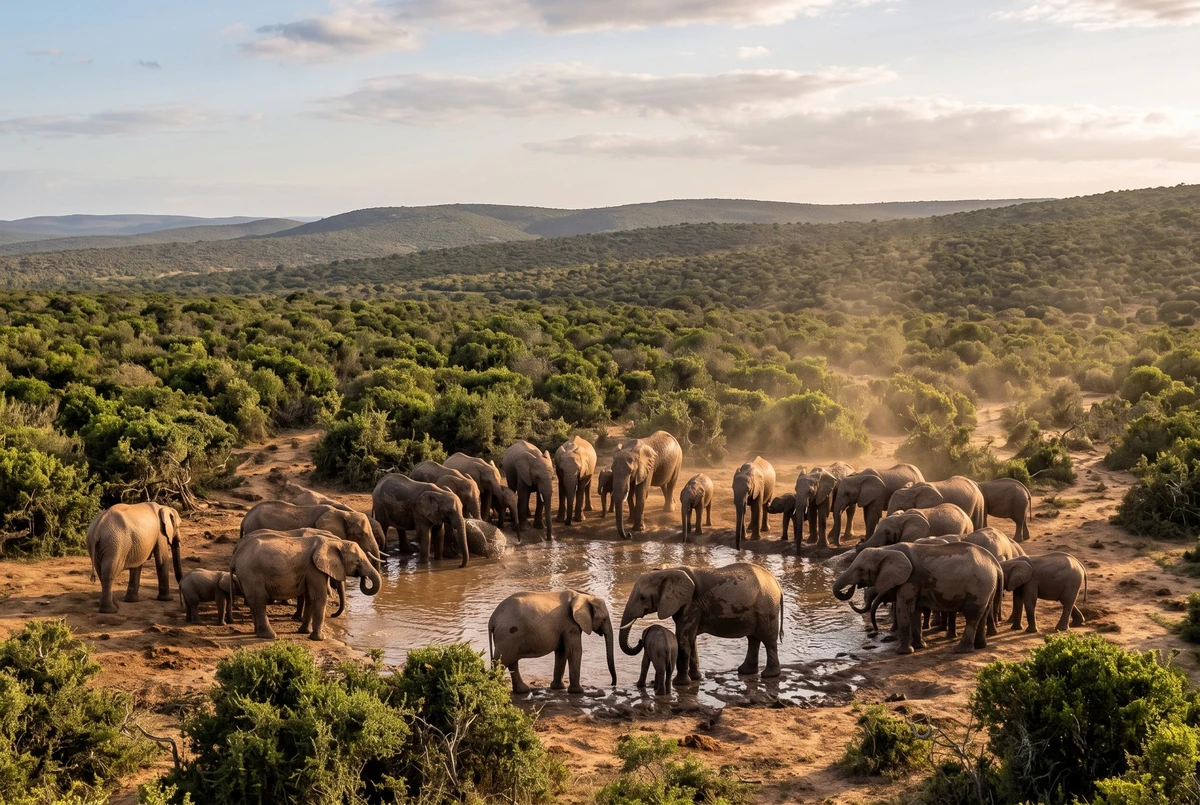
Overview
This Addo Elephant Park full-day safari from Port Elizabeth is a nine-hour small-group day in South Africa's third-largest national park, home to one of the densest elephant populations on the continent. Our guide collects you from your accommodation in Port Elizabeth (Gqeberha), Bluewater Bay, Colchester or Addo in the morning and drives the park's waterholes and valley thicket in an air-conditioned 4x4, looking for elephants, buffalo, zebra, kudu, warthog, black rhino and, with luck, lions and spotted hyena. Park entry fees, light refreshments and lunch inside the park are included, and the group is limited to ten guests so everyone has a window seat. Guests staying in Jeffreys Bay can also be collected. Sightings are never guaranteed.
Highlights
- Full day of game viewing in Addo Elephant National Park with an experienced guide
- Elephant herds at the waterholes, often dozens of animals bathing and drinking together
- Chances of buffalo, black rhino, zebra, kudu, eland, warthog and lions in the valley thicket
- Hapoor Dam and the other famous waterholes along the main game-viewing loops
- Small group of no more than ten guests in an air-conditioned 4x4 with window seats for all
- Park entry fees, light refreshments and lunch inside the park included
- Hotel pickup and drop-off in Port Elizabeth, Bluewater Bay, Colchester, Addo or Jeffreys Bay
- The flightless dung beetle and the rich birdlife of the Sundays River valley
Full Description
Addo Elephant National Park: from a handful of elephants to a stronghold
Addo Elephant National Park lies in the Sundays River valley of the Eastern Cape, about an hour's drive north-east of Port Elizabeth. It was proclaimed in 1931 to protect the last few elephants of the region after decades of conflict with farmers, and from that tiny remnant the herd has grown into a thriving population of several hundred, making Addo the surest place in the country to see elephants at close range. The park has since expanded across the Zuurberg mountains and down to the coast, and today it is the third-largest national park in South Africa.
Addo is malaria-free, which makes it the ideal safari for families with young children and for travellers who prefer not to take prophylaxis. Is Addo worth visiting? For anyone on the Garden Route or the Eastern Cape, it is the natural answer to the question of where to see elephants, and this full-day tour covers the best of the main game area without an overnight stay.
The waterholes: Hapoor Dam and the heart of the elephant country
The main section of the park is a rolling landscape of dense valley thicket, dominated by spekboom, the succulent shrub that elephants feed on, broken by open grassland and a chain of waterholes. Hapoor Dam is the most famous of them, named after a legendary bull, and on a warm day whole herds come down to drink, bathe and spray dust within a few metres of the vehicles. Other waterholes such as Domkrag, Marion Baree and Carol's Rest are on the guide's circuit and often reward a patient wait.
Our guide reads the signs along the sandy roads, listens to the radio reports from other vehicles and times the waterhole visits for the middle of the day when elephants are thirstiest. The 4x4 has a window seat for every guest and stops as long as the sighting deserves. Elephants are almost always seen, but no sighting can be guaranteed.
Beyond elephants: the Big Five and the smaller residents
Elephants are the headline, but Addo is a Big Five park. Lions were reintroduced to the main section and are seen regularly, usually resting in the shade in the heat of the day; spotted hyena, black rhino, buffalo and leopard are present too, the last two elusive in the thick bush. Herds of Burchell's zebra, red hartebeest, eland, kudu and warthog are everywhere, and the stately secretary bird, ostriches and birds of prey patrol the open areas.
Addo also protects the flightless dung beetle, a species found almost nowhere else, which has right of way on the park roads; your guide will slow down to show you one rolling its ball. The tour visits the underground hide and the viewing deck at the main camp, where a floodlit waterhole draws animals in the late afternoon.
Lunch in the park and the pace of the day
Lunch is included and taken inside the park at the main camp, with a view over the waterhole, so the day never leaves the bush. Light refreshments are provided during the morning drive, and there are clean rest stops with restrooms at the camp and at some picnic sites. The pace is unhurried: a nine-hour day gives time for the full morning loop, the lunch break and a different circuit in the afternoon when the light is at its best for photographs.
Addo opening hours vary slightly by season, with gates opening around sunrise and closing around sunset; our tour is timed inside these hours. Bring a camera with a zoom, binoculars, a hat, sunscreen and a light jacket, as mornings can be cool even in summer and the vehicle windows are opened at sightings.
Port Elizabeth, Jeffreys Bay and how to get to Addo
Port Elizabeth, officially Gqeberha, is the gateway city of the Eastern Cape, with flights of about two hours from Johannesburg and under an hour and a half from Cape Town. The main gate at Addo is about seventy kilometres by road, roughly an hour's drive, and the southern Matyholweni gate near Colchester is closer still, about forty-five minutes. Jeffreys Bay, the surfing town west of the city, is about an hour further, so guests staying there are collected first.
An Addo day trip from Port Elizabeth with a guide saves you the park entry queue, the navigation and the guesswork of where the animals are. The best time to visit Addo is the dry winter from May to September, when the thicket is thinner and animals gather at the waterholes, but elephants are seen all year, and summer brings newborn calves and long, warm evenings.
Itinerary
- Pickup from your accommodationOur guide collects you from your accommodation in Port Elizabeth, Bluewater Bay, Colchester or Addo between about 08:30 and 09:20 (earlier in Jeffreys Bay); the exact time is confirmed the day before.
- Drive to Addo and park entryAbout an hour's drive to the park gate, where entry fees are already covered and the game drive begins immediately.
- Morning game driveSeveral hours on the waterhole loops and thicket roads, stopping for elephants, zebra, kudu, buffalo, rhino and any lions reported on the radio, with light refreshments on the way.
- Lunch at the main campLunch inside the park overlooking the waterhole, with time for the viewing deck and the underground hide.
- Afternoon game driveA different circuit in the softer afternoon light, with the last waterhole stops before leaving the park.
- Return to Port ElizabethDrop-off at your accommodation around nine hours after pickup.
What's included
- Hotel pickup and drop-off
- Transport in an air-conditioned 4x4 vehicle
- Addo Elephant National Park entry fees
- Guided game drive with an experienced guide
- Light refreshments
- Lunch inside the park
Not included
- Tips for the guide
- Personal expenses
Not suitable for
- Children under about five years old, as the day is long
- People who cannot sit for long periods in a vehicle
Meeting point
We pick you up at your hotel or guesthouse in Port Elizabeth (Gqeberha), Bluewater Bay, Colchester or Addo between about 08:30 and 09:20, or at the Matyholweni south gate of the park if you prefer to meet there; guests in Jeffreys Bay are collected earlier. Our team contacts you the day before to confirm the exact pickup time and address.
Important information
- Wildlife sightings are never guaranteed; elephants are seen on almost every visit, lions and rhino with luck.
- Addo is malaria-free; no prophylaxis is needed.
- Bring a camera with a zoom lens, binoculars, a hat, sunglasses and sunscreen; mornings can be cool, so pack a light jacket.
- Wear neutral, comfortable clothing and closed shoes; the vehicle is air-conditioned but windows open at sightings.
- Tell us about dietary requirements when you book so lunch can be arranged accordingly.
- Carry your passport or ID and keep valuables with you; leave nothing visible in parked vehicles.
- Stay inside the vehicle at all times except at designated rest stops, and never feed the animals.
- The exact pickup time is confirmed the day before; please be ready in the lobby a few minutes early.
Good to know
Frequently Asked Questions
Straight answers to what travellers ask us most, before they book.
Is this a shared or a private tour?
It is a shared small-group safari limited to ten guests in one air-conditioned 4x4, so everyone has a window seat. If you want the vehicle for your own party only, see our private Addo safari or write to our team.
Is the price per person or per group?
The safari is priced per person. The booking panel on this page shows the current price.
How long is the tour?
About nine hours from pickup to drop-off, including roughly an hour's drive each way and a full day in the park with lunch.
Is hotel pickup included?
Yes, from accommodation in Port Elizabeth, Bluewater Bay, Colchester and Addo, and from Jeffreys Bay with an earlier start. You can also meet the guide at the park's south gate.
What is included?
Hotel pickup and drop-off, transport in an air-conditioned 4x4, Addo entry fees, the guided game drive, light refreshments and lunch inside the park. Tips and personal expenses are not included.
Will we see elephants and lions?
Elephants are seen on almost every visit because Addo has one of the densest populations in Africa. Lions, rhino and buffalo are present but sightings depend on the day and are never guaranteed.
Is it suitable for children and people with reduced mobility?
Yes for children of school age, and Addo is malaria-free. The 4x4 is a closed vehicle with normal steps; tell us about any mobility needs and we will confirm the vehicle suits you.
What should I bring?
Camera and binoculars, hat, sunscreen, a light jacket, water, any medication and your ID.
When is the best time to visit Addo?
The dry winter from May to September gives the best general viewing, with thinner bush and animals at the waterholes. Summer is hot but good for elephants and newborn calves.
Is Addo malaria-free?
Yes. Addo Elephant National Park is in a malaria-free region, which makes it a popular choice for families.
Can I join from Jeffreys Bay?
Yes. Guests in Jeffreys Bay are collected before those in Port Elizabeth; tell us your accommodation when you book.
How do I book and confirm?
Choose your date in the booking panel and send the request; our team confirms on WhatsApp within minutes and the guide contacts you the day before with the exact pickup time.
You might also like
Tours
View all 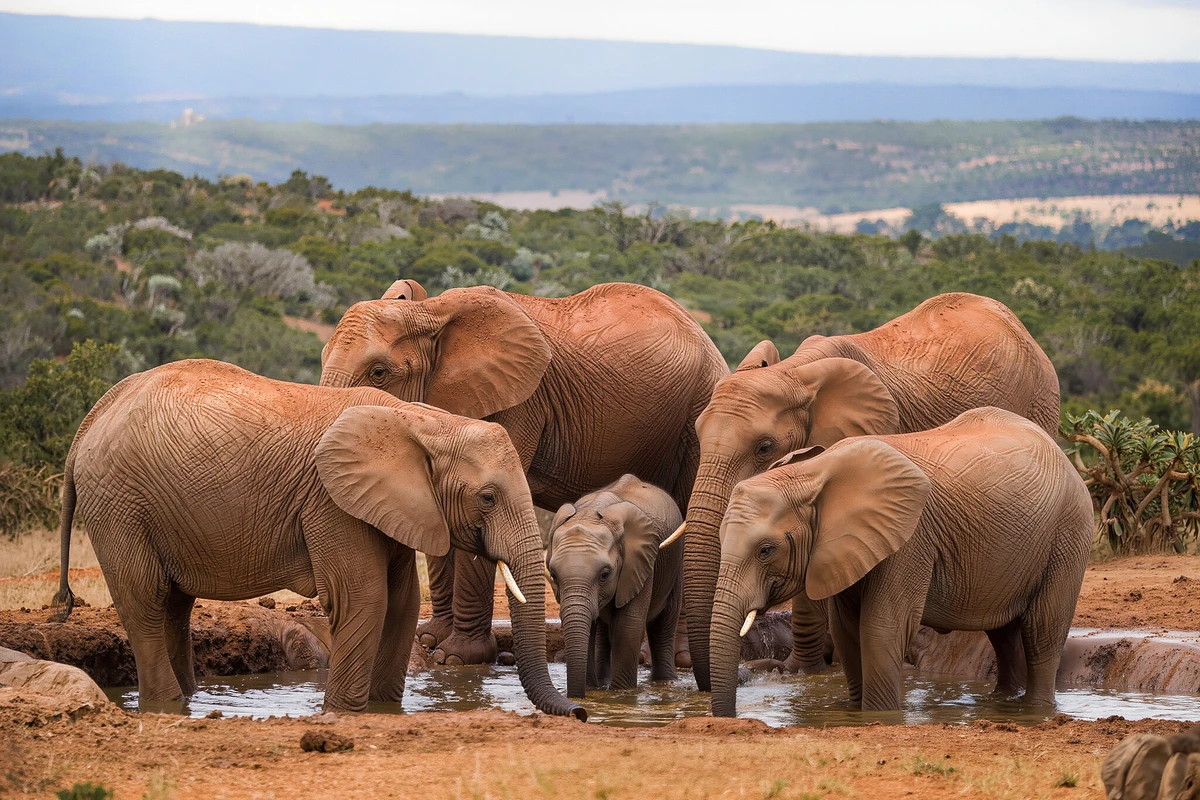
Airport Transfers
View allExplore more in Port Elizabeth
More tours in Port Elizabeth
See all tours in Port Elizabeth Other things to do in Port Elizabeth


More tours across South Africa
-
-
-
-
-
-