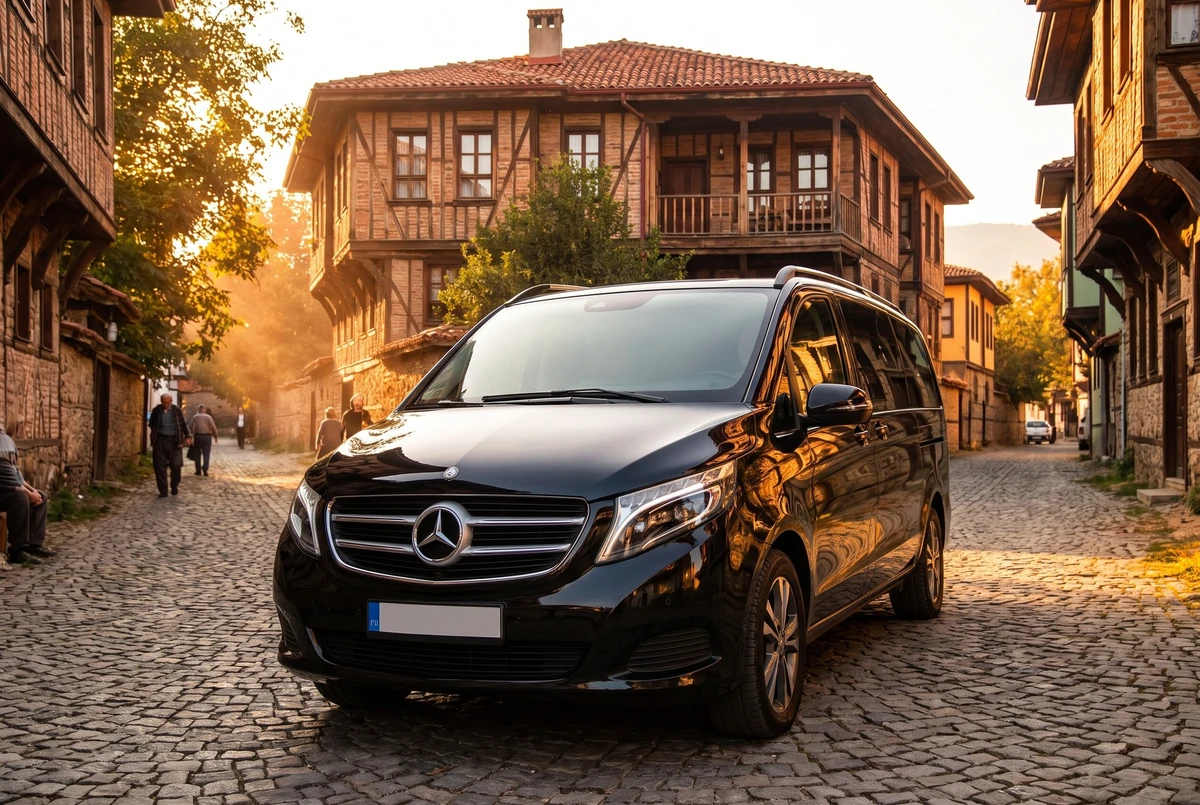
Gallipoli and Anzac Battlefields Full-Day Tour from Istanbul
- DurationAbout 15 hours (06:00 to around 23:00)
- Daily
- Group
- Pickup available

Some images are AI-generated for illustration. While we confirm your booking, just ask and we will send you the original photos.
- Fair, honest prices
- Real people, not bots
- Confirm, then pay
- Secure payment

Overview
A long but unforgettable day from Istanbul to the Gallipoli Peninsula, where in 1915 Ottoman forces held the Dardanelles against the Allied landings in one of the defining campaigns of the First World War. After an early pickup from your hotel on the European side, the coach drives along the Sea of Marmara with a breakfast stop to Eceabat, where you have lunch overlooking the strait and your guide joins the group. The afternoon covers the narrowest point of the Dardanelles and Kilitbahir Castle, the landing beaches and Turkish gun batteries, Anzac Cove and Arıburnu Cemetery, the Lone Pine Australian Memorial and the Chunuk Bair New Zealand Memorial, before the drive back to Istanbul for about 23:00. Shared small group of up to 15, lunch and entrance fees included.
Highlights
- Hotel pickup and drop-off on the European side of Istanbul and a small group of no more than 15
- Lunch at a village restaurant in Eceabat with views over the Dardanelles
- Kilitbahir Castle of 1463 at the narrowest point of the strait
- The landing beaches and the Turkish gun batteries that defended them
- Anzac Cove and Arıburnu Cemetery, with the Anzac Commemorative Site
- Lone Pine Australian Memorial and Chunuk Bair New Zealand Memorial on the ridge
- English-speaking guide on the peninsula and an audio guide for the drive
- All entrance fees included; air-conditioned non-smoking coach
Full Description
The drive from Istanbul and lunch in Eceabat
The coach leaves central Istanbul at about 06:00 and follows the Sea of Marmara west through Silivri and Tekirdağ, with a stop between 09:30 and 10:00 at a roadside restaurant where you can buy breakfast. The audio guide introduces the campaign on the way, so by the time the Gallipoli Peninsula comes into view across the Saros bay, you know why the Dardanelles mattered: the strait was the sea route to the Ottoman capital and to the Allies' Russian partner, and closing it in 1915 shaped the rest of the war.
At Eceabat, the small port on the European shore of the Dardanelles opposite Çanakkale, lunch is served at a village restaurant with a terrace over the strait, halal as everywhere in Turkey. This is where your guide joins the group for the afternoon; a Gallipoli tour from Istanbul always runs on the peninsula side, so no ferry crossing is needed.
The Dardanelles narrows and Kilitbahir Castle
The tour of the Gallipoli battlefields begins at the narrowest point of the Dardanelles, where the strait is just 1,200 metres wide and the whole campaign can be explained in one view: the Asian shore and Çanakkale across the water, the minefields that stopped the Allied fleet in March 1915, and the forts on both banks. Here stands Kilitbahir Castle, the fortress built by the Ottomans in 1463, a decade after the conquest of Constantinople, to lock the strait with its twin across the water.
Its unusual plan, a heart-shaped outer wall around a seven-storey central tower, was designed to stop ships rather than armies, and the walls still show the bastions added in the 16th and 19th centuries. The guide uses the castle terrace to point out the sea batteries, which is why this stop comes before the beaches; about 30 minutes.
The landing beaches and Turkish gun batteries
From Kilitbahir the coach crosses the peninsula to the Aegean side, where on 25 April 1915 British and French troops landed at the southern cape and the Australian and New Zealand Army Corps came ashore further north. Your guide stops at the landing beaches to show how the cliffs and ravines looked to men in rowing boats at dawn, and at the Turkish gun batteries whose positions still look down on the water.
Here the story is told from both sides: the Ottoman defenders under the officer who would later found the Turkish Republic, and the Allied soldiers who dug in a few hundred metres inland and stayed for eight months. The guide reads from letters and diaries, and explains the geography that made the campaign a stalemate; the group is quiet on this stretch, and the beaches are open-air sites with no entry fee.
Anzac Cove and Arıburnu Cemetery
Anzac Cove is the small crescent of shingle beach, just 600 metres long, where the Anzacs landed in the dark a mile north of their intended beach and found themselves below steep scrub-covered ridges. It became their main base for the whole campaign, and today it is the most visited place on the peninsula, especially around 25 April, the day of remembrance in Australia and New Zealand. Your guide walks you along the shore and to the Sphinx, the eroded rock formation above the beach that the soldiers named.
Beside the cove lies Arıburnu Cemetery, the first of the Commonwealth war cemeteries you visit, with its headstones set in lawns above the water, and next to it the Anzac Commemorative Site where the dawn service is held. The words of the Turkish commander's 1934 message to the mothers of the fallen are carved here, and the guide reads them.
Lone Pine and Chunuk Bair
The coach then climbs the ridge to Lone Pine, the Australian memorial and cemetery on the plateau where, in August 1915, four days of fighting over a few hundred metres of trenches produced some of the heaviest losses of the campaign; the memorial wall carries the names of nearly 5,000 soldiers with no known grave, and a single pine grown from a cone taken from the battlefield stands at its heart. Allow 30 minutes; the guide explains the tunnels and trenches still visible in the ground.
The last stop is Chunuk Bair, the highest point the Allies reached, held for two days by New Zealand troops in August 1915 before the Ottoman counter-attack. The New Zealand memorial and the statue of the Turkish commander stand side by side, and the view across the peninsula to the Dardanelles and the Aegean makes the whole campaign clear. The coach leaves for Istanbul at about 18:00, with a rest stop on the way, and reaches your hotel at about 23:00.
Itinerary
- Hotel pickupOur driver collects you from your hotel on the European side of central Istanbul from 06:00.
- Drive along the MarmaraAbout four hours west with a breakfast stop between 09:30 and 10:00, breakfast at your own expense.
- Lunch in EceabatA village restaurant with views over the Dardanelles; your guide joins the group here.
- The narrows and Kilitbahir CastleThe narrowest point of the strait and the 1463 fortress, about 30 minutes.
- Landing beaches and gun batteriesThe Aegean shore where the troops came ashore and the Ottoman positions above it.
- Anzac Cove and Arıburnu CemeteryThe landing beach, the Sphinx, the cemetery and the Anzac Commemorative Site, about 45 minutes.
- Lone PineThe Australian memorial and cemetery on the plateau, about 30 minutes.
- Chunuk BairThe New Zealand memorial and the view over the peninsula, about 30 minutes.
- Return to IstanbulDeparture at about 18:00 with a rest stop; drop-off at your hotel at about 23:00.
What's included
- Hotel pickup and drop-off on the European side of central Istanbul
- Round-trip transport in an air-conditioned, non-smoking coach
- English-speaking guide on the battlefields and English audio guide on the road
- Restaurant lunch in Eceabat village
- Guided visits to Kilitbahir Castle, the landing beaches, Anzac Cove, Arıburnu Cemetery, Lone Pine and Chunuk Bair
- All entrance fees
- Small group limited to 15 participants
Not included
- Breakfast at the road stop (open buffet available at extra cost)
- Drinks
- Gratuities and personal expenses
Is this right for you?
Great for
- Travellers without a car — hotel pickup is included
- Food lovers
- Travellers who want a proven choice — rated 4.8/5 by past travellers
Think twice if
- You want a private tour — this one is shared with other travellers
Not suitable for
- Wheelchair users (uneven paths at the cemeteries and memorials, coach steps)
Meeting point
Our driver collects you from your hotel in Sultanahmet, Laleli, Topkapı, Aksaray, Taksim, Sirkeci or Şişli from 06:00; we confirm your exact pickup time on WhatsApp the day before. Pickup and drop-off are possible only on the European side of the city and in these central districts; if you stay on the Asian side or further out, we arrange for you to meet the coach at a hotel in Sultanahmet or Taksim. Your guide joins the group in Eceabat at lunchtime. Drop-off is at the same hotel at about 23:00.
Important information
- This is a 15-hour day with about nine hours on the coach; bring a neck pillow, a charged phone and anything you need for the drive
- Bring your passport or ID card, comfortable shoes, sunglasses, a hat in summer and a camera
- Lunch in Eceabat is included; breakfast at the road stop and drinks are at your own expense
- The cemeteries and memorials are places of remembrance: modest dress and quiet behaviour are expected
- Pickup is only from the European side and the central districts listed; the Asian side is not served
- Pets and large luggage cannot be brought on the coach
- Around 25 April the peninsula is extremely busy and roads are closed for the dawn service; book early and expect changes to the order of stops
- The group is limited to 15 participants
Good to know
Frequently Asked Questions
Straight answers to what travellers ask us most, before they book.
Is this a shared or a private tour?
A shared small-group tour of up to 15 people in an air-conditioned coach with an English-speaking guide; for a private vehicle and guide write to our Istanbul team.
How long does the Gallipoli tour take?
About 15 hours door to door: pickup from 06:00, about four hours each way on the road, lunch, five hours on the peninsula and return to your hotel at about 23:00.
Is hotel pickup included?
Yes, from hotels in Sultanahmet, Laleli, Topkapı, Aksaray, Taksim, Sirkeci and Şişli on the European side; guests elsewhere meet the coach at a central hotel we agree with you.
What is included?
Round-trip transport, the guide and the audio guide, lunch in Eceabat and all entrance fees; breakfast, drinks and tips are not included.
Is the price per person or per group?
Per person; the booking panel on this page shows the current price.
Is it suitable for children and for reduced mobility?
Older children interested in history manage the day well, though it is very long; the paths at the cemeteries are uneven and the coach has steps, so it is not suitable for wheelchair users.
Which sites does the tour visit?
The narrows and Kilitbahir Castle, the landing beaches and gun batteries, Anzac Cove and Arıburnu Cemetery with the Anzac Commemorative Site, Lone Pine and Chunuk Bair.
Is there a ferry crossing?
No; the battlefields are on the European side of the Dardanelles, so the coach stays on the peninsula and you only see Çanakkale across the water.
What is the best time of year to visit Gallipoli?
Spring and autumn are mild and green; summer is hot and exposed on the ridges, so bring a hat and water. Around 25 April the peninsula is crowded for the dawn service.
What should I bring?
Passport or ID, comfortable shoes, sunglasses, a hat, water, a camera and a jacket for the early morning; lunch is included.
What happens in bad weather?
The tour runs in rain, as the sites are outdoors and the coach is close by; bring a waterproof jacket in winter and spring.
How do I book and confirm?
Book on this page and our Istanbul team confirms on WhatsApp within minutes with your pickup time and hotel meeting point.
More in Istanbul

Getting to & around Istanbul
Popular across Turkey
-
-
-
-
-
-