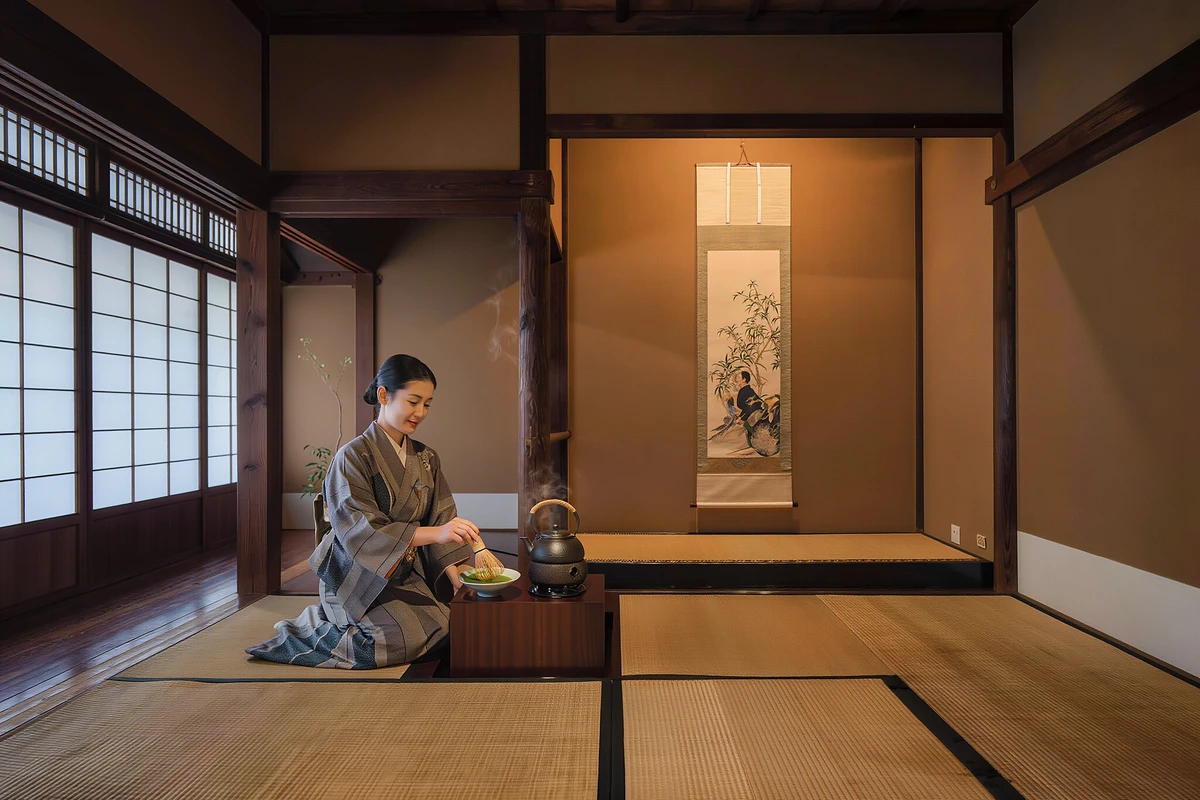
Zen Meditation with a Monk at a Hidden Temple Kyoto
- Duration2 hours
- Daily
- Group
Some images are AI-generated for illustration. While we confirm your booking, just ask and we will send you the original photos.
- Fair, honest prices
- Real people, not bots
- Confirm, then pay
- Secure payment

Overview
This Zen meditation experience in Kyoto takes you inside Jusho-in, a sub-temple of the great Myoshin-ji complex that is usually closed to the public. Your English-speaking guide meets you at Myoshin-ji's North Gate and walks you through the quiet temple lanes to Jusho-in, where the temple's 16th-generation chief monk introduces the basic ideas of Zen and the zazen posture. You then practise two meditation sessions in a tatami room overlooking the seasonal garden, with chairs available if sitting on the floor is difficult, and may try the traditional keisaku shoulder tap. Afterwards you relax over Japanese tea, matcha and seasonal Kyoto sweets and chat with the monk. A photographer sends you the photos afterwards. The default option is a small group; a private early-morning session is also available.
Highlights
- Enter Jusho-in, a sub-temple usually closed to the public
- Learn the basics of Zen from the temple's chief monk
- Two zazen meditation sessions in a quiet tatami room
- Optional keisaku, the traditional shoulder tap that sharpens focus
- Matcha and seasonal Kyoto sweets with views of the temple garden
- Professional photos of your experience sent afterwards
- Walk through Myoshin-ji, the largest Zen temple complex in Kyoto
- Beginner-friendly, with chairs available on request
Full Description
Myoshin-ji Temple: a city of Zen in north-west Kyoto
Myoshin-ji, founded in 1337 on the site of a former imperial villa, is the head temple of the largest branch of Rinzai Zen Buddhism in Japan. Its grounds in the Hanazono district feel like a small walled town: stone-paved lanes, long white walls with dark tiled roofs, massive wooden gates and dozens of sub-temples, each with its own garden and history.
Your experience begins at the North Gate, where the guide meets you and leads you through these peaceful lanes. Unlike Kyoto's busiest temples, Myoshin-ji is rarely crowded, which sets the calm tone for meditation before you even sit down. How to get to Myoshin-ji: the North Gate is a short walk from Myoshinji Station on the Randen Kitano tram line, and JR Hanazono Station lies just south of the complex.
Jusho-in, a hidden sub-temple
Jusho-in was founded in 1599 as one of the sub-temples of Myoshin-ji and is normally not open to the general public. Entering it with the temple's own chief monk is what makes this Kyoto temple experience special: instead of viewing a hall from behind a rope, you sit inside a working Zen temple, in rooms used by monks for centuries.
From the tatami room and its wooden veranda you look out over the temple garden, which changes with the seasons: fresh greens in spring, deep moss after summer rain, red maple leaves in autumn and clean lines of raked gravel in winter. The chief monk, the 16th generation to lead the temple, welcomes guests in a simple and friendly way, so no previous knowledge is needed.
Zazen meditation and the keisaku
Zazen, seated meditation, is the core practice of Zen. The chief monk first explains the ideas behind it and shows you the posture: back straight, hands resting in a simple mudra, eyes half closed and attention on the breath. You then practise two sessions, with a short pause in between to ask questions and stretch. Chairs are available for anyone who finds the floor uncomfortable.
During the second session you may choose to receive the keisaku, a flat wooden stick used in Zen halls to tap the shoulders lightly. It is not a punishment but an aid that refreshes concentration, requested and received with a bow. It is entirely optional. Many guests say that sitting in silence in a historic temple, hearing only birds and wind in the garden, is the moment they remember most from Kyoto.
Matcha, seasonal sweets and conversation with the monk
After meditation the mood softens. You are served a welcome cup of Japanese tea, then whisked matcha with a seasonal Kyoto sweet, small handmade wagashi whose shapes and colours follow the time of year. Matcha and Zen have been linked since the Middle Ages, when monks drank powdered green tea to stay alert during long meditation.
This is also the time for conversation: ask the monk about daily temple life, about his path into Zen after years in public service, or about how meditation can fit into a busy life. A photographer captures the experience throughout, and you receive the photo files afterwards. The shared session ends around two hours after the start, back near the North Gate.
Itinerary
- Meet at the North Gate of Myoshin-jiMeet your guide at the North Gate at 10:30 and walk through the temple grounds, about 10 minutes.
- Introduction to ZenThe chief monk of Jusho-in explains the basic ideas of Zen and the zazen posture.
- Two zazen sessionsPractise seated meditation twice in a quiet tatami room, with the optional keisaku.
- Matcha and sweetsEnjoy Japanese tea, matcha and seasonal sweets while talking with the monk and guide.
- Photos and finishThe experience ends after about two hours; the photographer sends your photos afterwards.
What's included
- English-speaking guide
- Entry to Jusho-in, a sub-temple of Myoshin-ji
- Introduction to Zen by the chief monk
- Two zazen meditation sessions
- Welcome Japanese tea
- Matcha and seasonal Kyoto sweets
- Optional keisaku shoulder tap
- Photographer, with the photo files sent afterwards
Not included
- Hotel pickup and drop-off
- Transport to the meeting point
- Tips
- Souvenirs and personal purchases
Is this right for you?
Great for
- Families with children — a child price for ages 3–11
- Groups who want privacy — a private option is available
- History and culture lovers
- A short visit — about 2 hours
Think twice if
- You need hotel pickup — you meet at the meeting point
Meeting point
Meet your guide at the North Gate of Myoshin-ji Temple in north-west Kyoto. The complex has more than one gate, so make sure you go to the north one; we send the exact map pin with your confirmation. The shared session starts at 10:30 and the private session at 08:00. The North Gate is a short walk from Myoshinji Station on the Randen Kitano line. The experience finishes back at the North Gate or at the Jusho-in entrance.
Important information
- Wear comfortable, loose clothes that are easy to sit in; tight jeans are not recommended.
- Kimono is not recommended, as it is hard to sit in during zazen.
- Chairs can be prepared for guests who find it difficult to sit on the floor.
- You will remove your shoes inside the temple; clean socks are a good idea.
- Weapons and sharp objects are not allowed in the temple.
- Please arrive on time; meditation begins in silence.
- Hotel pickup and transport to the meeting point are not included.
Good to know
Frequently Asked Questions
Straight answers to what travellers ask us most, before they book.
Is this a shared or a private experience?
The default option is a shared small-group session at 10:30. A private early-morning session at 08:00 is available for your group only.
How long does the Zen experience take?
About 2 hours, including the walk from the gate, two zazen sessions and tea.
Is hotel pickup included?
No. You meet the guide at the North Gate of Myoshin-ji Temple.
What is included?
An English-speaking guide, temple entry, an introduction to Zen by the chief monk, two zazen sessions, Japanese tea, matcha and seasonal sweets, the optional keisaku and professional photos.
Is the price per person or per group?
The shared session is priced per person; the private session is priced by group size. The booking panel on this page shows the current price of each option.
Is it suitable for children or guests with reduced mobility?
Calm older children can join. Chairs are available for anyone who cannot sit on the floor; tell us when booking.
Do I need any meditation experience?
No. The chief monk explains everything simply, and the experience is designed for first-timers.
Does the keisaku hurt?
No, it is a light tap on the shoulders to refresh concentration, and it is entirely optional.
What should I wear?
Loose, comfortable clothes. Avoid tight jeans and kimono, which make sitting difficult.
How do I get to Myoshin-ji Temple?
Take the Randen Kitano line to Myoshinji Station for the North Gate, or JR to Hanazono Station on the south side.
How do I book and confirm?
Choose the shared or private option and your date in the booking panel. Our team confirms on WhatsApp within minutes.
More in Kyoto
Popular across Japan
-
-
-
-
-
-