Lao Chai and Ta Van Rice Terrace Village Trek, Sapa
- Duration6.5 hours
- Daily
- Group
- Pickup available
- Fair, honest prices
- Real people, not bots
- Confirm, then pay
- Secure payment

Overview
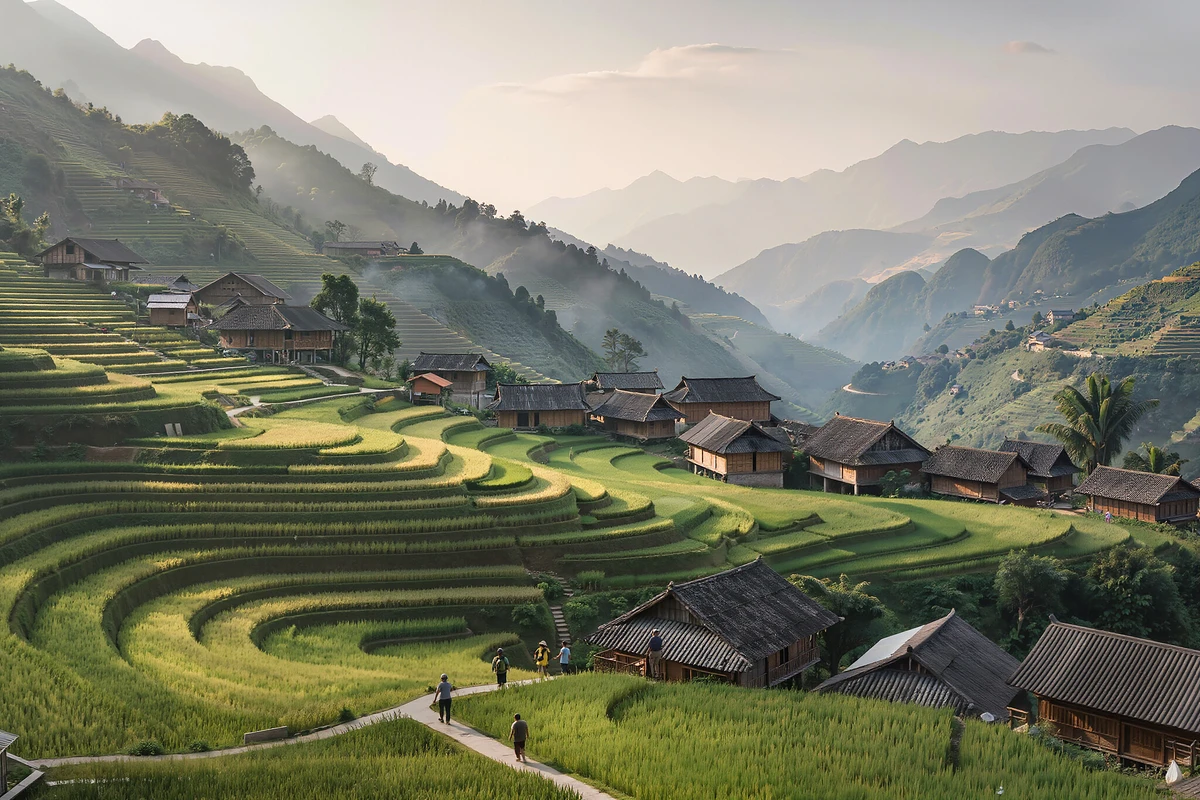
This guided trek leads you out of Sapa town and down into the Muong Hoa Valley, the most famous rice-terrace landscape in northern Vietnam. Over about 10 to 12 km you follow farm paths and village trails to Y Linh Ho and Lao Chai, home of the Black Hmong, then on to Ta Van, a village of the Giay people. A local ethnic guide who grew up in the mountains explains daily life, farming and traditional clothing, and lunch is cooked by a family in a village house. The default option is a small group of around ten, with village entrance fees included. A private trek for your party and an option with an overnight sleeper bus from Hanoi are also available.
Highlights
- Trek about 10 to 12 km through the Muong Hoa Valley rice terraces
- Viewpoint over the valley towards Fansipan, the highest peak in Indochina
- Y Linh Ho and Lao Chai, villages of the Black Hmong people
- Ta Van, a Giay village on the valley floor
- A home-cooked lunch with a local family in Lao Chai
- Learn how Hmong clothing is woven, dyed with indigo and decorated
- Local ethnic English-speaking guide from the Sapa area
- Small group of around ten, with a private trek option
Full Description
Muong Hoa Valley rice terraces
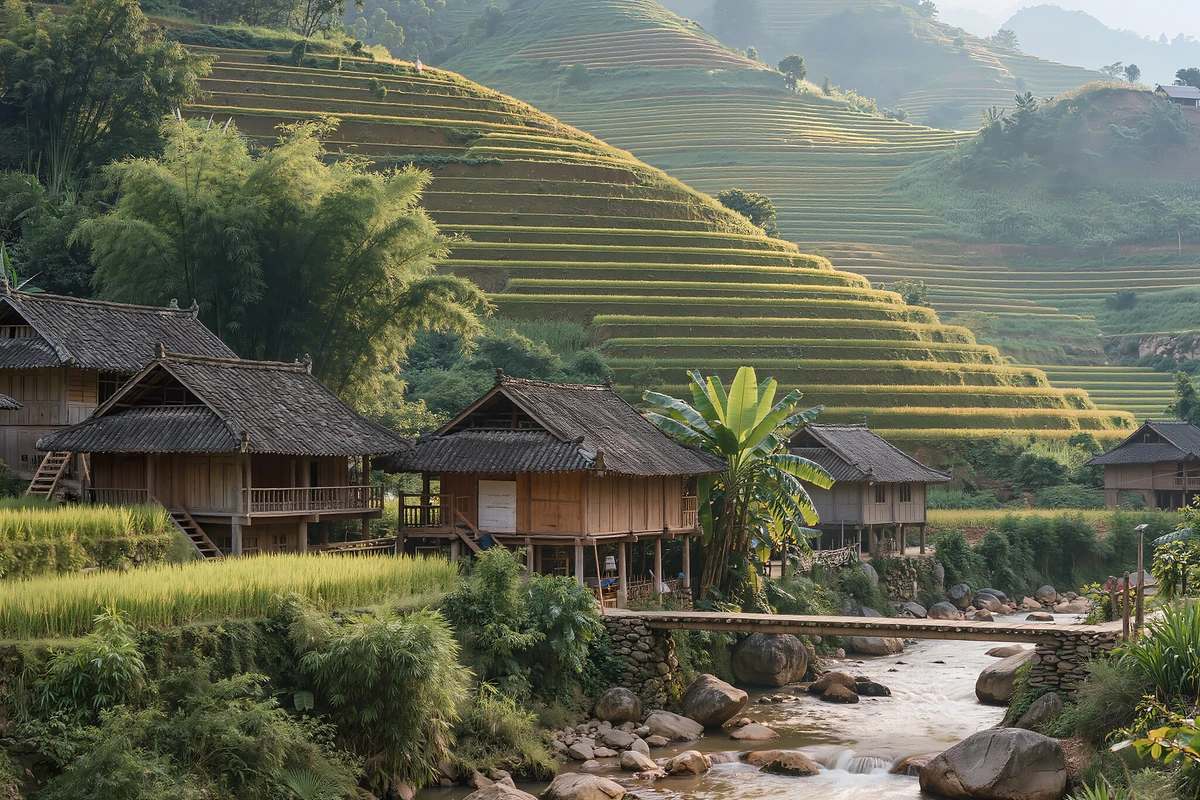
South-east of Sapa town the land drops steeply into the Muong Hoa Valley, where the Muong Hoa stream winds between mountains and the slopes are carved into thousands of curving rice terraces. Generations of Hmong, Giay and Dao families built and still farm these fields by hand, and the valley is also known for its field of ancient carved stones, decorated with patterns that are centuries old.
The terraces change through the year: flooded and mirror-like in May and June, bright green in July and August, and golden just before the harvest from mid-September to early October. This Sapa rice terrace trek starts with a short climb to a hill viewpoint looking towards Fansipan, then descends gradually along farm paths, so the views open up as you go.
Y Linh Ho village
Y Linh Ho is a Black Hmong village perched on steep slopes above the valley, reached around 11:00 after the first stretch of trekking. Houses of wood and stone sit among the terraces, and you will often see women in indigo-dyed hemp clothing tending the fields or carrying baskets on their backs.
From the village the trail crosses a small bridge over the river and continues along some of the most beautiful paths of the day towards Lao Chai Sang, with rice fields on one side and towering mountains on the other. This section involves some downhill walking on uneven ground, so good shoes with grip make a real difference, especially after rain. Your guide sets a steady pace and stops often for photos and explanations.
Lao Chai village and a Hmong family lunch
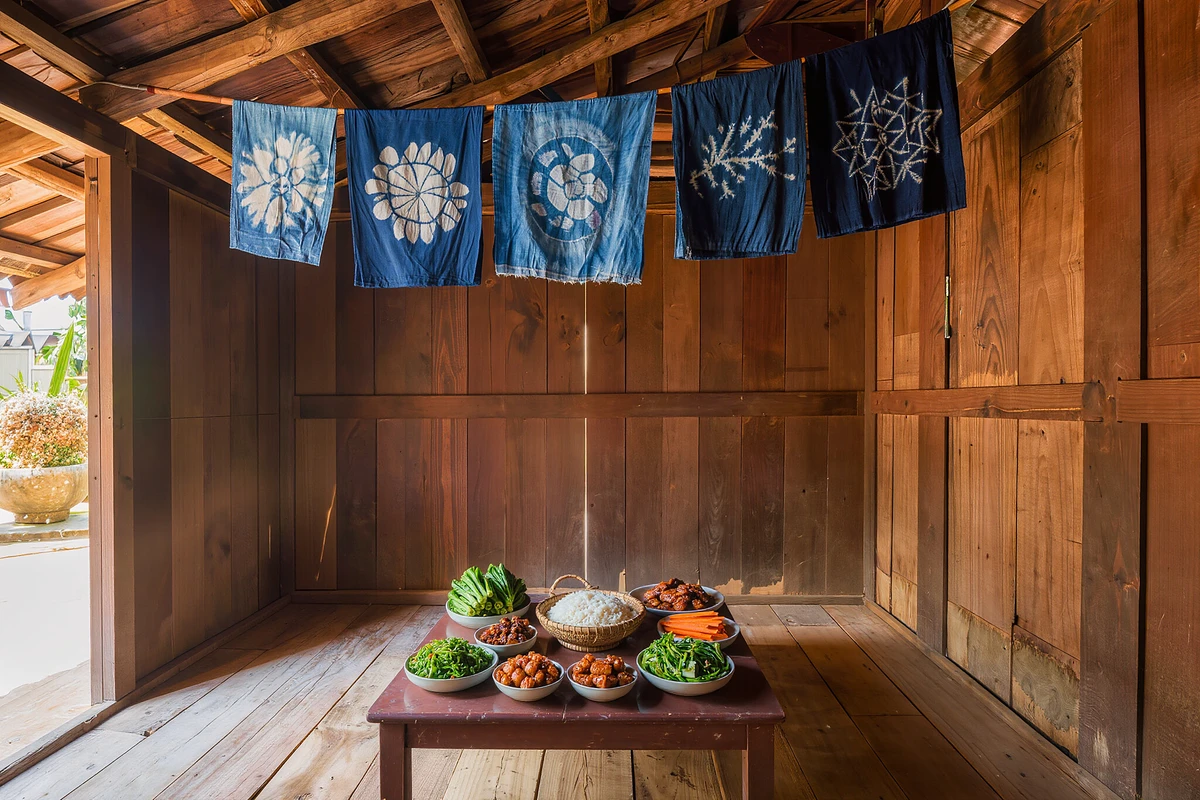
Lao Chai is one of the largest Black Hmong villages along the Muong Hoa Valley, spread across the hillsides above the stream. At about 12:30 you sit down for a home-cooked lunch with a local family in Lao Chai Sang, usually rice, stir-fried vegetables, eggs or meat and local greens, a warm and simple meal after the morning's walk. Tell us in advance if you need vegetarian or no-pork food.
After lunch you continue through Lao Chai, where villagers plant rice in spring and harvest in early autumn. This is also the moment to learn how Hmong clothing is made: hemp is spun and woven, dyed deep blue with indigo, and decorated with batik patterns drawn in beeswax and fine embroidery passed from mother to daughter.
Ta Van village
The last village of the trek is Ta Van, home to the Giay people, also written Dzay. Their culture is noticeably different from the Hmong: houses are often built of wood on stone foundations, women wear colourful blouses and turbans, and the village lies on flatter ground beside the stream, surrounded by wide rice fields.
Ta Van has become one of the most welcoming villages in the valley, with family homes, small shops and quiet lanes that are pleasant to stroll after the longer stretches of trekking. You reach it in the afternoon and finish the tour back in Sapa town at around 15:30, leaving time to rest before dinner. It is a fine ending to a day that shows two distinct mountain cultures side by side.
Best time to visit Sapa for trekking
The best time to visit Sapa for trekking is from mid-September to November, when skies are clearer and the terraces turn gold, and from March to May, when the weather is mild and fields are being planted. June to August is green and lush but brings rain, which can make paths muddy. December to February is cold and often foggy, with occasional frost.
How to get to Sapa: there is no airport, so most travellers come from Hanoi by expressway in about 5 to 6 hours, or by overnight train to Lao Cai and then about an hour by road. One option on this page includes an overnight sleeper bus from Hanoi so you can start the trek on arrival.
Itinerary
- Meet in Sapa townMeet your guide at 08:55 at the meeting point in Ham Rong ward, central Sapa, for a short briefing.
- Hill viewpointClimb to a small hill for views across the valley towards Fansipan, about 30 minutes.
- Trek to Y Linh HoDescend through the Muong Hoa Valley terraces and reach the Black Hmong village of Y Linh Ho around 11:00.
- Lunch in Lao Chai SangCross the river and continue to Lao Chai Sang for a home-cooked lunch with a local family around 12:30.
- Lao Chai village and Hmong craftsWalk through Lao Chai's fields and learn about Hmong weaving, indigo dyeing and clothing, about an hour.
- Ta Van village and returnContinue to the Giay village of Ta Van, then return to Sapa town at around 15:30.
What's included
- Local ethnic English-speaking trekking guide
- Guided trek through the Muong Hoa Valley rice terraces
- Visits to Y Linh Ho, Lao Chai and Ta Van villages
- Family-cooked lunch in a local village house
- Village entrance fees
- Small group of around ten people
Not included
- Hotel transfers
- Soft drinks and snacks
- Personal expenses and tips
Is this right for you?
Great for
- Families with children — a child price for ages 4–7
- Travellers without a car — hotel pickup is included
- Groups who want privacy — a private option is available
- Travellers who want a proven choice — rated 4.8/5 by past travellers
Think twice if
- Walking is difficult for you — expect active parts
Not suitable for
- Children under 5 years
- Pregnant women
- People with mobility impairments
- Wheelchair users
- People over 75 years
Meeting point
The small-group trek starts at 08:55 from the meeting point in Ham Rong ward, in the centre of Sapa town; we send the exact spot on WhatsApp after booking. Hotel transfers are not included in this option, but most hotels in central Sapa are a short stroll away. With the private trek you can choose a start time between 08:30 and 11:00. With the sleeper bus option we pick you up in Hanoi's Old Quarter around 23:00 and our guide meets you at the Sapa bus station the next morning.
Important information
- The trek covers about 10 to 12 km with uphill and downhill sections on uneven paths.
- Wear hiking shoes or trainers with good grip; paths are slippery after rain.
- Bring warm layers and a rain jacket; mountain weather changes quickly.
- Bring insect repellent, sunscreen, a hat and enough drinking water for the day.
- Snacks and soft drinks bought in the villages are not included.
- Tell us in advance about vegetarian or no-pork food; halal food is very limited in Sapa.
- Local people sometimes offer handicrafts for sale; buying is always optional.
- Most travellers need a Vietnam e-visa; please check before you travel.
Good to know
Frequently Asked Questions
Straight answers to what travellers ask us most, before they book.
Is this a shared or a private tour?
The default option is a small shared group of around ten. A private trek for your party only is also available on this page, with a choice of start times.
Can we change the route or the pace?
In the small group the guide keeps a pace that suits everyone. On the private trek you can walk more slowly, stop longer for photos and adjust the timing with your guide.
How many people join the group?
The small-group option has around ten trekkers. The private option is only for your party.
Is the price per person or per group?
The price is per person for each option. The booking panel on this page shows the current price of each option.
Is hotel pickup included?
Not in the trekking options: you meet the guide in central Sapa. The sleeper bus option includes pickup in Hanoi's Old Quarter.
What is included?
A local ethnic English-speaking guide, the guided trek through the Muong Hoa Valley, visits to Y Linh Ho, Lao Chai and Ta Van, a home-cooked lunch and village entrance fees.
How long is the trek and how hard is it?
About 6.5 hours and 10 to 12 km. It is moderate, mostly downhill after the first climb, but uneven and muddy in places.
Is it suitable for children or reduced mobility?
Active children over 5 who walk regularly can join. The trek is not suitable for people with mobility impairments, wheelchair users or pregnant women.
What should I bring?
Good walking shoes, warm layers, a rain jacket, water, sunscreen, a hat, insect repellent and a little cash.
What is the best season for the trek?
Mid-September to November and March to May are the most pleasant. Rice is greenest in July and August and golden from mid-September; winter is cold and foggy.
How do I get to Sapa from Hanoi?
By expressway in about 5 to 6 hours, or overnight train to Lao Cai plus an hour by road. We can arrange transfers, or choose the sleeper bus option on this page.
How do I book and confirm?
Choose your option and date in the booking panel. Our team confirms on WhatsApp within minutes and sends the exact meeting point.
More in Sapa



Getting to & around Sapa
Popular across Vietnam
-

-

-
-
-

-