Hiroshima Historical Walking Tour with Peace Park & Atomic Bomb Dome
- Duration2.5 hours
- Daily
- Group
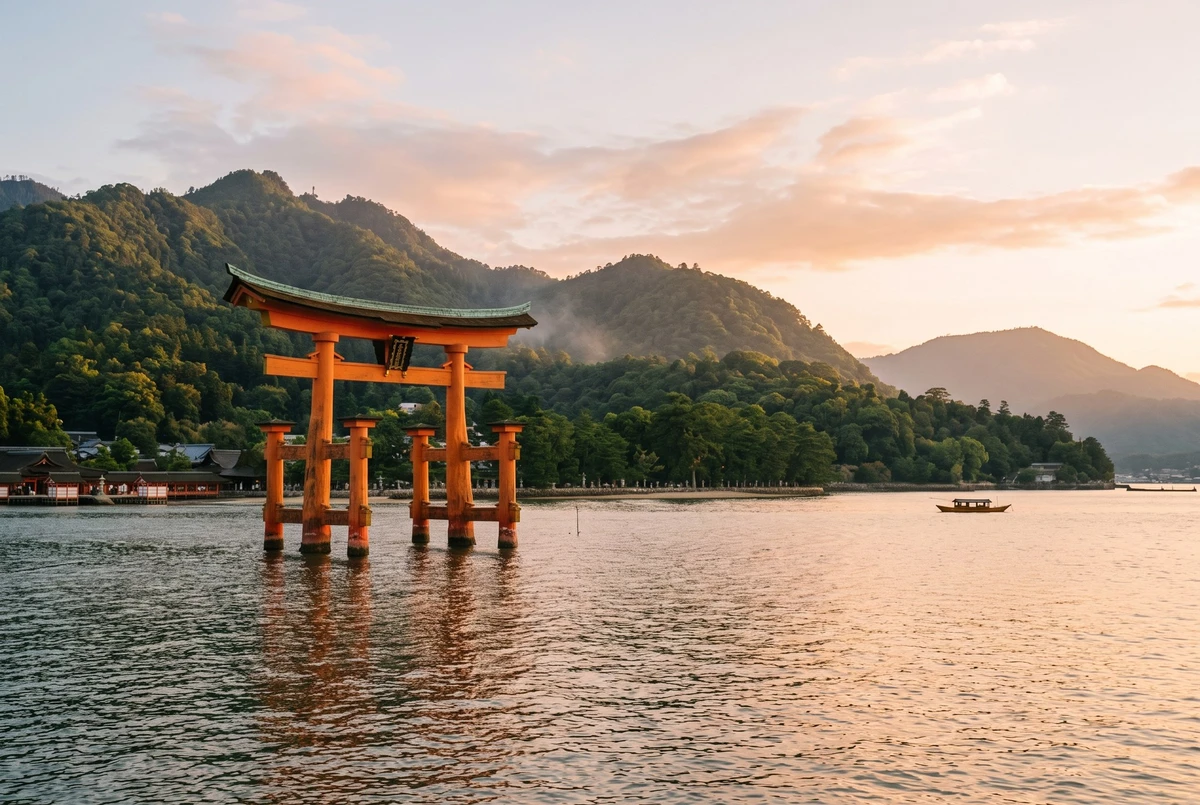
Some images are AI-generated for illustration. While we confirm your booking, just ask and we will send you the original photos.
- Fair, honest prices
- Real people, not bots
- Confirm, then pay
- Secure payment

Overview
This 2.5-hour guided walk tells the story of Hiroshima from its days as a castle town and military hub to the morning of 6 August 1945 and the city's rebirth as a voice for peace. You meet your English-speaking guide at Hiroshima Gokoku Shrine, walk through the grounds of Hiroshima Castle, pass Hiroshima Gate Park and stand before the Atomic Bomb Dome, before ending in the Peace Memorial Park beside the Peace Memorial Museum. Along the way the guide explains why the city was chosen as a target and what followed. It is a shared group tour on foot, with a wheelchair-accessible route, suited to anyone who wants to understand Hiroshima's history beyond the monuments. There is no hotel pickup, and museum entry is not included.
Highlights
- Walk from Hiroshima Castle to the Atomic Bomb Dome with a live English-speaking guide
- Learn why Hiroshima was chosen as a target and how the city rebuilt itself
- Visit Hiroshima Gokoku Shrine and the moated grounds of Hiroshima Castle
- Stand before the Atomic Bomb Dome, a UNESCO World Heritage Site
- Explore the Peace Memorial Park, its Cenotaph and the Flame of Peace
- Wheelchair-accessible route of about 2.5 hours
- Finish at the Peace Memorial Museum, ready to continue inside on your own
- Several start times through the day
Full Description
Hiroshima Gokoku Shrine
The walk begins at Hiroshima Gokoku Shrine, a Shinto shrine inside the castle grounds dedicated to the souls of soldiers and citizens from Hiroshima who died in war, including the victims of the atomic bombing. The original shrine was destroyed in 1945, and the present buildings date from 1965, with a bright torii gate in front of the main hall.
Today the shrine is woven into everyday life in the city: families bring newborn babies here, crowds gather for the first prayers of the New Year and local sports fans come to wish their team luck before the season. Starting here lets your guide introduce the two faces of Hiroshima, a proud regional capital with a long military past, and the meaning that remembrance still holds for its people.
Hiroshima Castle
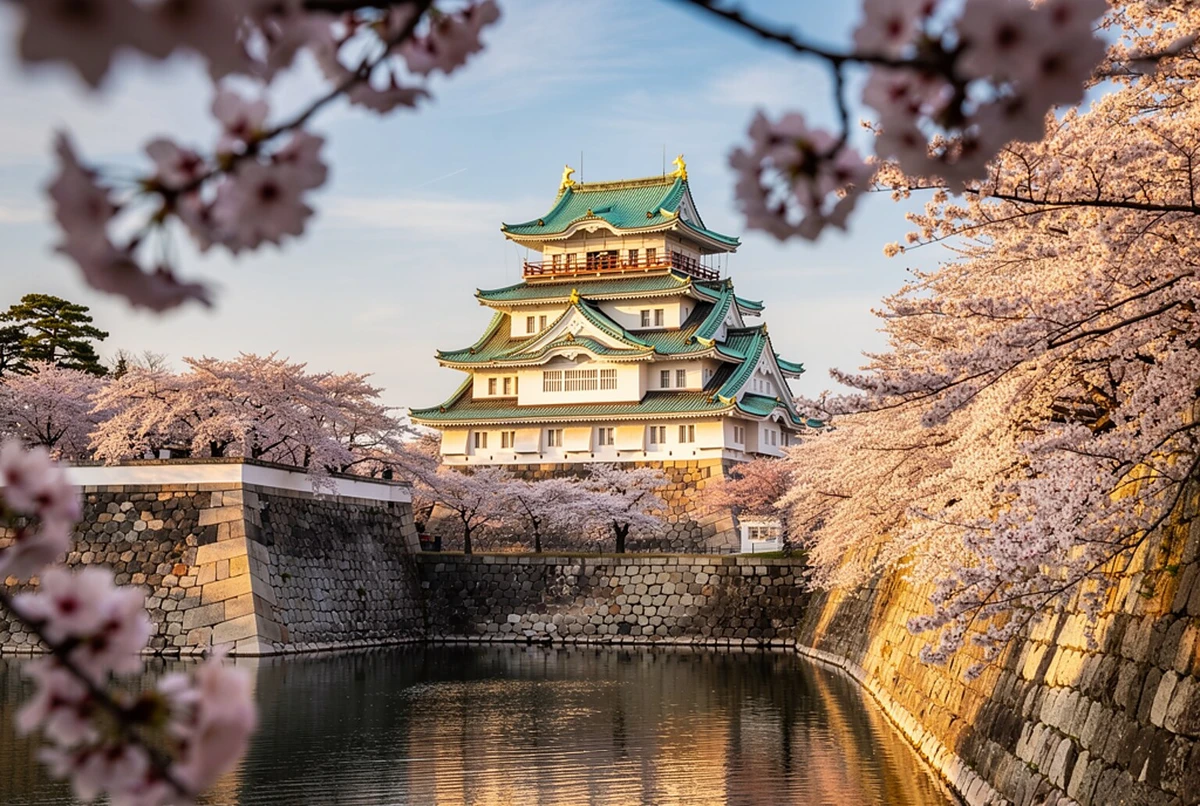
Hiroshima Castle was founded in the 1590s on the delta of the Ota River, and the city grew around it. Its nickname, Carp Castle, is still used by locals today. The original five-storey keep survived for more than three centuries until it was flattened by the blast in 1945; the present keep is a concrete reconstruction completed in 1958, standing above wide moats and stone walls that are largely original.
On this Hiroshima Castle tour you spend about 20 minutes in the grounds, walking past the moats, the rebuilt gate and the old stone foundations. The guide also points out the surviving trees in the grounds that were damaged in 1945 but sprouted again, now protected as survivor trees. The castle keep's interior is not part of the walk, so the focus stays on the outdoor history of the site.
A Military City: Why Hiroshima
Within the castle grounds your guide shows you the traces of Hiroshima's role as a military city. During the war of 1894 to 1895, Japan's Imperial General Headquarters was moved here, and the port of Ujina became the main departure point for troops heading overseas. By 1945 the city hosted a regional army command, barracks, depots and factories.
Here the tour addresses the question many visitors ask: why was Hiroshima bombed? The guide explains how its military importance, its flat delta landscape and the fact that it had not yet been heavily bombed made it one of the chosen targets in the summer of 1945. Nearby are the remains of a concrete underground command post from which young student operators sent one of the first reports of the destruction.
Hiroshima Gate Park
Hiroshima Gate Park is one of the city's newest public spaces, opened in 2023 on the site of the former municipal baseball stadium, a short walk north of the Atomic Bomb Dome. Its wide lawns, trees and low buildings with shops and cafés have turned the area into a meeting place for local families and students.
The stop here, about 30 minutes, shows how Hiroshima has kept rebuilding and renewing itself. Your guide uses the open space to tell the story of the post-war decades, when the city rose from ashes, regained its population and reshaped its centre around parks, wide avenues and the river. From the edge of the park you also get your first view of the ruined dome across the trees.
The Atomic Bomb Dome
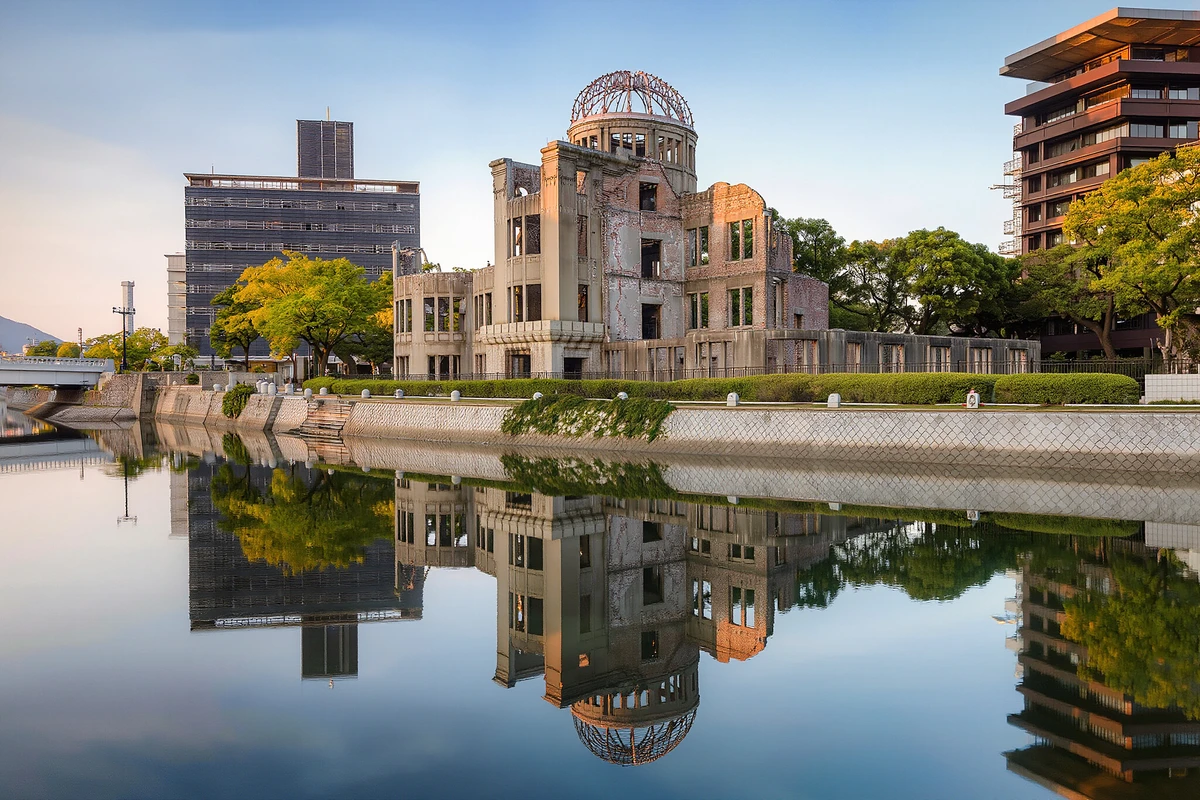
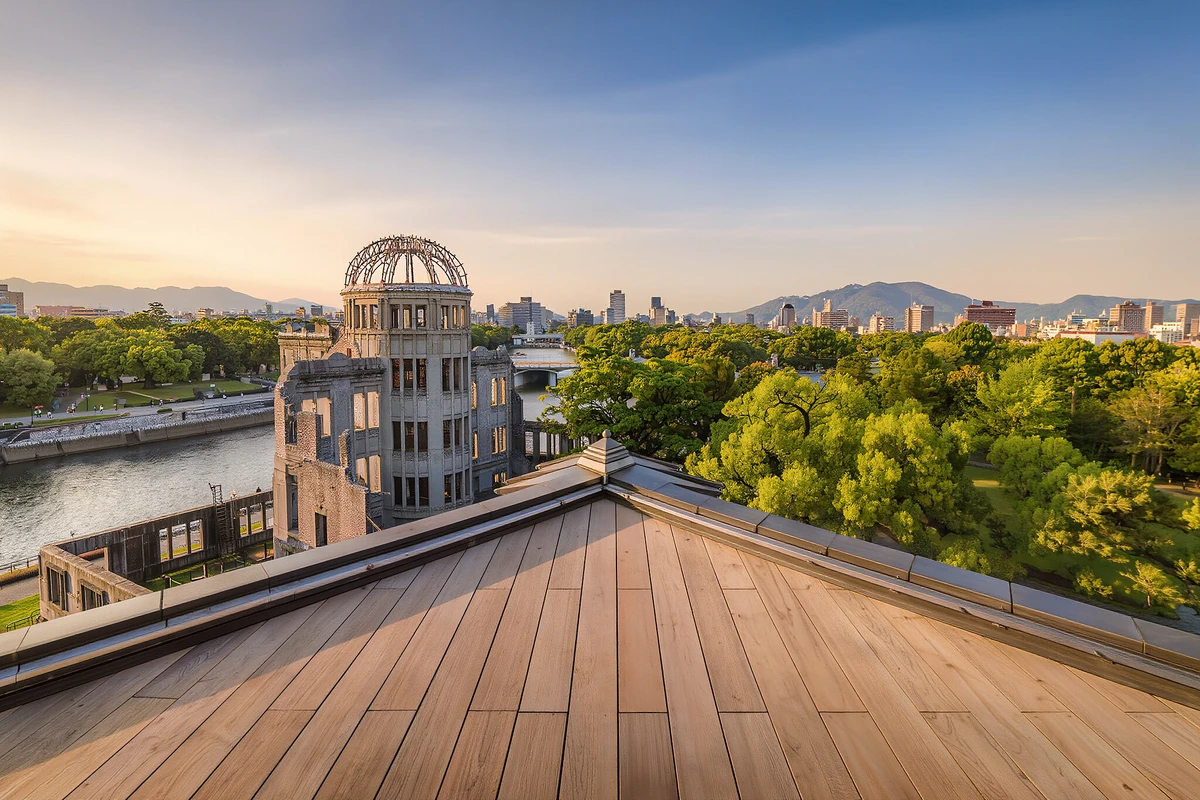
The Atomic Bomb Dome was built in 1915 as the Hiroshima Prefectural Industrial Promotion Hall, a modern European-style exhibition building beside the Motoyasu River. At 8:15 on the morning of 6 August 1945, the bomb exploded almost directly above it. Everyone inside died, but because the blast came from overhead, part of the walls and the steel frame of the dome remained standing.
The ruin was preserved as it was left, and in 1996 it was inscribed as a UNESCO World Heritage Site, a silent witness to the destruction of the city. This Atomic Bomb Dome tour stop lasts about 20 minutes, with time to look at the building from the riverbank and the nearby T-shaped Aioi Bridge while your guide recounts what happened that morning.
Hiroshima Peace Memorial Park and Museum
The Peace Memorial Park was laid out after the war on the Nakajima district, once a busy neighbourhood of shops, temples and houses that was destroyed in seconds. Today it is a calm space of lawns and trees between two rivers. The arched Cenotaph holds the names of the victims and frames, in one line, the Flame of Peace and the Atomic Bomb Dome. Nearby, the Children's Peace Monument is covered with garlands of paper cranes sent from around the world.
The tour ends after about 30 minutes in the park, at the entrance of the Hiroshima Peace Memorial Museum. Museum entry is not included, so you can continue inside at your own pace; allow one to two hours. The museum opens daily from early morning to early evening, with longer hours in summer, and Hiroshima Peace Memorial Park guided tour visitors often say this is the most moving part of their trip to Japan.
Itinerary
- Meet at Hiroshima Gokoku ShrineMeet your guide in front of the torii gate near the main hall and begin with the story of the shrine (about 10 minutes).
- Hiroshima Castle groundsWalk around the moats, the reconstructed keep and the military remains in the grounds (about 20–30 minutes).
- Hiroshima Gate ParkStop in the new park on the former stadium site to hear how the city was rebuilt (about 30 minutes).
- Atomic Bomb DomeStand by the river opposite the dome while your guide recounts the morning of 6 August 1945 (about 20 minutes).
- Peace Memorial ParkWalk past the Cenotaph, the Flame of Peace and the Children's Peace Monument (about 30 minutes).
- Finish at the Peace Memorial MuseumThe tour ends at the museum entrance, where you can continue inside on your own.
What's included
- Guided walking tour in English
- Hiroshima Gokoku Shrine and Hiroshima Castle
- Hiroshima Gate Park
- Atomic Bomb Dome
- Hiroshima Peace Memorial Park
- Wheelchair-accessible route
Not included
- Tips for the guide
- Peace Memorial Museum entry
Is this right for you?
Great for
- Families with children — a child price for ages 3–11
- First-time visitors who want the highlights
- A half-day plan — about 2.5 hours
- Travellers who want a proven choice — rated 4.9/5 by past travellers
Think twice if
- You want a private tour — this one is shared with other travellers
- Walking is difficult for you — expect active parts
Meeting point
There is no hotel pickup on this walking tour. Meet your guide in front of the torii gate of Hiroshima Gokoku Shrine, near the main hall, inside the grounds of Hiroshima Castle. The shrine is around a 20-minute walk from Hiroshima Station, or a short walk from the Kamiyacho tram stops. Please arrive 10 minutes before your start time.
Important information
- Wear comfortable walking shoes and dress for the weather
- Bring water, a hat and sunscreen in summer, and an umbrella in the rainy season
- Peace Memorial Museum entry is not included; allow one to two hours for it after the tour
- The route is wheelchair accessible
- Please behave quietly and respectfully at the memorials
- The castle keep's interior is not part of the walk
- Tips for the guide are not included
- Please arrive 10 minutes before the start time at the torii gate
Good to know
Frequently Asked Questions
Straight answers to what travellers ask us most, before they book.
Is this a shared or a private experience?
It is a shared walking tour: you join a group of other travellers led by a live English-speaking guide.
How long does the walk take?
About 2.5 hours, from Gokoku Shrine to the entrance of the Peace Memorial Museum.
Is hotel pickup included?
No. You meet the guide at the torii gate of Hiroshima Gokoku Shrine, within walking distance of the city centre and the tram.
What is included?
A guided walk in English through Gokoku Shrine, Hiroshima Castle grounds, Hiroshima Gate Park, the Atomic Bomb Dome and the Peace Memorial Park.
Is the Peace Memorial Museum included?
No. The tour ends at the museum entrance, and you can buy a ticket there and visit on your own after the walk.
Is the price per person or per group?
The price is per person. The booking panel on this page shows the current price.
Is it suitable for children or people with reduced mobility?
Yes, the route is wheelchair accessible and fine for children. The subject is serious, and the guide tells the story with care, so parents can judge what suits their children.
What should I bring?
Comfortable shoes, water, a hat or umbrella depending on the season, and a camera. Please be respectful when taking photos at the memorials.
Why was Hiroshima chosen as a target?
Hiroshima was a major military and supply centre with an army command and a port for troops. Your guide explains this context in detail at the castle grounds.
What is the best time to visit Hiroshima?
Spring, with cherry blossoms around the castle in late March and early April, and autumn are the most pleasant. Summer is hot and humid, and June brings the rainy season.
What happens in bad weather?
The walk goes ahead in rain, so bring an umbrella. If a typhoon or severe warning affects the tour, we contact you to change the date.
How do I book and confirm?
Choose your date and start time in the booking panel and complete your booking. Our team confirms your place and the meeting point on WhatsApp within minutes.
More in Hiroshima
Getting to & around Hiroshima
Popular across Japan
-
-
-
-
-
-