Tokyo Highlights 3-Hour Guided E-Bike Tour
- DurationAbout 3 hours
- Daily
- Group
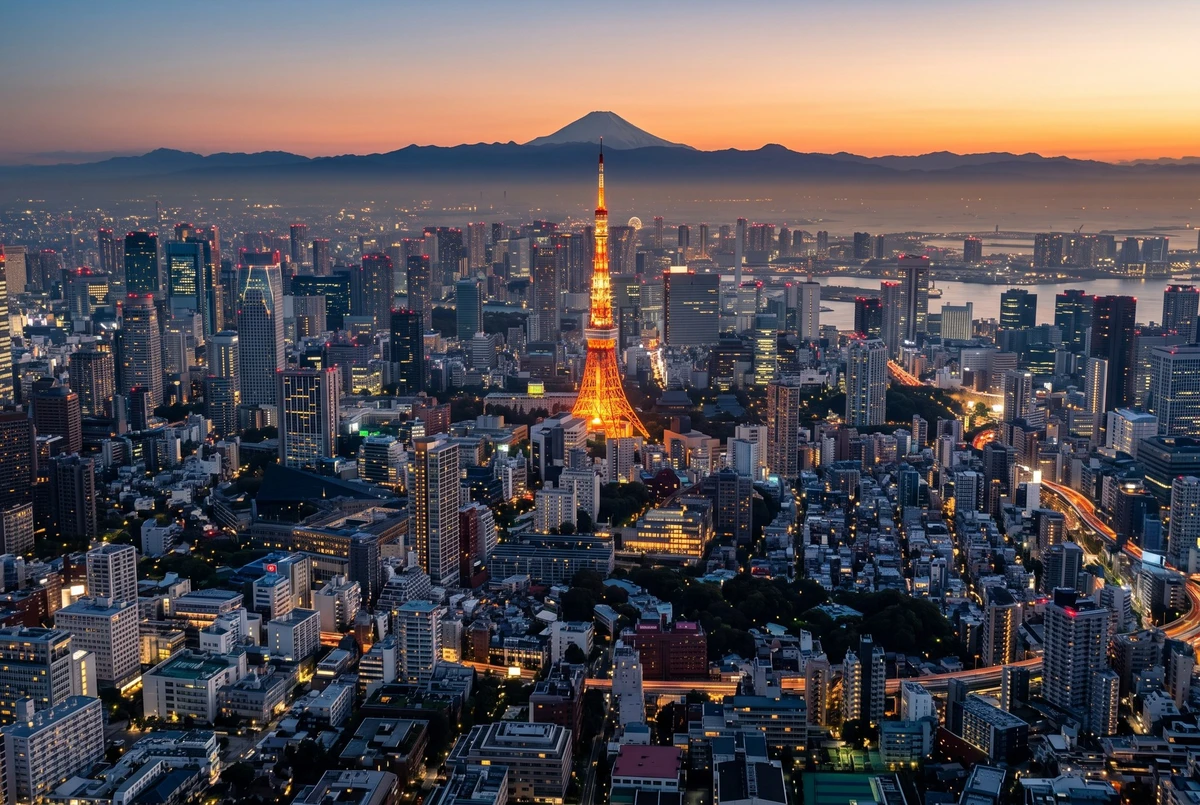
Some images are AI-generated for illustration. While we confirm your booking, just ask and we will send you the original photos.
- Fair, honest prices
- Real people, not bots
- Confirm, then pay
- Secure payment

Overview
See far more of Tokyo in three hours than you could on foot, without the effort of a normal bike. On this small-group e-bike tour of up to six riders, an English-speaking guide leads you from Tsukiji through Ginza, past the moats of the Imperial Palace and the red-brick Tokyo Station, across historic Nihonbashi and into the quieter east side of the city, with a stop for traditional Japanese sweets, a visit inside Kiyosumi Gardens and the old Tomioka Hachimangu Shrine. The default City Route is described here; other routes take you to Tokyo Tower in the morning or at sunset, or over the bridges to Odaiba for the evening views. Helmet and e-bike are included; riders must be 13 or older and confident on a bicycle.
Highlights
- Small group of up to six riders with an English-speaking guide
- Electric-assist bikes that make Tokyo's distances easy
- Photo stop at the Imperial Palace moats and stone walls
- The restored red-brick Marunouchi building of Tokyo Station
- Entry to Kiyosumi Gardens, a classic Japanese stroll garden
- Tomioka Hachimangu Shrine in the old Fukagawa district
- Traditional Japanese sweets stop and local back streets
- Other routes to Tokyo Tower or Odaiba at sunset
Full Description
Tsukiji and Ginza: the start of the ride
The tour starts in Tsukiji, the district that for decades hosted the world's most famous fish market. The wholesale market moved to Toyosu in 2018, but the outer market's narrow lanes of seafood stalls, knife shops and small eateries are still busy every morning, and the neighbourhood keeps its working, local character. After a safety briefing and a short practice, you set off on your e-bike.
Within minutes you are rolling through Ginza, Tokyo's most elegant shopping district, with its wide avenues, flagship stores and polished facades. Riding through Ginza on a bike gives you a very different view from the pavement: you see how the grand avenues give way to small side streets, and your guide shares how this former silver-minting quarter became a symbol of modern Tokyo.
Tokyo Imperial Palace
The Tokyo Imperial Palace stands on the site of Edo Castle, once the seat of the shoguns who ruled Japan for more than two centuries, and today the residence of the Emperor. What you see from outside are the broad moats, massive sloping stone walls built from fitted granite blocks, white-walled watchtowers and the gently curving pines along the outer garden, all set against the glass towers of Marunouchi.
On this e-bike tour you stop for about 10 minutes for photos at the palace plaza, with views towards the famous double bridge and the inner walls. The wide, car-free paths around the outer gardens are among the most pleasant places to cycle in Tokyo. Is the Imperial Palace worth visiting? For first-time visitors it is the best place to understand old Edo and modern Tokyo at a glance.
Tokyo Station and Nihonbashi
Tokyo Station's Marunouchi building, opened in 1914, is one of the city's best-loved landmarks: a long red-brick facade with white stone trim and two domed wings, carefully restored to its original look and reopened in 2012. You stop here for about 15 minutes and your guide explains how the station grew into one of the busiest railway hubs in the world, while the old building remains its elegant face.
From here you ride to Nihonbashi, the bridge that was the starting point of the five great highways of the Edo period and still serves as the zero point for distances on Japan's national roads. The present stone bridge, decorated with bronze lions and lamp posts, dates from 1911. The area around it, full of long-established merchant houses and department stores, is the historic commercial heart of Tokyo.
Kiyosumi Gardens
Kiyosumi Gardens is a classic Japanese stroll garden on the east side of the Sumida River, built around a large pond with small islands, arched bridges and a lakeside teahouse. Its special feature is the collection of beautiful natural rocks brought from all over Japan, including stepping stones that let you walk across the water, a favourite spot for photos and for watching the carp and turtles.
This is the longest stop on the City Route, about 40 minutes, and entry to the garden is included. After riding through busy streets it is a peaceful contrast, a chance to feel the essence of Japanese nature in the middle of the city. Spring brings cherry and azalea blossoms, autumn brings red and gold leaves, and in winter the pines and stones stand out against clear skies.
Tomioka Hachimangu Shrine and the Fukagawa area
Tomioka Hachimangu, founded in 1627, is the largest Hachiman shrine in Tokyo and the spiritual centre of Fukagawa, an old riverside neighbourhood of merchants and craftsmen. The shrine is also known as the birthplace of the public sumo tournaments of the Edo period, remembered today by monuments engraved with the names of the great grand champions in its grounds.
You spend about 20 minutes here with your guide, who explains the shrine's portable shrines and its lively summer festival, one of the three great festivals of old Edo. Along the way through this part of the city you also pass views of Tokyo Skytree and stop for traditional Japanese sweets, before an easy final ride back to Tsukiji. It is a side of Tokyo that most visitors never see.
Itinerary
- Meet in Tsukiji and safety briefingArrive 15 minutes early at the meeting point in Tsukiji to fit your helmet, adjust your e-bike and learn how traffic and cycling work in Tokyo.
- Ride through GinzaAbout 15 minutes cycling along the avenues and side streets of Tokyo's best-known shopping district.
- Tokyo Imperial PalaceA photo stop of about 10 minutes at the palace plaza, moats and stone walls.
- Tokyo StationAbout 15 minutes at the red-brick Marunouchi building with stories from your guide.
- NihonbashiAbout 20 minutes riding through the historic bridge district, the starting point of Japan's old highways.
- Traditional sweets stopAbout 15 minutes to try traditional Japanese sweets at a local shop.
- Ride east with Skytree viewsCycling through local streets with a view of Tokyo Skytree on the way.
- Kiyosumi GardensAbout 40 minutes to walk around the pond, stepping stones and teahouse of this Japanese garden.
- Tomioka Hachimangu ShrineAbout 20 minutes at the largest Hachiman shrine in Tokyo.
- Return to TsukijiAn easy ride of about 15 minutes back to the starting point, where the tour ends.
What's included
- Electric-assist bike rental
- Helmet
- English-speaking guide (group of up to 6)
- Luggage storage at the start
- Knapsack on request, gloves in winter
- Kiyosumi Gardens entry
- Traditional Japanese sweets snack
Not included
- Drinks (bring water)
- Hotel pickup and drop-off
- Personal expenses
Is this right for you?
Great for
- History and culture lovers
- First-time visitors who want the highlights
- Travellers who want a proven choice — rated 4.8/5 by past travellers
Think twice if
- You need hotel pickup — you meet at the meeting point
- You want a private tour — this one is shared with other travellers
- Walking is difficult for you — expect active parts
Not suitable for
- Children under 13
- Pregnant women
- People with heart problems
- Wheelchair users
- People over 120 kg
- People under 147 cm tall
Meeting point
The tour starts and ends at the meeting point in Tsukiji 6-11-5, Chuo City, near the Tsukiji outer market and a few minutes on foot from Tsukiji and Tsukiji-shijo stations. Please arrive 15 minutes before your start time for the safety briefing; as this is a group tour, late arrivals cannot join once the group has left. Luggage can be stored at the start.
Important information
- Riders must be 13 or older, at least 147 cm tall, under 120 kg and able to ride a bicycle confidently
- Arrive 15 minutes before the start; latecomers cannot join after departure
- In Tokyo traffic keeps to the left and bikes often share streets with pedestrians
- Bring water and wear comfortable shoes and clothes suitable for cycling
- The tour may finish up to 30 minutes late because of traffic
- E-bikes must be returned to the start, so it is not possible to leave the tour partway
- If rain or safety concerns cancel the tour, you are informed by email the day before or on the day
Good to know
Frequently Asked Questions
Straight answers to what travellers ask us most, before they book.
Is this a shared or a private experience?
It is a shared small-group tour of up to six riders, led by an English-speaking guide.
How long does the Tokyo e-bike tour take?
About three hours, though traffic can add up to 30 minutes.
Is hotel pickup included?
No. The tour starts and ends at the meeting point in Tsukiji, close to two subway stations.
What is included?
The e-bike, a helmet, an English-speaking guide, luggage storage, a knapsack if needed and gloves in winter. On the City Route you also get entry to Kiyosumi Gardens and a traditional sweets snack.
Is the price per person or per group?
The price is per person. The booking panel on this page shows the current price of each route.
Which routes can I choose?
The City Route described on this page, a morning Tokyo Tower Route, a Tokyo Bay Sunset Route to Odaiba and a Tokyo Tower Sunset Route that includes the tower's observation deck.
Do I need to be a strong cyclist?
No, the electric assist takes the strain out of hills and distances, but you must be able to ride a bicycle confidently in city traffic.
Is it suitable for children or reduced mobility?
Riders must be at least 13 years old and 147 cm tall. The tour is not suitable for wheelchair users, pregnant women or people with heart problems.
What should I bring?
Comfortable shoes, water, sun protection in summer and warm layers in winter; gloves are provided in the cold season.
What is the best season for cycling in Tokyo?
Spring and autumn are the most pleasant, with cherry blossoms or autumn leaves in the gardens; summer mornings and winter's clear days are also good.
What happens in bad weather?
If rain or safety concerns force a cancellation, you are informed the day before or on the day and receive a full refund or a new date.
How do I book and confirm?
Choose your date and route in the booking panel and send your request. Our team confirms your booking on WhatsApp within minutes and shares the meeting point.
More in Tokyo

Popular across Japan
-
-
-
-
-
-