Old Hutongs Night Walking Tour with Local Snacks Beijing
- DurationAbout 2.5 hours
- Daily
- Group
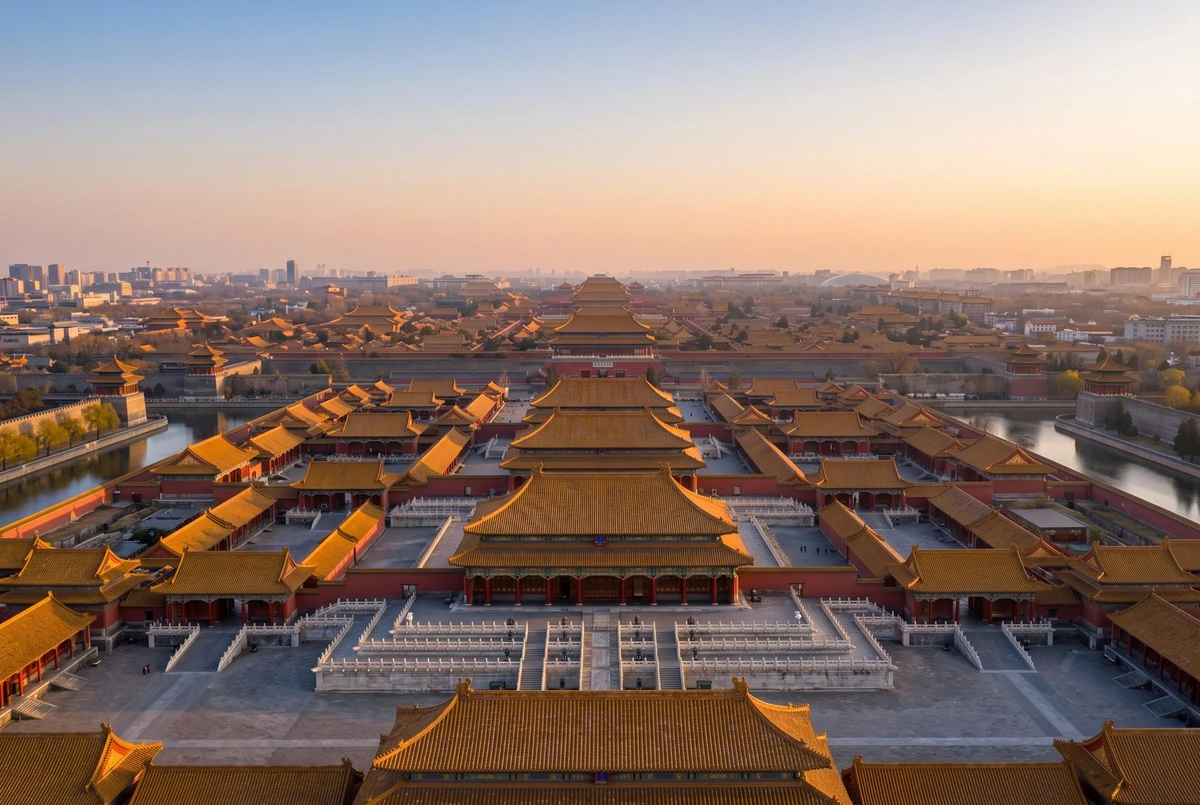
Some images are AI-generated for illustration. While we confirm your booking, just ask and we will send you the original photos.
- Fair, honest prices
- Real people, not bots
- Confirm, then pay
- Secure payment

Overview
When the lanterns come on, the hutongs north of the Forbidden City become the most atmospheric corner of Beijing, and this small-group evening walk takes you through the best of them with an English-speaking guide and whisper headsets. You start at Nanluoguxiang, one of the city's oldest lanes, turn into the courtyard houses of Mao'er Hutong, cross the square between the Drum and Bell Towers on the historic Central Axis, follow the Qing-era shops of Yandai Xiejie and finish at Yinding Bridge on Houhai lake. The default option adds tastings of Beijing snacks along the way and a sit-down Mongolian hotpot dinner by the water; a shorter option covers the same route without food. It is a shared walking tour for anyone who wants old Beijing at its liveliest hour.
Highlights
- Lantern-lit evening walk through Beijing's best-preserved hutong district
- Nanluoguxiang, a lane laid out in the thirteenth century and lined with snack shops
- Grey-brick courtyard houses and former residences of officials in Mao'er Hutong
- The Drum and Bell Towers, the northern end of Beijing's Central Axis, floodlit at night
- Yandai Xiejie, the Tobacco Pipe Lane, one of the city's oldest shopping streets
- Yinding Bridge and the willow-lined Houhai lakeside
- Tastings of Beijing snacks and a Mongolian hotpot dinner by the lake in the default option
- English-speaking guide with whisper headsets in a small group
Full Description
Nanluoguxiang, the thirteenth-century lane
Nanluoguxiang is a straight north-south lane of under eight hundred metres laid out when the Yuan dynasty built its capital in the thirteenth century, which makes it one of the oldest surviving streets in Beijing. Eight hutongs branch off on each side in a pattern old Beijingers compare with a centipede, and behind the grey walls lie hundreds of traditional courtyard houses. The guide meets you at Exit E of the metro station at the southern end, so the walk begins exactly where the lane does.
Today Nanluoguxiang is also the liveliest stretch of the route, with small shops selling pastries, candied fruit and the thick Beijing yogurt in clay pots that the default option lets you taste. A Nanluoguxiang evening tour shows the lane at its best, when day-trippers have gone and the lanterns are lit. The guide explains how to read a courtyard gate, from the number of beams to the stone drums at the door, before turning off the main lane into the quieter side hutongs.
Mao'er Hutong and courtyard life
Mao'er Hutong runs west from Nanluoguxiang and is one of the finest places in the city to understand the siheyuan, the walled courtyard house that defined old Beijing. Several of its compounds were the residences of high officials in the Qing dynasty, and their red-lacquered gates, carved brick screens and tiered roofs still stand behind the modern doors. The guide walks the lane at a slow pace, pointing out details that a Beijing hutong walking tour on your own would miss.
Ordinary families still live in the lane, so you see bicycles parked under the eaves, neighbours chatting on stools and the glow of kitchens through latticed windows. This is the part of the evening that visitors remember most, because it shows that the hutongs are living neighbourhoods rather than a museum. Photography is welcome from the lane, but the courtyards are private; your guide will tell you when a gate is open to visitors and when it is not.
Drum and Bell Tower Square on the Central Axis
At the northern end of the hutongs the lanes open onto the square between the Drum Tower and the Bell Tower, two massive structures that marked time for the capital for more than six centuries. The Drum Tower, first built in the Yuan dynasty and rebuilt by the Ming, rises on a red-walled base with grey tiled roofs; the Bell Tower behind it is slightly taller and entirely of brick and stone. Together they form the northern end of Beijing's Central Axis, inscribed as a World Heritage site.
At night both towers are floodlit, and the square between them fills with local families, children on scooters and elderly residents dancing to music, a scene your guide uses to explain how the rhythm of drum and bell once governed the opening of city gates and the curfew. This walk gives you twenty minutes on the square at night without the entrance queues, with the best photo angle from the hutong mouth on the south side.
Yandai Xiejie, the Tobacco Pipe Lane
From the towers the route follows Yandai Xiejie, a short diagonal lane barely two hundred and thirty metres long whose name means Tobacco Pipe Lane. In the Qing dynasty its shops sold long-stemmed pipes and tobacco to the officials and bannermen who lived around the lakes, and the lane itself is said to be shaped like a pipe, with the bridge at its end as the bowl. It is one of the oldest commercial streets in Beijing and keeps its low shopfronts and carved wooden signboards.
At night the lane is a corridor of red lanterns, with stalls selling paper cuttings, cloisonné, snacks and small souvenirs, and the guide stops at a traditional snack stand for another tasting in the default option. The crowd is a mix of locals and visitors, and the whisper headsets mean you hear every word even in the bustle. Twenty minutes is enough to walk its length, look into the workshops and reach the lake at the far end.
Yinding Bridge, Houhai lake and the hotpot dinner
Yandai Xiejie ends at Yinding Bridge, the small white stone arch that separates Houhai from Qianhai in the Shichahai lake district. The bridge is one of the classic views of old Beijing: willows along both banks, rowing boats on the water in summer, and on clear days the Western Hills on the horizon, a sight the old chroniclers listed among the scenic wonders of the capital. Houhai lake at night is especially pretty, with lanterns reflected across the water.
This is where the default option sits down to dinner: a Mongolian hotpot by the water, with thin slices of lamb and vegetables cooked at the table in a charcoal-heated copper pot and dipped in sesame sauce, a dish Beijing has eaten on winter evenings for centuries. The shorter option ends the walk here without the meal. Shichahai metro station is a short walk away, or ask the guide for the best route back to your hotel.
Itinerary
- Meeting at Nanluoguxiang metro stationYour guide waits at Exit E at 18:00 for the snacks and hotpot option, or 19:00 for the walk without food, and hands out the whisper headsets.
- NanluoguxiangAbout twenty minutes along the thirteenth-century lane with explanations of courtyard gates and the first snack tasting in the default option.
- Mao'er Hutong and the side lanesAbout thirty minutes among the grey-brick courtyard houses and former residences of Qing officials.
- Drum and Bell Tower SquareAbout twenty minutes on the square at the northern end of the Central Axis, with both towers floodlit.
- Yandai XiejieAbout twenty minutes down the lantern-lit Tobacco Pipe Lane with its old shopfronts and a snack stop in the default option.
- Yinding Bridge and HouhaiViews over the lake from the bridge, then the Mongolian hotpot dinner by the water in the default option; the tour ends here.
What's included
- English-speaking guide
- Whisper headsets
- Guided small-group walk through Nanluoguxiang, Mao'er Hutong, Bell and Drum Tower Square, Yandai Xiejie and Yinding Bridge
Not included
- Food and drinks
- Hotel transfers
- Gratuities (optional)
Is this right for you?
Great for
- Food lovers
- First-time visitors who want the highlights
- Travellers who want a proven choice — rated 4.8/5 by past travellers
Think twice if
- You need hotel pickup — you meet at the meeting point
- You want a private tour — this one is shared with other travellers
- Walking is difficult for you — expect active parts
Not suitable for
- Wheelchair users
- People with limited mobility (the walk requires good physical fitness)
Meeting point
Meet your guide at Exit E of Nanluoguxiang metro station, served by Lines 6 and 8, at 18:00 for the option with snacks and hotpot dinner or at 19:00 for the walk without food. The guide waits at the exit with the headsets; please arrive a few minutes early. The walk finishes at Yinding Bridge by Houhai lake, close to Shichahai metro station on Line 8.
Important information
- This is a walking tour on paved lanes with a few steps; good physical fitness is required
- Wear comfortable shoes and bring a light jacket, as evenings by the lake are cooler than the day
- Come hungry for the default option: the snacks and the hotpot dinner replace an evening meal
- Tell us about allergies or dietary needs when booking so the guide can adapt the tastings
- The itinerary may be adjusted for weather or local events
- Courtyard houses are private homes; photograph from the lane and respect residents
- Headsets are collected at the end of the walk
Good to know
Frequently Asked Questions
Straight answers to what travellers ask us most, before they book.
Is this a shared or a private experience?
It is a shared small-group walking tour with an English-speaking guide and whisper headsets.
How long does it take?
About three and a half hours with the snacks and hotpot dinner, or about two and a half hours for the walk without food.
Is hotel pickup included?
No. The meeting point is Exit E of Nanluoguxiang metro station, easy to reach on Lines 6 and 8 from anywhere in central Beijing.
What is included?
The guide, the headsets and the guided walk; the default option also includes a variety of Beijing snacks and a Mongolian hotpot dinner by Houhai lake.
What is the difference between the two options?
The route is the same. The 18:00 option includes the snack tastings and the hotpot dinner; the 19:00 option is the walk only, without any food.
Is the price per person or per group?
Per person. The booking panel on this page shows the current price of each option.
Is it suitable for children?
Children who can walk for two to three hours are welcome with their parents; there is no separate child rate. Prams are difficult on the crowded lanes.
Is it suitable for people with reduced mobility?
No. The tour covers several kilometres on foot and is not suitable for wheelchair users or people with limited mobility.
What is in the hotpot dinner?
Mongolian hotpot: thin slices of lamb, vegetables, tofu and noodles cooked at the table in a copper pot and dipped in sesame sauce, served at a restaurant by the lake.
What should I bring?
Comfortable shoes, a light jacket and your appetite. Everything else, including the headsets, is provided.
When is the best time of year for the hutong walk?
Spring and autumn evenings are the most pleasant; summer is warm but lively around the lake, and in winter the hotpot dinner is exactly what Beijingers choose.
How do I book and confirm?
Select the option and date in the booking panel and send the request; our team confirms on WhatsApp within minutes with the meeting details.
More in Beijing

Getting to & around Beijing
Popular across China
-
-
-
-
-
-