Backstreets & Temples E-Bike Tour with Nanzenji & Heian Shrine Kyoto
- DurationAbout 4 hours
- Daily
- Group
Some images are AI-generated for illustration. While we confirm your booking, just ask and we will send you the original photos.
- Fair, honest prices
- Real people, not bots
- Confirm, then pay
- Secure payment

Overview
This four-hour e-bike tour in Kyoto links the city's great temples and shrines by its quiet backstreets, so you see more in one morning or afternoon than you could on foot. Starting in Gion, an expert local guide leads a small group of up to 8 riders to Nanzen-ji and its brick aqueduct, the vermilion halls of Heian Shrine, the canal-side Philosopher's Path, the ancient forest of Shimogamo Shrine and the wide gravel avenues around the Kyoto Imperial Palace, before riding back to Gion. Comfortable electric bikes take the effort out of the gentle hills, and the guide shares stories of Kyoto's history and daily life at every stop. The tour suits riders aged 12 and over; there is no hotel pickup.
Highlights
- Six famous Kyoto sights linked by quiet backstreets in about 4 hours
- Small group of up to 8 riders with an expert local guide
- Comfortable e-bikes make the gentle hills easy
- Nanzen-ji's great gate and red-brick aqueduct
- Heian Shrine and the giant vermilion torii
- The canal-side Philosopher's Path
- Shimogamo Shrine in the ancient Tadasu-no-Mori forest
- The Kyoto Imperial Palace and its wide park
Full Description
Gion: start of the ride
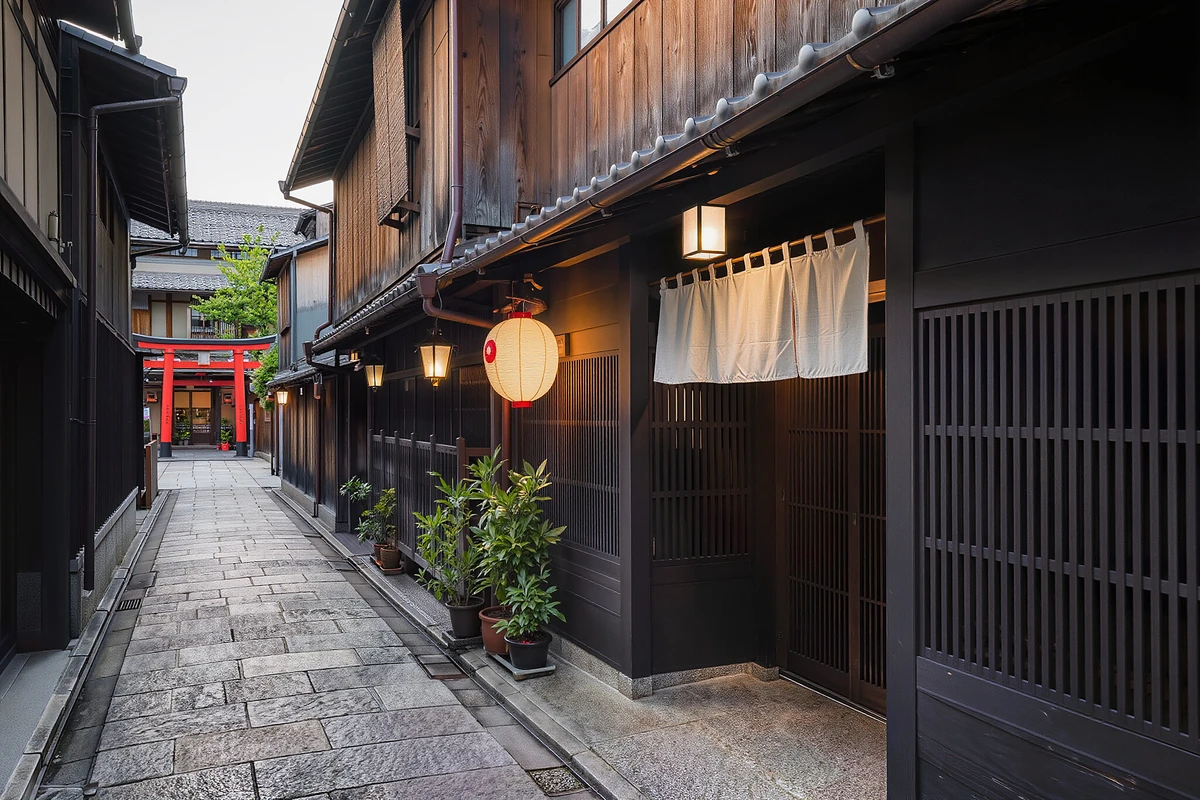
The tour starts on Yamato-oji Street in Gion, Kyoto's best-known historic district, where wooden teahouses with lattice fronts line lanes such as Hanamikoji and the willow-shaded Shirakawa canal. Before setting off, your guide fits your e-bike, checks the height of the seat and explains how the electric assist works, then leads a short loop through the district.
Gion is at its most atmospheric early in the day, before the crowds arrive, which is why the morning starts are popular. You pass the edge of the old entertainment quarter and the gateway towards Yasaka Shrine, picking up the first stories of the tour: how Gion grew up around the shrine, and why its traditional arts have survived in this small corner of the city. About 20 minutes here sets the scene for a day spent among Kyoto's backstreets rather than its main roads.
Nanzen-ji Temple and the Lake Biwa aqueduct
A short ride east brings you to Nanzen-ji, the head temple of one of the main schools of Zen Buddhism, founded at the end of the 13th century. The first thing you see is the Sanmon, a massive two-storey wooden gate of the 17th century, about 22 metres high, standing among pines at the entrance to wide, peaceful grounds that are free to walk.
Deeper in the grounds stands the surprise that photographers love: a Western-style red-brick aqueduct built in the 1890s to carry water from Lake Biwa through the hills into Kyoto. Its moss-covered arches look almost Roman beside the temple halls, and in autumn the maples around it turn deep red. The tour spends about 30 minutes here. If you wonder whether Nanzen-ji is worth visiting, the mix of Zen architecture, gardens and engineering makes it one of the most rewarding temples in eastern Kyoto.
Heian Shrine and the giant torii
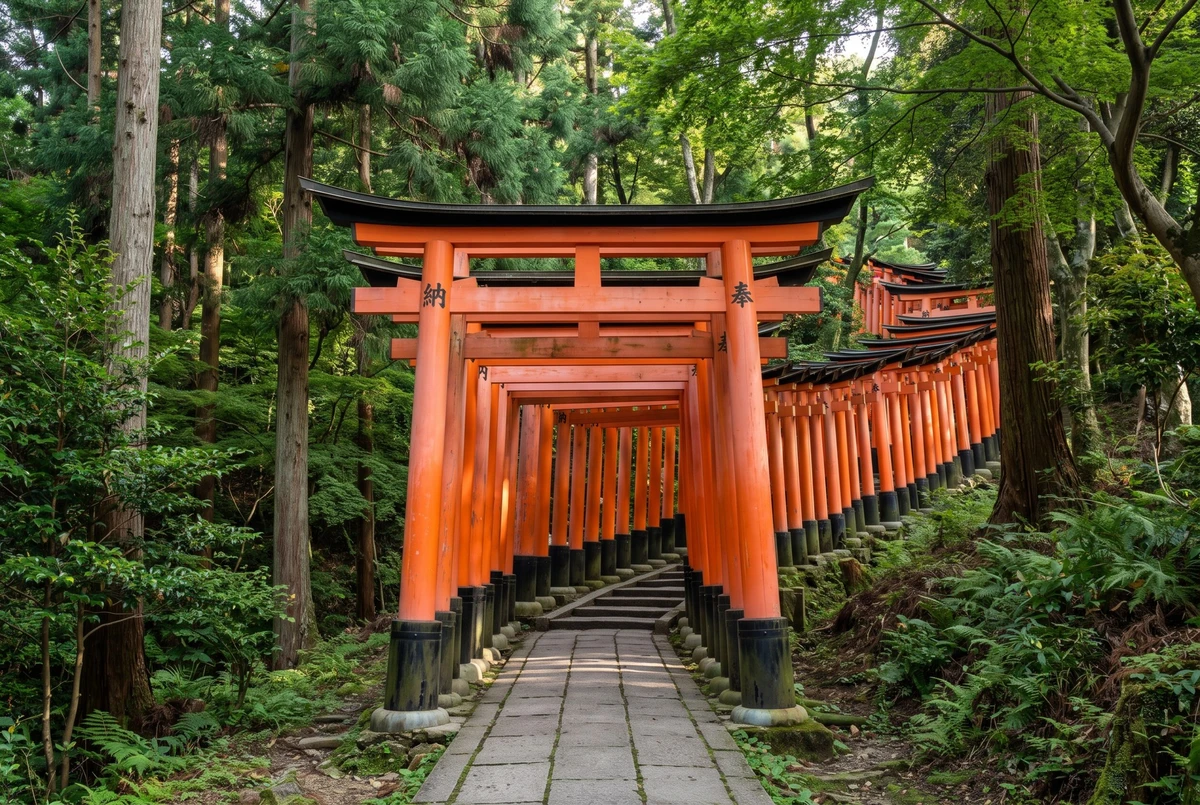
Heian Shrine was built in 1895 to celebrate 1,100 years since Kyoto became Japan's capital, and its bright vermilion halls copy, at a smaller scale, the ceremonial hall of the first imperial palace. Unlike the forest shrines of the city, it sits in a wide white gravel courtyard, which makes its colours stand out even more under a blue sky.
On the way in you ride beneath the shrine's giant vermilion torii, about 24 metres tall, which straddles the avenue in the Okazaki district and is one of the largest shrine gates in Japan. The guide explains the meaning of the gate, how to visit a Shinto shrine respectfully and how this area grew into Kyoto's cultural quarter, with museums and a zoo around it. The visit lasts about 30 minutes, with time for photos in the courtyard and under the torii.
The Philosopher's Path
Next the group rides north along the Philosopher's Path, a two-kilometre stone path beside a narrow canal at the foot of the eastern hills. It is named after a university philosopher who took this walk each day, and its quiet atmosphere, small bridges and moss-covered walls make it one of the loveliest routes in Kyoto at any season.
Cherry trees line the canal, so early April is the best time to visit the Philosopher's Path for blossom, while November brings brilliant maple colours and summer gives deep green shade. On an e-bike you cover the path at an easy pace, stopping where the guide points out a hidden shrine, a garden gate or a good spot for photos. About 30 minutes here gives a real feeling for the residential side of Kyoto that most bus tours skip.
Shimogamo Shrine and the Tadasu-no-Mori forest
Crossing to the north of the city, the ride reaches Shimogamo Shrine, one of the oldest shrines in Kyoto, older even than the city itself, and part of the UNESCO-listed historic monuments of ancient Kyoto. It stands where the Kamo and Takano rivers meet, and you approach it through Tadasu-no-Mori, a protected primeval forest of tall trees and small streams.
The long gravel path under the trees is one of the most peaceful places in the city, and the vermilion gate and halls at its end feel far from the busy streets. Each May the shrine shares one of Kyoto's three great festivals with its sister shrine upstream, with a procession in Heian-era costume. Your guide explains the shrine's link with the river and the forest during a visit of about 20 minutes, then the group sets off for the palace.
The Kyoto Imperial Palace and its park
The Kyoto Imperial Palace was the residence of Japan's emperors until the capital moved to Tokyo in 1869. The present halls were rebuilt in 1855 in the classic court style, and the palace sits inside Kyoto Gyoen, a huge public park of wide gravel avenues, old trees and lawns right in the centre of the city.
Riding the long avenues is a highlight of the tour: there are no cars, the views of the palace walls and gates are open, and in spring the weeping cherry trees in the north of the park draw crowds of photographers. The guide tells the story of the court that once lived here and how the city changed when it left. After about 30 minutes, the group rides back south through the backstreets to the starting point in Gion, where the tour ends.
Itinerary
- Start in GionMeet at the tourist lounge on Yamato-oji Street, fit your e-bike and ride a short loop through Gion, about 20 minutes.
- Nanzen-ji TempleSee the great Sanmon gate and the brick aqueduct in the temple grounds, about 30 minutes.
- Heian ShrineRide under the giant torii and visit the vermilion shrine courtyard, about 30 minutes.
- Philosopher's PathCycle and stop along the canal-side path with photo stops, about 30 minutes.
- Shimogamo ShrineWalk through the Tadasu-no-Mori forest to the shrine halls, about 20 minutes.
- Kyoto Imperial PalaceRide the wide avenues of the palace park with the guide's stories, about 30 minutes.
- Return to GionCycle back through the backstreets to the tourist lounge in Gion, where the tour ends.
What's included
- Comfortable e-bike rental
- Expert local guide speaking English
- Visits to Gion, Nanzen-ji, Heian Shrine, the Philosopher's Path, Shimogamo Shrine and the Imperial Palace grounds
- Commentary on Kyoto's culture and history
- Small group of up to 8 riders
- Photo stops at scenic places
Not included
- Insurance
- Food and drinks
- Hotel pickup and drop-off
Is this right for you?
Great for
- Travellers who want a proven choice — rated 4.9/5 by past travellers
Think twice if
- You want a private tour — this one is shared with other travellers
- Walking is difficult for you — expect active parts
Not suitable for
- Children under 12 years
- People shorter than 145 cm
- People over 100 kg
Meeting point
Meet your guide at a tourist lounge on Yamato-oji Street in Gion. Coming from Shijo Street, turn into Yamato-oji Street at the junction and walk about 50 metres; the lounge is on the right. Please arrive 15 minutes before your start time. We send the map pin with your booking confirmation. The tour ends at the same place; there is no hotel pickup.
Important information
- Arrive 15 minutes before the start time
- Riders must be at least 145 cm tall and 12 years or older
- Maximum rider weight is 100 kg
- You must be able to ride a bike confidently
- Insurance is not included; consider your own travel insurance
- Wear comfortable clothes and shoes, and bring water and sun protection in summer
- Riding under the influence of any intoxicating substance is not allowed
Good to know
Frequently Asked Questions
Straight answers to what travellers ask us most, before they book.
Is this a shared or a private experience?
It is a shared small-group tour with up to 8 riders and an expert local guide.
How long does the tour take?
About 4 hours, starting and ending in Gion.
Is hotel pickup included?
No. You meet the guide at a tourist lounge on Yamato-oji Street in Gion.
What is included?
A comfortable e-bike, an expert local guide, visits to six sights with commentary on Kyoto's culture and history, and photo stops along the way.
Is the price per person or per group?
The tour is priced per person. The booking panel on this page shows the current price for your date.
Is it suitable for children or people with reduced mobility?
Riders must be 12 or older and at least 145 cm tall. It is not suitable for people who cannot ride a bike.
Do the temples charge an entrance fee?
The tour visits the open grounds of the temples and shrines, which are free to walk. Paid inner gardens or halls are not part of the route.
Is an e-bike hard to ride?
No. If you can ride a normal bike, the electric assist simply makes hills and long stretches easier. Your guide explains the controls before you start.
What should I bring?
Comfortable clothes and shoes, water, and a hat and sunscreen in warm weather or a light raincoat if showers are expected.
What happens in bad weather?
The tour runs in light rain. If the weather is unsafe for cycling, our team contacts you to change the date or arrange a refund.
Which start time is best?
The morning starts see Gion and the temples at their quietest. Spring blossom and autumn leaves are the most beautiful seasons for this route.
How do I book and confirm?
Choose your date and start time in the booking panel and send your request. Our team confirms on WhatsApp within minutes and sends the meeting point.
More in Kyoto
Popular across Japan
-
-
-
-
-

-