Gion Night Walking Tour & Geisha Culture Kyoto
- Duration100 minutes
- Daily
- Group
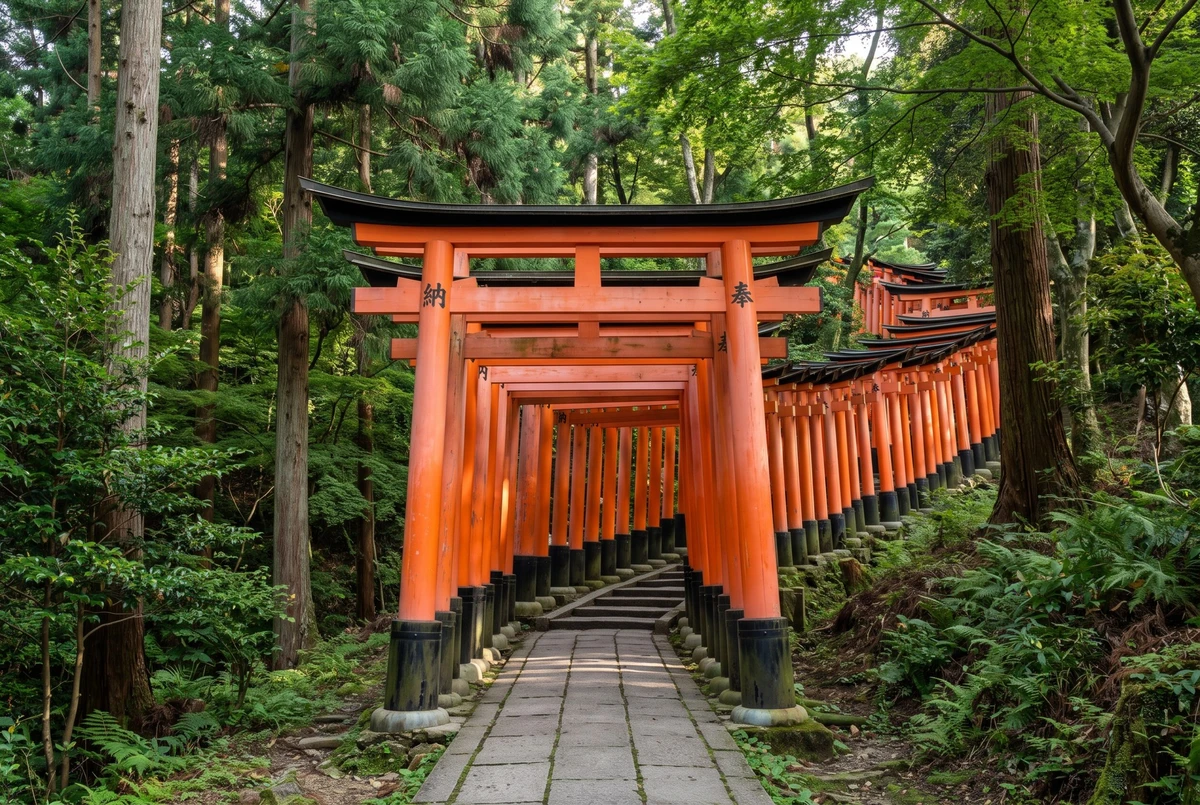
Some images are AI-generated for illustration. While we confirm your booking, just ask and we will send you the original photos.
- Fair, honest prices
- Real people, not bots
- Confirm, then pay
- Secure payment

Overview
Discover Gion after dark on this 100-minute small-group walk through Kyoto's most famous geisha district. Starting at the historic Minamiza Theatre, your English-speaking guide leads you along Hanamikoji Street, lined with wooden teahouses, and shares the rules, rituals and surprising trivia of geisha culture. The route continues to a shrine known for matchmaking, a Buddhist pagoda lit up at night, quiet stone lanes most visitors miss and an ancient shrine with more than a thousand years of history. Groups are limited to about 10 people, and the guide takes photos of you along the way. It is a shared walking tour that suits couples, friends and curious travellers. There is no hotel pickup; you meet in front of the Minamiza Theatre.
Highlights
- Hanamikoji Street and its wooden teahouses glowing with lanterns at night
- Stories of geisha culture, apprentices and the etiquette of the district
- A matchmaking shrine with its famous stone for cutting and binding ties
- Yasaka Pagoda illuminated against the night sky
- Quiet stone lanes and lesser-known corners of Gion
- Small group of about 10 people with an English-speaking guide
- Photography service during the walk
- Evening start times, with earlier starts from late May to August
Full Description
Minamiza Theatre and Shijo Street
The Minamiza Theatre stands at the eastern end of the Shijo Bridge over the Kamo River and is the oldest kabuki theatre in Japan, carrying on a tradition that began on the riverbanks of Kyoto in the early 17th century. The present building, with its tiled roof and grand gabled facade, dates from 1929. Each December wooden boards bearing the actors' names are hung across the front for the city's most celebrated kabuki season.
At night Shijo Street is busy with lit shopfronts and people heading out for dinner, a lively contrast to the quiet lanes ahead. Your guide gathers the group in front of the theatre and gives a short introduction to Gion: how it grew as an entertainment quarter serving pilgrims to Yasaka Shrine, and why it remains the heart of Kyoto's geisha culture. A Gion night walking tour starts here because every story of the district begins with this stage.
Hanamikoji Street, Kyoto's Geisha District
Hanamikoji Street is the main street of Gion Kobu, the most prestigious of Kyoto's geisha districts. Its stone paving is lined with ochaya, the private teahouses where geiko, as geisha are called in Kyoto, and their apprentices, the maiko, entertain guests with dance, music and conversation. Bamboo blinds, lattice windows and paper lanterns make the street look much as it did a century ago.
Here your guide explains the hidden world behind the doors: the years of training, the differences between a maiko's long trailing sash and a geiko's simpler style, and the rules that govern a district where introductions are still needed to enter a teahouse. If you are lucky you may glimpse a geiko or maiko hurrying to an appointment, but this is not a tour to meet them. Photography is banned in the private side lanes, and your guide shows where you can take photos respectfully.
Yasui Konpira-gu, Gion's Matchmaking Shrine
Tucked between the lanes south of Hanamikoji, Yasui Konpira-gu is the shrine Kyoto people visit to end bad relationships and begin good ones. Its centrepiece is a large stone covered in thousands of white paper slips, each carrying a wish. Visitors write their wish on a slip, crawl through the hole in the stone from front to back to cut a bad tie, then back again to bind a good one, before attaching the paper to the stone.
The shrine is open at night, and under its lanterns it has a gentle, slightly mysterious atmosphere. Your guide explains the ritual and its meaning, so you can try it if you wish. The tie can be with a person, but also with a habit, an illness or bad luck, which is why the shrine attracts visitors of all ages and not only those hoping for love.
Yasaka Pagoda and the Hidden Lanes of Gion
From the shrine the walk climbs gently through narrow lanes to the Yasaka Pagoda, the five-storey pagoda of Hokan-ji Temple. Rising about 46 metres above the old wooden houses, it was rebuilt in 1440 and is one of the most recognisable silhouettes of Kyoto. At night it is lit from below, and the view up the sloping street, with lanterns on either side, is one of the best photo spots of the walk.
On the way your guide takes you through hidden pathways and quiet stone lanes that most visitors miss, past traditional townhouses, small family shops and gardens behind wooden fences. Some sections include steps and slopes, which is why the route is not suitable for wheelchairs or strollers. The photography service means the guide can capture you against the pagoda and lanterns.
Yasaka Shrine
The walk ends near Yasaka Shrine, which according to tradition was founded in 656, more than a thousand years ago, and gave Gion its name. Its vermilion West Gate looks straight down Shijo Street, and inside the grounds a dance stage is hung with hundreds of paper lanterns that glow after dark. The shrine is open around the clock, so a night visit is easy and peaceful.
Yasaka Shrine is the shrine behind the Gion Matsuri, Kyoto's great festival held every July, and your guide shares the story of how it began as a ritual to protect the city from epidemics. From here you are at the edge of Maruyama Park and a short walk from Gion-Shijo Station, perfect for dinner in the area or a quiet stroll back along the river.
Itinerary
- Meet at the Minamiza TheatreMeet your guide in front of the theatre at the east end of the Shijo Bridge for a short introduction to Gion (about 10 minutes).
- Hanamikoji StreetWalk past the teahouses and learn about geisha culture, training and etiquette (about 25 minutes).
- Matchmaking shrineVisit the shrine and its stone for cutting bad ties and binding good ones (about 15 minutes).
- Yasaka Pagoda and hidden lanesClimb through quiet lanes to the illuminated pagoda for photos (about 30 minutes).
- Yasaka ShrineFinish at the ancient shrine among its glowing lanterns (about 20 minutes).
What's included
- English-speaking guide
- Small group of up to about 10 people
- Hanamikoji Street and stories of geisha culture and etiquette
- Matchmaking shrine and a pagoda illuminated at night
- Hidden pathways and lesser-known spots
- Photography service during the walk
Not included
- Hotel pickup and drop-off
- Food and drinks
Is this right for you?
Great for
- Families with children — a child price for ages 7–12
- First-time visitors who want the highlights
- A short visit — about 1.5 hours
- Travellers who want a proven choice — rated 4.9/5 by past travellers
Think twice if
- You want a private tour — this one is shared with other travellers
- Walking is difficult for you — expect active parts
Not suitable for
- People with mobility impairments
- Wheelchair users
- People with a cold
- Babies under 1 year
Meeting point
There is no hotel pickup. Meet your guide in front of the Minamiza Theatre in Gion, on the front side of the building facing Shijo Street, at the east end of the Shijo Bridge. The listed time is the departure time, so please arrive at least 5 minutes earlier, and allow extra time if you come by bus or taxi. There is a restroom near the meeting point; the next one is only in the second half of the walk.
Important information
- Wear comfortable shoes; the route includes stairs and slopes
- Not accessible for wheelchairs, strollers or people with limited mobility
- Please arrive at least 5 minutes before the start time
- Your booking is valid only for the date and time you booked
- Photography is not allowed in the private lanes of Gion; never block or follow geiko and maiko
- Children under 6 do not need a ticket
- Bring an umbrella in the rainy season and a warm layer in winter
- Use the restroom near the meeting point before the walk starts
Good to know
Frequently Asked Questions
Straight answers to what travellers ask us most, before they book.
Is this a shared or a private experience?
It is a shared small-group walking tour, usually limited to about 10 people, led by an English-speaking guide.
How long does the Gion night tour take?
About 100 minutes, starting in the evening in front of the Minamiza Theatre.
Is hotel pickup included?
No. You meet the guide in front of the Minamiza Theatre, a few minutes' walk from Gion-Shijo Station.
What is included?
An English-speaking guide, the walk through Hanamikoji Street, the matchmaking shrine, the illuminated pagoda, hidden lanes and an ancient shrine, plus a photography service.
Is the price per person or per group?
The price is per person, with a child rate and no ticket needed for children under 6. The booking panel on this page shows the current price.
Is it suitable for children or people with reduced mobility?
Children are welcome, but the route has stairs and slopes, so it is not suitable for wheelchairs, strollers or people with limited mobility.
Will I see a geisha?
You may see a geiko or maiko on her way to an appointment, especially early in the evening, but sightings are never guaranteed and the tour is not designed to meet them.
Can I take photos in Gion?
Yes, on the public streets. Photography is banned in the private lanes off Hanamikoji, and your guide shows you the best places to take photos respectfully.
What should I bring?
Comfortable shoes, a phone or camera, an umbrella in the rainy season and a warm layer in winter.
What is the best time to visit Gion?
Spring cherry blossoms and autumn colours are the most beautiful, July brings the Gion Matsuri, and in summer earlier starts let you see the district at dusk.
What happens in bad weather?
The walk goes ahead in rain, and the lanterns look beautiful on wet stones. If a typhoon or severe warning affects the tour, we contact you to change the date.
How do I book and confirm?
Choose your date and start time in the booking panel and complete your booking. Our team confirms your place on WhatsApp within minutes.
More in Kyoto
Popular across Japan
-
-
-
-

-
-