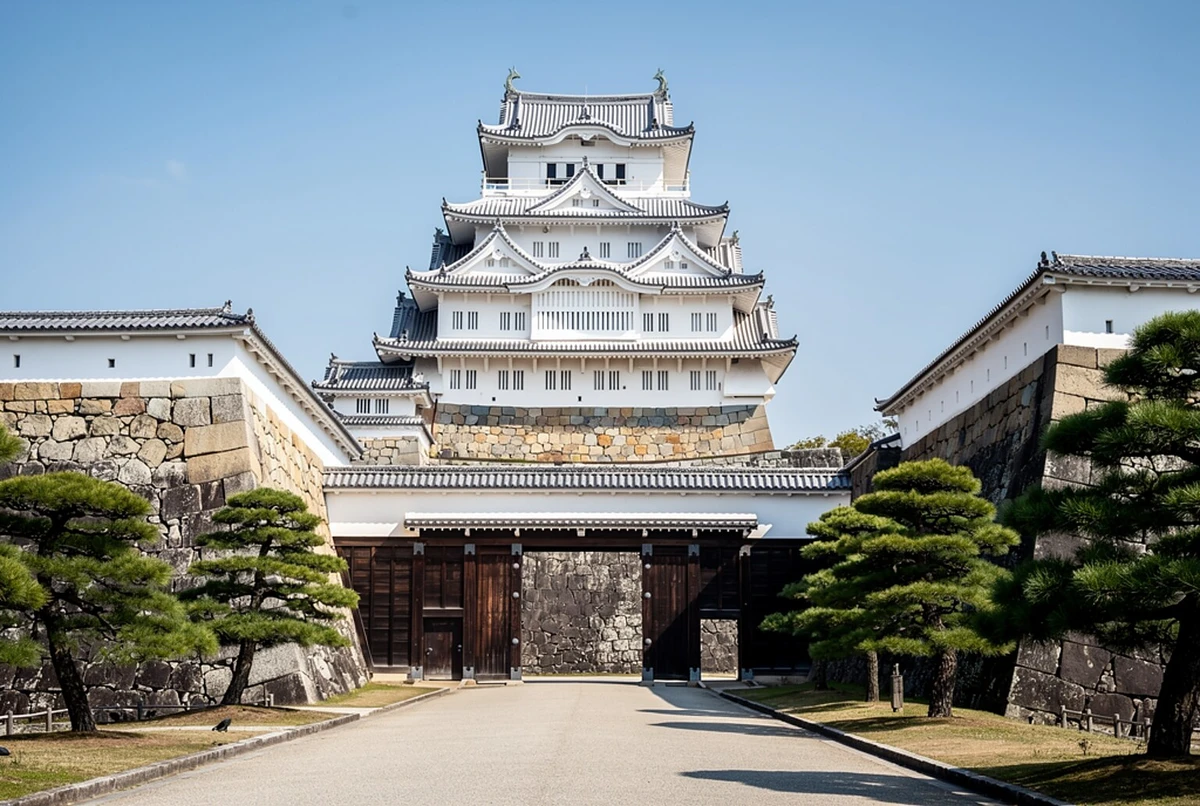
Imperial Palace Walking Tour Through Japanese History Tokyo
- Duration2 hours
- Daily
- Group

Some images are AI-generated for illustration. While we confirm your booking, just ask and we will send you the original photos.
- Fair, honest prices
- Real people, not bots
- Confirm, then pay
- Secure payment

Overview
This 2-hour small-group walk takes you through the grounds of the former Edo Castle, seat of the shoguns for over two and a half centuries and today the setting of the Imperial Palace in central Tokyo. A friendly English-speaking local guide leads up to 10 guests from Wadakura Fountain Park across the moat to Ōte-mon Gate, past samurai guardhouses and stone walls, through the Ninomaru Garden with its koi pond and up to the vast platform where the castle keep once stood. It is a shared walking tour, ideal for first-time visitors, history lovers, couples and families with children who can manage some slopes. Hotel pickup is not included: you meet the guide near Tokyo Station.
Highlights
- Cross the Wadakura Moat and enter through the massive Ōte-mon Gate of Edo Castle
- See the Hyakunin Bansho, the long guardhouse once staffed by samurai in shifts
- Stroll the Ninomaru Garden with its pond, waterfall and imperial koi
- Climb the stone base of Edo Castle's great keep, lost to fire in 1657 and never rebuilt
- Admire the Fujimi-yagura turret and step inside the Fujimi-tamon defence house
- Small group of up to 10 guests with a friendly English-speaking local guide
- Stories of the samurai era, the shoguns and the birth of modern Tokyo
- Photo tips at the best viewpoints of the castle walls and gardens
Full Description
Wadakura Fountain Park and the Imperial Palace moats
Wadakura Fountain Park sits on the eastern edge of Kōkyo Gaien, the wide outer garden of the Imperial Palace, a short walk from the Marunouchi side of Tokyo Station. Its fountains were first built in 1961 to celebrate an imperial wedding and rebuilt in 1995, and they frame a classic view of grey stone walls rising straight out of the Wadakura Moat.
This is where our Imperial Palace walking tour begins. Your guide explains how the moats formed a spiral defensive system that made Edo Castle the largest castle in Japan, and how the town of Edo grew around it to become Tokyo. If you are wondering how to get to the Imperial Palace, this park is the easiest start: about 5–10 minutes on foot from Tokyo Station or Otemachi Station.
Ōte-mon Gate and the samurai guardhouses
Ōte-mon was the main gate of Edo Castle, used by feudal lords arriving for audiences with the shogun. It is a masugata gate: you pass a small outer gate into a square stone courtyard, then turn sharply through a larger watch-gate, a layout designed to trap and slow down attackers. The wooden gatehouse was rebuilt after the Second World War and today it is the main entrance to the Imperial Palace East Gardens.
Inside, the route passes the ruins of the Ote-San'no Gate and the long wooden Hyakunin Bansho, the 'hundred-man guardhouse', where samurai from the shogun's most trusted clans kept watch day and night. Your guide fills these stones with stories of rank, protocol and daily life in the castle, the part of an Edo Castle tour that most visitors walk past without noticing.
Ninomaru Garden and Bairinzaka (Plum Tree Hill)
The Ninomaru Garden is a Japanese strolling garden laid out around a pond, with a small waterfall, stone lanterns, stepping stones and shaded paths. It was recreated in the 1960s from an Edo-period garden plan. The imperial koi gliding through the pond are a favourite photo stop; irises bloom here in June, azaleas in spring, and the maples turn red in late November.
Along the way you pass a restored Edo-period tea-house and a grove of trees representing each Japanese prefecture, then walk up Bairinzaka, the Plum Tree Hill, whose white and pink blossoms open in February and March. Many travellers ask about the best time to visit the Imperial Palace East Gardens: spring blossom and autumn colour are the prettiest, yet the garden stays calm and green all year, a welcome break from the busy city.
Edo Castle ruins and the great keep site (Honmaru)
At the top of the hill lies the Honmaru, the inner citadel where the shogun lived, held court and ruled the country. The great keep that crowned it was the tallest in Japan, but it burned in the Great Fire of Meireki in 1657 and was never rebuilt: the government of the time chose to spend its funds on rebuilding the city instead. The massive granite base, the tenshudai, still stands, and you can climb it for a wide view over the lawn.
Nearby, a detailed restoration model shows the five-tiered keep as it once looked. Your guide explains the rise and fall of the shogunate and how the emperor moved to this site in 1868, the start of modern Japan. Is the Imperial Palace worth visiting? Standing where the keep once rose, most guests agree it is.
Fujimi-yagura turret and the Fujimi-tamon defence house
Fujimi-yagura, the 'Mount Fuji–viewing turret', is one of the few corner towers still standing at Edo Castle. Rebuilt in 1659 on a high stone wall at the southern edge of the Honmaru, it served as a lookout and, after the keep was lost, as a stand-in for it on ceremonial days. Its white walls and three tiers of curved roofs make it one of the most elegant views in the grounds.
Close by, the Fujimi-tamon is a long defensive storehouse built along the top of the wall, where guns and bows were once kept. You can step inside to see its heavy timber frame and the small windows used by archers. From here the walk loops back past the stone walls to Wadakura Fountain Park, about two hours after you started.
Itinerary
- Wadakura Fountain ParkMeet your guide near the fountain for a short introduction to Edo and the Imperial Palace.
- Wadakura MoatPhoto stop by the moat and the stone walls, about 5 minutes.
- Ōte-mon GateEnter through the old main gate of Edo Castle and hear how its defensive courtyard worked, about 10 minutes.
- Ote-San'no Gate ruins and Hyakunin Bansho GuardhouseSee the gate ruins and the long samurai guardhouse, about 20 minutes.
- Ninomaru GardenStroll around the pond with its koi, the tea-house and the prefectural trees, about 20–30 minutes.
- Bairinzaka (Plum Tree Hill)Walk up the slope to the inner citadel, about 10 minutes.
- Edo Castle ruins and the keep siteExplore the Honmaru, climb the keep base and see the restoration model, about 25 minutes.
- Fujimi-tamon and Fujimi-yaguraStep inside the defence house and view the turret, about 20 minutes.
- Return to Wadakura Fountain ParkWalk back to the start, where the tour ends after about 2 hours.
What's included
- Guided walking tour of the Imperial Palace grounds with a friendly local guide
- Small group of up to 10 guests per guide
- Ōte-mon Gate, guardhouses and Edo Castle ruins
- Ninomaru Garden with its ponds and koi
- Site of the great keep and the Honmaru (Main Hall)
- Stories about Edo history, the samurai era and modern Tokyo
- Tips on the best photo spots
Not included
- Hotel pickup and drop-off
- Transport to and from the meeting point
- Entry to the inner palace
- Tips (optional)
Is this right for you?
Great for
- Families with children — a child price for ages 3–11
- History and culture lovers
- First-time visitors who want the highlights
- A short visit — about 2 hours
Think twice if
- You want a private tour — this one is shared with other travellers
- Walking is difficult for you — expect active parts
Not suitable for
- Wheelchair users, unless travelling with someone who can assist on the slopes
- People with mobility impairments
- Guests who need a slow pace or frequent rest stops (some slopes are steep)
Meeting point
The tour starts at Wadakura Fountain Park in the outer garden of the Imperial Palace (3-1 Kōkyogaien, Chiyoda City), a 5–10 minute walk from Tokyo Station or Otemachi Station. Your guide waits near the fountain, close to the café in the park. Hotel pickup is not included, so please arrive about 10 minutes before your start time. On Sundays, roads around the palace are sometimes closed for running events and taxis cannot always get close, so allow extra time and be ready to walk the last part.
Important information
- Wear comfortable walking shoes: the route has gravel paths and some steep slopes, but no stairs
- The tour runs rain or shine, so dress for the weather and bring an umbrella if rain is forecast
- Bring water on hot days; vending machines are available along the route
- The inner palace, where the imperial family lives, is not open to the public and is not visited
- The East Gardens are usually closed on Mondays, Fridays and over the New Year period; our team confirms the route for your date
- There is no dress code and tattoos are welcome
- Groups are small (up to 10 guests per guide), so book early in spring and autumn
- Tips for the guide are optional
Good to know
Frequently Asked Questions
Straight answers to what travellers ask us most, before they book.
Is this a shared or a private experience?
It is a shared small-group walking tour. You join other travellers, with a maximum of 10 guests per guide, so there is always time for your questions.
How long does the Imperial Palace walking tour take?
About 2 hours, starting and ending at Wadakura Fountain Park. Departures are usually at 9:00, 11:00, 11:30 and 14:00.
Is hotel pickup included?
No. You make your own way to Wadakura Fountain Park, an easy 5–10 minute walk from Tokyo Station or Otemachi Station.
What is included?
A guided walk with a friendly English-speaking local guide through Ōte-mon Gate, the guardhouses, the Ninomaru Garden, the Edo Castle ruins and the keep site, plus stories about Japanese history and photo tips. Entry to the East Gardens is free, so no ticket is needed.
Is the price per person or per group?
The price is per person. The booking panel on this page shows the current price of each option.
Do we go inside the Imperial Palace?
No. The inner palace is the residence of the imperial family and is closed to the public. The tour explores the historic East Gardens and the grounds of Edo Castle, where most of the castle's history can be seen.
Is it suitable for children or people with reduced mobility?
Children who enjoy walking usually love the koi, the gates and the castle stories. There are no stairs, but some slopes are steep, so it is not suitable for wheelchair users without help or for guests who need frequent rests.
What should I bring?
Comfortable shoes, water, sun protection in summer, and an umbrella or rain jacket if rain is forecast.
What is the best time of day and season for this tour?
Morning departures are cooler in summer and the gardens are quieter. Plum blossom (February–March), cherry blossom (late March–early April) and autumn leaves (late November) are the most beautiful seasons.
What happens in bad weather?
The tour runs in light rain, so dress accordingly. If conditions become unsafe, for example during a typhoon, our team contacts you on WhatsApp to arrange another date.
What are the Imperial Palace East Gardens opening hours?
The East Gardens usually open at 9:00 and close between 16:00 and 18:00 depending on the season. They are normally closed on Mondays, Fridays and over the New Year period.
How do I book and confirm?
Choose your date, start time and number of guests in the booking panel and send your request. Our team confirms your booking on WhatsApp within minutes.
More in Tokyo



Popular across Japan
-
-
-
-
-
-