
3-Day Serengeti and Ngorongoro Group Safari from Arusha
4.8 (69 reviews) from travellers who booked this experience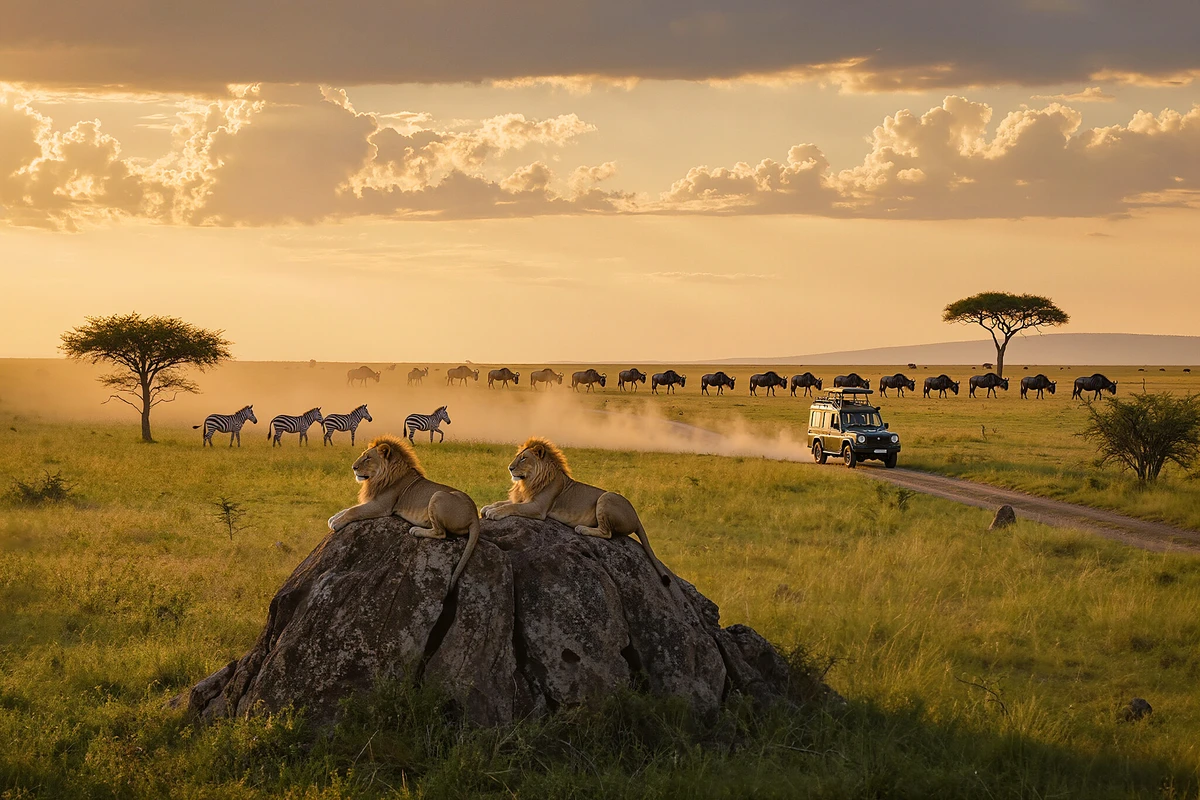
Overview
This 3-day Serengeti and Ngorongoro group safari from Arusha is the classic short Tanzania safari: two nights camping, three days of game drives in a shared 4x4 with a pop-up roof, a professional driver-guide and a safari chef who cooks every meal. We pick you up in Arusha at dawn, cross the Ngorongoro highlands to the Serengeti for an afternoon game drive, spend a full day among the lions, elephants, cheetahs and migrating herds of the Serengeti, then descend into the Ngorongoro Crater on the last morning before driving back to Arusha. The default option is a joining safari for a small group of up to six travellers per vehicle; a second option adds a sunrise balloon flight over the Serengeti. It suits adventurous travellers on a sensible budget.
Highlights
- Game drives in the Serengeti, stage of the Great Migration
- A morning on the floor of the Ngorongoro Crater, a UNESCO World Heritage Site
- Chances to see the Big Five: lion, leopard, elephant, buffalo and rhino
- 4x4 safari vehicle with pop-up roof for photography
- Two nights in tents at public campsites with a safari chef cooking full-board meals
- All park, camping, crater and concession fees included
- Small group of at most six travellers per vehicle
- Optional sunrise hot-air balloon flight over the Serengeti
Full Description
Serengeti National Park: the endless plains
The Serengeti covers about 14,750 square kilometres of grassland, acacia woodland and granite kopjes in northern Tanzania and has been a UNESCO World Heritage Site since 1981. Its name comes from the Maasai word for endless plains, and that is what you see from the pop-up roof: grass to the horizon, dotted with wildebeest, zebra and gazelle, and lions resting on the rocks. A Serengeti safari from Arusha reaches the central Seronera area, where the river valleys keep water all year and predators are seen most often, including leopards in the sausage trees.
You enter through the Naabi Hill gate on day one for an afternoon game drive and spend the whole of day two inside the park, with an early start when the light is soft and the cats are active. Wildlife sightings are never guaranteed, but the Seronera valley offers some of the most reliable game viewing in Africa, and our driver-guide knows where the recent sightings have been. Keep your voice low near animals and never ask the driver to leave the tracks.
The Great Migration and the best time to visit the Serengeti
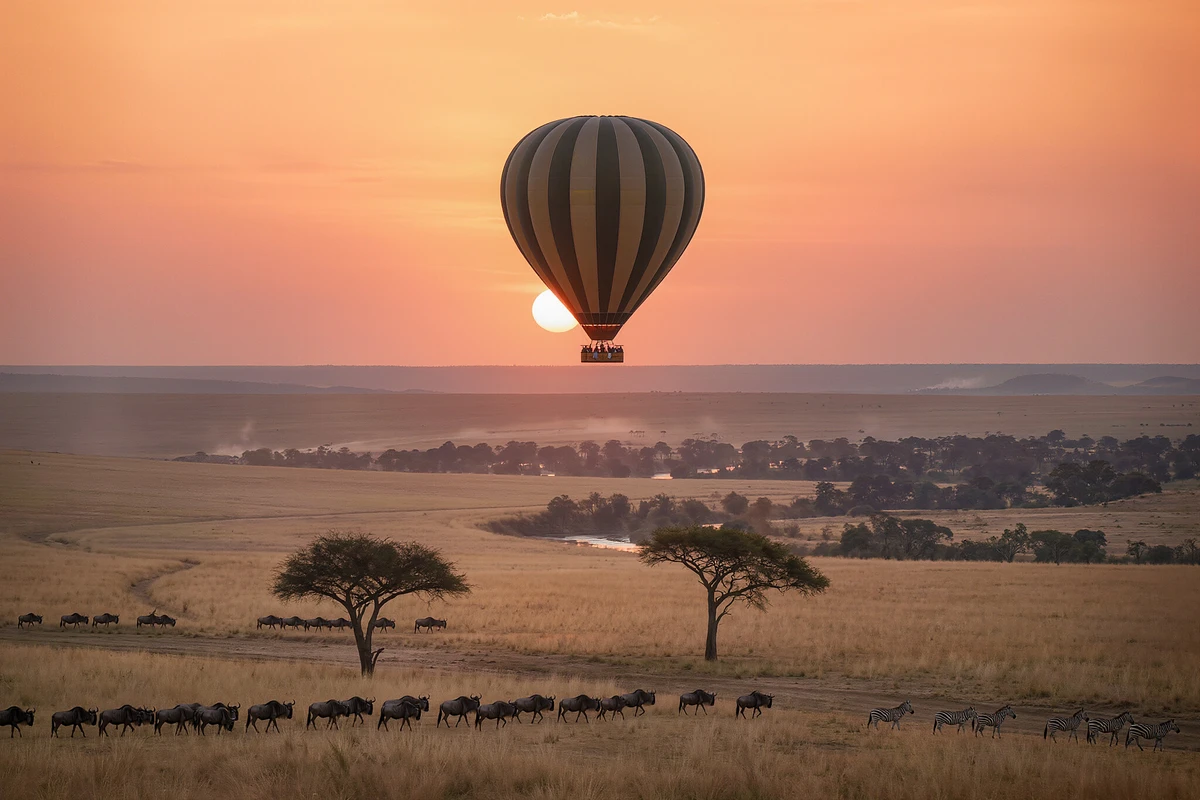
Over a million wildebeest and hundreds of thousands of zebra move around the Serengeti ecosystem in a yearly loop that follows the rain. From December to March the herds gather on the short-grass plains in the south-east around Ndutu for the calving season; in April and May they move north-west; from July to October they cross the Grumeti and Mara rivers in the north; and in November they return south. The central Serengeti where this safari goes has resident wildlife all year, so there is no bad month.
If you want to see the migration itself, tell us your dates and we will say honestly where the herds are likely to be; a three-day safari cannot chase them to the far north. The best time to visit the Serengeti for general game viewing is the dry season from June to October, when grass is short and animals gather at water. The green season from November to May is quieter, with lower prices and dramatic skies.
Ngorongoro Crater: a day on the crater floor
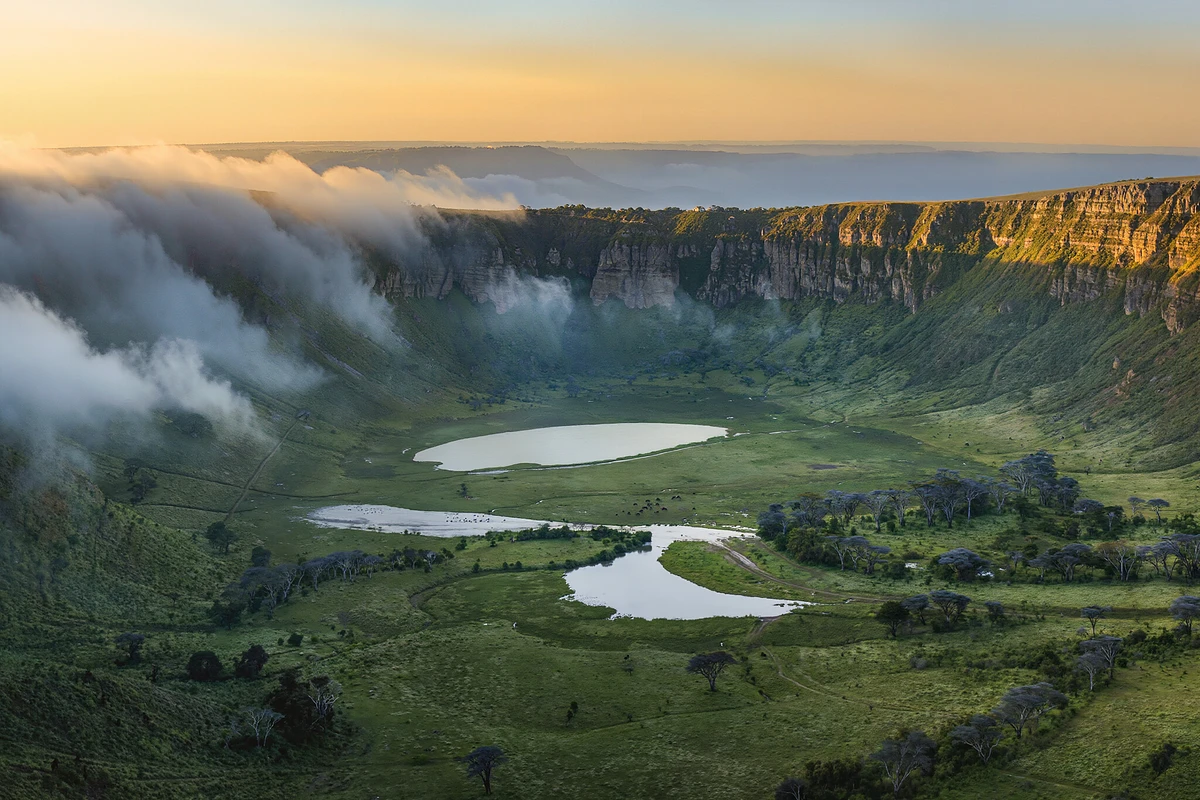
The Ngorongoro Crater is the largest intact volcanic caldera in the world, about 260 square kilometres across its floor and 600 metres below the rim, where you camp on the second night at around 2,300 metres. It was listed by UNESCO in 1979 and lies inside the Ngorongoro Conservation Area, where the Maasai still graze cattle alongside the wildlife. On the last morning you descend the steep rim road at first light for a game drive among lions, elephants with huge tusks, buffalo, hyena clans and the rare black rhino.
Is the Ngorongoro Crater worth visiting after the Serengeti? Yes, because the wildlife here is concentrated in a natural bowl: the Lerai yellow-fever-tree forest, the Gorigor swamp with its hippos and the soda lake Magadi with flamingos in season are all within a short drive. Vehicles are allowed about six hours on the floor, so you have lunch at the picnic site by the hippo pool and climb out early in the afternoon for the drive back to Arusha.
Camping safari: tents, the chef and life at the campsites
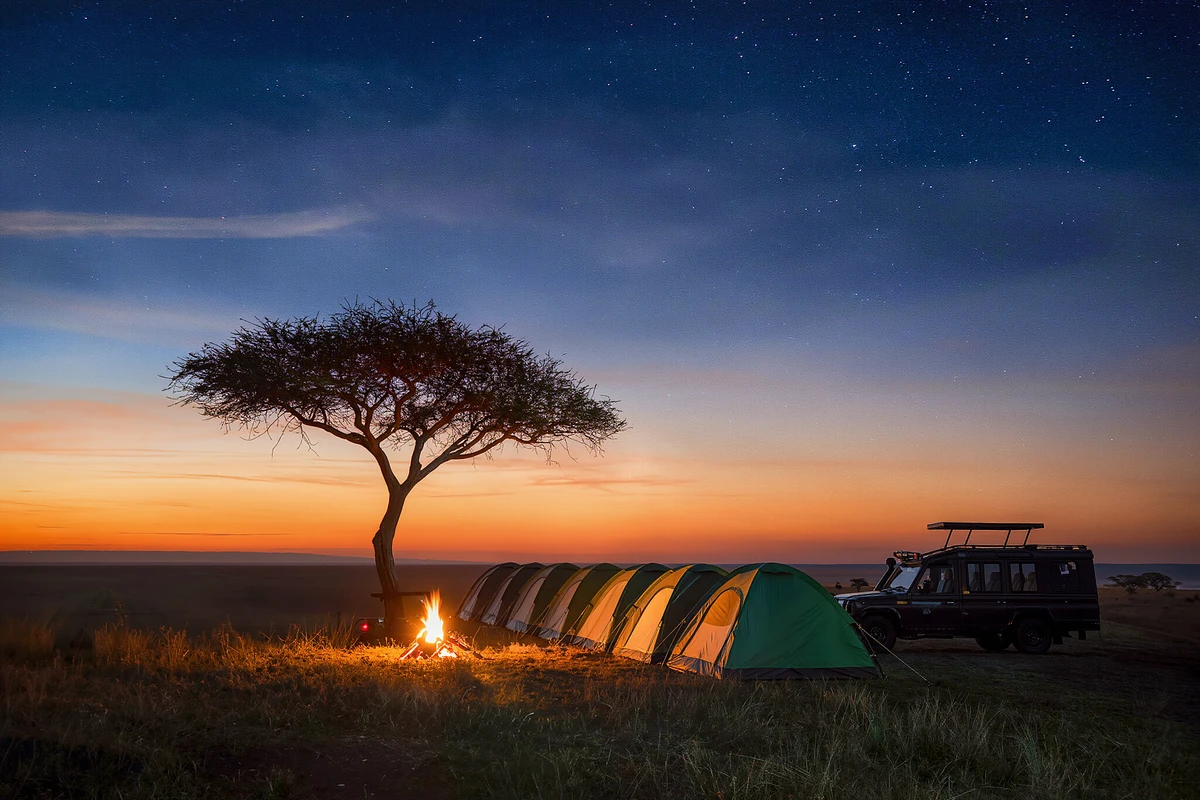
This is a camping safari, which keeps the cost down and brings you closer to the bush. You sleep in dome tents with sleeping mattresses at public campsites in the Serengeti and on the Ngorongoro rim; the chef and the driver-guide set everything up while you relax. The campsites have shared toilets and showers, and the chef prepares breakfast, a packed or hot lunch and a three-course dinner, with bottled water throughout. Dietary needs, including halal and vegetarian, are handled if you tell us at booking.
Nights are cold on the crater rim, often close to 5°C, so bring a warm layer; the Serengeti nights are mild. Animals wander near the camps, which is part of the adventure, and our team briefs you on simple safety rules. The joining format means you share the vehicle with up to five other travellers, which also makes the safari more sociable.
The road from Arusha and the Ngorongoro highlands
The drive from Arusha to the Serengeti takes most of day one, but it is scenic the whole way. You cross the Maasai steppe, pass the turn-off to Lake Manyara and the town of Karatu, and climb through the misty forest of the Ngorongoro highlands to the crater rim viewpoint, where the whole caldera opens out below you. From the rim the road drops across the Malanja depression and the short-grass plains past Olduvai Gorge, the archaeological site where some of the oldest hominid fossils were found.
How to get to the Serengeti from Arusha without a long drive is a common question; there are flights to Seronera airstrip, but the road lets you see three ecosystems in a day and is included here. The journey is about 330 kilometres and takes roughly seven hours including the stops. Our driver-guide times the day so you still have a game drive in the Serengeti before reaching camp.
Itinerary
- Day 1: Arusha to the SerengetiPickup at about 06:00 from your accommodation in Arusha town, drive through Karatu and the Ngorongoro highlands with a stop at the crater viewpoint, enter the Serengeti via Naabi Hill with a game drive on the way to camp in the Seronera area.
- Day 2: Full day in the SerengetiEarly morning and afternoon game drives across the central Serengeti with a break at camp for lunch, then dinner and a second night under canvas in the park, or drive to the Ngorongoro rim campsite depending on the day's sightings.
- Day 3: Ngorongoro Crater and returnDescend into the crater at first light for about five to six hours of game viewing with a picnic lunch, climb out in the early afternoon and drive back to Arusha, arriving in the evening.
What's included
- Pickup and drop-off at your accommodation in Arusha
- 4x4 safari vehicle with pop-up roof
- Professional English-speaking driver-guide
- All park, transit, concession, camping and crater fees
- Full-board meals cooked by a safari chef
- Bottled drinking water
- Tents with sleeping mattresses and camping equipment
- Game drives in the Serengeti and the Ngorongoro Crater
Not included
- Travel, accident and medical insurance
- Airport transfers (available on request)
- Tips for the driver-guide and chef
- Personal expenses
Not suitable for
- Babies and very young children
- People with serious back problems (long hours on rough roads)
- Travellers who need a private bathroom every night
Meeting point
We pick you up between 06:00 and 07:00 on day one at your hotel or guesthouse in Arusha town; please be ready in the lobby with your packed bag. Accommodation outside the town centre may need an extra transfer, which we confirm when you send your hotel name. Drop-off on day three is at the same address in the evening.
Important information
- Pack light in a soft bag (about 10 kg); extra luggage can be stored at your Arusha hotel
- Bring a warm jacket, fleece and socks for the Ngorongoro rim, where nights can drop to about 5°C
- Wear neutral colours (beige, khaki, green); avoid bright colours and black or dark blue near tsetse areas
- Bring sun cream, a hat, sunglasses, insect repellent, a torch and a power bank
- Binoculars and a camera with zoom make a real difference; the guide has one pair to share
- Never feed or touch animals and stay in the vehicle except at designated stops
- Wildlife sightings are never guaranteed
- Travel, accident and medical insurance is strongly recommended and not included
- Tell us about dietary needs (halal, vegetarian, allergies) when booking
Good to know
Frequently Asked Questions
Straight answers to what travellers ask us most, before they book.
Is this a shared or a private tour?
The default option is a joining safari: you share the 4x4, the driver-guide and the chef with a small group of up to six travellers. The balloon option is also a group safari. If you want a private vehicle for your party, message our team on WhatsApp and we will quote a private version.
Can we change the itinerary or the pace?
On a group safari the route and timings are fixed for everyone, but the driver-guide adapts the game drives to the sightings of the day. A private safari gives full flexibility.
How many people are in the vehicle?
Up to six travellers per 4x4 so that everyone has a window seat and room under the pop-up roof.
Is the price per person or per group?
Per person, with a child rate for ages 14 and under on the default option. The booking panel on this page shows the current price of each option.
Is hotel pickup included?
Yes, pickup and drop-off at hotels and guesthouses in Arusha town are included. Properties outside the centre may need an additional transfer, which we confirm when you book. Airport transfers can be arranged on request.
What is included?
Transport in a 4x4 with pop-up roof, a professional English-speaking driver-guide, all park, transit, concession, camping and crater fees, full-board meals cooked by a safari chef, bottled water, tents with mattresses and camping equipment. Insurance, tips and personal expenses are not included.
How long is the safari?
Three days and two nights, leaving Arusha at dawn on day one and returning in the evening of day three.
Where do we sleep?
In dome tents with sleeping mattresses at public campsites inside the Serengeti and on the Ngorongoro Crater rim, with shared bathroom facilities. Bring a sleeping bag or ask us whether one can be provided.
Is it suitable for children and people with reduced mobility?
Children aged about six and older who enjoy long drives do well; babies are not recommended. The vehicle and campsites are not well suited to wheelchair users, so please ask us before booking so we can advise honestly.
What should I bring?
A soft bag of about 10 kg with neutral-coloured clothes, a warm layer for the crater rim, closed shoes, sun protection, insect repellent, a torch, a power bank, binoculars and your camera.
When is the best time for a 3-day Serengeti safari?
June to October for dry-season game viewing, December to March for the calving season in the southern Serengeti. The central Serengeti and the crater are rewarding all year.
How do I book and confirm?
Choose your option and departure date in the booking panel and send the request; our team confirms on WhatsApp within minutes and collects your hotel name and dietary needs.
You might also like
Tours
View all
Airport Transfers
View allExplore more in Arusha
More tours in Arusha
See all tours in Arusha 
Other things to do in Arusha


More tours across Tanzania
-
-
-
-
-
-