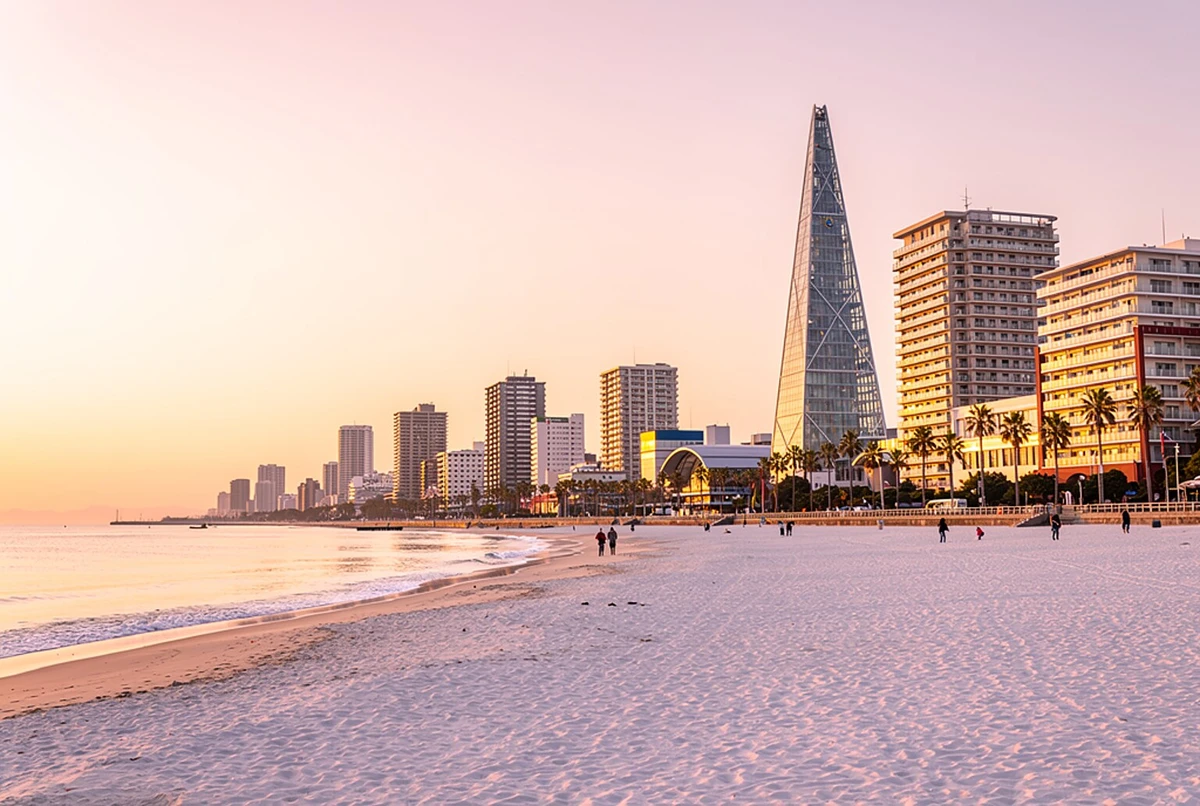
Osaka Castle, Shinsekai & Namba Guided Walking Tour
- Duration4 hours
- Daily
- Group
Some images are AI-generated for illustration. While we confirm your booking, just ask and we will send you the original photos.
- Fair, honest prices
- Real people, not bots
- Confirm, then pay
- Secure payment

Overview
This guided Osaka walking tour links the city's three faces in one half-day: samurai history at Osaka Castle, retro charm in Shinsekai and modern energy in Namba and Dotonbori. Your English-speaking native guide meets the group near Osaka Castle, walks you past Hokoku Shrine and through the castle grounds, and takes you inside the Main Tower with your entrance ticket included. Two short metro rides then carry you like a local to Tennoji Park, a photo stop at Abeno Harukas, Tsutenkaku Tower and Janjan Yokocho, before the walk ends among the neon of Dotonbori, Hozenji Temple and Ebisubashi Bridge. It is a shared group tour on foot of about four hours, with morning and afternoon starts and no hotel pickup, best for active travellers aged 6 to 75.
Highlights
- Entrance ticket to Osaka Castle Main Tower and its observation deck
- Hokoku Shrine and the stone walls and moats of the castle grounds
- Tennoji Park and a photo stop at the Abeno Harukas skyscraper
- Retro Shinsekai, Tsutenkaku Tower and the Janjan Yokocho arcade
- Dotonbori neon, the Running Man sign and Ebisubashi Bridge
- Moss-covered Hozenji Temple, Hozenji Yokocho and Ukiyo Koji alley
- Travel between districts by metro like a local, with photo help from your guide
- Morning or afternoon start with an English-speaking native guide
Full Description
Hokoku Shrine and the Osaka Castle Grounds
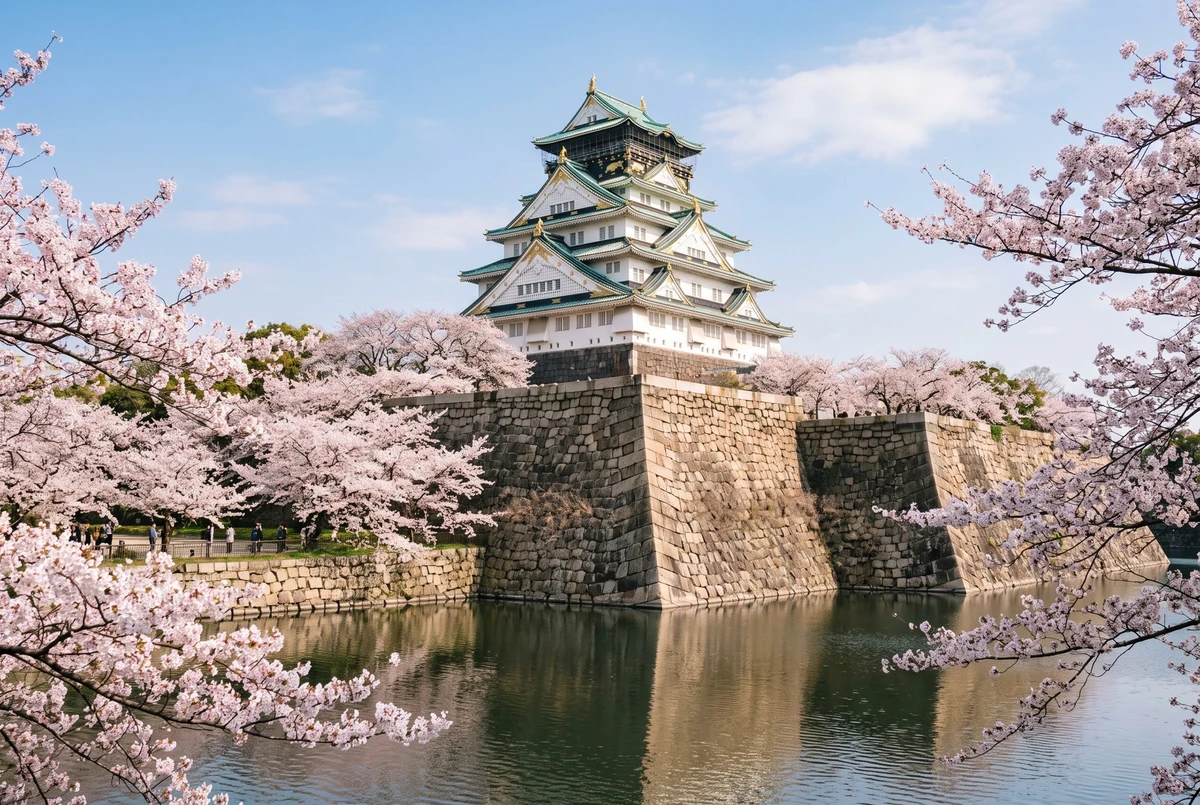
The tour begins on the southern side of Osaka Castle Park at Hokoku Shrine, a Shinto shrine dedicated to the warlord who built the castle in 1583 and unified Japan. Moved here in 1961, it has a striking bronze statue of him in its forecourt and is a quiet place to learn the background of the Sengoku, or Warring States, period before the crowds arrive.
From the shrine you pass through the Sakuramon gate into the inner citadel. Your guide points out the enormous stones of the walls, some weighing over 100 tonnes, carried here by rival lords as proof of loyalty, and the deep moats that made the fortress so hard to take. An Osaka Castle guided tour like this gives you the stories behind each gate before you climb the keep itself.
Inside the Osaka Castle Main Tower
Your entrance ticket to the Main Tower is included, so the group walks straight in. The present keep was rebuilt in 1931 on the original stone base and restored in 1997; inside it is a modern museum spread over eight floors, with samurai armour, swords, letters, and a large reproduction of a folding screen that shows the great siege of 1615 in astonishing detail.
The highlight is the observation deck on the top floor, about 50 metres above the ground, with views over the castle park, the moats and the skyline of central Osaka. Osaka Castle opening hours are normally 9:00 to 17:00, with last entry at 16:30, and the tower closes over the New Year holiday. Both our morning and afternoon departures fit comfortably within those hours, with about 80 minutes for the grounds and the museum.
Tennoji Park and Abeno Harukas
A short metro ride takes the group south to Tennoji, one of Osaka's busiest hubs. Tennoji Park opened in 1909 and combines a lawn area, the Keitakuen strolling garden and the city zoo, with paths that lead naturally towards Shinsekai. It is a pleasant green break after the castle, and the park is a favourite place for local families at weekends.
Across the road rises Abeno Harukas, a 300-metre tower that was the tallest building in Japan when it opened in 2014. The group stops for photos of its stepped glass facade, and your guide explains how the district changed from a temple quarter to a modern business centre. The observation floors at the top are not part of the tour, but the photo stop shows how old and new Osaka sit side by side.
Shinsekai, Tsutenkaku Tower and Janjan Yokocho
Shinsekai, the 'New World', was built in 1912 as a showcase district inspired by Paris and by American amusement parks. Today it is Osaka's most nostalgic quarter, crowded with kushikatsu counters, giant food signboards and old game parlours. At its centre stands Tsutenkaku Tower, rebuilt in 1956, which you view from the outside while your guide explains its role in Osaka's history and the lucky Billiken figure inside.
The group then walks through Janjan Yokocho, a narrow covered arcade named after the strumming sound of the shamisen that once drifted out of its establishments. Elderly locals still play shogi and go here, and tiny counters serve fried skewers. Is Shinsekai worth visiting? Many travellers say it is the most memorable part of this tour, because it shows an everyday Osaka that no other district preserves.
Namba, Dotonbori and Ebisubashi Bridge
A second metro ride brings you to Namba, the energetic heart of modern Osaka, with its long covered shopping streets and constant crowds. Your guide explains why Osaka is called the 'kitchen of Japan' and shares favourite places to eat takoyaki or kushikatsu after the tour, since no meal is included.
Dotonbori, the canal street dug in the early 17th century and once lined with theatres, is the final stage. Huge mechanical signboards, crab and octopus figures and the Running Man neon sign hang above the river, and Ebisubashi Bridge is the classic place to photograph them. The tour finishes here, right in the centre, so you can stay for dinner. The best time to visit Dotonbori is at dusk, which the afternoon departure reaches.
Hozenji Temple, Hozenji Yokocho and Ukiyo Koji
Just behind the neon lies the quietest corner of the walk. Hozenji Temple, founded in 1637, is famous for its statue of Fudo Myoo, which is covered in thick green moss because visitors splash it with water as they pray. Your guide shows you how to make an offering, and the small courtyard with its lanterns is one of the most photogenic spots in Osaka.
Around the temple runs Hozenji Yokocho, a stone-paved lane of traditional restaurants that survived the 20th century almost unchanged, and nearby Ukiyo Koji, a narrow passage decorated like an Osaka street of the early 1900s, with old posters, lamps and shop signs. Together they reveal the traditional side of Dotonbori in about 10 minutes, before the last photo stop at the bridge.
Itinerary
- Meet at Tanimachi 4-chome Station, exit 1BMeet your guide at 08:30 or 13:30 in front of the convenience store at the exit; look for the bright green band on the guide's bag.
- Hokoku ShrineShort guided visit to the shrine dedicated to the castle's founder, about 10 minutes.
- Osaka Castle grounds and Main TowerWalk through the gates and stone walls, then visit the museum and observation deck with your included ticket, about 80 minutes.
- Metro ride to TennojiRide the subway like a local, about 10 minutes; the fare is paid on the day.
- Tennoji Park and Abeno HarukasStroll the park and stop for photos of the skyscraper, about 25 minutes.
- Shinsekai, Tsutenkaku Tower and Janjan YokochoExplore the retro district, view the tower from outside and walk the old arcade, about 45 minutes.
- Metro ride to NambaSecond short subway ride to the city centre, about 10 minutes.
- Namba, Dotonbori, Hozenji Temple and Hozenji YokochoWalk the shopping streets and canal, visit the moss-covered temple and its stone-paved lane, about 40 minutes.
- Ukiyo Koji and Ebisubashi BridgePass through the retro alley and finish with photos of the Running Man sign at Ebisubashi Bridge.
What's included
- English-speaking native local guide
- Entrance ticket to Osaka Castle Main Tower
- Hokoku Shrine and the Osaka Castle grounds
- Tennoji Park, Shinsekai, Tsutenkaku Tower and Janjan Yokocho
- Namba, Dotonbori, Hozenji Temple and Hozenji Yokocho
- Photo help from your guide
Not included
- Two metro rides (pay on the day; rail passes are not valid on the Osaka Metro)
- Food and drinks
Is this right for you?
Great for
- Families with children — a child price for ages 6–15
- History and culture lovers
- First-time visitors who want the highlights
- A half-day plan — about 4 hours
Think twice if
- You want a private tour — this one is shared with other travellers
- Walking is difficult for you — expect active parts
Not suitable for
- Children under 6 years
- People with mobility impairments
- Wheelchair users
- People over 75 years
Meeting point
Meet your guide at 08:30 for the morning tour or 13:30 for the afternoon tour in front of the convenience store at exit 1B of Tanimachi 4-chome Station on the Tanimachi subway line. Your guide carries a bright green band on the bag; please speak to them on arrival. Hotel pickup is not included. The tour ends at Ebisubashi Bridge in Dotonbori, a few minutes' walk from Namba Station.
Important information
- The tour includes almost 10 km of walking; wear comfortable shoes.
- Bring cash or an IC card for two metro rides; rail passes are not valid on the Osaka Metro.
- The tour goes ahead in rain, so bring a raincoat or an umbrella.
- No food is included; your guide recommends places to eat after the tour.
- Not suitable for children under 6, guests over 75, wheelchair users or people with mobility impairments.
- Osaka Castle Main Tower is closed over the New Year holiday; tours on those dates visit the grounds only.
- Bring water, especially in the hot and humid summer months.
Good to know
Frequently Asked Questions
Straight answers to what travellers ask us most, before they book.
Is this a shared or a private experience?
It is a shared group walking tour led by an English-speaking native guide.
How long does it take?
About 4 hours. The morning tour starts at 08:30 and the afternoon tour at 13:30.
Is hotel pickup included?
No. We meet at exit 1B of Tanimachi 4-chome Station and finish at Ebisubashi Bridge in Dotonbori.
What is included?
The English-speaking native guide, the entrance ticket to Osaka Castle Main Tower and the guided walk through Hokoku Shrine, Tennoji, Shinsekai, Namba, Dotonbori and Hozenji. Metro fares, food and drinks are not included.
Is the price per person or per group?
The price is per person. The booking panel on this page shows the current price for your date.
Is it suitable for children or guests with reduced mobility?
It suits active travellers aged 6 to 75. With almost 10 km of walking and station stairs, it is not suitable for wheelchair users or guests with mobility impairments.
What should I bring?
Comfortable walking shoes, water, an umbrella or raincoat, a camera and some cash or an IC card for the metro.
What is the best time of day or season for this tour?
The morning tour reaches the castle before the crowds, while the afternoon tour ends in Dotonbori as the neon lights up. Spring cherry blossom and autumn colours are the most beautiful seasons.
What happens in bad weather?
The tour runs in rain; the castle museum and the covered arcades give shelter. In a typhoon or severe weather warning we contact you to change the date.
How do I book and confirm?
Choose your date and start time in the booking panel. Our team confirms your booking on WhatsApp within minutes.
Do we go inside Osaka Castle?
Yes. The entrance ticket to the Main Tower is included, so you visit the museum floors and the observation deck with your group.
Can I use my rail pass for the metro rides?
No. Rail passes are not valid on the Osaka Metro, so please pay the two short rides with cash or an IC card on the day.
More in Osaka
Getting to & around Osaka
Popular across Japan
-
-
-
-
-
-