Post-WWII History Walking Tour with a Historian Buenos Aires
- Duration2.5 hours
- Daily
- Group
Some images are AI-generated for illustration. While we confirm your booking, just ask and we will send you the original photos.
- Fair, honest prices
- Real people, not bots
- Confirm, then pay
- Secure payment

Overview
This shared walking tour of about two and a half hours explores how the Second World War and its aftermath left their mark on Buenos Aires. Led in English by a history teacher from the University of Buenos Aires, the route on foot links the Juana Azurduy Monument, the Luna Park arena, a historic German restaurant in the Microcentro, the National Arms Museum, Palacio San Martín and the Circolo Italiano before ending at Plaza Embajada de Israel. The historian examines the arrival of war criminals after 1945, whether the government knew or encouraged it, the story of the city's Jewish community and the operation that identified a fugitive here in 1960. It suits curious adults and teenagers from ten upwards.
Highlights
- Two-and-a-half-hour walk through Retiro and the Microcentro with a university historian
- Luna Park, where a rally of around 15,000 supporters of the German regime gathered in 1938
- A century-old German restaurant tied to the post-war presence of fugitives in the city
- The National Arms Museum and the palaces around Plaza San Martín
- Palacio San Martín, the ceremonial seat of Argentine diplomacy
- The Circolo Italiano and the political currents of the Italian community
- Plaza Embajada de Israel, the memorial on the site of the 1992 embassy attack
- Small-group format with time for questions and debate
Full Description
Juana Azurduy Monument and the Palacio Libertad
The walk begins beside the monument to Juana Azurduy, the heroine of the wars of independence, on the plaza that faces the Palacio Libertad. This colossal Beaux-Arts building was the central post office of Argentina, begun in 1908 and finished in 1928, and since 2015 it has been the largest cultural centre in the country, with concert halls and galleries behind its columns and dome. The benches in front of it are the meeting point.
Here the historian sets the scene: Argentina stayed neutral for most of the war, had strong German, Italian and Jewish communities, and only declared war on Germany in March 1945. Understanding that starting point makes the rest of the route, and the question of whether the country became a refuge for war criminals, far easier to follow. Expect about twenty minutes at this first stop.
Luna Park arena
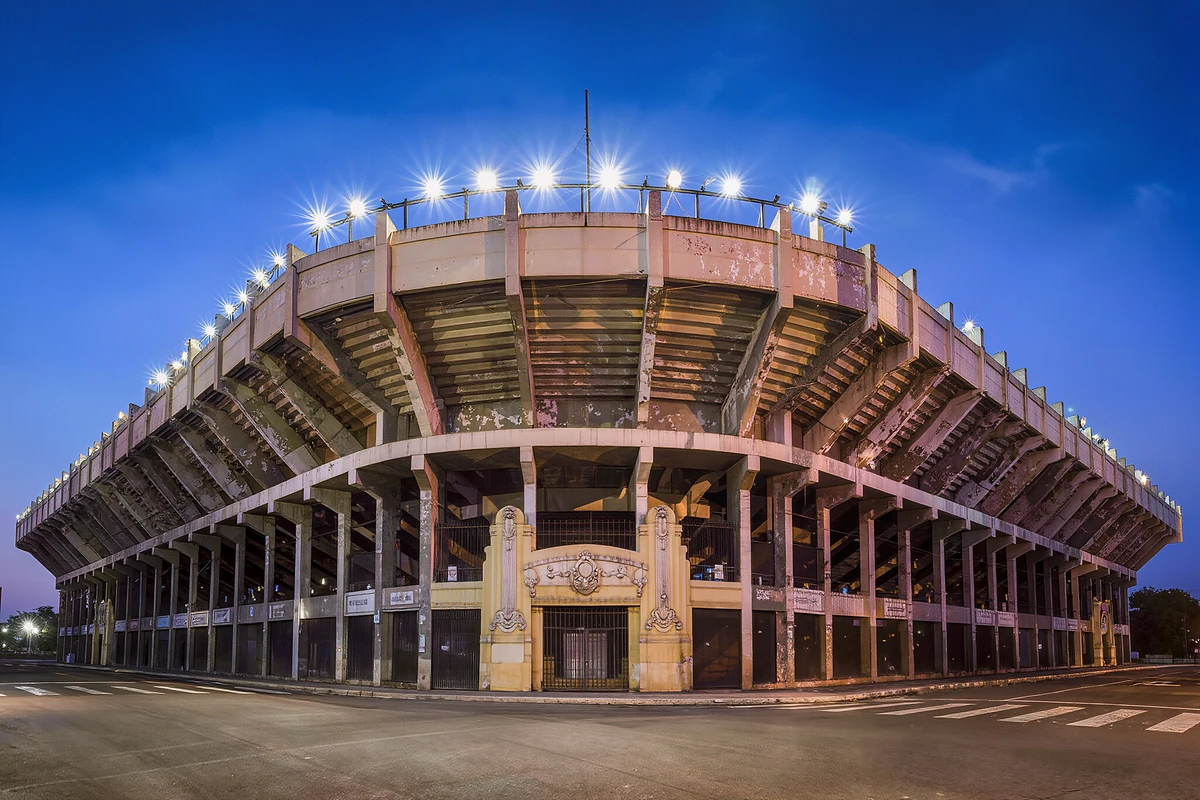
A short walk along Bouchard street brings you to Luna Park, the Art Deco arena at the corner of Corrientes Avenue that opened in 1932 and still hosts concerts and boxing today. In April 1938 it filled with around 15,000 people celebrating the annexation of Austria by Germany, with banners and uniformed groups inside, while a counter-demonstration gathered outside. The event remains one of the most debated images of pre-war Buenos Aires.
The guide uses the building to explain the size and organisation of the German community in the 1930s, the schools, clubs and newspapers it ran, and how the Argentine state reacted. Entry to Luna Park is not included; the stop takes place outside the curved façade and lasts about twenty minutes, with time for questions about this Buenos Aires history walking tour's central theme.
A historic German restaurant in the Microcentro
On Lavalle street, in the heart of the Microcentro, stands a German restaurant that has served the same wood-panelled dining room since the 1920s. After 1945 it became one of the meeting places of German immigrants, and among its regulars was Adolf Eichmann, who lived in the city under a false name until Israeli agents identified him in 1960 and took him to trial in Jerusalem. The guide stops here to tell that story step by step.
The stop is on the pavement outside, about twenty minutes, and it is one of the most memorable of the route because it turns an abstract debate into a concrete address. The historian explains how the identification happened, how the operation was planned, and what the episode revealed about the networks that helped fugitives reach South America after the war.
National Arms Museum and Plaza San Martín
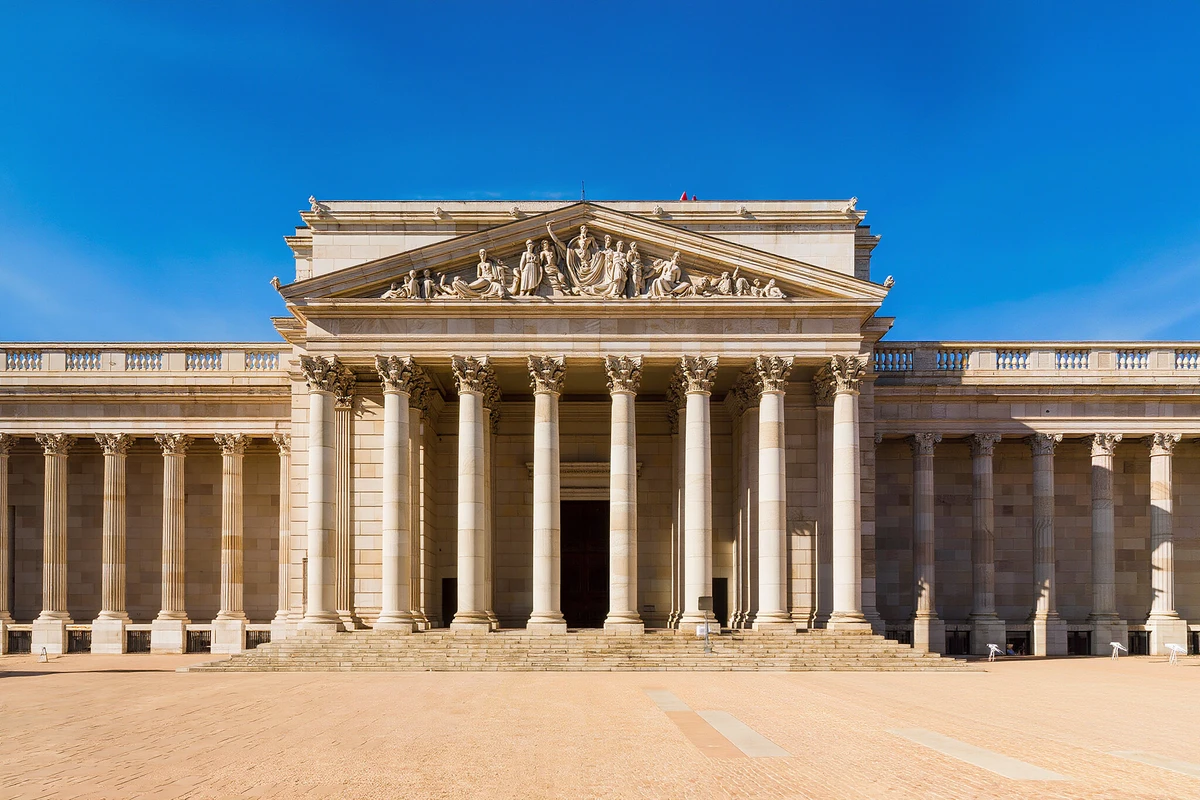
Walking north you reach Plaza San Martín, the green hilltop square of the Retiro district surrounded by the grandest palaces of the belle époque. In the Palacio Paz, a vast French-style mansion completed in 1914, the National Arms Museum keeps thousands of weapons from the 16th century to the 20th, including arms from both world wars. The tour does not go inside; the historian uses the façade and the square for a twenty-minute stop.
The theme here is the long relationship between the Argentine army and German military tradition, from the Prussian instructors of the late 19th century to the officers who admired Germany in the 1930s and 1940s. It helps explain why some politicians and soldiers were sympathetic to the new arrivals after 1945, which is the key to the debate at the heart of this historical tour of Buenos Aires.
Palacio San Martín
Across the square stands Palacio San Martín, built between 1905 and 1909 as the residence of the Anchorena family and since 1936 the ceremonial seat of the Argentine Ministry of Foreign Affairs. Its three wings, mansard roofs, wrought-iron gates and marble halls make it one of the finest examples of French academic architecture in Buenos Aires. Official receptions and treaty signings still take place behind its courtyard.
For this tour the palace represents the diplomacy of the period: Argentina's neutrality, its late declaration of war, the immigration policies of the post-war governments and the documents that allowed thousands of Europeans, including some war criminals, to enter the country. The historian discusses what the archives show and what remains disputed. The stop lasts about twenty minutes, outside the gates.
Circolo Italiano and Plaza Embajada de Israel
The route continues to the Circolo Italiano on Libertad street, the club of the Italian community housed in a belle-époque palace, where the guide explains how fascism found supporters and opponents among the city's enormous Italian population and how that divided world shaped the post-war years. It is a twenty-minute stop outside the building.
The walk ends at Plaza Embajada de Israel, at the corner of Arroyo and Suipacha. The embassy that stood here was destroyed by a bomb attack on 17 March 1992 that killed dozens of people; today the outline of the building is traced on the neighbouring wall and a row of trees stands for the victims. The historian closes the tour here, linking the attacks of the 1990s with the earlier history of the Jewish community in Buenos Aires.
Itinerary
- Meet at the Juana Azurduy MonumentGather by the benches facing the Palacio Libertad at 15:00 for an introduction of about twenty minutes.
- Luna ParkWalk to the arena and hear about the 1938 rally and the German community of the 1930s; about twenty minutes.
- German restaurant on Lavalle streetThe story of the fugitive identified in Buenos Aires in 1960; about twenty minutes.
- National Arms Museum and Plaza San MartínThe Argentine army and German military tradition; about twenty minutes outside the Palacio Paz.
- Palacio San MartínDiplomacy, neutrality and post-war immigration policy; about twenty minutes.
- Circolo ItalianoThe Italian community and its political divisions; about twenty minutes.
- Plaza Embajada de IsraelThe memorial of the 1992 attack and the closing discussion; the tour ends here.
What's included
- Guided walking tour of about 2.5 hours
- Historian guide speaking English
- Stops at Luna Park, the National Arms Museum, Palacio San Martín, the Circolo Italiano and Plaza Embajada de Israel
Not included
- Entry to the Casa Rosada
- Entry to the Libertad Synagogue
- Entry to the Luna Park arena
- Hotel pickup
- Food and drinks
Is this right for you?
Great for
- First-time visitors who want the highlights
- A half-day plan — about 2.5 hours
- Travellers who want a proven choice — rated 4.9/5 by past travellers
Think twice if
- You want a private tour — this one is shared with other travellers
- Walking is difficult for you — expect active parts
Not suitable for
- Children under 10 years
- Wheelchair users
Meeting point
There is no hotel pickup. Meet your historian a few metres from the Juana Azurduy Monument in Retiro, by the benches that face the Palacio Libertad (the former central post office), close to the Leandro N. Alem metro station and the Retiro train terminal. The tour starts at 15:00 and ends about two and a half hours later at Plaza Embajada de Israel, a ten-minute walk from Plaza San Martín. We send the exact map pin on WhatsApp when we confirm.
Important information
- Wear comfortable shoes and bring water; the walk covers several blocks of Retiro and the Microcentro.
- The tour is conducted in English only.
- There is no restroom stop during the tour, so plan accordingly before meeting.
- Entry to the Casa Rosada, the Libertad Synagogue and Luna Park is not included; all buildings are seen from outside.
- A basic knowledge of the Second World War and the Holocaust is helpful but not required; the guide welcomes questions.
- The subject matter is serious and treated with respect; it is not recommended for children under 10.
- In bad weather the tour may be cancelled, in which case you can reschedule or receive a full refund.
- Bring a hat and sunscreen in summer and a jacket in winter; much of the walk is in the open.
Good to know
Frequently Asked Questions
Straight answers to what travellers ask us most, before they book.
Is this a shared or a private experience?
It is a shared walking tour with a small group and a historian guide who teaches at the University of Buenos Aires.
How long does the tour take?
About two and a half hours on foot, starting at 15:00 and ending at Plaza Embajada de Israel.
Is hotel pickup included?
No. The meeting point is the Juana Azurduy Monument in Retiro, easy to reach by metro, train or taxi.
What is included?
The guided walk and the historian guide. Entry to buildings, transport and food are not included.
Is the price per person or per group?
Per person. The booking panel on this page shows the current price.
Is it suitable for children or people with reduced mobility?
It is not recommended for children under 10 because of the subject, and it is not suitable for wheelchair users because of the distance and the pavements.
Do I need to know the history before joining?
A basic knowledge of the Second World War and the Holocaust helps you follow the debates, but the historian explains the context and answers any question.
What should I bring?
Comfortable shoes, water, sun protection in summer and a jacket in winter. There is no restroom stop, so prepare before the start.
What is the best time of year for this walk?
The tour runs all year at 15:00. Spring and autumn are the most pleasant for walking; in summer bring a hat and water.
What happens in bad weather?
Heavy rain may lead to cancellation; in that case you choose between a new date and a full refund, and we inform you on WhatsApp.
Does the tour go inside Luna Park or the Palacio San Martín?
No. All stops are outside the buildings; the historian explains their history from the street.
How do I book and confirm?
Choose your date on this page and send the booking; our team confirms on WhatsApp within minutes with the meeting details.
More in Buenos Aires
Getting to & around Buenos Aires
Popular across Argentina
-
-
-
-
-
-