Top 6 Armenian Destinations Tour from Yerevan
- Duration8 hours
- Daily at 10:00
- Group
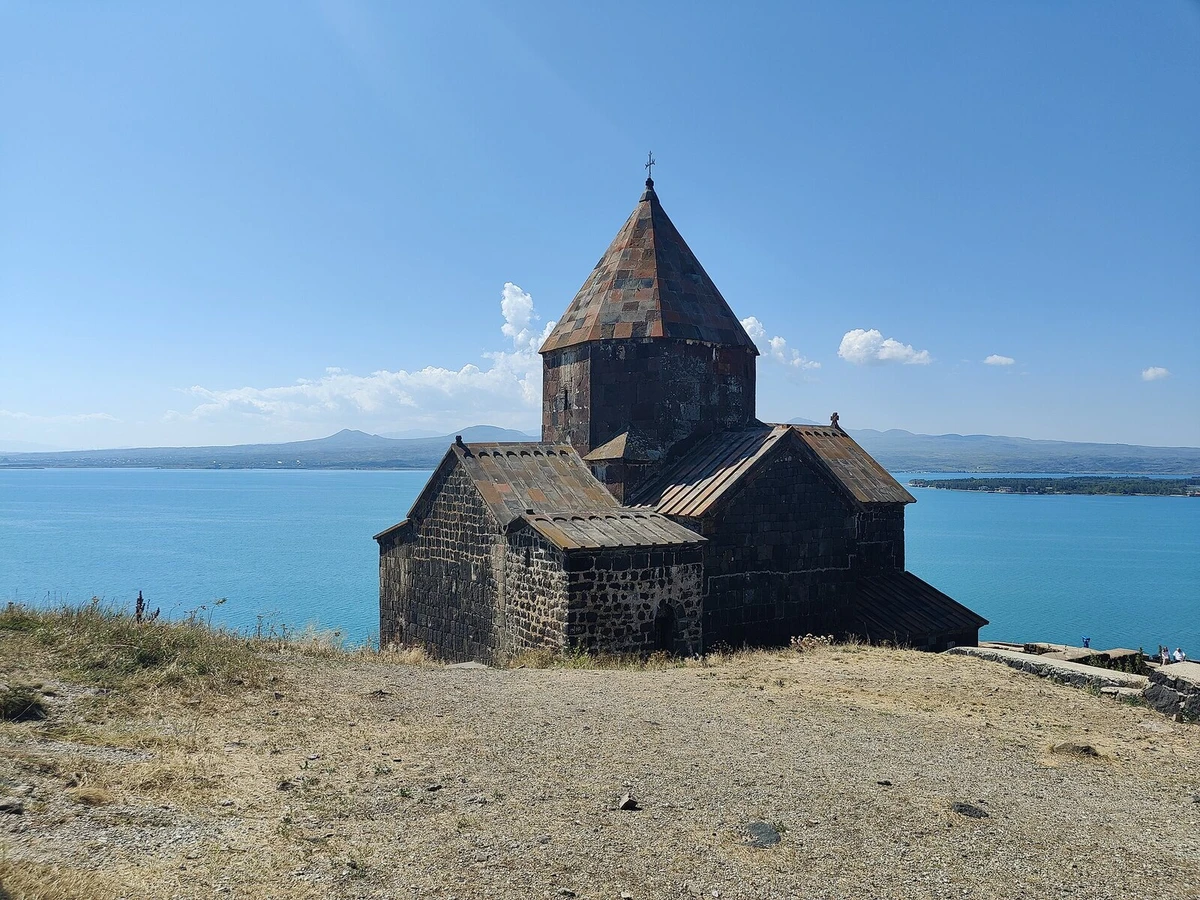
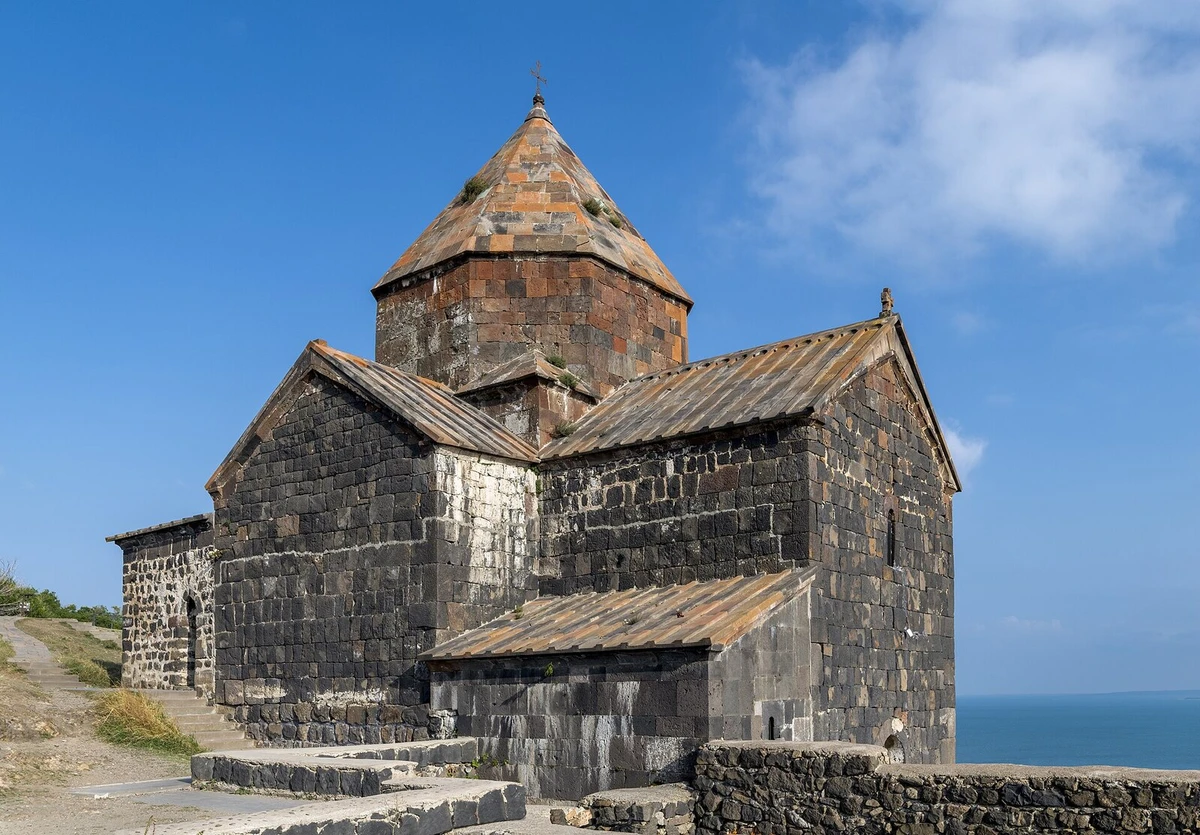
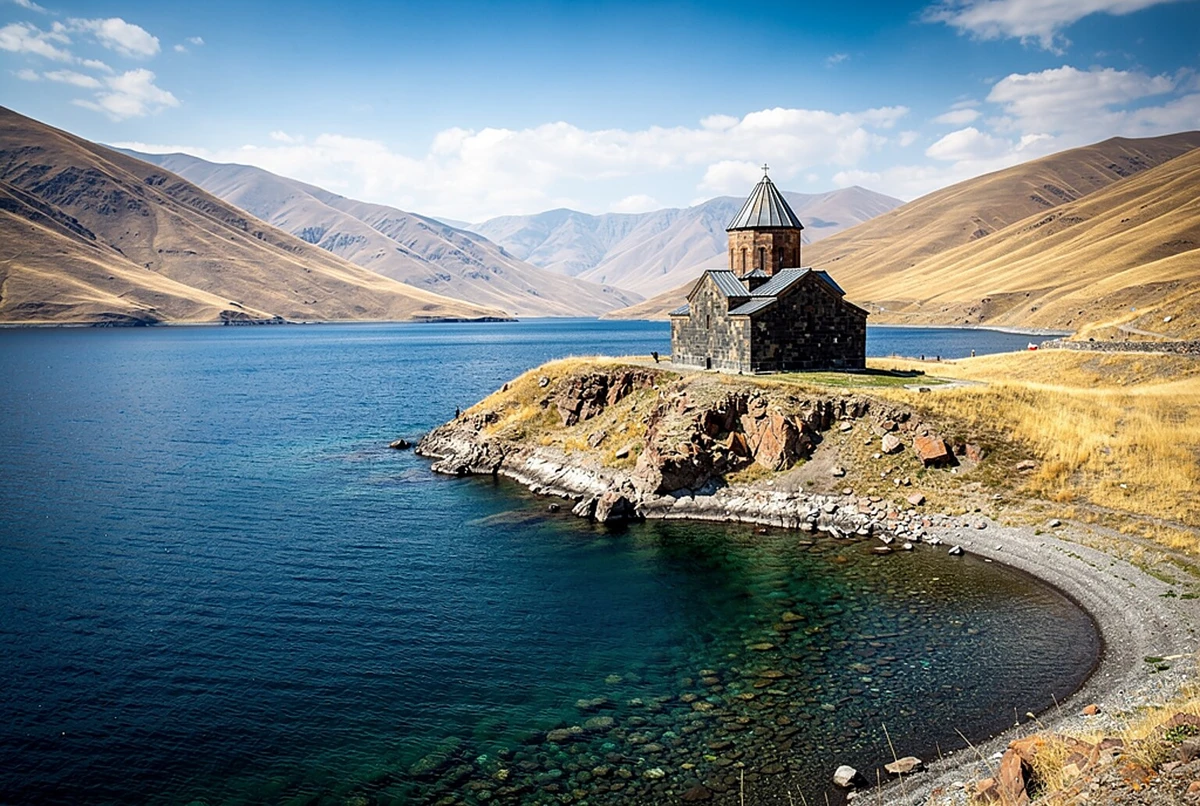
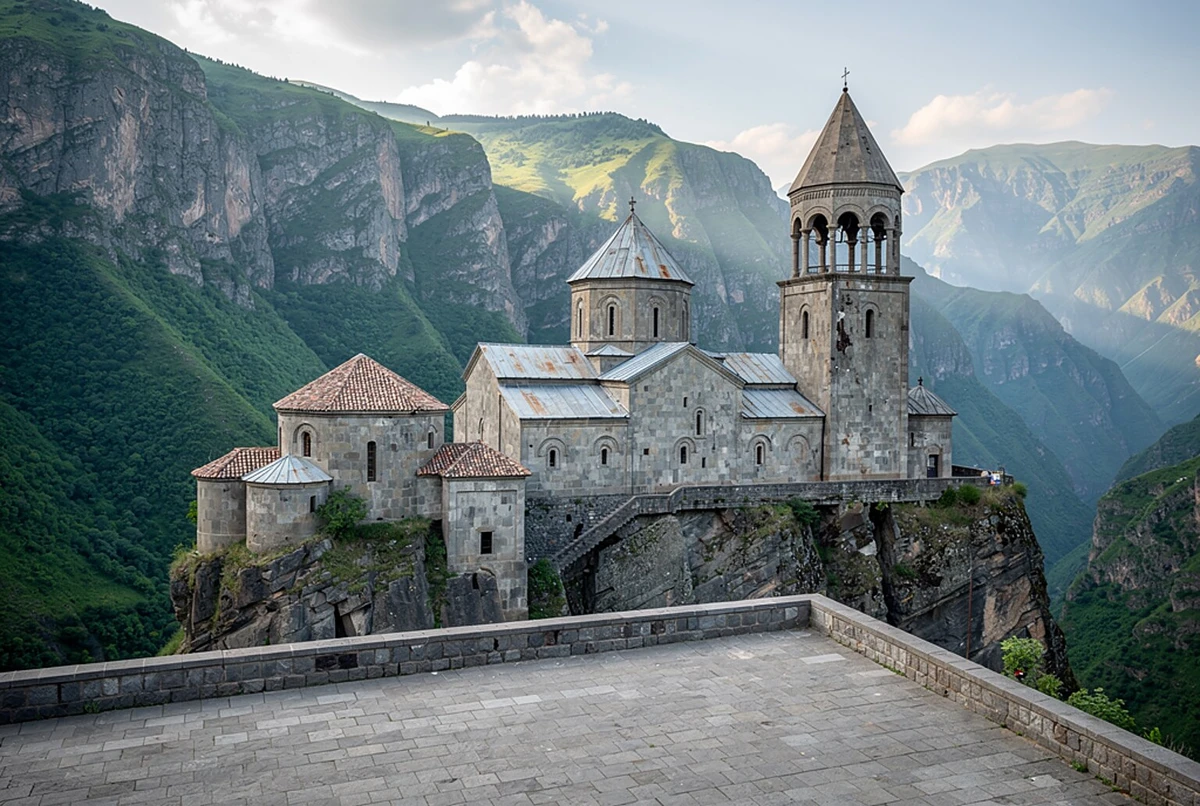
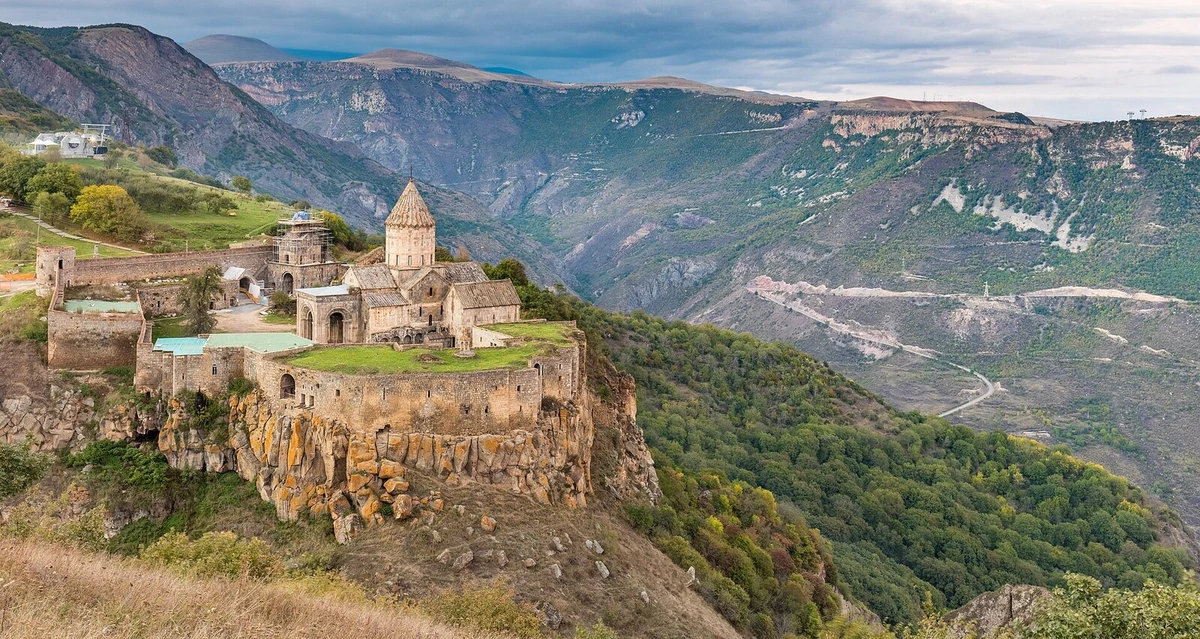
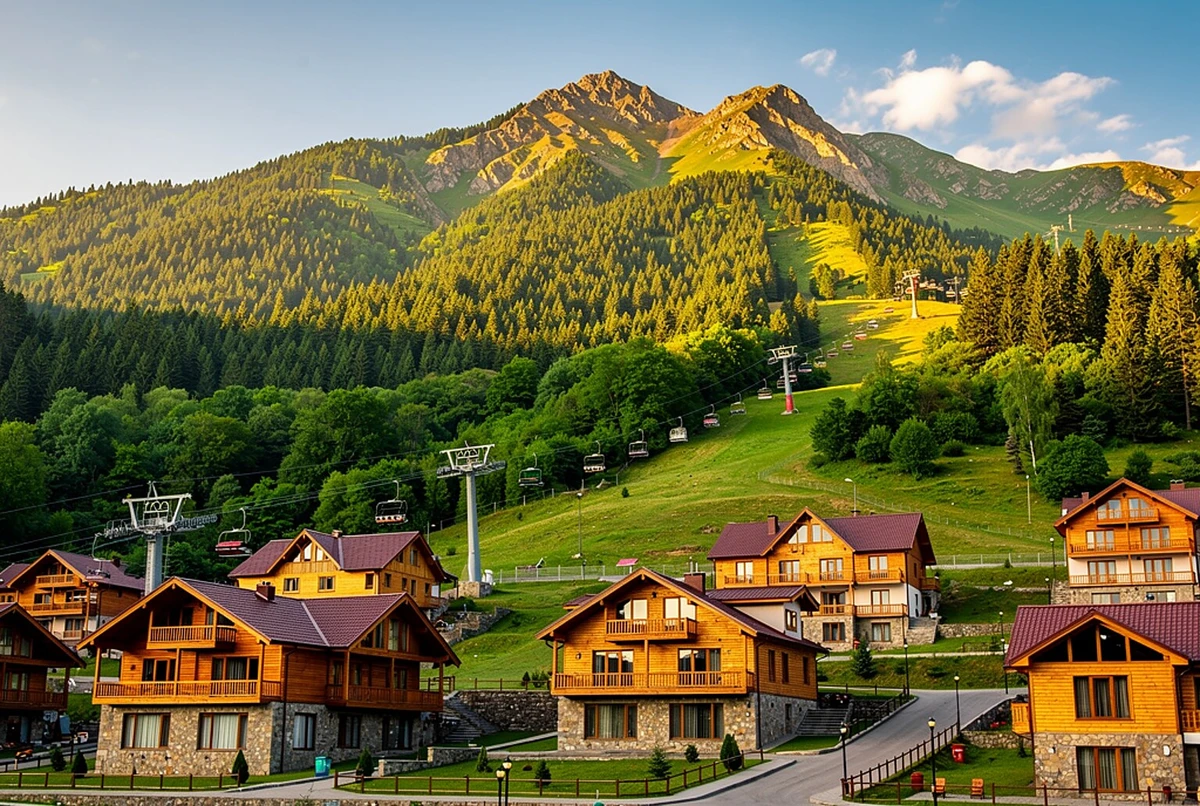
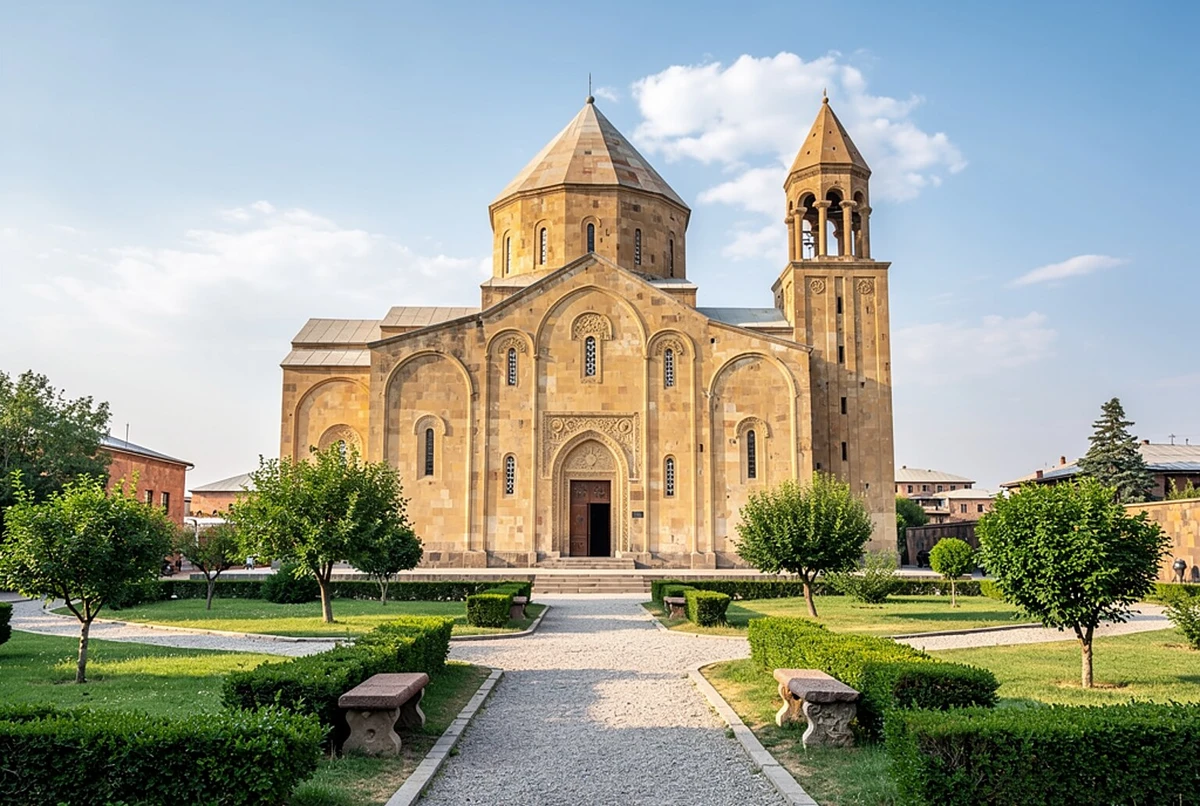
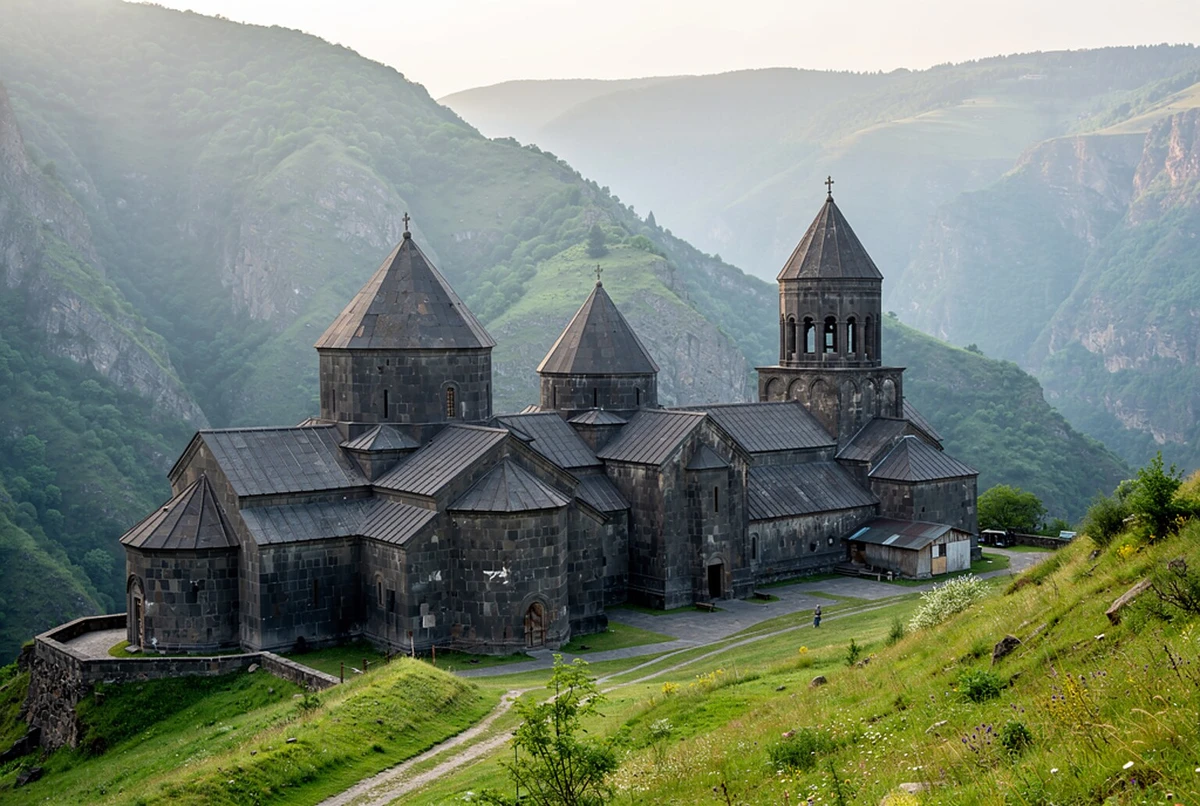
Photos show the places you visit; the boat or vehicle on the day may differ. Photos: Andrew Behesnilian (MrAndrew47) (CC BY-SA 3.0) · Yerevantsi (CC BY-SA 4.0) · Vyacheslav Argenberg (CC BY 4.0), via Wikimedia Commons
Some images are AI-generated for illustration. While we confirm your booking, just ask and we will send you the original photos.
- Fair, honest prices
- Real people, not bots
- Confirm, then pay
- Secure payment

Overview
This shared full-day tour from Yerevan links six of Armenia's best-known sights in about eight hours. It starts with a photo stop at the Khor Virap viewpoint facing Mount Ararat, continues to the turquoise Azat Reservoir, the Greco-Roman Garni Temple and the basalt columns of the Symphony of Stones, then reaches the rock-cut Geghard Monastery, a UNESCO World Heritage site, and the Charents Arch, with a lavash baking class along the way. Two options are available: “Group Tour with an English-Speaking Guide”, described here, and “Group Tour without a Guide”, the same route with a driver only. Transport is by comfortable air-conditioned vehicle from a central meeting point on Abovyan Street; hotel pickup, meals and the entrance fees for Garni and the Symphony of Stones are not included.
Highlights
- Mount Ararat seen from the Khor Virap viewpoint
- The turquoise water of the Azat Reservoir in its bare canyon
- Garni Temple, the Greco-Roman colonnade above the Azat gorge
- The Symphony of Stones, a cliff of basalt columns like organ pipes
- Geghard Monastery, carved into the rock and listed by UNESCO
- Charents Arch, a stone frame for the view of Ararat
- A lavash baking class included
- An English-speaking guide who explains the history of each place
Full Description
Khor Virap viewpoint and Mount Ararat
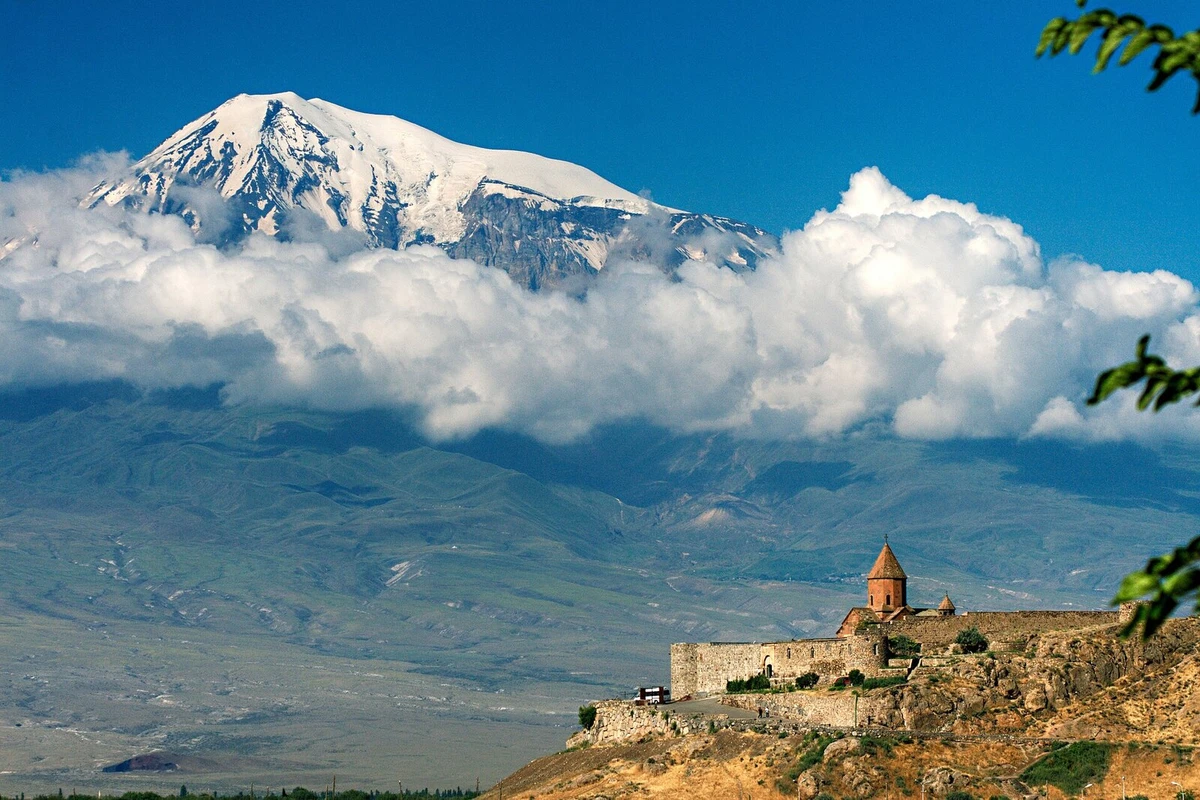
Khor Virap is the image that most people have of Armenia: a small walled monastery on a hillock in the Ararat plain, with the snow-covered cone of Mount Ararat rising behind it. The name means deep pit, after the dungeon where, according to tradition, the country's patron saint was held for some thirteen years before the king's conversion made Armenia the first Christian state at the beginning of the fourth century.
On this tour Khor Virap is a photo stop of about thirty minutes at the viewpoint, not a visit inside the monastery, so the time is used for the panorama. Ararat stands at 5,137 metres on the Turkish side of the closed border and is clearest early in the day and in the cooler months, when the air is free of haze. Travellers looking for a Khor Virap and Mount Ararat view on a day trip from Yerevan get it here in the best light, at the start of the route.
Azat Reservoir and the Azat canyon
The road from the Ararat plain towards Garni climbs through dry, rounded hills and suddenly reveals the Azat Reservoir, a sheet of blue-green water held between bare slopes. The lake was created in the 1970s by a dam on the Azat River to irrigate the plain below, and its colour changes with the season and the light, from deep turquoise to pale jade.
The stop lasts about twenty minutes and is made for photographs: on clear days Ararat is still visible on the horizon, behind the water. The surrounding landscape belongs to the Azat valley, whose upper section is protected together with Geghard Monastery as World Heritage. Few visitors would search for Azat Reservoir on its own, yet it is often the surprise of the day, a quiet contrast with the temples and monasteries that follow. A hat and sunscreen are useful here, because there is no shade.
Garni Temple: a Greco-Roman colonnade in the Caucasus
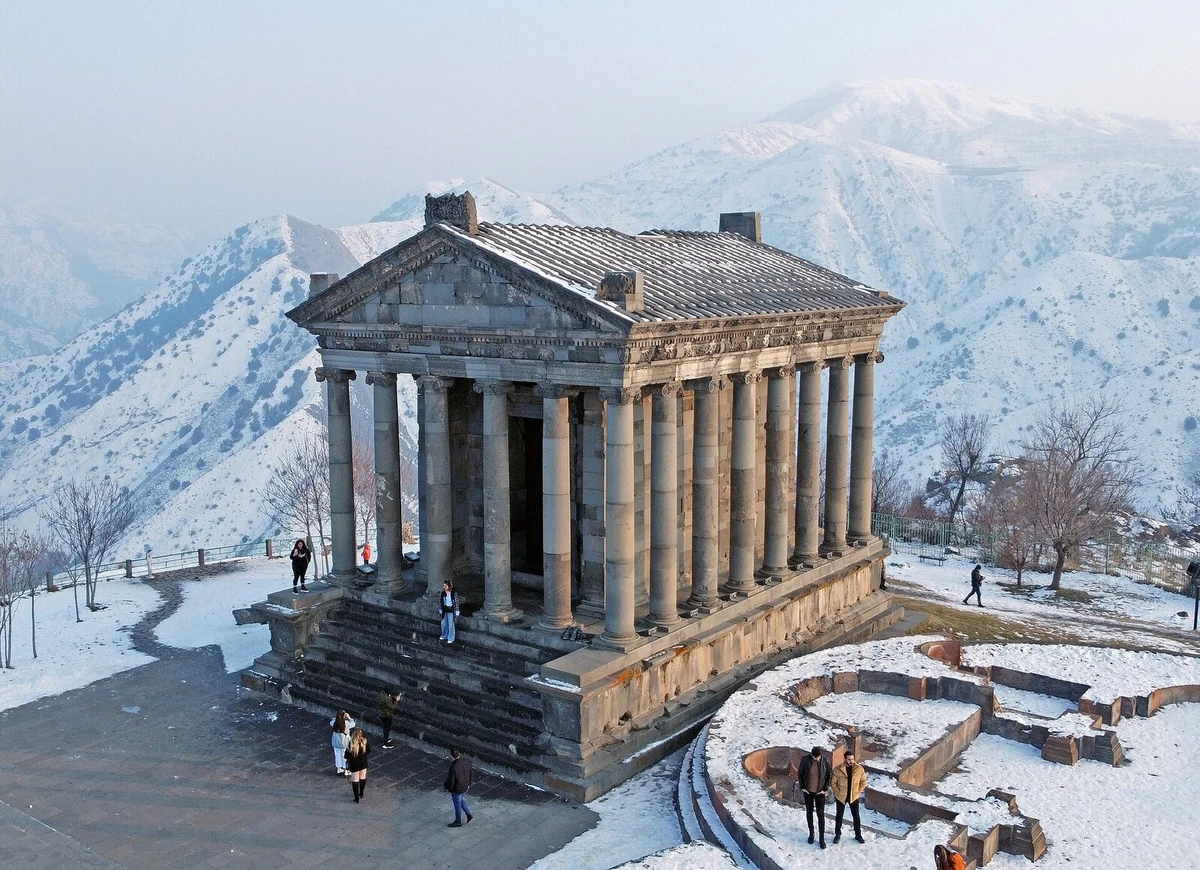
Garni Temple stands on a triangular cliff above the Azat gorge, on the site of a fortress that served the Armenian kings as a summer residence. Built in the first century AD from grey basalt, it has twenty-four Ionic columns, a steep flight of steps and a carved frieze, and is believed to have been dedicated to a sun god. It is the only surviving temple of its kind in the country.
An earthquake brought the building down in 1679, and what you see today was reassembled from the original stones in the 1970s. Around it lie the remains of the palace, a seventh-century church and a Roman-style bathhouse with a mosaic floor. Is Garni Temple worth visiting? For most travellers it is the centrepiece of any Garni Geghard tour from Yerevan. The entrance fee is not included and is paid on site in local currency; allow time to walk to the edge of the cliff for the view into the gorge.
Symphony of Stones in the Garni gorge
Below the temple, at the bottom of the gorge, the cliffs turn into one of Armenia's strangest natural sights. The Symphony of Stones is a wall of basalt columns, most of them six-sided, hanging in tight vertical rows above the river. They formed when thick lava cooled slowly and cracked into regular prisms, and their resemblance to the pipes of a giant organ explains both the name and the nickname, the Basalt Organ.
The columns rise for tens of metres and continue along the gorge, so the best photographs are taken from the path directly beneath them, looking up. A Symphony of Stones tour needs sturdy shoes, because the ground at the foot of the cliff is uneven. The entrance fee is not included in the tour and is paid on site in cash. Morning and late afternoon give the most contrast on the rock; at midday the sun falls straight into the gorge.
Geghard Monastery: churches carved into the cliff
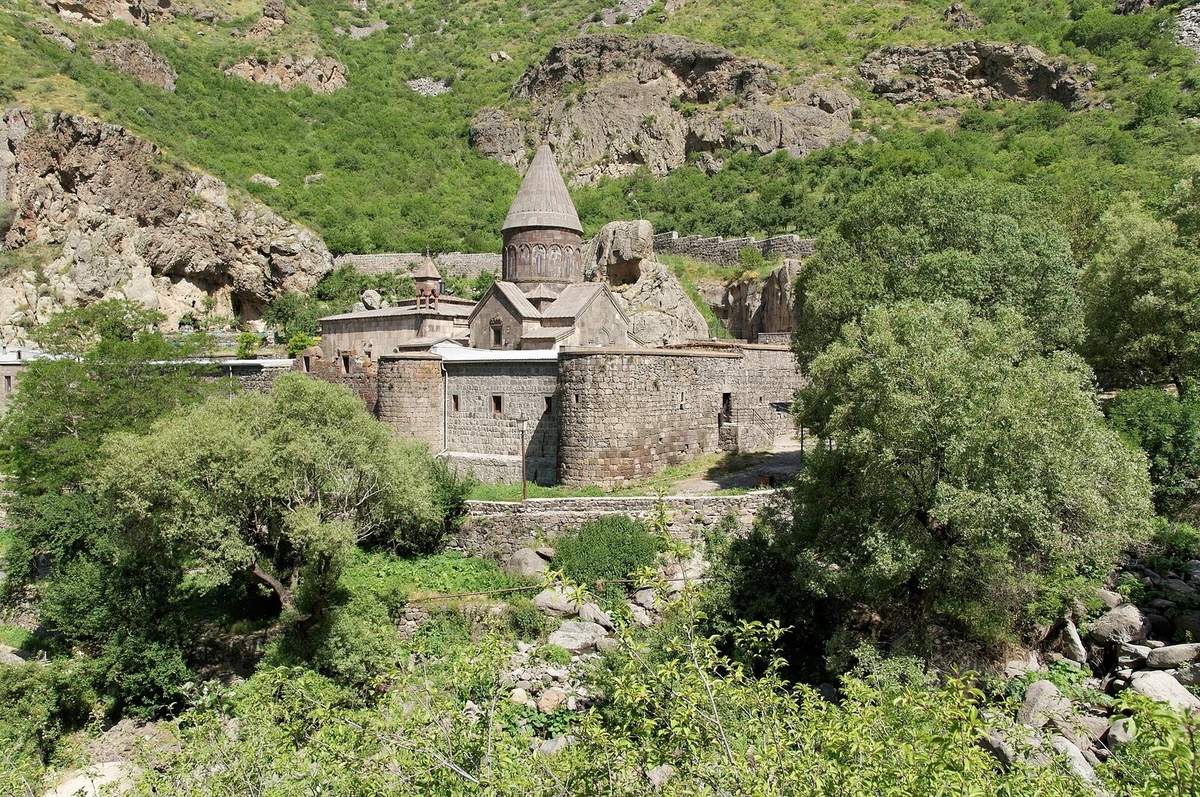
Geghard lies at the head of the Azat valley, enclosed by high cliffs, and part of it is not built but hollowed out of the rock. Tradition places its foundation in the fourth century, at a spring inside a cave, and the monastery was first known as the Monastery of the Cave. Its present name means the Monastery of the Spear, after the relic that was kept here for centuries.
The main church dates from 1215, and behind it open the rock-cut chambers of the thirteenth century, with carved crosses, animal reliefs, a sacred spring and remarkable acoustics. Outside, the cliff face is covered with khachkars, the carved cross-stones typical of Armenia. Geghard Monastery is a UNESCO World Heritage site and an active place of worship, so dress modestly and keep your voice low. For many guests it is the most moving stop of the day, and the guide's explanations of the symbols make a real difference here.
Charents Arch and the lavash baking class
On the road between Garni and Yerevan a simple stone arch stands on a hilltop above the Ararat plain. It was built in 1957 and named after the Armenian poet Charents, whose lines about his homeland are carved inside it. The idea is as clear as the view: the arch frames Mount Ararat and the plain like a picture, and on a clear day it gives one of the finest panoramas of the mountain near the capital.
The stop lasts about twenty minutes and is at its best in the soft light of the late afternoon. The day also includes a lavash baking class. Lavash is the thin Armenian flatbread baked against the hot wall of a tonir, a clay oven sunk into the ground, and its preparation is recognised by UNESCO as intangible cultural heritage. Watching the dough being stretched and slapped onto the oven wall, and tasting it warm, is a simple and memorable way to end a day of temples, canyons and monasteries.
Itinerary
- Meeting on Abovyan Street, YerevanMeet our team at the Government Parking Lot on Abovyan Street in central Yerevan for the 10:00 departure.
- Khor Virap viewpointA drive of about forty-five minutes to the Ararat plain, then a photo stop of around thirty minutes facing the monastery and Mount Ararat.
- Azat ReservoirA photo stop of about twenty minutes above the lake and the Azat canyon.
- Garni TempleTime to visit the first-century temple and the fortress site above the gorge. The entrance fee is paid on site.
- Symphony of StonesA visit to the basalt columns at the bottom of the Garni gorge. The entrance fee is paid on site.
- Geghard MonasteryA visit to the UNESCO-listed monastery, with its main church and rock-cut chambers.
- Charents ArchA stop of about twenty minutes for the framed view of Mount Ararat.
- Lavash baking classSee how Armenian flatbread is baked in a traditional clay oven; the class is included and its timing is set by the team on the day.
- Return to YerevanA drive of about an hour and a half back to the Government Parking Lot, around eight hours after departure.
What's included
- Comfortable transportation
- Professional driver
- Stops at the Khor Virap viewpoint, Azat Reservoir, Garni Temple, the Symphony of Stones, Geghard Monastery and Charents Arch
- Lavash baking class
Not included
- Tour guide
- Garni Temple entrance fee (paid on site)
- Symphony of Stones entrance fee (paid on site)
- Meals and drinks
- Hotel pickup and drop-off
Is this right for you?
Great for
- Travellers who want it organised for them — confirmed on WhatsApp before you pay
Think twice if
- You want a private tour — this one is shared with other travellers
Not suitable for
- Pregnant women
- People with back problems
Meeting point
Meet our team at the Government Parking Lot on Abovyan Street, in central Yerevan; the team waits for you in the parking lot. The tour departs at 10:00 and returns to the same place about eight hours later. Hotel pickup and drop-off are not included.
Important information
- Bring cash in local currency for the entrance fees at Garni Temple and the Symphony of Stones, which are paid on site.
- Meals and drinks are not included; bring water and snacks or cash for food on the way.
- Wear comfortable shoes: there are steps at Garni and uneven ground in the gorge.
- Bring warm clothing, a hat and sunscreen; the weather changes quickly in the mountains.
- Dress modestly for Geghard Monastery, which is an active place of worship.
- Smoking and eating are not allowed in the vehicle.
- Khor Virap is a viewpoint photo stop; the tour does not go inside the monastery.
- The view of Mount Ararat depends on the weather and cannot be guaranteed.
Good to know
Frequently Asked Questions
Straight answers to what travellers ask us most, before they book.
Is this a shared or a private experience?
It is a shared group tour: you travel with other guests in a comfortable vehicle with a professional driver and, with the default option, an English-speaking guide.
How long does the tour take?
About eight hours. It departs from central Yerevan at 10:00 and returns to the same meeting point in the early evening.
Is hotel pickup included?
No. The tour starts and ends at the Government Parking Lot on Abovyan Street, in central Yerevan, which is easy to reach on foot or by taxi from most city hotels.
What is included?
Comfortable transportation, a professional driver, the English-speaking guide with the default option, the stops at all six sights and a lavash baking class. Meals, drinks, hotel pickup and the entrance fees for Garni Temple and the Symphony of Stones are not included.
Is the price per person or per group?
The price is per person. The booking panel on this page shows the current price of each option for your date.
Which option should I choose?
“Group Tour with an English-Speaking Guide” is the option described on this page: the guide explains the history of every stop, which adds a great deal at Garni and Geghard. “Group Tour without a Guide” follows the same route at the same time with a driver only, and you explore each place on your own. Choose the guided option on a first visit to Armenia.
Are the entrance fees included?
No. The fees for Garni Temple and the Symphony of Stones are paid on site in local currency, so bring some cash. The other stops on the route have no entrance fee listed.
Do we visit the inside of Khor Virap Monastery?
No. Khor Virap is a photo stop of about thirty minutes at the viewpoint, with the monastery and Mount Ararat in front of you. The longer visits of the day are Garni, the Symphony of Stones and Geghard.
Is it suitable for children or guests with reduced mobility?
Children can join with their parents and pay the same rate as adults. The tour is not suitable for pregnant women or people with back problems, and there are steps and uneven paths at Garni, in the gorge and at Geghard, so guests with reduced mobility should contact us before booking.
What should I bring and wear?
Comfortable walking shoes, warm clothing, a hat, sunscreen, water and cash in local currency. For Geghard Monastery choose modest clothes that cover shoulders and knees.
What is the best time to visit Garni and Geghard?
Spring and autumn offer mild temperatures and the clearest views of Mount Ararat. Summer is hot at midday, and in winter warm clothing is essential, as snow can reach the higher roads.
How do I book and confirm?
Choose your option and date in the booking panel on this page and send your request. Our team confirms your booking on WhatsApp within minutes and sends the meeting details.
More in Yerevan