Evening Wildlife Safari Guided Tour Banff
- Duration2 hours
- Daily (evening departures, seasonal times)
- Group
- Pickup available
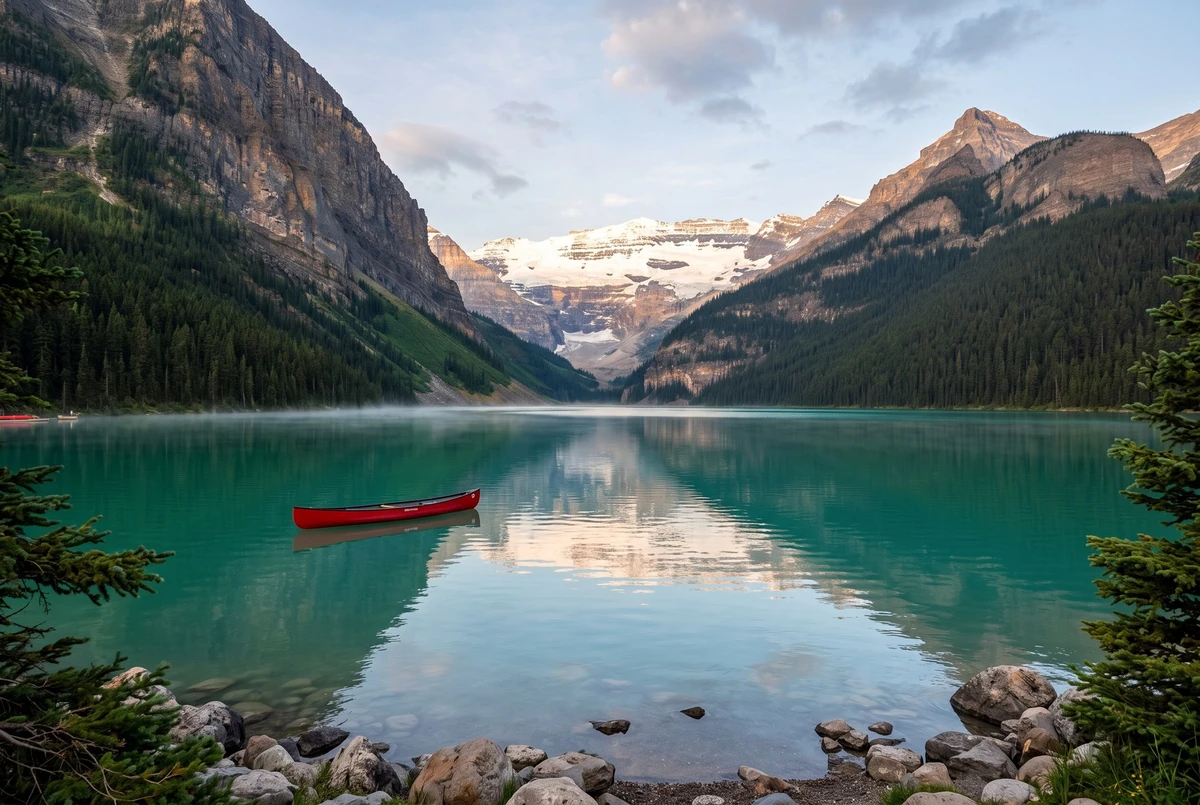
Some images are AI-generated for illustration. While we confirm your booking, just ask and we will send you the original photos.
- Fair, honest prices
- Real people, not bots
- Confirm, then pay
- Secure payment

Overview
Dusk is when Banff National Park comes alive. On this two-hour guided evening safari you are picked up from a main hotel in Banff town or the train station and driven along scenic Bow Valley roads at the hour when elk, deer and bighorn sheep are most active. A certified local guide explains how the animals live, how they move through a valley shared with a town, a railway and a highway, and what the park does to protect them, using hands-on interpretive tools. It is a shared small-group tour of up to 24 guests that suits families, couples and first-time visitors. Sightings are never guaranteed, but the guides know where animals often feed.
Highlights
- Two-hour guided wildlife drive at dusk, when animals are most active
- Chances to see elk, deer and bighorn sheep in their natural habitat
- Golden evening light on the Bow Valley and its mountain peaks
- Certified local guide with stories on animal behaviour and conservation
- Hands-on interpretive tools to understand the wildlife
- Pickup and drop-off at main hotels in Banff town and the train station
- Small group of up to 24 guests
Full Description
Banff National Park at dusk
Founded in 1885, Banff National Park is Canada's oldest national park and part of the Canadian Rocky Mountain Parks UNESCO World Heritage Site. It covers more than 6,600 square kilometres of peaks, glaciers, forests and valleys. During the day many animals rest in the forest; as the light softens in the evening, they move out into meadows and along roadsides to feed, which is why an evening wildlife tour in Banff gives one of the best chances to see them.
Your guide chooses the route on the night according to recent sightings and conditions, staying on the scenic roads of the Bow Valley around town. The drive itself is beautiful: the sun drops behind the ridges, the peaks glow pink and orange, and the valley turns quiet. Many guests say the light alone makes the evening worth it, even before the first elk appears.
The Bow Valley and its mountain views
The Bow Valley is the green corridor that runs through the heart of Banff National Park, carrying the Bow River, the Trans-Canada Highway and the transcontinental railway. Around Banff town it is framed by Mount Rundle, Cascade Mountain and Sulphur Mountain, and its meadows, marshes and open forests form some of the richest wildlife habitat in the park.
On the safari you look across this valley from pull-outs and quiet roadsides, with time to scan the grasslands with your own eyes or binoculars. Your guide explains how fire, rivers and glaciers shaped the valley and why the low, warmer valley floor is so important for animals in winter. If you are planning the best time to visit Banff for wildlife, late spring and autumn evenings are especially rewarding.
Elk, deer and bighorn sheep
Elk are the animal most visitors hope to see in Banff. Bulls grow wide antlers each year, and in September and October the valley echoes with their bugling during the rut. Mule deer and white-tailed deer graze along the forest edges, while bighorn sheep, with their heavy curled horns, often appear on rocky slopes and roadsides. Other animals, from coyotes to bears, are sometimes seen, but nothing can be promised in a wild park.
The guide shares real stories about how these animals behave and the challenges they face, and uses hands-on interpretive tools so you can feel the size of an antler or the texture of a coat. Parks Canada asks visitors to stay at least 30 metres from elk, deer and sheep and to never feed them; on this tour you watch from a respectful distance, the way wildlife should be seen.
Living with wildlife: conservation in Banff
Banff is famous among scientists for its wildlife crossings: overpasses and underpasses built over and under the Trans-Canada Highway, together with long fences, so that animals can move through the valley safely. Monitoring has recorded many thousands of crossings by elk, deer, bears, wolves and other species, and the system has become a model for road projects around the world.
Your guide explains these efforts and the daily balance between millions of visitors and the animals that live here. It is this mix of spotting and understanding that makes the safari different from simply driving around on your own. The tour ends with drop-off at your Banff hotel or the train station, leaving the rest of the evening free for dinner in town.
Itinerary
- Hotel pickup in BanffPickup from main hotels in Banff town or Banff train station shortly before the evening departure.
- Scenic drive through the Bow ValleyTravel the valley roads around Banff as the evening light softens, with commentary from your guide.
- Wildlife viewing stopsPause at pull-outs and meadows where elk, deer and bighorn sheep often feed, for most of the two hours.
- Conservation storiesLearn about animal behaviour, wildlife crossings and park protection with hands-on interpretive tools.
- Drop-off in BanffReturn to your hotel or the train station about two hours after pickup.
What's included
- Certified English-speaking guide
- Pickup and drop-off at main hotels in Banff town and Banff train station
- Small group of up to 24 guests
- Hands-on interpretive tools to learn about the animals
Not included
- Food and drinks
- Gratuities
- Large bags and luggage (not allowed)
Is this right for you?
Great for
- Families with children — a child price for ages 3–12
- Travellers without a car — hotel pickup is included
- Nature and wildlife lovers
- A short visit — about 2 hours
Think twice if
- You want a private tour — this one is shared with other travellers
Meeting point
Pickup is included from main hotels in Banff town and from Banff train station; we confirm your exact pickup point and time after booking. If you prefer to make your own way, the meeting point is the public bus parking behind a central Banff Avenue hotel in downtown Banff, about 18 minutes before the departure time.
Important information
- Wildlife sightings cannot be guaranteed; guides go to areas animals often use
- Wear comfortable shoes and weather-appropriate clothing; evenings in the mountains are cool
- Luggage and large bags are not allowed
- Departure time shifts with the season to match dusk; check your confirmation
- Bring binoculars and a camera with a zoom lens if you have them
- Never leave the group to approach animals; stay at a safe distance
- No-shows and missed departures cannot be refunded
Good to know
Frequently Asked Questions
Straight answers to what travellers ask us most, before they book.
Is this a shared or a private experience?
It is a shared small-group tour with up to 24 guests, led by a certified local guide.
How long does the evening safari take?
About two hours from pickup to drop-off.
Is hotel pickup included?
Yes, from main hotels in Banff town and from Banff train station. You can also meet the group at the public bus parking in downtown Banff.
What is included?
A certified guide, hotel pickup and drop-off in Banff, the small-group drive and hands-on interpretive tools. Tips are not included.
Is the price per person or per group?
The price is per person, with a lower child rate for ages 3 to 12. The booking panel on this page shows the current price.
Which animals can I see in Banff in the evening?
Elk, mule deer, white-tailed deer and bighorn sheep are the most common. Coyotes, bears and other animals are seen occasionally, but no sighting is guaranteed.
Is it suitable for children or people with reduced mobility?
Yes, it suits families; children from 3 have a child rate and infants under 3 can join. Most viewing is from the vehicle and roadside pull-outs, with little walking.
What should I bring?
Warm layers, comfortable shoes, a camera and binoculars if you have them. Large bags and luggage are not allowed.
What is the best season for wildlife in Banff?
Late spring, when animals graze the fresh green valley floor, and autumn, when the elk rut takes place in September and October, are especially good.
What happens in bad weather?
The tour runs in most weather, as viewing is mostly from the vehicle. If it is cancelled for safety, we offer another evening or a refund.
Is it safe to watch elk and bears in Banff?
Yes, when you keep your distance. Parks Canada asks visitors to stay at least 30 metres from elk and deer and 100 metres from bears, and your guide follows these rules.
How do I book and confirm?
Select your date in the booking panel and send your request; our team confirms your booking and pickup details on WhatsApp within minutes.
More in Banff
Popular across Canada
-
-
-
-
-

-