
Accra Guided City Tour, A Cultural and Historical Experience
- DurationAbout 6 hours
- Daily
- Group
- Pickup available
Some images are AI-generated for illustration. While we confirm your booking, just ask and we will send you the original photos.
- Fair, honest prices
- Real people, not bots
- Confirm, then pay
- Secure payment

Overview
This guided Accra city tour brings together the capital's history, culture and everyday life in one well-paced day. After pickup from your hotel, you travel in an air-conditioned vehicle with a dedicated English-speaking guide to the W.E.B. Du Bois Centre, the National Museum of Ghana and the Kwame Nkrumah Memorial Park, where the story of Ghana's independence comes to life. Then the mood changes: you walk through the colourful lanes of Makola Market, browse carvings, beads and fabrics at the Accra Arts Centre, and finish at Black Star Square and the Jamestown Lighthouse. Entrance fees and bottled water are included, so it suits first-time visitors, couples, families and solo travellers who want to understand Accra in a single day.
Highlights
- Hotel pickup and drop-off in Accra in an air-conditioned vehicle
- Dedicated English-speaking local guide for the whole tour
- Kwame Nkrumah Memorial Park and Mausoleum, where independence was declared
- The W.E.B. Du Bois Centre and its Pan-African story
- Colour and energy of Makola Market, Accra's busiest market
- Handmade crafts, beads, drums and fabrics at the Accra Arts Centre
- Black Star Square, Independence Arch and the Jamestown Lighthouse
- Entrance fees for the sites on the itinerary included
Full Description
Kwame Nkrumah Memorial Park and Mausoleum
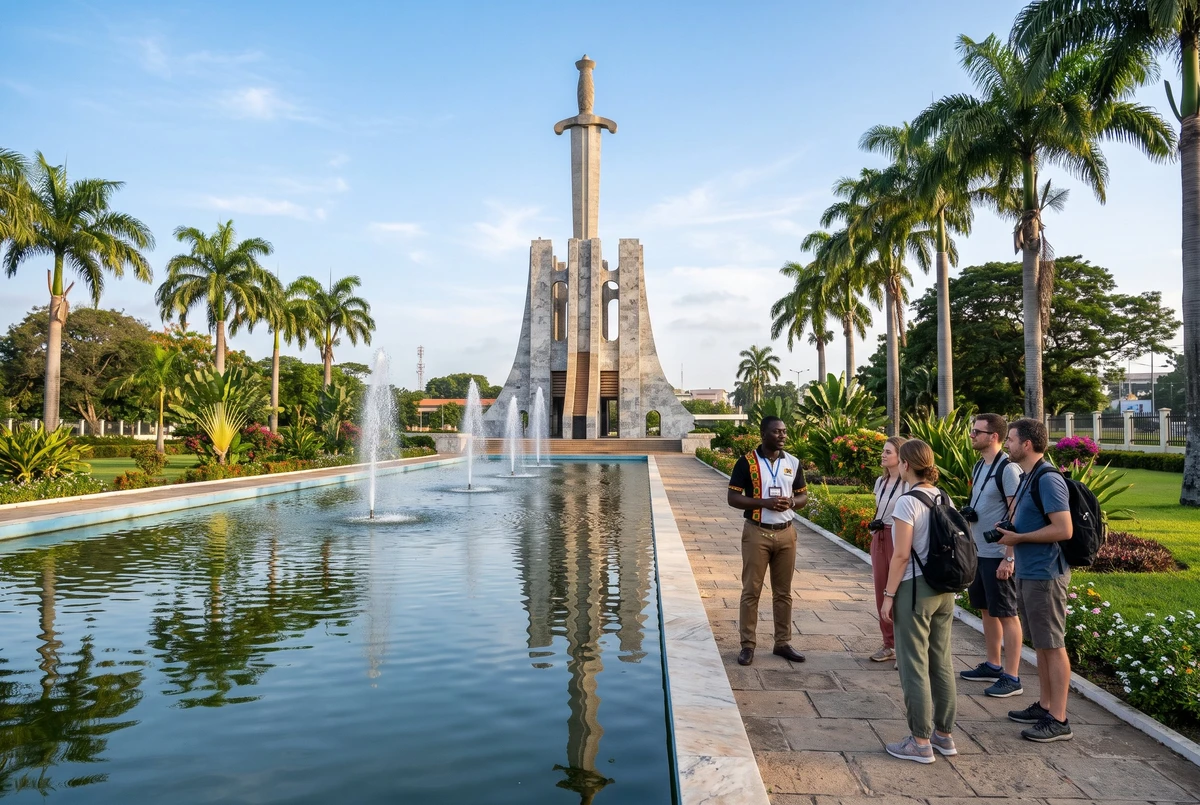
The Kwame Nkrumah Memorial Park stands on the former Old Polo Grounds in central Accra, the very place where Ghana's independence from Britain was proclaimed on 6 March 1957. Ghana was the first country in sub-Saharan Africa to gain independence from colonial rule, and the park, opened in 1992, honours the country's first president, whose remains rest here with those of his wife. The mausoleum, clad in marble and shaped to recall an upturned sword, rises above reflecting pools and fountains.
On this Accra city tour you spend time walking the gardens, seeing the statues and visiting the small museum with photographs and personal objects from the independence years. Your guide explains why this site matters so much to Ghanaians and to the wider Pan-African movement. Many visitors ask whether the Nkrumah Memorial Park is worth visiting: for anyone curious about modern African history, it is one of the most meaningful stops in the city.
W.E.B. Du Bois Centre
In the quiet, leafy district of Cantonments, the W.E.B. Du Bois Centre occupies the former residence of the African-American scholar and civil rights campaigner who moved to Ghana in 1961 and died in Accra in 1963. He is buried in the grounds, next to the house where he spent his last years working on an encyclopedia of the African world. The centre was opened in 1985 as a memorial and research library dedicated to Pan-Africanism.
Inside, you see his study, his books, photographs and personal belongings, and your guide tells the story of how his ideas about African unity linked the diaspora with the newly independent nations of the continent. The peaceful garden is a calm contrast to the busy roads of the capital, and the visit gives useful context for the independence story you hear later in the day. Allow around forty minutes here.
National Museum of Ghana
Founded in 1957, the year of independence, the National Museum of Ghana is the country's oldest and largest museum and the best introduction to the many peoples and traditions of Ghana. Its galleries bring together archaeology, ethnography and art: royal stools and regalia, kente cloth, gold weights used by Akan traders, masks, drums and objects that tell how Ghanaians lived, traded and celebrated over the centuries.
Your guide helps you read the displays and connects them with what you see later in the markets and craft stalls of Accra. It is the right stop to understand the role of chiefs and symbols such as the Adinkra signs that appear on fabrics all over the city. Please remember that touching the exhibits is not allowed. If you only have one day in Accra, a visit here combined with the memorial park gives you the essential background to the country.
Makola Market and the Accra Arts Centre
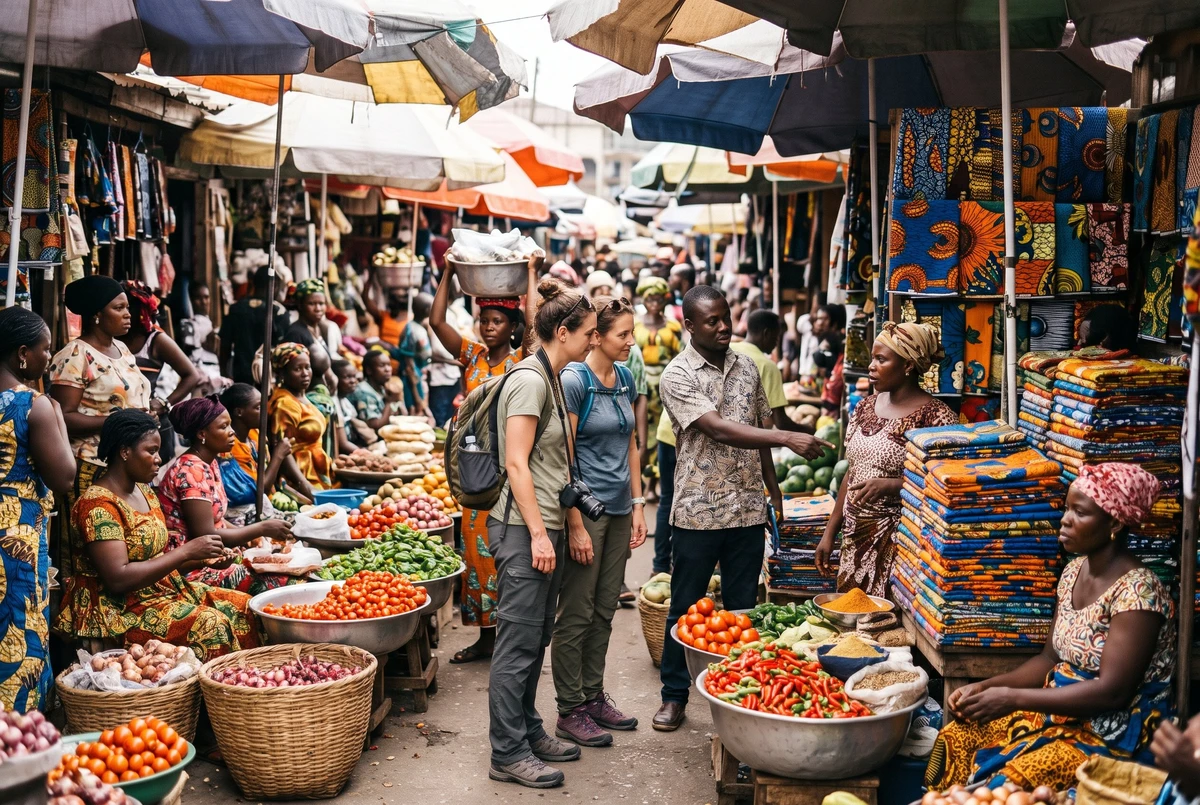
Makola Market is the beating heart of central Accra: a dense maze of stalls and lanes where traders, many of them women who have run their businesses for decades, sell wax-print fabrics, beads, spices, smoked fish, fruit, vegetables, shoes and household goods. It is loud, colourful and full of life, and walking through it with a local guide is the easiest way to experience daily life in Ghana's capital without feeling lost.
A short drive away, the Accra Arts Centre, officially the Centre for National Culture, gathers artisans and traders selling carvings, paintings, kente and batik cloth, glass beads, leather goods and djembe drums. This is the place in Accra to shop for authentic souvenirs, and your guide can explain how pieces are made and what fair bargaining looks like. Bring some cash in Ghana cedis for small purchases, and ask before photographing traders.
Black Star Square and the Jamestown Lighthouse
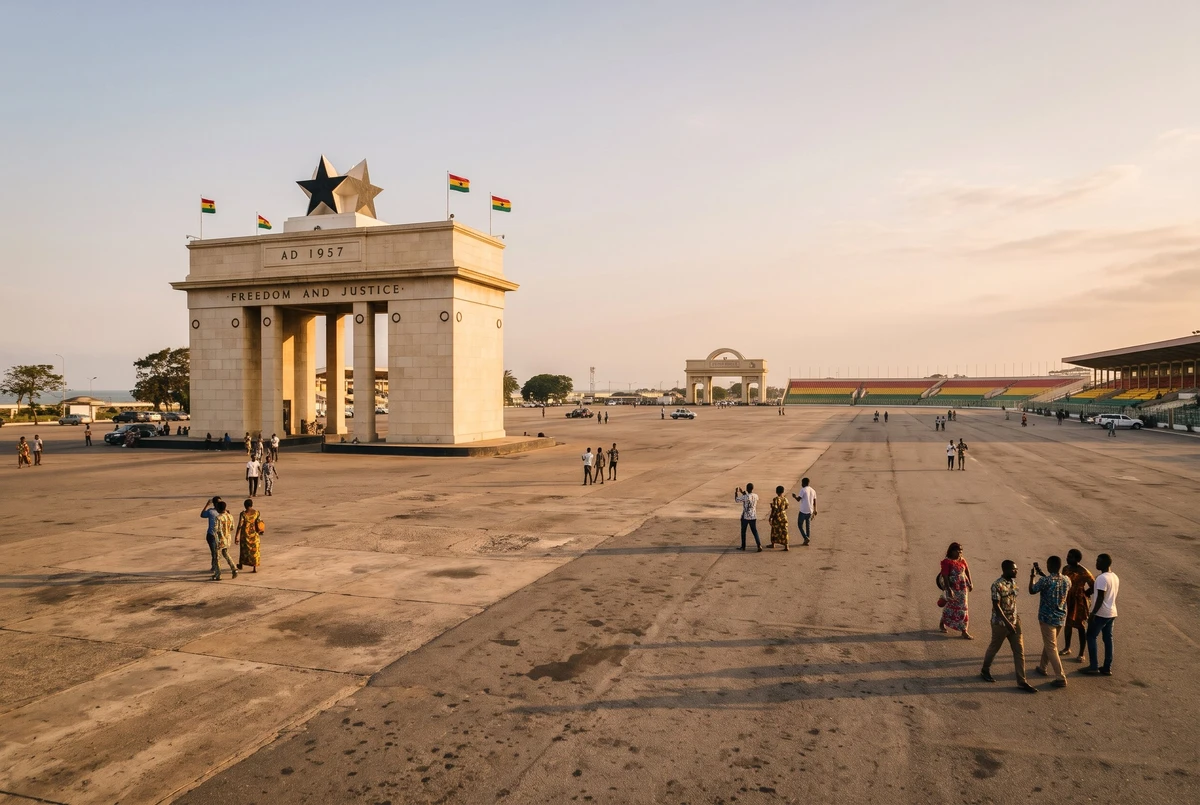
Black Star Square, also known as Independence Square, was built in 1961 beside the Atlantic and is one of the largest public squares in the world. It hosts Ghana's national parades on Independence Day, and its two landmarks, the Black Star Gate crowned with the black star of the national flag and the white Independence Arch, are the classic photo stops of any Accra sightseeing tour. Your guide explains the symbolism of the star and of the flag's colours.
The tour also passes the red-and-white Jamestown Lighthouse, standing above one of Accra's oldest neighbourhoods and its busy fishing harbour. Jamestown grew around a British fort built in the seventeenth century, at a time when the coast was part of the Atlantic slave trade, and your guide presents this history factually and with respect. From here you return to your hotel in the afternoon with a clear picture of Accra's past and present.
Itinerary
- Hotel pickup in AccraOur guide meets you at your hotel or accommodation at the start time you chose and you set off in an air-conditioned vehicle.
- W.E.B. Du Bois CentreVisit the former residence, study and resting place of the Pan-African scholar, about forty minutes.
- National Museum of GhanaGuided look at the galleries of Ghanaian history, crafts and traditions, about forty-five minutes.
- Kwame Nkrumah Memorial Park and MausoleumWalk the memorial gardens and hear the story of Ghana's independence, about forty-five minutes.
- Makola MarketStroll through the lanes of Accra's busiest market with your guide, about forty minutes.
- Accra Arts CentreBrowse carvings, beads, drums and fabrics made by local artisans, about forty minutes.
- Black Star Square and Jamestown LighthousePhoto stops at the Black Star Gate, Independence Arch and the lighthouse above the old fishing harbour.
- Return to your hotelDrop-off at your hotel or accommodation in Accra, about six hours after pickup.
What's included
- Hotel pickup and drop-off in Accra
- Dedicated English-speaking local guide
- Air-conditioned vehicle with Wi-Fi on board
- Entrance fees for the sites on the itinerary
- Bottled water
Not included
- Lunch
- Accommodation
- Personal shopping at the markets
Is this right for you?
Great for
- Travellers without a car — hotel pickup is included
- First-time visitors who want the highlights
- Travellers who want a proven choice — rated 4.6/5 by past travellers
Think twice if
- You want a private tour — this one is shared with other travellers
Not suitable for
- Pregnant women
- People with back problems
- People over 95 years
Meeting point
Our guide picks you up from your hotel, guesthouse or apartment in Accra at the start time you select in the booking panel and brings you back there at the end of the tour. We confirm the exact pickup time on WhatsApp after booking; times can shift a little with Accra's traffic.
Important information
- Wear light clothing, a hat and comfortable shoes for walking in the markets
- Bring sunscreen and some cash in Ghana cedis for souvenirs and snacks
- Lunch is not included; your guide can suggest a local place on the way
- Touching museum exhibits is not allowed
- Ask before photographing traders in Makola Market and the Arts Centre
- Pickup and visit times may change slightly because of traffic or weather
- Bottled water is provided in the vehicle
Good to know
Frequently Asked Questions
Straight answers to what travellers ask us most, before they book.
Is this a shared or a private experience?
It is a guided city tour with a dedicated English-speaking guide and an air-conditioned vehicle; it is not sold as a private tour. Your guide stays with you from pickup to drop-off.
How long does the Accra city tour take?
About six hours from hotel pickup to drop-off, depending on traffic in Accra.
Is hotel pickup included?
Yes. Pickup and drop-off at your hotel or accommodation in Accra are included.
What is included?
Hotel pickup and drop-off, a dedicated guide, an air-conditioned vehicle with Wi-Fi, bottled water and the entrance fees for the sites on the itinerary. Lunch is not included.
Is the price per person or per group?
The price is per person. The booking panel on this page shows the current price of each option for your date and group size.
Is it suitable for children or travellers with reduced mobility?
Children are welcome. The tour includes short walks in gardens and busy markets, so it is not recommended for pregnant women or people with back problems.
What should I bring?
Light clothes, a hat, sunscreen, comfortable shoes, a camera and some cash in Ghana cedis for souvenirs.
What is the best time of year for an Accra city tour?
The tour runs all year. November to March is the drier season and the most comfortable for walking; mornings are cooler and the markets are at their liveliest.
Can I shop for souvenirs on the tour?
Yes. Makola Market and the Accra Arts Centre are the best places in the city for fabrics, beads, carvings and drums, and your guide gives you time to browse.
What happens if it rains?
Most visits take place in museums and covered market lanes, so the tour runs in light rain; in heavy downpours the guide may adjust the order of stops.
How do I book and confirm?
Choose your date, the number of travellers and your preferred start time in the booking panel on this page and send the request. Our team confirms your booking on WhatsApp within minutes and shares the pickup or meeting details.