Te Puia Te Ra Guided Day Tour and Haka Cultural Performance Rotorua
- Duration2 hours
- Daily at 09:00 and 12:00
- Group
Photos show the places you visit; the boat or vehicle on the day may differ. Photos: Pseudopanax at English Wikipedia (Public domain) · DestinationFearFan (CC BY-SA 4.0), via Wikimedia Commons
Some images are AI-generated for illustration. While we confirm your booking, just ask and we will send you the original photos.
- Fair, honest prices
- Real people, not bots
- Confirm, then pay
- Secure payment

Overview
This 2-hour experience at Te Puia in Rotorua combines the geothermal wonders of the Te Whakarewarewa valley with the living culture of the Māori people. A Māori guide, or kaiārahi, leads a shared group on a 90-minute walk past bubbling mud pools and steaming vents to Pōhutu Geyser, the largest active geyser in the Southern Hemisphere, through the Kiwi Conservation Centre and into the New Zealand Māori Arts and Crafts Institute, where you watch master carvers and weavers at work. The visit ends with a 30-minute cultural performance in the carved meeting house Te Aronui a Rua, with a pōhiri welcome, songs, chants, poi dances and the haka. Tours start at 09:00 and 12:00; there is no pickup.
Highlights
- Shared 90-minute guided walk with a Māori guide
- Pōhutu Geyser, the largest active geyser in the Southern Hemisphere
- Bubbling mud pools and steaming vents of Te Whakarewarewa
- Kiwi Conservation Centre
- Master carvers and weavers at the Māori Arts and Crafts Institute
- 30-minute cultural performance with the haka
- Traditional pōhiri welcome in a carved meeting house
Full Description
Te Whakarewarewa geothermal valley
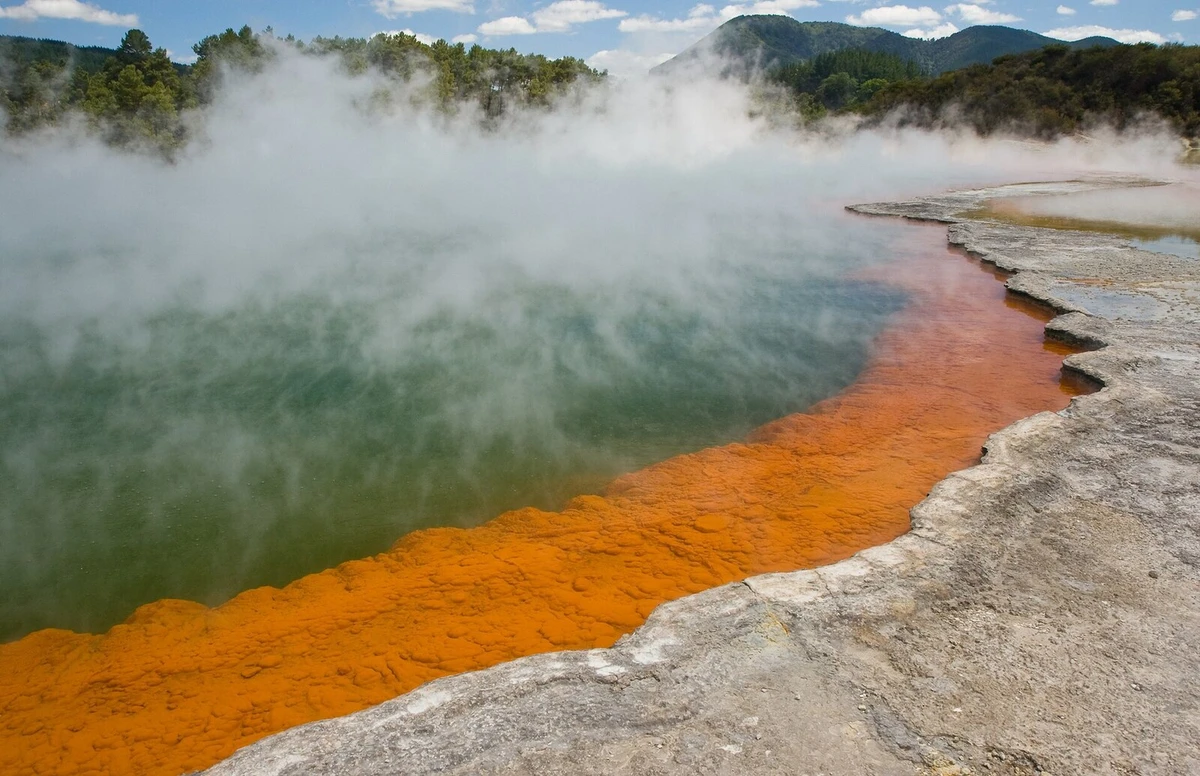
Te Puia lies in Te Whakarewarewa, a geothermal valley on the southern edge of Rotorua, a city built on one of the most active volcanic zones in the world. The ground here steams and bubbles everywhere: hot springs, sulphur-yellow rocks, silica terraces and boiling mud pools that plop and gurgle like porridge.
Your Māori guide explains how local iwi, or tribes, have lived with this heat for centuries, cooking food in the hot pools and steam vents and bathing in the warm waters. The smell of sulphur is part of the experience. For travellers searching for the best things to do in Rotorua, the Te Whakarewarewa valley is one of the essential sights.
Pōhutu Geyser
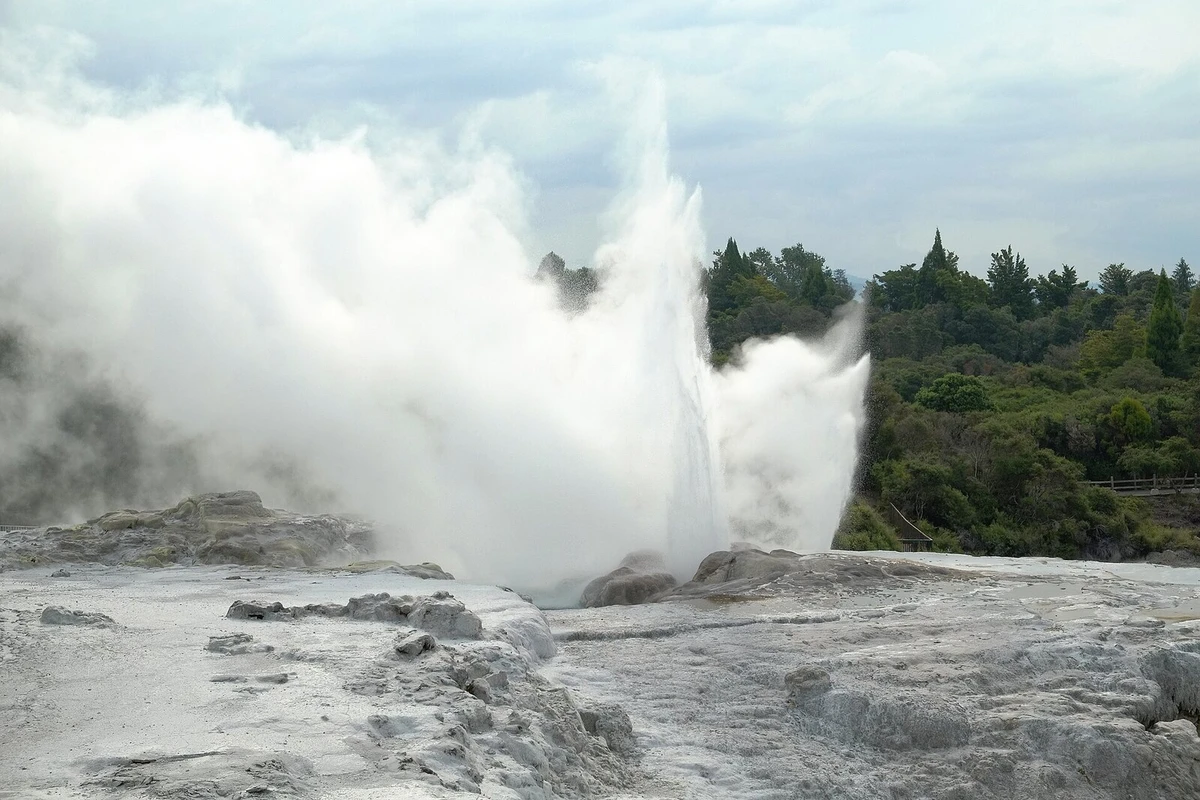
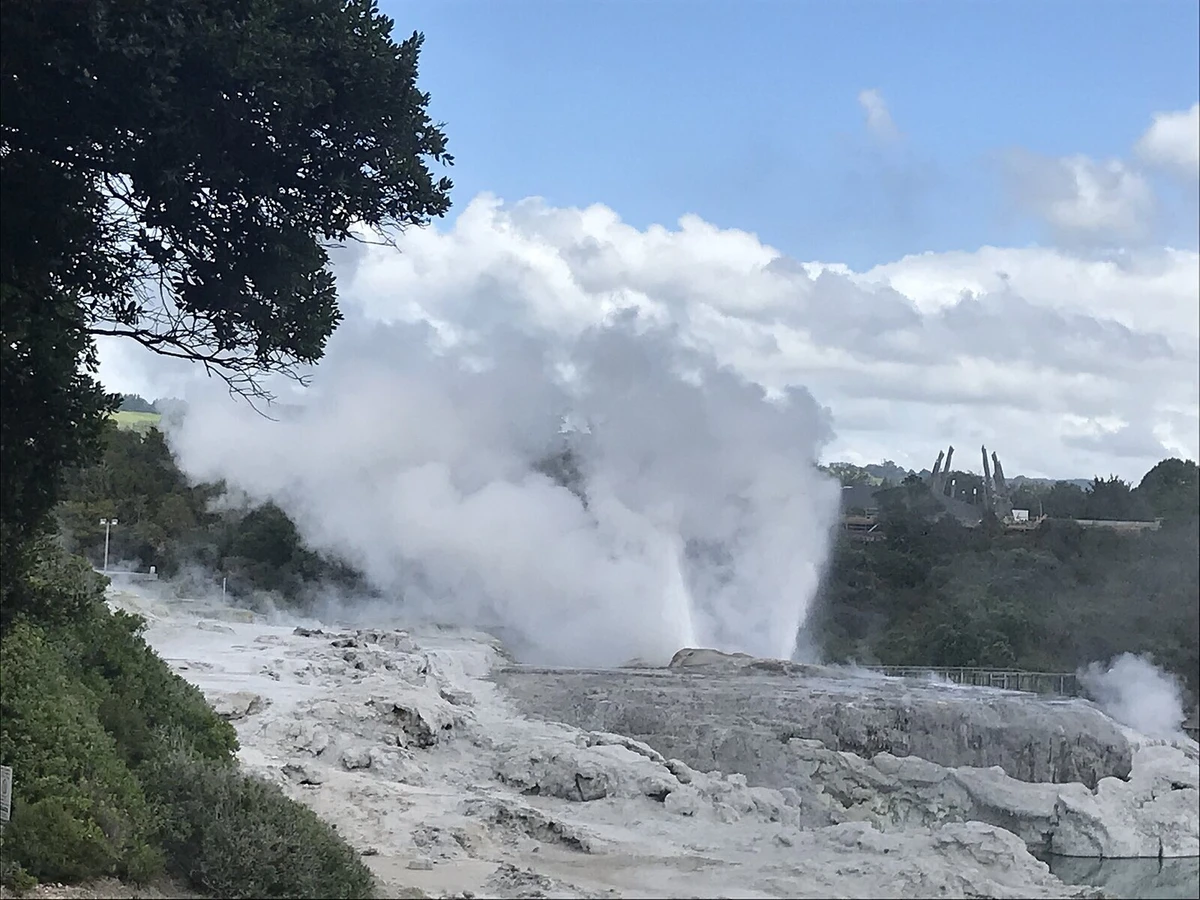
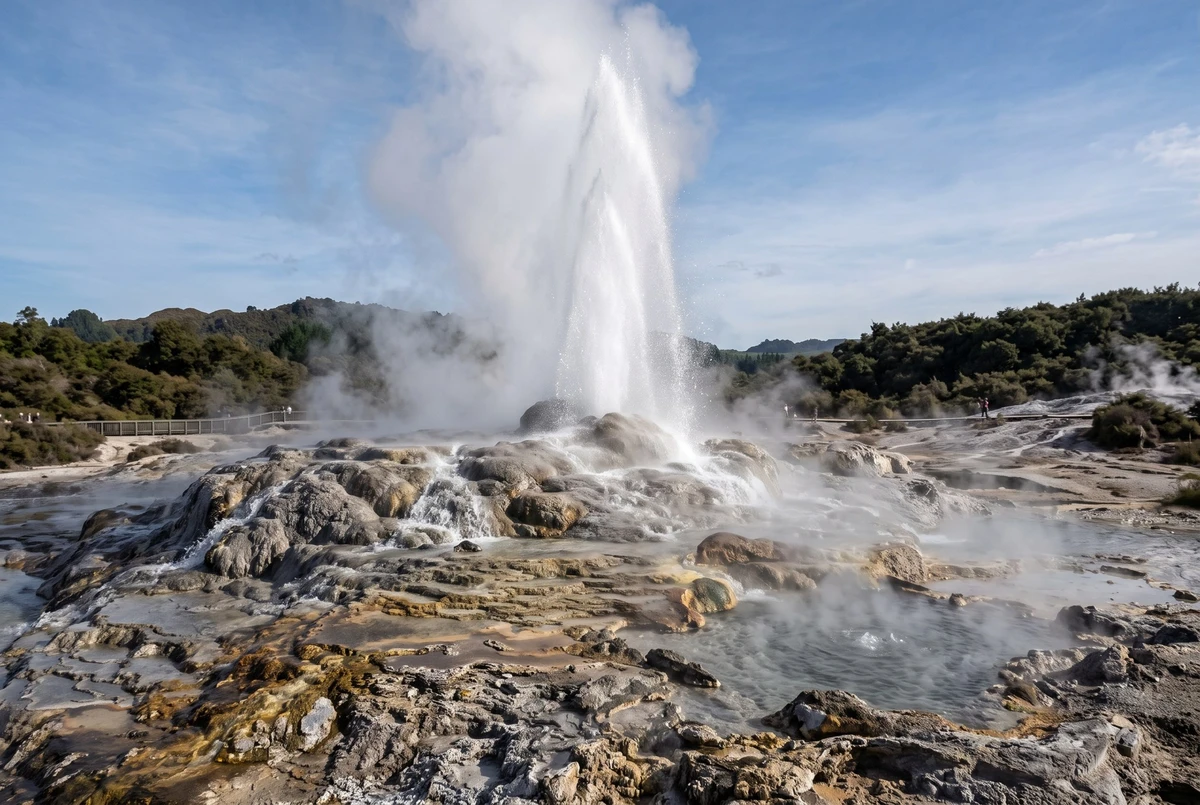
The highlight of the valley is Pōhutu, meaning big splash, the largest active geyser in the Southern Hemisphere. It erupts many times a day, often once or twice an hour, sending columns of boiling water and steam up to 30 metres into the air, while the neighbouring Prince of Wales Feathers geyser usually begins to play just before it.
Viewing terraces let you watch safely from close by, feeling the warm spray drift across on the wind. Your guide tells the stories and legends connected with the geysers. Is Te Puia worth visiting? Seeing Pōhutu erupt against the bush-clad hills is, for many visitors, the most memorable sight in Rotorua.
Kiwi Conservation Centre
The walk continues to the Kiwi Conservation Centre, a dimly lit nocturnal house where you can see the kiwi, New Zealand's flightless national bird, active as it would be at night in the forest. Kiwi are shy and rarely seen in the wild, so this is a rare chance to watch one foraging with its long beak.
Your guide explains why kiwi are endangered, the threats they face from introduced predators and the conservation work under way to protect them, including programmes that hatch and raise chicks before releasing them into safe habitats. Please keep your voice low and do not use flash, as the birds are sensitive to light and noise.
The New Zealand Māori Arts and Crafts Institute
Te Puia also houses the New Zealand Māori Arts and Crafts Institute, founded in 1926 to keep traditional skills alive. In the national schools of carving and weaving you watch students and masters shaping wood, bone and stone into intricate designs, and weaving flax into cloaks and baskets, each pattern carrying ancestral meaning.
The visit ends in Te Aronui a Rua, a beautifully carved meeting house, with a 30-minute cultural performance. After the pōhiri, the traditional welcome ceremony, the performers present waiata songs, mōteatea chants, graceful poi dances and the powerful haka. The best time to visit Te Puia is the morning tour, when the valley is often wrapped in steam.
Itinerary
- Check-in at Te PuiaCheck in at the main entrance on Hemo Road before the 09:00 or 12:00 tour.
- Geothermal valley walkMud pools, hot springs and steaming vents with your Māori guide.
- Pōhutu GeyserWatch the geyser from the viewing terraces.
- Kiwi Conservation CentreSee kiwi in the nocturnal house.
- Māori Arts and Crafts InstituteWatch carvers and weavers at work; the walk lasts about 90 minutes.
- Cultural performanceA 30-minute pōhiri, songs, poi and haka in the carved meeting house.
What's included
- 90-minute guided walk with a Māori guide
- Pōhutu Geyser and the geothermal valley
- Kiwi Conservation Centre
- New Zealand Māori Arts and Crafts Institute
- Cultural performance with pōhiri welcome, song, poi and haka
Not included
- Food and drinks
- Transportation to/from the activity
Amounts shown for items not included (such as entrance tickets, park fees, boat rides or optional extras) are set by the attractions and local suppliers, can change without notice and are given as a guide only. Please confirm the current amounts with us on WhatsApp before your tour. Haqqi Tours has no control over these third-party prices; they are paid by you on the day unless they are listed as included.
Is this right for you?
Great for
- Families with children — a child price for ages 5–15
- A short visit — about 2 hours
- Travellers who want a proven choice — rated 4.8/5 by past travellers
Think twice if
- You want a private tour — this one is shared with other travellers
Not suitable for
- People with mobility impairments
- Wheelchair users
Meeting point
Check in at the main entrance of Te Puia, 20 Hemo Road, Whakarewarewa, about 5 minutes by car south of central Rotorua. Tours start at 09:00 and 12:00; please arrive 15 minutes early. We send your ticket and the exact pin on WhatsApp. There is parking on site.
Important information
- Wear comfortable walking shoes for paths with some slopes
- Bring a hat, sunscreen and water
- Stay on marked paths; the geothermal ground is extremely hot
- Photography is allowed, but respect cultural customs and no flash in the kiwi house
- Smoking is not allowed
- Transport to Te Puia is not included
- Not suitable for wheelchair users
Good to know
Frequently Asked Questions
Straight answers to what travellers ask us most, before they book.
Is this a shared or a private experience?
It is a shared guided tour and performance with other visitors.
How long does it take?
About 2 hours: a 90-minute guided walk and a 30-minute performance.
Is hotel pickup included?
No. You make your own way to Te Puia on Hemo Road, a few minutes from central Rotorua.
What is included?
A 90-minute guided walk, Pōhutu Geyser, the Kiwi Conservation Centre, the Māori Arts and Crafts Institute and the cultural performance.
Is the price per person or per group?
The price is per person. The booking panel on this page shows the current price.
Is it suitable for children and people with reduced mobility?
Children enjoy the geysers and the kiwi. The paths are not suitable for wheelchair users or people with mobility impairments.
Will I see the geyser erupt?
Pōhutu erupts many times a day, often once or twice an hour, so most visitors see it, though eruptions are natural and not timed.
What is the haka?
A traditional Māori posture dance performed with chanting, strong movements and facial expressions to show strength and welcome.
What should I bring?
Comfortable shoes, a hat, sunscreen, water and a light rain jacket.
What happens in bad weather?
The tour runs in rain; the performance is indoors in the meeting house.
Which tour time is best?
The 09:00 tour is cooler and the steam is more visible; the 12:00 tour suits a later start.
How do I book and confirm?
Choose your date and time in the booking panel and complete the booking. Our team confirms on WhatsApp within minutes.
More in Rotorua

Popular across New Zealand
-
-
-
-

-
-