
Kampala
Plan Kampala with Haqqi Tours: day tours, private airport transfers, attraction tickets and packages, run by our own team and confirmed on WhatsApp in Arabic or English.
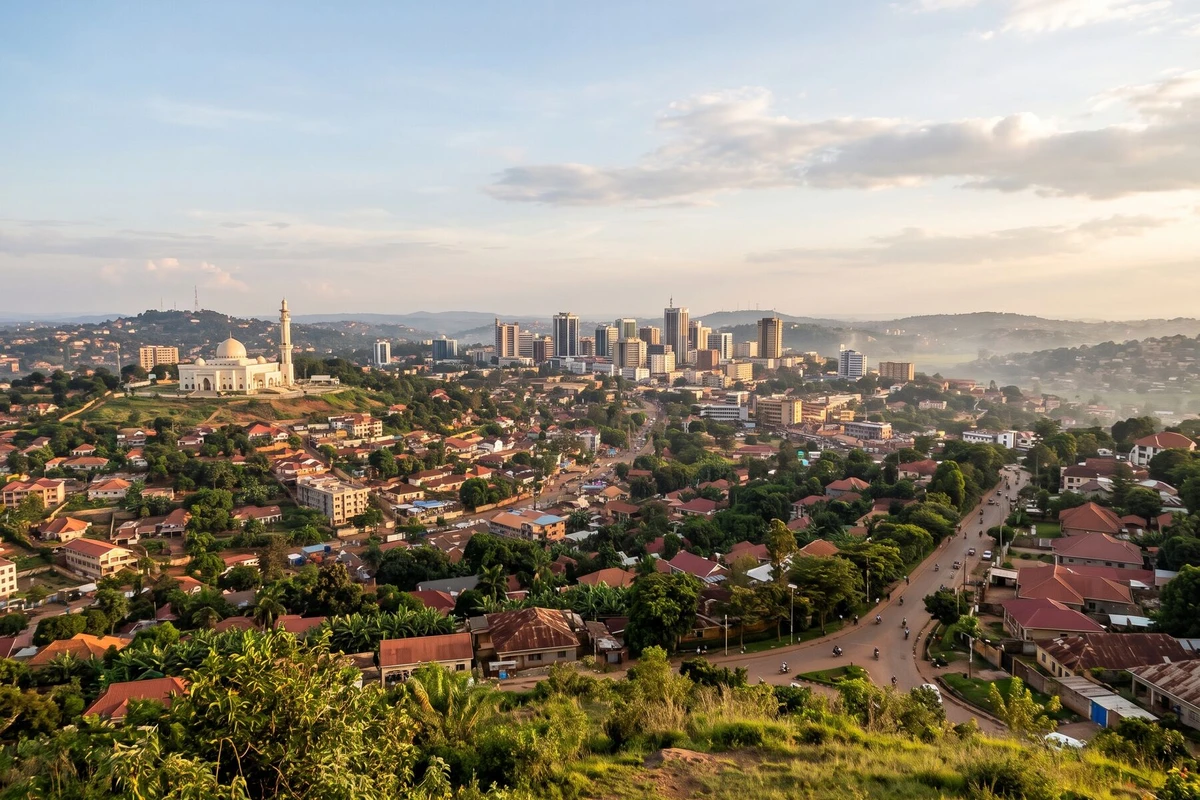
Early morning on Old Kampala Hill, the call to prayer rises from the Uganda National Mosque as the city wakes below. Mist drifts between the hills, the red roofs of Mengo and the twin towers of Rubaga Cathedral catch the first sun, and the roads fill with boda-boda motorbikes carrying passengers, bananas and even furniture. By the time the market stalls of Nakasero are stacked with pineapples and avocados, the whole city is humming.
Nothing matches those filters yet. Widen your search or message us on WhatsApp.
Kampala Day Tours
View all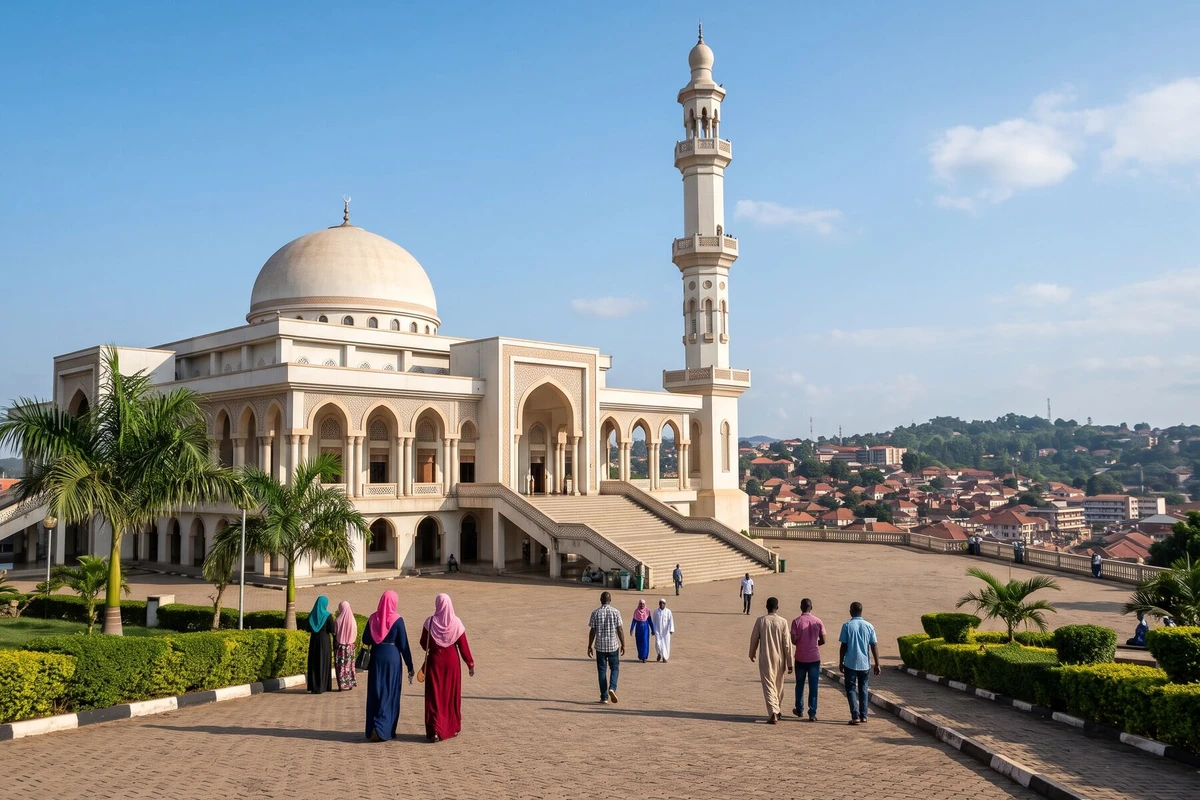
Kampala at first sight
Kampala grew from the hills of the kingdom of Buganda, where the Kabaka held court at Mengo and the royal tombs were raised at Kasubi. The British built their administration on Nakasero, and churches and mosques crowned the surrounding hills. Today it is a busy, friendly capital of markets, music and green gardens near the northern shore of Lake Victoria, best discovered on foot with a local guide who knows the stories behind each hill.
Why include Kampala in your itinerary?
- A capital best explored hill by hill. Mosques, cathedrals, royal sites and markets sit on and between the hills, and a guided walk links them into one clear story of Buganda, the colonial years and modern Uganda.
- Warm, welcoming and full of everyday life. Markets overflow with fruit, street cooks roll fresh rolex, and greetings are taken seriously, so even a short walk brings conversations and smiles.
- A gateway to the lake and the Nile. Entebbe and its botanical gardens lie on Lake Victoria to the south, and Jinja, where the Nile begins, is an easy day trip to the east.
Signature experiences in Kampala
A Guided Walk Through the Heart of Kampala
The best introduction to the city is on foot with a local guide. Walks usually move through the busy centre, past the taxi parks and old shopfronts, up to the colonial buildings of Nakasero and across to Old Kampala, with stories of Buganda, the railway, independence and daily life along the way. Your guide helps you cross the traffic safely, explains the market trades and adapts the pace for families, and our team on WhatsApp helps you choose the right route.
The Uganda National Mosque on Old Kampala Hill
Crowning the hill where the first fort of the colonial era stood, the Uganda National Mosque is one of the largest mosques in East Africa, with a vast prayer hall, stained-glass windows and a tall minaret. Climbing the spiral stairs of the minaret rewards you with a sweeping view over the seven original hills of Kampala and on clear days to Lake Victoria. Modest dress is required, and wraps are offered at the entrance.
The Kasubi Tombs and Mengo
On Kasubi Hill, the great thatched house of Muzibu Azaala Mpanga holds the tombs of Buganda's kings and is listed by UNESCO as a masterpiece of building with natural materials. After a fire in 2010, craftsmen used traditional skills to restore it. Nearby, the hill of Mengo holds the Lubiri palace and the parliament building of Buganda, the Bulange, linked by a straight royal road, with the Kabaka's Lake below.
Markets, Cathedrals and Hilltop Views
Owino Market, also known as St Balikuddembe, is a maze of fabrics, shoes, spices and second-hand goods, while Nakasero Market is the place for fresh fruit, vegetables and Ugandan coffee. Namirembe Cathedral on its hill and Rubaga Cathedral opposite are both fine viewpoints, and the Bahá'í House of Worship on Kikaya Hill sits in calm gardens on the edge of the city. The Uganda Museum adds displays of traditional music, crafts and history.
Namugongo, Lake Victoria and the Nile
East of the centre, the shrine at Namugongo honours the young Christian converts killed in the 1880s and draws pilgrims from across Africa each June. To the south, Entebbe offers the lakeside botanical gardens, a wildlife education centre and boat trips to Ngamba Island chimpanzee sanctuary, while the Mabamba wetlands shelter the rare shoebill stork. A day trip east to Jinja lets you see the Nile flow out of Lake Victoria.
Neighbourhoods and quarters to know in Kampala
Nakasero and the City Centre
Nakasero Hill rises right above the commercial centre and holds many of Kampala's government offices, international hotels, banks and green, tree-lined streets. Staying here puts you close to the market, the main roads and the starting points of most walking tours, ideal for first-time visitors who want to be at the heart of the city.
Kololo
Kololo is Kampala's leafy hill of embassies, quiet residential streets, guesthouses and cafés, with the independence grounds at its foot and views across the city from the top. It is calm after dark yet only a short drive from the centre, a comfortable choice for families and travellers who prefer a peaceful base.
Old Kampala and Mengo
The historic western hills, around the Uganda National Mosque, Mengo and the routes to Namirembe and Rubaga, hold Kampala's oldest neighbourhoods, small shops and many halal eateries. Accommodation here is simpler, but it suits travellers who want to be close to the mosque and the royal sites of Buganda.
Muyenga and Munyonyo by the Lake
To the south-east, the hills of Muyenga and the shore at Munyonyo lead down to Lake Victoria, with resort hotels, lakeside gardens and boat jetties. They are quieter and greener than the centre and convenient for the airport road, though traffic into the city can be slow at rush hour.
How long to stay in Kampala and how to pair it
Recommended stay
We recommend two to three nights in Kampala. One day for a guided walk through the centre, the markets and Old Kampala with the Uganda National Mosque, a second for the Kasubi Tombs, Mengo, the cathedrals and Namugongo, and a third for a day trip to Jinja or to Entebbe and the lake. With more time, continue west to the national parks.
How to pair it
Kampala pairs naturally with Entebbe, about an hour south on the lake, for its botanical gardens and boat trips, and with Jinja, about two to three hours east, for the source of the Nile. For wildlife, Murchison Falls, Queen Elizabeth and Kibale National Parks are each several hours away, and Bwindi's gorilla forest lies in the far south-west, with private transfers arranged by our team.
Best time to visit Kampala and the rhythm of the day
Best months
The best time to visit Kampala is during the dry seasons from June to September and from December to February, when sunny mornings make walking across the hills a pleasure. Thanks to the altitude, the city is warm rather than hot all year. March, October and November bring short showers and green views, while April and May are the wettest months, when afternoon storms can slow traffic.
The daily rhythm
Kampala starts early. Mornings are the best time for walking tours, markets and the minaret view, before the heat and the heaviest traffic. Middle of the day suits museums, the cathedrals and a long lunch of matooke or fish. In the late afternoon the hills glow in golden light and the traffic thickens, and evenings are best spent at your hotel or a quiet restaurant on Kololo or by the lake.
On-the-ground logistics in Kampala
Arrival
Entebbe International Airport (EBB) is the gateway to Kampala, on the shore of Lake Victoria about forty kilometres to the south. The expressway takes around forty-five minutes to one hour, while the old road can take much longer at busy times. Flights arrive from cities such as Nairobi, Kigali, Addis Ababa, Doha, Dubai, Istanbul and Amsterdam. We arrange private transfers that meet you at arrivals and drive you directly to your hotel.
Getting around
Kampala is spread across many hills, so walking works best with a guide for the central districts, while longer distances need a car. Boda-boda motorbike taxis are everywhere but carry real risks for visitors, and the shared minibus taxis are crowded and hard to navigate. App-based car rides are widely used. For a full day of sightseeing, Namugongo, Entebbe or Jinja, a private car with driver arranged by our team is the most comfortable choice.
Local etiquette tip
Greetings matter in Kampala, so say hello and ask how someone is before anything else; oli otya means how are you in Luganda. Dress modestly, especially at the Uganda National Mosque, the cathedrals and the royal tombs, where you may be asked to remove shoes. Ask before photographing people and never photograph soldiers, police or government buildings. Tipping guides and drivers is appreciated, and rounding up in restaurants is common.
Must-do things in Kampala
- Climb the minaret of the Uganda National Mosque
- Join a guided walk through central Kampala
- Stand beneath the thatched roof of the Kasubi Tombs
- Walk the royal road from Mengo to the Bulange
- Lose yourself in the lanes of Owino Market
- Buy fresh fruit at Nakasero Market
- Enjoy the view from Namirembe or Rubaga Cathedral
- Visit the shrine at Namugongo
- Taste a rolex hot from a street stall
- Take a day trip to the source of the Nile at Jinja
Do’s and don’ts in Kampala
Do
- Do start walking tours early in the morning
- Do carry small notes of Ugandan shillings
- Do dress modestly at religious and royal sites
- Do greet people before asking for directions
- Do keep your yellow fever certificate with your passport
Don’t
- Don't photograph soldiers, police or official buildings
- Don't ride boda-bodas without a helmet
- Don't leave phones and bags on show in crowds
- Don't underestimate the rush-hour traffic
- Don't walk alone in quiet streets late at night
Kampala at a glance
Plan Kampala with Haqqi Tours
Every option is confirmed by our team on WhatsApp before you pay, and delivered by our own people or by trusted local partners we work with in every city. Because we send travellers from all over the world, our partners give us special rates and priority, so you always receive the best. Prices are per person unless marked per vehicle.
About Haqqi Tours: About us Contact us Legal NoticePrivacy PolicyCookies & Marketing PreferencesTerms & ConditionsBooking, Payment & Refunds
More services in Kampala
Good to know
Frequently Asked Questions
Straight answers to what travellers ask most about Kampala.
Where should I stay in Kampala?
Most visitors stay on Nakasero or Kololo, close to the centre, good hotels and restaurants, and the starting points of walking tours. Old Kampala suits travellers who want to be near the Uganda National Mosque, while Muyenga and Munyonyo offer lakeside calm closer to the airport road. Our team suggests the best area for your plans and arranges your private transfer from Entebbe.
Is a guided walk the best way to see Kampala?
Yes. Kampala's sights are scattered across hills linked by busy roads, and a local guide makes sense of the city, handles the traffic, explains the markets and shares the history of Buganda and modern Uganda. Walks can be combined with short drives to the Kasubi Tombs, the cathedrals or Namugongo for a full, relaxed day.
What is the dress code and etiquette in Kampala?
Dress is casual in the city, but modest clothing that covers shoulders and knees is expected at the Uganda National Mosque, churches and royal sites, and women are offered wraps and head coverings at the mosque. Greet people politely, ask before taking photographs and avoid photographing official buildings. Comfortable shoes are essential for the hills.
Is Kampala suitable for families and Muslim travellers?
Yes. Kampala is friendly and family-oriented, and children enjoy the markets, the minaret climb, the lakeside gardens and the wildlife centre at Entebbe. Uganda has a sizeable Muslim community, so halal food is available in Kampala, especially around Old Kampala and Kibuli, and the Uganda National Mosque welcomes worshippers. Fish and vegetarian dishes are easy, and our team can advise.
Is it safe to travel to Kampala now?
Kampala is generally welcoming to visitors who take normal city precautions. Keep valuables out of sight, use trusted drivers instead of random motorbike taxis, avoid walking alone late at night and stay away from demonstrations. Check your own government's official travel advice before departure, and keep our WhatsApp line handy throughout your stay.
What are the must-do things in Kampala?
The must-do things in Kampala include a guided walk through the centre and Old Kampala, the minaret of the Uganda National Mosque, the Kasubi Tombs, Mengo and the Bulange, Owino and Nakasero markets, the cathedrals of Namirembe and Rubaga, the shrine at Namugongo and a rolex from a street stall, plus a day trip to Jinja. Our private tours combine these in the best order.
How many days do you need in Kampala?
Two to three days is ideal: one for a guided walk, the markets and the mosque, one for the royal sites, cathedrals and Namugongo, and one for Entebbe or Jinja. One full day covers the main highlights at a quicker pace, while a longer stay lets you add Lake Victoria boat trips or the start of a safari.
What can I book in Kampala with Haqqi Tours?
Day tours, including Kampala City Guided Walking Sightseeing Tour. Each has its own page, and the WhatsApp desk combines any of them into one plan with one written price.
How do I get from the airport to my hotel in Kampala?
With a private transfer: a driver at arrivals, flight tracking and a fixed price for the whole vehicle, door to door. Tell the desk the flight number and the hotel.
Is there public transport from the airport to Kampala?
Public options vary by airport and end at a station rather than your hotel; the private transfer starts at the arrivals door and ends at your door.
Which tours are available in Kampala?
Among them: Kampala City Guided Walking Sightseeing Tour. Each page says whether the day is private or small-group, what it includes and how long it lasts.
Are the tours private or in a group?
Both exist, and each tour page says which. A private tour has a vehicle and guide for your party alone; the desk can make most group tours private on request.
How do I book?
Fill in the form on any page or message us on WhatsApp with the date, the number of travellers and the hotel. A member of our team confirms the price and the details in writing within minutes.
Are the prices fixed?
Yes - every price is agreed in writing on WhatsApp before you travel and does not change on the day.
Do the drivers and guides speak Arabic or English?
It depends on the city and the day, so we do not promise a particular language; tell us your preference and we do our best. The WhatsApp desk always works in Arabic and English.
Can I change or cancel a booking in Kampala?
Yes, in the same WhatsApp conversation. The terms depend on the product and on how close to the date the change comes; the desk states them before you pay.