
Byron Bay Whale Watching Cruise
- Duration2.5 hours
- Daily during the whale season (roughly June to November), weather permitting
- Group
Some images are AI-generated for illustration. While we confirm your booking, just ask and we will send you the original photos.
- Fair, honest prices
- Real people, not bots
- Confirm, then pay
- Secure payment

Overview
This Byron Bay whale watching cruise is a shared 2.5-hour boat trip that leaves the jetty on Fawcett Street in Ballina, follows the Richmond River out to sea and runs north along the coast to Cape Byron Marine Park, the stretch of ocean where humpback whales pass closest to the shore on their annual migration. A qualified marine biologist travels with you and explains what the whales are doing, how to read a blow or a breach and what else lives in these waters. The vessel is modern and eco-friendly, with life jackets and ponchos provided, and sightings are guaranteed: if no whales appear, you may join another cruise. There is no hotel pickup; the cruise suits families, couples and anyone visiting Byron Bay, Australia in whale season.
Highlights
- Humpback whales seen from the water during the June to November migration along the New South Wales coast
- Qualified marine biologist on board explaining the whales, dolphins and seabirds you encounter
- Cruise along the coastline between Ballina and Byron Bay into Cape Byron Marine Park
- Views of Cape Byron, the lighthouse and the easternmost point of mainland Australia from the sea
- Modern, eco-friendly vessel with life jackets and waterproof ponchos provided
- Whale sighting guarantee: if no whales are seen, join another cruise
- Photos taken during the trip shared online afterwards
- Easy departure from the Richmond River jetty in Ballina, about 30 minutes south of Byron Bay
Full Description
Ballina and the Richmond River jetty
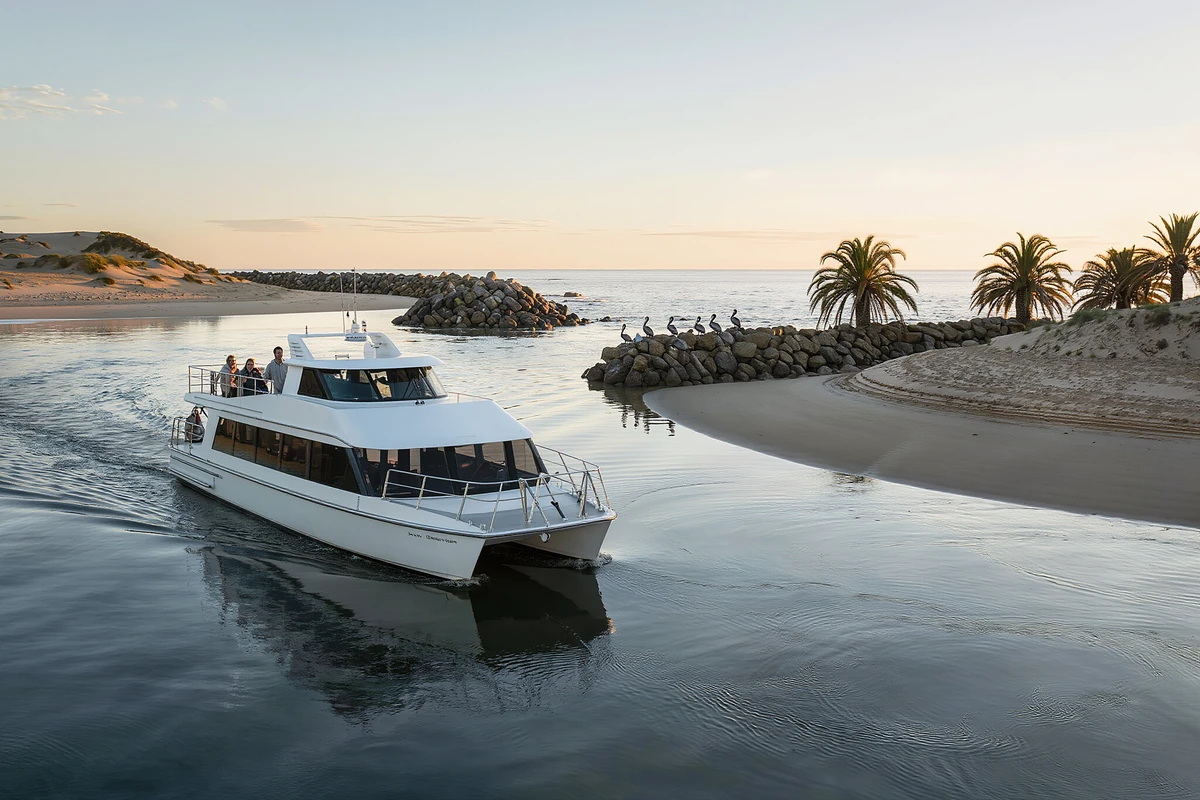
The cruise departs from the jetty on Fawcett Street in Ballina, a relaxed river town at the mouth of the Richmond River about 30 minutes' drive south of Byron Bay. Ballina grew up in the nineteenth century as a timber and shipping port, and its waterfront still has the feel of a working harbour, with fishing boats, pelicans on the pylons and the long rock breakwaters that guide vessels through the river mouth. Many visitors searching for Ballina whale watching discover that this is the most sheltered departure point on this part of the coast.
Plan to arrive at the jetty about 15 minutes before the 10:00 departure. The first part of the trip is calm, following the river past the town and out between the breakwaters into the open Pacific. It is a gentle introduction for anyone nervous about boats, and the marine biologist uses these minutes for the safety briefing and an outline of what the morning may bring.
The coastline between Ballina and Byron Bay
Once outside the river mouth the vessel turns north along a coast of long golden beaches, low headlands and the green ridge of the hinterland behind. From the water you see Lennox Head, Broken Head and the curve of Tallow Beach, and on a clear day the lighthouse on Cape Byron stands out well before you reach it. This stretch of the New South Wales north coast is one of the best places in the country to see whales from a boat, because the continental shelf comes close to shore and the migration route runs within a few kilometres of the beaches.
The biologist watches for blows on the horizon while you scan the water, and dolphins frequently ride the bow wave along the way. Seabirds such as gannets and shearwaters follow the bait schools, and in the right season sea turtles surface near the boat. The crossing to the marine park takes well under an hour.
Cape Byron Marine Park and the humpback whales
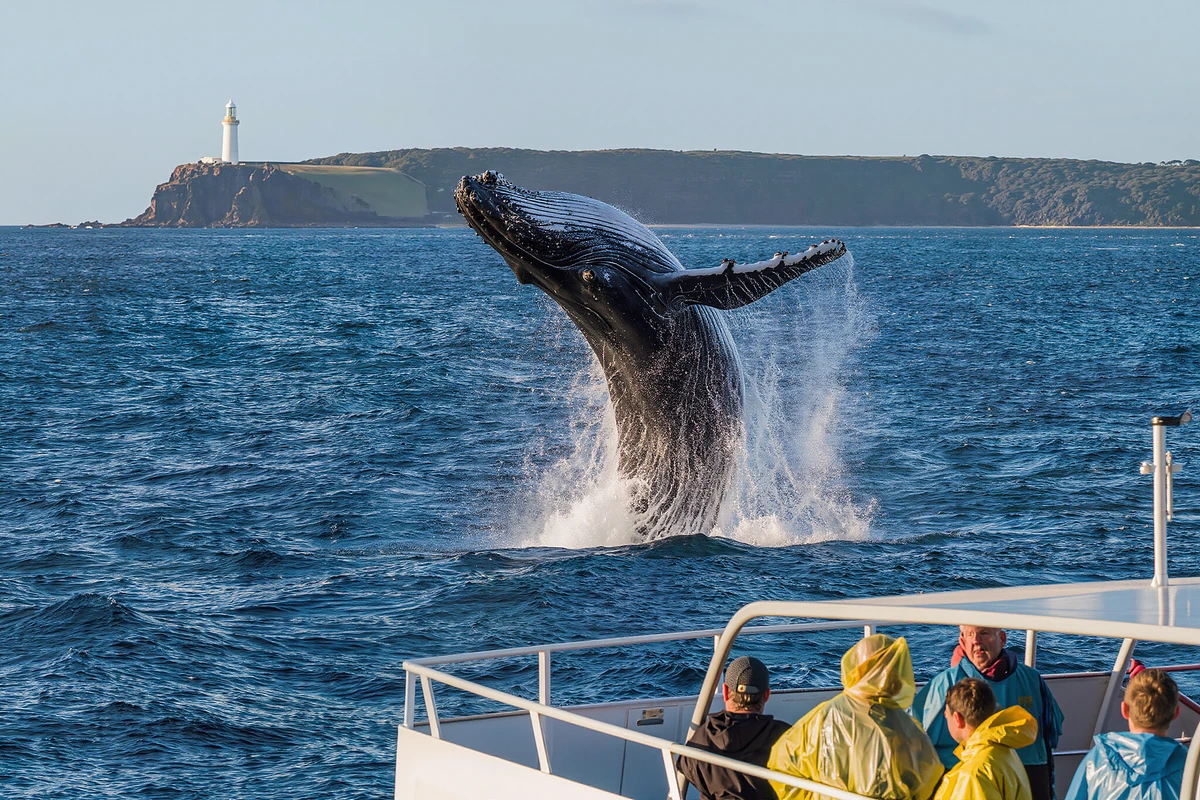
Cape Byron Marine Park protects the waters around the easternmost point of mainland Australia, from Brunswick Heads in the north to Lennox Head in the south. Its reefs, sandy bottoms and rocky headlands support an unusual mix of tropical and temperate species, and every year between June and November humpback whales migrate past the cape in both directions: north to the warm breeding waters in the early months and south with newborn calves from September onwards. This is the heart of the Byron Bay whale watching cruise, and the captain slows to an idle whenever whales are near so that the boat drifts respectfully alongside them.
You may see tail slaps, pectoral fin waves, spy-hopping and the full breach that lifts most of a whale out of the water. The biologist explains the behaviour as it happens and answers questions, which is what makes this trip more than a sightseeing cruise. Whale sighting is guaranteed: if none are seen, you may join another cruise.
Cape Byron and the lighthouse from the sea
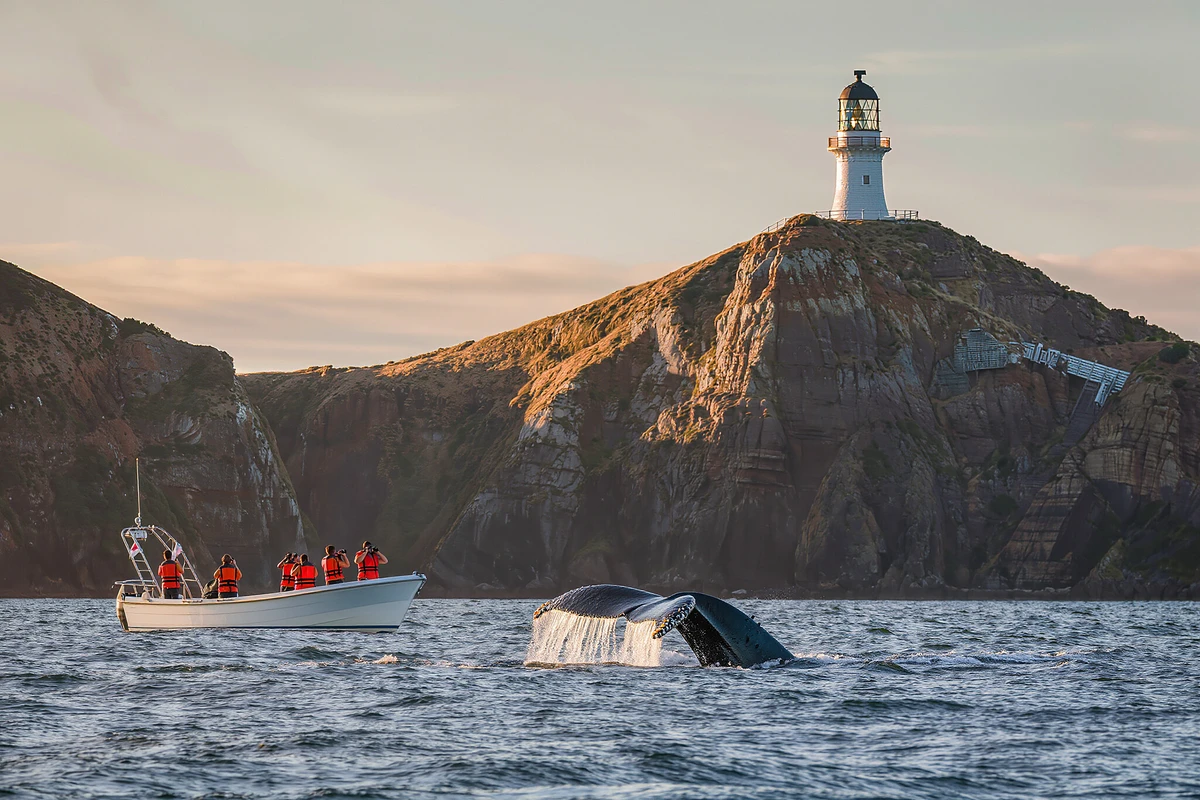
Cape Byron itself rises to a grassy headland crowned by the white Cape Byron Lighthouse, completed in 1901 and still one of the most photographed buildings on the Australian coast. On land it is reached by a walking track from Byron Bay, but from the water you see it as sailors have for more than a century: the headland, the lighthouse and the sweep of Wategos Beach and The Pass below it. For many travellers wondering whether Byron Bay is worth visiting, this view from a boat is the clearest answer.
Because the lighthouse marks the whale-watching grounds, you usually spend the middle part of the cruise within sight of it. The biologist points out the lookout on the cape where land-based observers count whales each season, and explains why the deep water close to the point draws the animals so near to shore.
Byron Bay as a base for the cruise
Byron Bay is the best-known town on the New South Wales north coast, a former whaling and dairy settlement that has become a destination for beaches, surf, markets and the hinterland of rainforest and waterfalls behind it. Most visitors stay in the town or along the beaches to the north and south, and the drive to Ballina for this cruise takes about 30 minutes along the coast road or the highway. There is no hotel pickup, so a hire car, taxi or ride-share is the usual way to reach the jetty.
If you have a full day, the whale watching cruise pairs naturally with an afternoon at the Cape Byron lighthouse or a swim at Main Beach. The best time to visit Byron Bay for whales is the migration season from June to November; the sea is generally calmest in the mornings, which is why the cruise departs at 10:00.
Itinerary
- Check-in at the Fawcett Street jetty, Ballina (09:45)Arrive about 15 minutes before departure, show your booking and meet the crew and marine biologist at the jetty on the Richmond River.
- Departure down the Richmond River (10:00)The vessel leaves the jetty, passes the town waterfront and heads out between the breakwaters while the safety briefing is given and ponchos are handed out.
- Cruise north along the coastAbout 30 to 40 minutes heading north past Lennox Head and Broken Head, scanning for blows and often joined by dolphins along the way.
- Whale watching in Cape Byron Marine ParkAround an hour drifting near the whales below Cape Byron, with the marine biologist explaining each behaviour and helping you spot breaches and tail slaps.
- Return to Ballina (about 12:30)The boat runs back south along the coast and up the river to the same jetty; photos taken during the trip are shared online afterwards.
What's included
- 2.5-hour whale-watching cruise on a modern eco-friendly vessel
- Qualified marine biologist guide
- Whale sighting guarantee (another cruise if no whales are seen)
- Life jackets and waterproof ponchos
- Photos of your trip shared online after the cruise
Not included
- Hotel pickup and drop-off
- Food and drinks
Is this right for you?
Great for
- Nature and wildlife lovers
- Anyone who wants to see it from the water
- A half-day plan — about 2.5 hours
- Travellers who want a proven choice — rated 4.8/5 by past travellers
Think twice if
- You want a private tour — this one is shared with other travellers
- You get seasick easily
Not suitable for
- Children under 3 years
- Pregnant women
- People with back or neck problems
- People prone to severe seasickness
Meeting point
There is no hotel pickup. Make your own way to the jetty on Fawcett Street in Ballina, on the Richmond River waterfront close to the town centre and about 30 minutes' drive south of Byron Bay. Please arrive 15 minutes before the 10:00 departure so the crew can check you in and fit life jackets; the cruise returns to the same jetty about 2.5 hours later.
Important information
- The cruise runs only during the humpback whale season, roughly June to November, and is weather dependent
- Bring a warm, windproof layer, sunglasses, a hat and sunscreen; it is cooler on the water than on land
- Waterproof ponchos and life jackets are provided on board
- No food or drinks are included; bring water and snacks
- Take seasickness tablets before departure if you are prone to motion sickness
- Wear flat, non-slip shoes and keep cameras and phones secured with a strap
- Whale sighting is guaranteed; if no whales are seen you may join another cruise
- Children must be accompanied by an adult at all times
Good to know
Frequently Asked Questions
Straight answers to what travellers ask us most, before they book.
Is this a shared or a private experience?
It is a shared cruise. You travel with other passengers on the same vessel, with the marine biologist and crew available to everyone on board.
How long does the Byron Bay whale watching cruise take?
About 2.5 hours from departure to return, including the run from Ballina up the coast to Cape Byron Marine Park and back.
Is hotel pickup included?
No. You meet the crew at the jetty on Fawcett Street in Ballina. Byron Bay is about 30 minutes away by car.
What is included?
The cruise on a modern eco-friendly vessel, a qualified marine biologist guide, life jackets, waterproof ponchos, the whale sighting guarantee and photos of the trip shared online afterwards. Food and drinks are not included.
Is the price per person or per group?
It is per person. The booking panel on this page shows the current price for each traveller type.
When is the best time to see whales in Byron Bay?
The season runs roughly from June to November. The northbound migration peaks in June and July, and from September to November the whales return south, often with calves that spend more time on the surface.
What happens if we do not see any whales?
Sightings are guaranteed. If no whales are seen on your cruise, you may join another cruise to try again.
Is the cruise suitable for children or for reduced mobility?
Children aged 3 and over are welcome with an adult. The cruise is not recommended for pregnant women or anyone with back or neck problems, and boarding involves steps, so please tell us about mobility needs before you book.
What should I bring?
A windproof jacket, sunglasses, hat, sunscreen, water, snacks and a camera. Ponchos and life jackets are supplied.
What happens in bad weather?
The cruise is weather dependent. If the sea is too rough, the departure is moved to another day or time and we let you know as early as possible.
Do I need a car to get to Ballina?
A hire car, taxi or ride-share is the simplest way from Byron Bay; the drive is about 30 minutes and there is parking near the jetty.
How do I book and confirm?
Choose your date in the booking panel and complete the request; our team confirms your booking on WhatsApp within minutes, and you receive the meeting details by email.
More in Byron Bay

Getting to & around Byron Bay
Popular across Australia
-
-
-
-

-
-