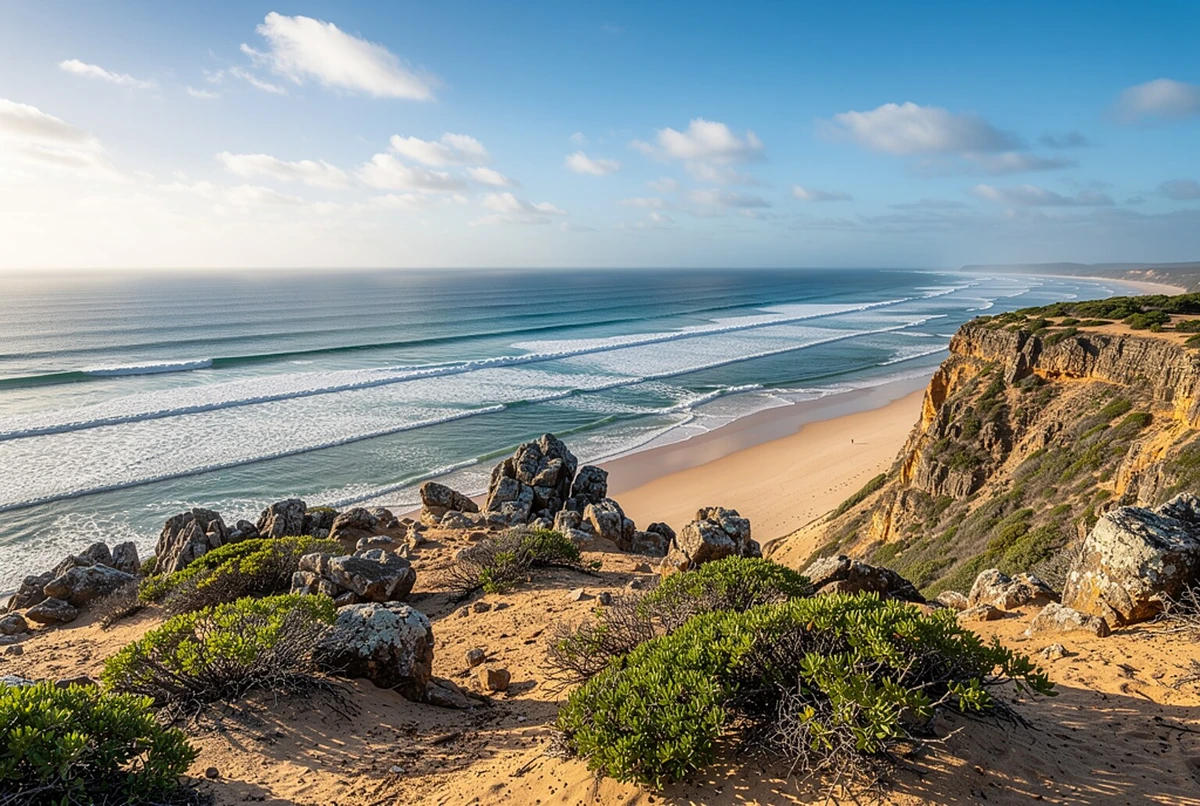
Byron Bay Julian Rocks Snorkelling Tour
- DurationAbout 2.5 hours
- Daily
- Group
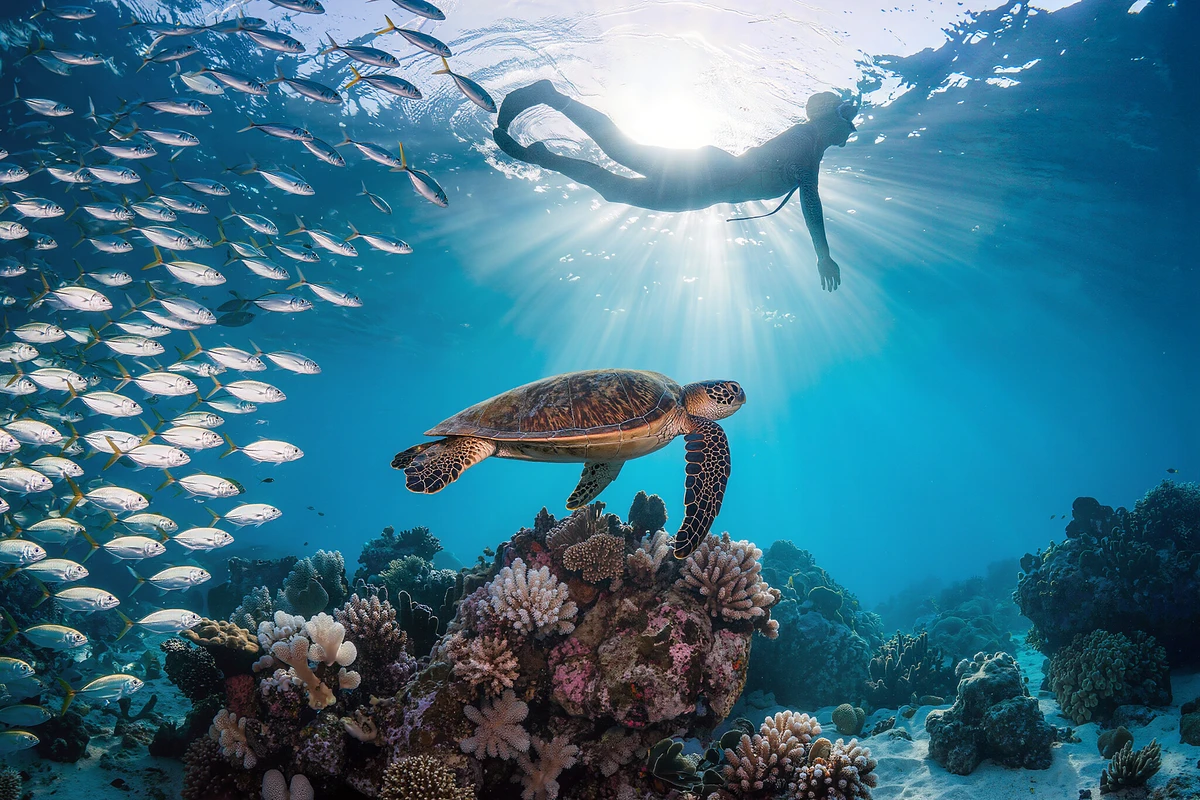
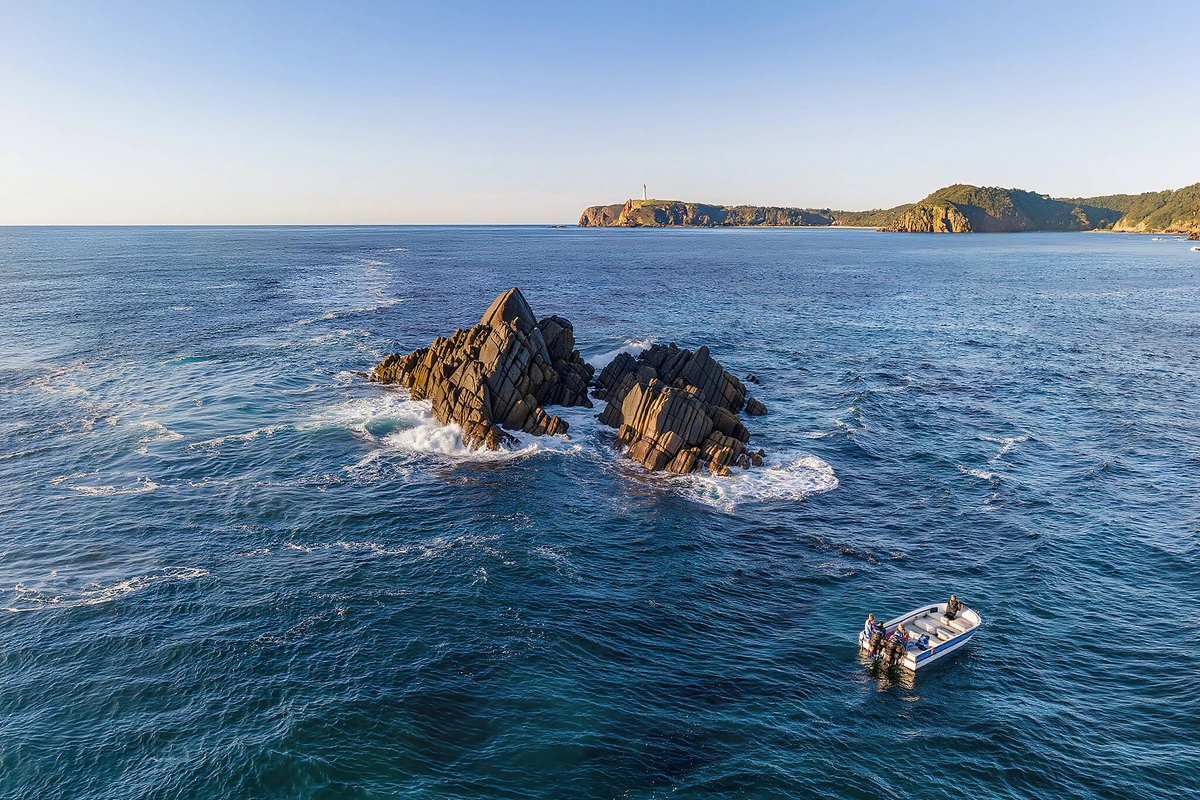
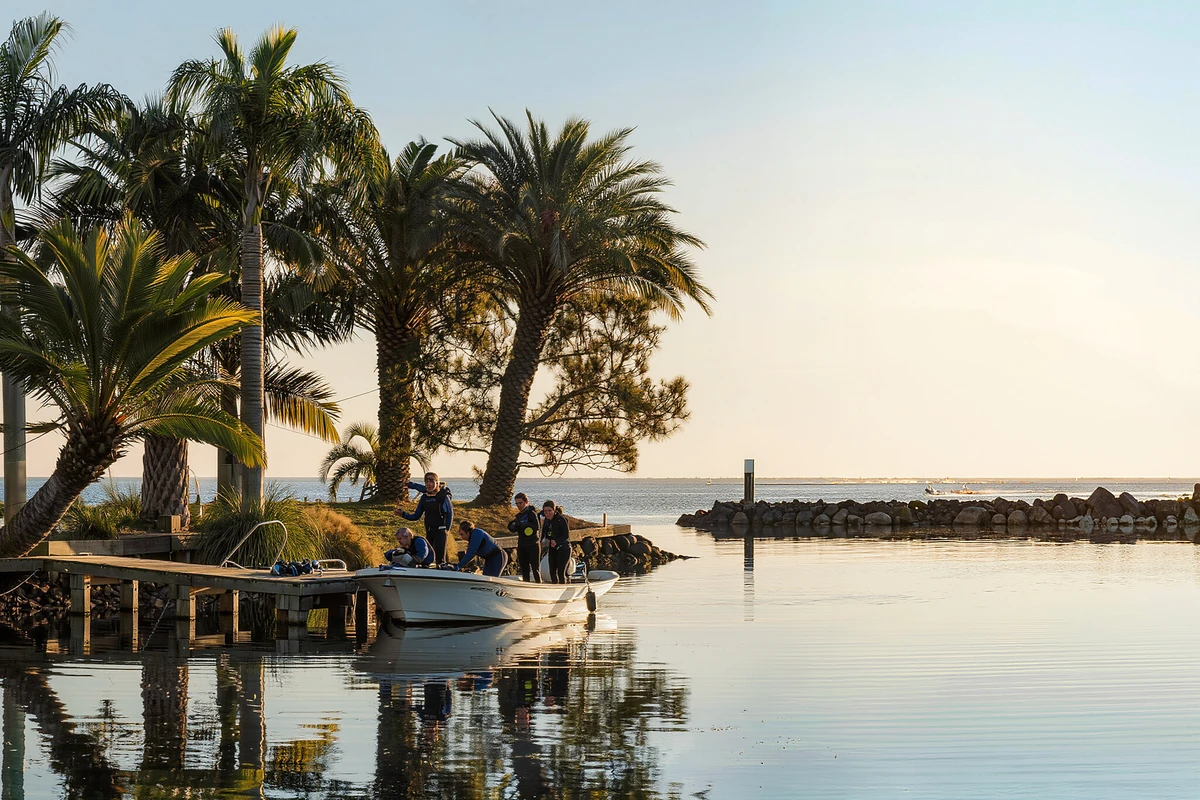
Some images are AI-generated for illustration. While we confirm your booking, just ask and we will send you the original photos.
- Fair, honest prices
- Real people, not bots
- Confirm, then pay
- Secure payment

Overview
This Julian Rocks snorkelling tour takes you by boat to the marine sanctuary off Byron Bay known to the Bundjalung people as Nuthungulli, a cluster of rocky islets where warm tropical currents meet cooler southern water and marine life gathers in remarkable numbers. You depart from the harbour at Brunswick Heads, a short drive north of Byron Bay, with a marine biologist as your guide, and spend the session snorkelling and freediving over the reef with green and loggerhead turtles, eagle and manta rays, harmless leopard sharks in summer and clouds of fish. Mask, fins and wetsuit are provided. It is a shared small-group trip of about 2.5 hours, suitable for confident swimmers including older children; there is no hotel pickup.
Highlights
- Snorkel the Julian Rocks sanctuary zone, the most famous dive site in Byron Bay
- Turtles on almost every trip: green, loggerhead and hawksbill
- Harmless leopard sharks and manta rays in summer, grey nurse sharks in winter
- A marine biologist guide who explains what you are seeing in the water
- Boat ride from the river harbour at Brunswick Heads along the coast
- Mask, fins and wetsuit provided; freediving welcome for the experienced
- Three departures a day, from early morning to lunchtime
- Protected sanctuary with no fishing, so fish life is dense and unafraid
Full Description
Brunswick Heads: the harbour where the boat departs
Brunswick Heads is a quiet river town about 15 minutes north of Byron Bay, where the Brunswick River meets the sea between a long surf beach and a sheltered estuary lined with pelicans and fishing boats. The snorkelling boat leaves from the harbour at 43 Harbour Way, on the river a short walk from the town's main street. There is parking nearby and a bus from Byron Bay, but a taxi or car is the simplest way to arrive for the early departures.
You check in at the harbour, sign the paperwork and are fitted with a wetsuit, mask and fins before boarding. The guide gives a briefing on the boat about the site, the animals you are likely to meet and how to behave around them, especially the rule of never touching or chasing turtles and rays. The departure through the river mouth is the start of a scenic ride down the coast.
The boat ride along the coast to Julian Rocks
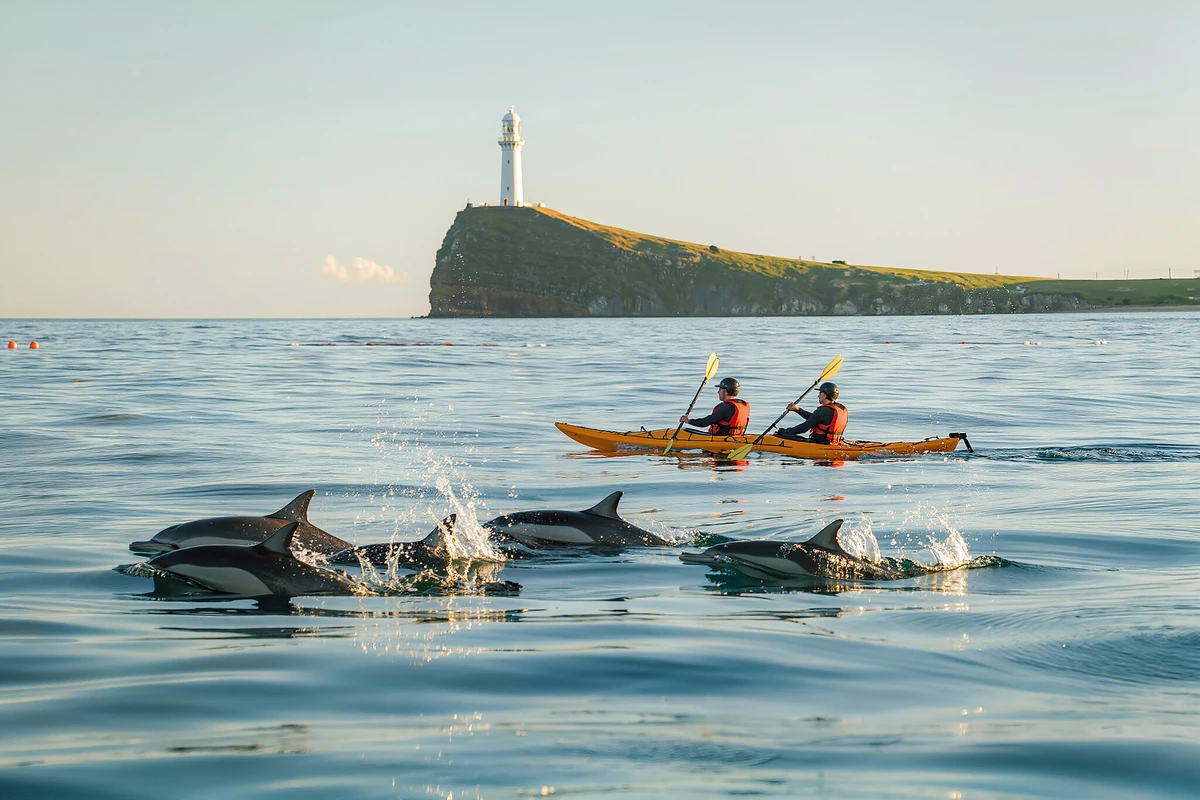
From the river mouth the boat turns south and runs along the coast for about 20 to 25 minutes, with the beaches of Brunswick Heads and Byron Bay on one side and the open Pacific on the other. Ahead, the forested bulk of Cape Byron and its lighthouse grow larger, and Julian Rocks appear as a group of dark islets about 2.5 kilometres offshore. Dolphins often ride the bow wave, and from June to November humpback whales pass this stretch of water.
The crossing can be bumpy on days with swell, so take seasickness tablets beforehand if you are prone to it; the ride is short and the water at the rocks is usually calmer on the sheltered side. The boat moors at the sanctuary and the guide checks conditions before everyone goes in. The same ride brings you back to Brunswick Heads at the end of the session.
Julian Rocks, Nuthungulli: the marine sanctuary
Julian Rocks are the eroded remains of an ancient volcanic flow, standing in the sea off Cape Byron and protected as a sanctuary zone within Cape Byron Marine Park, with no fishing permitted. To the Bundjalung people the rocks are Nuthungulli, a place of cultural significance long before the first divers arrived. What makes the site exceptional is its position at the meeting point of the warm East Australian Current and cooler southern water, so tropical and temperate species share the same reef.
Below the surface the rocks drop into gutters, boulders and sandy patches at depths of 5 to 20 metres, with the shallow areas ideal for snorkelling. Visibility is often 10 to 20 metres, best in the cooler months. Snorkelling Julian Rocks is consistently ranked among the best marine experiences in Australia, and the sanctuary status means the fish are dense and unafraid.
Turtles, rays and sharks: what you see through the season
Green, loggerhead and hawksbill turtles live around the rocks all year and are seen on almost every tour, grazing on the reef or rising to breathe beside the snorkellers. Eagle rays and bull rays glide over the sand, wobbegong sharks lie camouflaged on the bottom, and schools of kingfish, trevally and sweetlip move through the gutters. The marine biologist guide identifies species as you go and explains their behaviour back on the boat.
The seasons change the cast. From about December to May the water is warmest and harmless leopard sharks, spotted bottom-dwellers up to 2 metres long, rest on the sand, while manta rays sweep through in summer. From May to October the cooler water brings grey nurse sharks, which look fierce but are placid and stay deeper, and visibility is at its clearest. Whales pass the site from June to November.
Snorkelling and freediving with a marine biologist
The session is guided throughout: the guide leads a loop around the sheltered side of the rocks, points out animals, keeps the group together and helps anyone who wants a hand with mask or fins. Experienced freedivers are welcome to dive down along the boulders, while beginners stay on the surface in the clear water; the wetsuit provides warmth and buoyancy. Expect roughly an hour in the water, depending on conditions.
Children who are confident swimmers and comfortable in open water can join, with an adult beside them; the guide will advise on the day if the swell is too much. Bring swimwear, a towel and sunscreen, and leave valuables behind. If you are wondering whether Julian Rocks is worth it for a snorkeller rather than a diver, the answer is yes: the turtles and rays are mostly in the shallows, and the biologist's commentary makes the trip.
Itinerary
- Check-in at Brunswick Heads harbour, 43 Harbour WayArrive 30 minutes before departure, sign in and get fitted with your wetsuit, mask and fins.
- Briefing and boardingThe marine biologist guide explains the site, the animals and the rules of the sanctuary before the boat leaves the river mouth.
- Boat ride to Julian RocksAbout 20 to 25 minutes south along the coast with Cape Byron ahead, watching for dolphins and whales in season.
- Guided snorkelling at the sanctuaryRoughly an hour in the water over the sheltered side of the rocks with turtles, rays and reef fish, with freediving for those who want it.
- Return to Brunswick HeadsThe ride back along the coast, with the guide recapping what you saw; about 2.5 hours in total.
What's included
- Boat transfer from Brunswick Heads to Julian Rocks and back
- Marine biologist guide
- Guided snorkelling session over the sanctuary reef
- Mask, fins and wetsuit
Not included
- Hotel pickup and drop-off
- Food and drinks
- Towel and swimwear
Is this right for you?
Great for
- Anyone who wants to see it from the water
Think twice if
- You want a private tour — this one is shared with other travellers
- You get seasick easily
Not suitable for
- Non-swimmers or people not confident in open water
- Pregnant women
- People with heart or respiratory conditions affected by exertion in cold water
- Children under 13 unless confident swimmers accompanied by an adult
Meeting point
There is no hotel pickup. Meet at the harbour at 43 Harbour Way, Brunswick Heads, on the river about 15 minutes' drive north of Byron Bay; arrive 30 minutes before your departure time to sign in and be fitted with gear. Departures are at 07:30, 10:00 and 12:30. There is parking near the harbour, and the boat returns to the same spot after about 2.5 hours. Tell us if you need advice on getting there without a car.
Important information
- You must be a confident swimmer comfortable in open ocean water; this is a boat-based snorkel, not a beach
- Bring swimwear to wear under the wetsuit, a towel, sunscreen and a warm layer for after the swim
- Mask, fins and wetsuit are provided; bring your own snorkel if you prefer
- Take seasickness tablets before departure if you are prone to it; the crossing can be bumpy
- Never touch or chase turtles, rays or sharks; the guide explains sanctuary rules on board
- Visibility and conditions vary with swell and wind; the guide decides on the day whether the site is safe
- Arrive 30 minutes before departure; the boat cannot wait for late arrivals
- Food and drinks are not included; cafés are a short walk from the harbour
Good to know
Frequently Asked Questions
Straight answers to what travellers ask us most, before they book.
Is this a shared or a private experience?
It is a shared small-group boat trip with a marine biologist guide; the group snorkels together around the sheltered side of the rocks.
How long does the tour take?
About 2.5 hours from check-in, including the boat ride each way and roughly an hour in the water, depending on conditions.
Is hotel pickup included?
No. You make your own way to the harbour at 43 Harbour Way in Brunswick Heads, about 15 minutes by car north of Byron Bay.
What is included?
The boat transfer from Brunswick Heads to Julian Rocks and back, a marine biologist guide, the guided snorkelling session, and a mask, fins and wetsuit. Food, drinks, towels and transfers are not included.
Is the price per person or per group?
Per person. The booking panel on this page shows the current price.
Will I see turtles and sharks?
Turtles are seen on almost every trip. Leopard sharks and manta rays appear in the warmer months from about December to May, and grey nurse sharks in the cooler months. Wild animals are never guaranteed, but Julian Rocks is one of the most reliable sites in Australia.
Are the sharks dangerous?
No. Leopard sharks are harmless bottom-dwellers that eat shellfish, wobbegongs lie still on the bottom, and grey nurse sharks are placid and stay deeper; the guide explains how to behave around them.
Is it suitable for children or people with reduced mobility?
Children who are confident swimmers in open water can join with an adult beside them. The trip involves boarding a boat and entering the sea from it, so it is not suitable for people with reduced mobility.
What should I bring?
Swimwear to wear under the wetsuit, a towel, sunscreen, a warm layer for afterwards and seasickness tablets if needed. Leave valuables at your accommodation.
When is the best time of year to snorkel Julian Rocks?
Summer, from December to May, has the warmest water with leopard sharks and manta rays; winter, from June to October, has the clearest visibility and grey nurse sharks, with whales passing offshore. Early departures usually have the calmest sea.
What happens in bad weather?
The trip depends on swell and wind. If the guide judges the site unsafe, we move your booking to another departure or date and confirm it with you on WhatsApp.
How do I book and confirm?
Choose your date and departure time on this page and send the booking; our team confirms it on WhatsApp within minutes with the harbour meeting details.
More in Byron Bay
Getting to & around Byron Bay
Popular across Australia
-

-
-
-
-
-