
Uluru, Kata Tjuta and Kings Canyon 3-Day Camping Tour
- Duration3 days and 2 nights
- Daily
- Group
- Pickup available
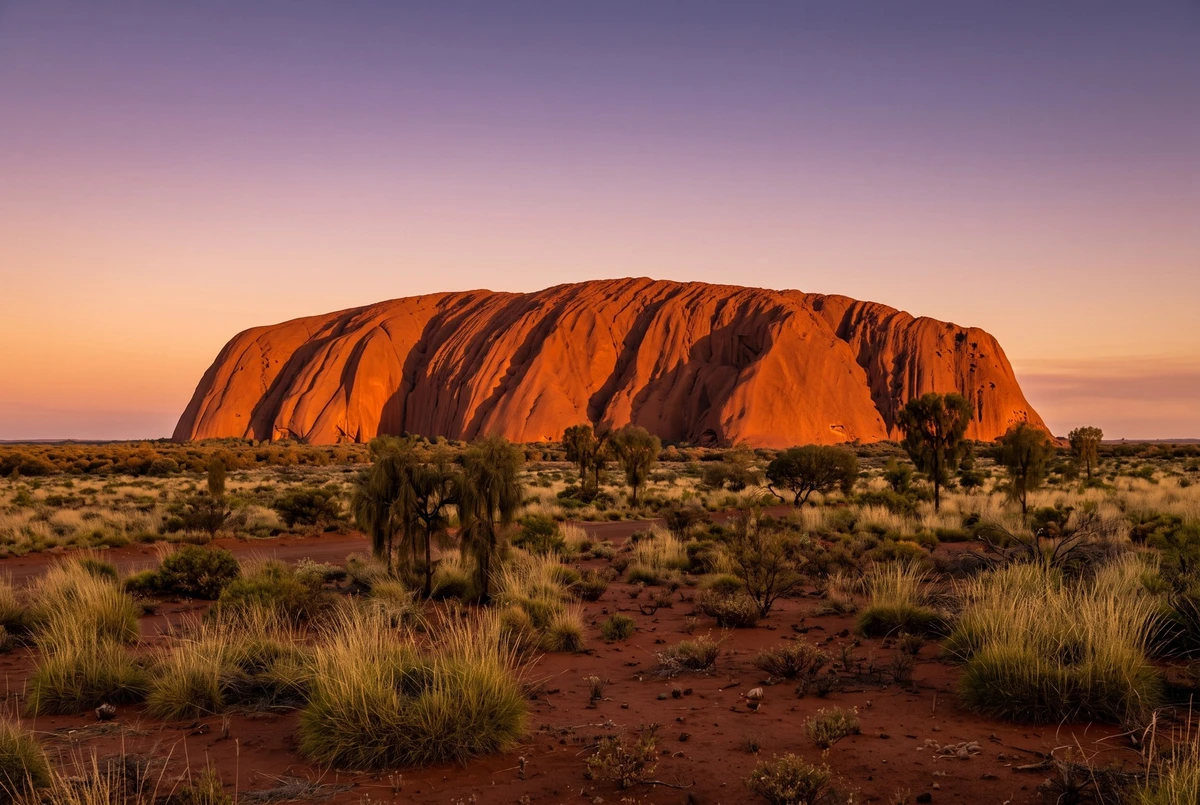
Some images are AI-generated for illustration. While we confirm your booking, just ask and we will send you the original photos.
- Fair, honest prices
- Real people, not bots
- Confirm, then pay
- Secure payment

Overview
This 3-day outback camping tour covers the three great sights of Australia's Red Centre: Uluru, Kata Tjuta and Kings Canyon. Travelling in an all-terrain vehicle with an expert guide, you hike between the domes of Kata Tjuta, watch both sunset and sunrise over Uluru, complete the full Uluru Base Walk, visit the Cultural Centre and explore Kings Canyon on its famous Rim Walk. Nights are spent at bush camps in traditional Australian swags, with shared meals by the campfire. The default option starts and ends in Yulara with a third night at camp; other options start or finish in Alice Springs. It is a shared small-group adventure for active travellers and families with children aged 8 and over. Park fees, meals and camping gear are included.
Highlights
- Watch the sun set and rise over Uluru
- Complete the full Uluru Base Walk and visit an important cultural site
- Guided afternoon hike between the domes of Kata Tjuta
- Kings Canyon Rim Walk with the Lost City, Garden of Eden and Amphitheatre
- Sleep under the stars in traditional swags at bush camps
- All meals, national park fees and camping gear included
- Options from Yulara or Alice Springs, with 2 or 3 nights
Full Description
Kata Tjuta, the many heads
Your first afternoon takes you to Kata Tjuta, a group of 36 giant red conglomerate domes about 30 km west of Uluru. The name means many heads in the local Anangu language, and the tallest dome rises higher than Uluru itself. The domes are sacred under Anangu law, so some areas are closed to visitors and your guide explains which stories can be shared.
On a guided afternoon hike of about two hours you walk between the domes, where sheer walls rise on both sides and the colours shift from deep red to purple as the light changes. The contrast with Uluru is striking: where the rock is a single monolith, Kata Tjuta is a cluster of rounded towers and narrow gorges. It is one of the best walks in the Uluru-Kata Tjuta National Park.
Uluru at sunset and sunrise
Uluru rises about 348 metres above the desert plain and is the spiritual heart of Anangu country. The national park around it is listed by UNESCO for both its natural and cultural values. On day 1 you finish at the sunset viewing area with a light snack, watching the rock glow orange, red and finally deep purple as the sun goes down behind you.
Day 2 begins in the dark so you can watch sunrise over Uluru, one of the most memorable moments of any Red Centre trip. As the first light hits the sandstone, its surface turns from shadow to fiery red within minutes. People often ask about the best time to visit Uluru; cooler months from April to September make walking easier, while summer brings dramatic storms and green desert after rain.
The Uluru Base Walk and Cultural Centre
After sunrise your guide takes you to a significant cultural site at the base of the rock to learn about Anangu rock art and creation stories, then you complete the full Uluru Base Walk at your own pace. The loop is about 10 km and passes waterholes, caves, ancient paintings and sacred sites where photography is not allowed. Climbing Uluru has been closed since 2019 out of respect for its traditional owners.
After lunch you visit the Cultural Centre near the base of the rock, where exhibitions, artworks and stories from First Nations people of the Western and Central Deserts explain the Tjukurpa, the law and creation knowledge that guides Anangu life. It gives real meaning to everything you have seen. In the afternoon you drive about three hours to your bush camp near Watarrka National Park.
Kings Canyon Rim Walk in Watarrka National Park
Day 3 is dedicated to Kings Canyon, a massive gorge in Watarrka National Park where sandstone walls more than 100 metres high drop to a shady creek bed. The guided Rim Walk begins with a steep climb, then follows the top of the canyon for around three hours with breathtaking views over the sheer cliffs and the desert beyond.
Along the way you explore the Lost City, a maze of weathered beehive domes, descend into the Garden of Eden, a permanent waterhole fringed with ferns and ancient cycads, and look across the great Amphitheatre. It is often called one of the best day walks in Australia. Bring at least three litres of water and good shoes. After lunch the tour begins the journey back towards Yulara or on to Alice Springs.
Swag nights, Yulara and Alice Springs
Nights on this tour are spent at bush camps, sleeping in swags, the traditional canvas bedrolls of the Australian outback with a mattress and sleeping bag. Facilities are basic and shared, and evenings are spent around the campfire with a shared dinner under one of the clearest night skies on earth. Winter nights can be very cold, so pack warm clothing.
Yulara is the resort town that serves Uluru-Kata Tjuta National Park, with the airport nearby, while Alice Springs lies about four and a half hours' drive to the east. On the 3-night option you have a free evening in Yulara on day 3 for optional activities at your own expense or one last Uluru sunset, then a relaxed breakfast before your transfer to Yulara accommodation or the airport.
Itinerary
- Day 1: PickupFrom Yulara or Uluru Airport between 13:40 and 14:00, or from Alice Springs at about 06:00 with a 4.5-hour drive and early lunch.
- Day 1: Kata TjutaGuided afternoon hike between the domes, about 2 hours.
- Day 1: Uluru sunsetLight snack while the rock changes colour, about 1 hour, then dinner and the night at camp.
- Day 2: Uluru sunrise and Base WalkSunrise viewing, a cultural site with rock art and the full Base Walk, about 2 hours.
- Day 2: Cultural CentreArtworks and stories of the Western and Central Desert peoples, about 30 minutes.
- Day 2: Drive to WatarrkaAbout 3 hours to the bush camp near Kings Canyon for dinner and a night in swags.
- Day 3: Kings Canyon Rim WalkGuided hike past the Lost City, Garden of Eden and Amphitheatre, about 3 hours.
- Day 3: Return journeyAbout 4 hours by road to Yulara (late afternoon) or Alice Springs (about 18:00).
- Day 4 (3-night options): YularaBreakfast at camp and transfer to Yulara accommodation or the airport, finishing at about 09:00.
What's included
- 2 nights camping in a traditional swag with sleeping bag and basic shared facilities
- All meals except lunch on day 1
- Drop-off in Alice Springs on day 3
- Expert English-speaking outback guide
- Multilingual audio guide via mobile app (French, Spanish, Japanese, Korean, German)
- All-terrain vehicle
- Uluru-Kata Tjuta and Watarrka national park entry fees
- Guided walks at Uluru, Kata Tjuta and Kings Canyon
Not included
- Lunch on day 1 (eat before pickup; there are no food outlets at the airport)
- Pillow
- Personal items
- Optional activities
Is this right for you?
Great for
- Travellers without a car — hotel pickup is included
- Nature and wildlife lovers
- Travellers who want a proven choice — rated 4.8/5 by past travellers
Think twice if
- You prefer short outings — this takes 3 days
- You want a private tour — this one is shared with other travellers
- Walking is difficult for you — expect active parts
Not suitable for
- Children under 8 years
- People with mobility impairments
Meeting point
With the default Yulara option you are picked up between 13:40 and 14:00 from Yulara accommodation or Uluru (Ayers Rock) Airport; your flight must land before 13:45, and you should eat lunch before pickup because there are no food outlets at the airport. Options starting in Alice Springs pick you up at about 06:00 from your hotel or hostel there. Drop-off depends on the option: Alice Springs at about 18:00 on day 3, or Yulara at about 09:00 on day 4.
Important information
- Strict luggage limit of 15 kg: one small to medium soft bag or backpack plus a small daypack
- Bring sturdy walking shoes, a hat, sunscreen, insect repellent or a fly net and a 3-litre water bottle
- Bring warm clothing in winter, a torch, toiletries and a power bank (limited power at camp)
- A pillow is not supplied; bring a small travel pillow if you like
- Dietary requirements can be catered for with 48 hours' notice
- For Yulara departures, flights must land before 13:45 and lunch on day 1 is not included
- Some sacred sites at Uluru and Kata Tjuta must not be photographed; follow your guide's advice
Good to know
Frequently Asked Questions
Straight answers to what travellers ask us most, before they book.
Is this a shared or a private experience?
It is a shared small-group camping tour with an expert outback guide.
How long does the tour take?
Three days. The 2-night options end on day 3 in Alice Springs, and the 3-night options end at about 09:00 on day 4 in Yulara.
Is hotel pickup included?
Yes. Depending on your option, pickup is from Yulara accommodation or Uluru Airport, or from your hotel or hostel in Alice Springs.
What is included?
Camping in swags with sleeping bags, all meals (except lunch on day 1 for Yulara starts), the guide, an audio guide app, the all-terrain vehicle, park fees and guided walks.
Is the price per person or per group?
The price is per person. The booking panel on this page shows the current price of each option.
What is a swag?
A swag is a traditional Australian canvas bedroll with a built-in mattress. You sleep outdoors under the stars at the bush camp, with a sleeping bag provided.
Is it suitable for children or people with reduced mobility?
Children aged 8 and over are welcome. The tour is not suitable for younger children or people with mobility impairments because of the hikes and camping.
How hard is the Kings Canyon Rim Walk?
It starts with a steep climb, then follows the rim for about three hours over uneven rock. A reasonable fitness level, good shoes and plenty of water are needed.
What should I bring?
Walking shoes, hat, sunscreen, fly net or repellent, a 3-litre water bottle, a torch, warm clothes in winter and a power bank, all in a soft bag under 15 kg.
When is the best time to visit Uluru and Kings Canyon?
April to September brings mild days ideal for hiking, though nights are cold. Summer is very hot, so walks start early in the morning.
What happens in extreme heat or bad weather?
Your guide adjusts walk times for safety, and some trails close early on very hot days. The rest of the itinerary continues as planned.
How do I book and confirm?
Choose your option and date and send the booking with your flight or hotel details; our team confirms on WhatsApp within minutes.
More in Uluru
Popular across Australia
-
-
-
-
-
-