Coffee Farm Guided Tour in English Salento
- DurationAbout 1.5 hours
- Daily
- Group
Some images are AI-generated for illustration. While we confirm your booking, just ask and we will send you the original photos.
- Fair, honest prices
- Real people, not bots
- Confirm, then pay
- Secure payment

Overview
This coffee farm guided tour in English takes you behind the scenes of a traditional, sustainably certified farm in the green hills four kilometres from Salento, in the heart of Colombia's coffee region. In about an hour and a half the farm's guide walks you from the history of coffee and the species grown here through the plantations, where you pick ripe cherries like a local harvester, to the composting station, the processing plant with its hopper, pulper and drying beds, the threshing warehouse, the roasting room and finally a demonstration of the traditional cloth-strainer brew. It is a shared visit with several daily start times, ideal for travellers staying in Salento who want to understand what is really in their cup. Transport to the farm is not included.
Highlights
- Traditional family coffee farm with sustainable-production certifications
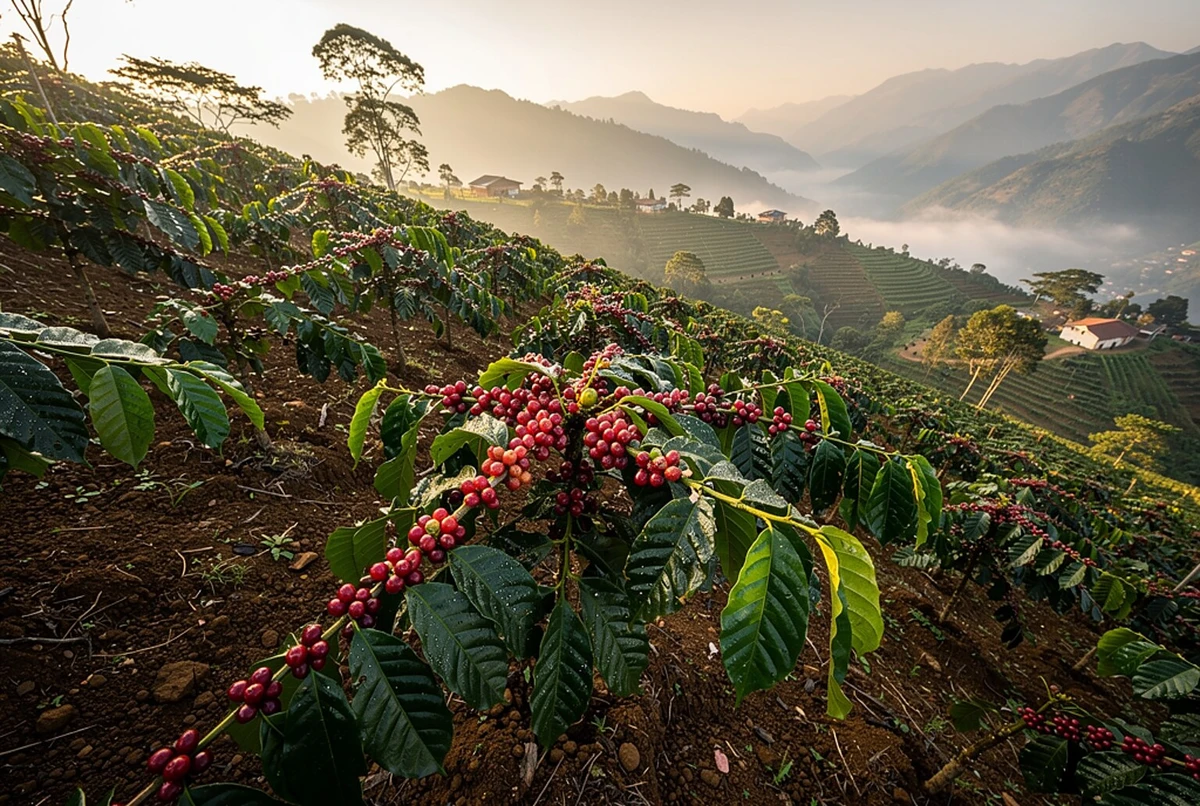
- Pick ripe coffee cherries yourself in the plantation
- See the full process: pulping, fermentation, mechanical and sun drying, threshing and roasting
- Learn the basics of a proper extraction and the traditional cloth-strainer brew
- Guided in English by the farm's own team
- Four daily start times to fit around a Cocora Valley morning or afternoon
- Exceptional scenery of the Quindío hills and the farm's own coffee house
- Short and easy: about ninety minutes on the farm
Full Description
The coffee farm near Salento
The farm lies about four kilometres from the main square of Salento, reached along a partly unpaved country road that winds between pastures and coffee slopes. It is a traditional working farm rather than a show garden, with certifications for sustainable production, and it opens its gates for guided visits in English at 09:00, 11:00, 13:00 and 16:00. The guide begins with the history of coffee in Colombia, the arabica species and varieties grown on the property, and how a seedling is planted and grows before it produces its first harvest after a few years.
Most visitors spend the full ninety minutes on the tour and then linger at the coffee house, which is open to the public and looks out over the plantations and the hills of the Quindío department. A Salento coffee farm tour is one of the most searched experiences in the region, and this farm is among the closest to town, so it fits easily into a day that also includes the Cocora Valley.
The plantation and the harvest
The walk through the gardens and coffee plantations is the hands-on part of the visit. You are given a basket and shown how to tell a ripe red cherry from a green one, then you pick like a true Colombian harvester along the rows of bushes shaded by banana and guamo trees. The guide explains why the coffee region's altitude, volcanic soil and two rainy seasons allow two harvests a year, and why hand-picking only the ripe fruit is the first step toward quality.
Next comes the composting and crop-fertilisation station, where the farm turns coffee pulp and plant waste into organic fertiliser, with a short explanation of sustainability and the birds, insects and plants that live among the coffee. This part of the tour is on gently sloping paths; the ground can be damp, so closed shoes are recommended, and insect repellent is the one thing the farm asks you to bring.
The processing plant and the warehouse
From the field the cherries go to the processing plant, and here the guide follows the same route the fruit takes: the hopper where the harvest is weighed and received, the pulper that strips the red skin from the beans, the fermentation and washing that remove the sticky mucilage, and the two ways of drying, mechanical dryers for wet days and the traditional sun-drying beds under a roof. You see and touch the beans at each stage, from wet parchment to dry.
The storage, threshing and marketing warehouse completes the picture: dry parchment coffee is stored, then threshed to remove the papery husk, graded and bagged for sale. The guide explains how the farm sells its coffee and what the labels on a bag really mean. Allow around half an hour for this section, which is sheltered and works in any weather.
Roasting and the traditional brew
The last stop is the roasting room, where the guide explains the types of roast, from light to dark, and why roasting is so important to quality: the same green bean can taste sweet and fruity or bitter and smoky depending on a few minutes in the drum. You smell the difference between freshly roasted batches and learn the basics of a proper extraction, meaning the right grind, water temperature and timing.
The visit ends with a traditional Colombian preparation in a cloth strainer and pot, the way coffee has been brewed in farm kitchens for generations. Food and drinks are not included in the tour, but the coffee house next door serves the farm's own coffee and snacks for anyone who wants to sit with a cup and the view before taking the jeep back to Salento.
Itinerary
- Arrival at the farmReach the farm about ten minutes before your start time; shared jeeps leave from the main square of Salento (not included).
- History and the coffee plantIntroduction to the history of coffee, the main species and how the plant is planted and grows, about fifteen minutes.
- Plantation walk and harvestWalk through the gardens and coffee rows and pick ripe cherries with a basket, around twenty-five minutes.
- Composting and sustainability stationHow pulp and plant waste become fertiliser, with notes on the farm's flora and fauna, about ten minutes.
- Processing plant and warehouseHopper, pulper, mechanical and traditional drying, then storage, threshing and marketing, about twenty-five minutes.
- Roasting and the traditional brewRoast types, extraction basics and a cloth-strainer preparation, about fifteen minutes; the coffee house is open afterwards.
What's included
- Guided tour of the farm in English
- Walk through the gardens and coffee plantations with hands-on picking
- Composting and fertilisation station
- Visit to the processing plant: hopper, pulper, mechanical and traditional drying
- Storage, threshing and marketing warehouse
- Explanation of roasting types, extraction basics and traditional brewing in a cloth strainer
Not included
- Transport to and from the farm
- Food and drinks
Is this right for you?
Great for
- Food lovers
- Travellers who want a proven choice — rated 4.8/5 by past travellers
Think twice if
- You want a private tour — this one is shared with other travellers
Meeting point
The tour starts at the farm itself, about four kilometres from the main square of Salento along a partly unpaved road; transport is not included. The easiest way is a shared jeep from the square (paid directly to the driver) or a taxi; a map link is sent with your confirmation. Please arrive about ten minutes before your chosen start time: 09:00, 11:00, 13:00 or 16:00.
Important information
- Transport to and from the farm is not included; shared jeeps leave from the main square of Salento
- The access road is a rural road that is not fully paved; allow a little extra time
- Bring insect repellent, closed comfortable shoes and a light rain jacket, as the coffee region is often wet
- Food and drinks are not included; the farm's coffee house sells coffee and snacks
- The tour is conducted in English; other languages are not available on this option
- Alcohol and drugs are not permitted on the farm
- Children are welcome; the walk is gentle but paths can be muddy
Good to know
Frequently Asked Questions
Straight answers to what travellers ask us most, before they book.
Is this a shared or a private experience?
It is a shared guided visit with other travellers at a fixed start time; the group walks together with the farm's guide.
How long does the tour take?
About an hour and a half on the farm, plus the short drive from Salento each way.
Is hotel pickup included?
No. The tour starts at the farm; you get there by shared jeep from the main square of Salento or by taxi at your own expense.
What is included?
The guided tour in English covering the plantation walk and harvest, the composting station, the processing plant, the warehouse, roasting and the traditional brew. Food, drinks and transport are not included.
Is the price per person or per group?
Per person; the booking panel on this page shows the current price of the option.
Is the tour suitable for children?
Yes, children enjoy picking the cherries; the paths are easy but can be muddy, so bring suitable shoes.
How do I get to the coffee farm from Salento?
Shared jeeps leave from the main square and reach the farm in about fifteen minutes along a partly unpaved road; a taxi is the alternative. We send a map link with your confirmation.
Can I buy coffee at the farm?
Yes, the farm has a coffee house open to the public where you can drink its coffee and buy bags to take with you.
What is the best time to visit?
Mornings are usually drier and clearer in the coffee region; the 09:00 and 11:00 starts combine well with an afternoon in the Cocora Valley, while 16:00 suits travellers who hiked the valley in the morning.
What happens if it rains?
The tour runs in light rain; the processing plant, warehouse and roasting room are under cover, so bring a rain jacket for the plantation walk.
Is the tour available in other languages?
This option is in English. Contact our team if you need another language and we will check what the farm can offer.
How do I book and confirm?
Select your date and start time on this page and send the booking; our team confirms on WhatsApp within minutes together with directions to the farm.