
Mbabane City Tour
- DurationAbout 2.5 hours
- Daily
- Group

Some images are AI-generated for illustration. While we confirm your booking, just ask and we will send you the original photos.
- Fair, honest prices
- Real people, not bots
- Confirm, then pay
- Secure payment

Overview
Get to know the capital of the Kingdom of Eswatini on this two-and-a-half-hour city tour that mixes walking and driving. You meet your local guide outside Mbabane City Council and start with a visit to local arts and crafts, before a guided walk around the town centre to learn about the city's origins, history, culture and way of life. Along the way you taste local and street food and visit a Swazi traditional pharmacy to discover how herbal medicine is still part of daily life. The tour ends with a drive through the city and a local township, showing how most residents really live. It suits curious travellers, couples and families with children aged four and over who enjoy culture, food and conversation.
Highlights
- Guided walk around the capital of the Kingdom of Eswatini
- Swazi arts and crafts: baskets, carvings and beadwork
- Visit to a Swazi traditional pharmacy
- Local and street food tasting
- Drive through the city and a local township
- Guide speaks English, French or Portuguese
- Compact tour of about two and a half hours
Full Description
Mbabane, the capital of Eswatini
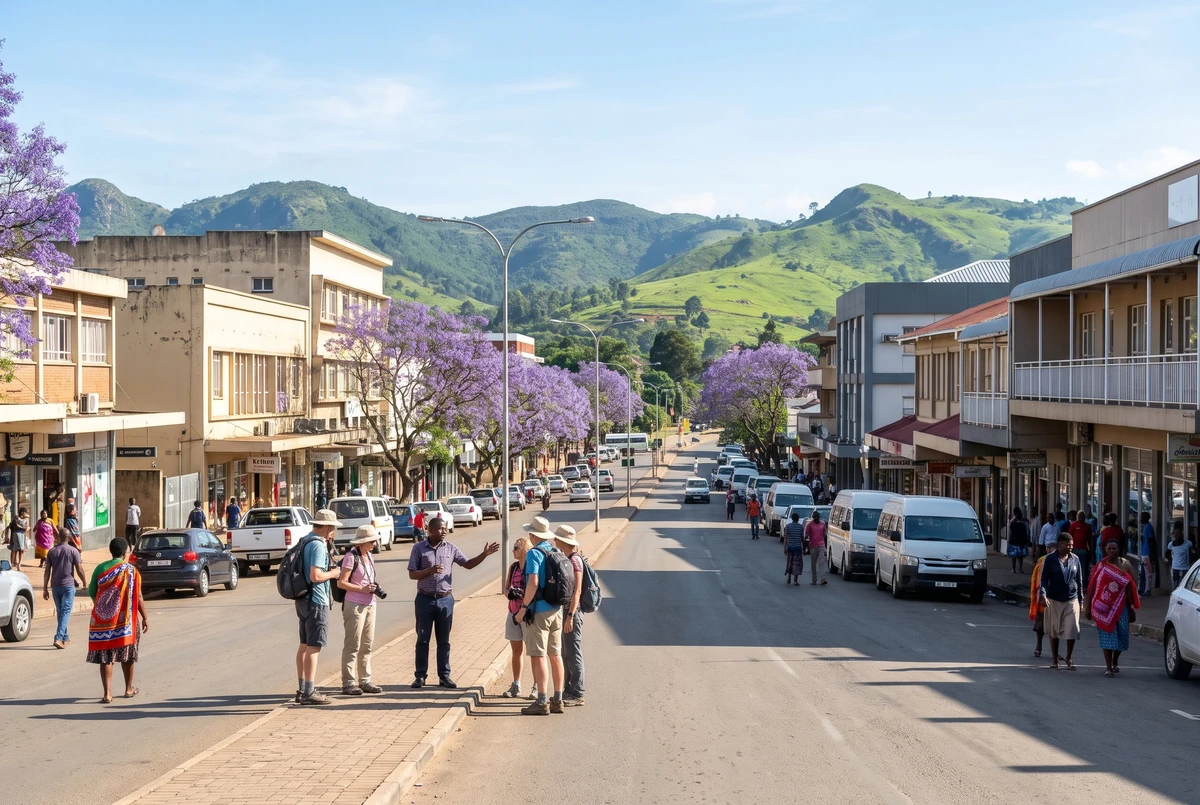
Mbabane is the capital city of the Kingdom of Eswatini, set in the green Dlangeni hills of the Hhohho region at an altitude of more than a thousand metres, which gives it a fresh, mild climate. The town grew at the start of the twentieth century around a colonial administrative post near the Mbabane River and became the seat of government, while the royal and legislative capital lies at Lobamba in the nearby Ezulwini Valley.
On this Mbabane city tour you walk through the town centre with your guide, who explains how the city was founded, how it has grown and what it means to live in one of Africa's last absolute monarchies, where Swazi traditions remain strong. You see the main streets, public buildings and everyday business of the capital. The walking part takes about an hour, so a moderate level of fitness and comfortable shoes are needed.
Swazi arts and crafts
The tour begins at the municipality of Mbabane with a visit to local arts and crafts, one of the best ways to understand Swazi culture. Eswatini is known across southern Africa for its handicrafts: baskets and bowls woven from colourful lutindzi grass and sisal, soapstone carvings, beadwork with traditional patterns, wooden sculptures, candles and handmade textiles, many of them produced by women's cooperatives in rural communities.
Your guide explains the meaning of the patterns and colours, how the pieces are made and how craft work supports families across the kingdom. You can meet makers and sellers and buy authentic souvenirs directly from them, so bring some cash in emalangeni or South African rand, which is also accepted in Eswatini. Remember to ask permission before taking photos of people at the stalls, as your guide will remind you.
Swazi traditional pharmacy and street food
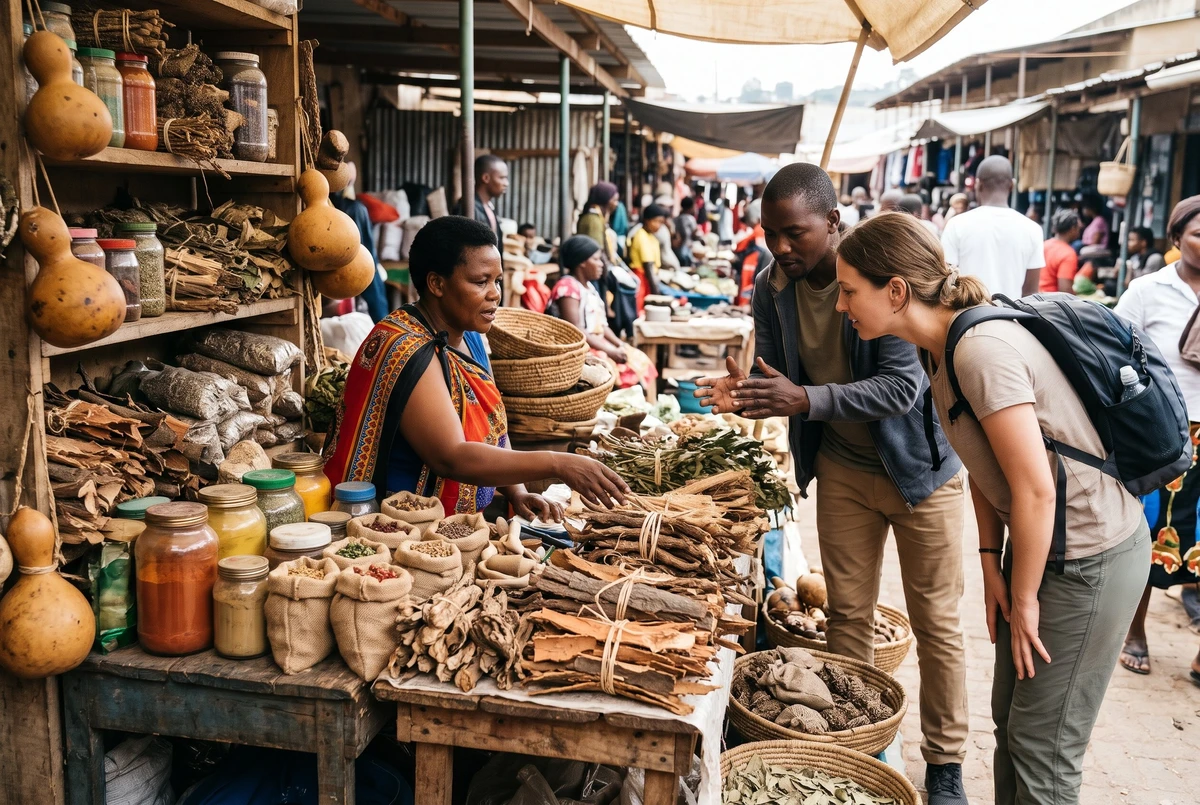
Traditional medicine is still an important part of life in Eswatini, and many people consult traditional healers alongside modern clinics. On this tour you visit a Swazi traditional pharmacy, where roots, bark, leaves, seeds and powders are sold for remedies passed down through generations. Your guide explains how the plants are gathered and prepared and the role of traditional healers in Swazi society, always with respect for local beliefs.
Food is the other highlight of the walk. You taste local and street food, from simple snacks sold on the pavements to traditional dishes based on maize, beans, vegetables and grilled meat, and learn how Swazi families eat every day and on special occasions. The tastings are part of the tour, but lunch is not included, so you can ask your guide for a good local place to eat afterwards.
City and township drive
After the walking tour, a vehicle takes you on a drive through the wider city, past residential neighbourhoods, schools, markets and viewpoints over the surrounding hills, so you can see how Mbabane spreads across its valleys. Your guide continues the commentary on modern life in the capital, the economy and the relationship between town and countryside in Eswatini.
The tour finishes with a drive through a local township, where many residents of Mbabane live. It is a respectful, eye-opening look at everyday life beyond the city centre: small shops, community spaces, homes and the busy rhythm of the streets. Your guide answers your questions about education, work and family life, and then brings you back to the meeting point at Mbabane City Council, about two and a half hours after the start.
Itinerary
- Mbabane City CouncilMeet your guide just outside the municipality building at your chosen time.
- Arts and crafts visitDiscover Swazi baskets, carvings and beadwork and meet local makers, about twenty minutes.
- Guided walk around MbabaneWalk through the town centre learning about its history and culture, with a stop at a traditional pharmacy and food tastings, about one hour.
- City driveDrive through the wider city and its neighbourhoods.
- Township driveDrive through a local township to see everyday life beyond the centre.
- Return to the meeting pointBack at Mbabane City Council, about two and a half hours after the start.
What's included
- Guided walk around Mbabane
- Arts and crafts tour
- Swazi traditional pharmacy tour
- Local and street food tasting
- Transport for the city and township drive
Not included
- Lunch
- Transport from your hotel to the meeting point
Is this right for you?
Great for
- Food lovers
- First-time visitors who want the highlights
Think twice if
- You want a private tour — this one is shared with other travellers
Not suitable for
- Children under 4 years
- People over 70 years
Meeting point
Meet your guide just outside the Mbabane City Council (the municipality building) at the start time you choose in the booking panel. Hotel pickup is not included; we send you the location pin on WhatsApp after booking.
Important information
- Wear comfortable shoes and clothes; the tour includes about an hour of walking
- A moderate level of fitness is required
- Bring a hat, a camera and some cash for crafts or extra snacks
- Only take photos in the market after asking permission
- Lunch is not included
- Transport from your hotel to the meeting point is not included
- Mbabane can be cool in the mornings and evenings; bring a light jacket
Good to know
Frequently Asked Questions
Straight answers to what travellers ask us most, before they book.
Is this a shared or a private experience?
It is a guided city tour with a local guide; it is not sold as a private tour.
How long does the Mbabane city tour take?
About two and a half hours, including roughly one hour of walking and the city and township drive.
Is hotel pickup included?
No. The tour starts and ends just outside Mbabane City Council.
What is included?
A guided walk, an arts and crafts tour, a Swazi traditional pharmacy visit, local food tasting and transport for the city and township drive.
Is the price per person or per group?
The price is per person. The booking panel on this page shows the current price of each option for your date and group size.
Is it suitable for children or travellers with reduced mobility?
It is not suitable for children under four or people over seventy. The walk needs moderate fitness; travellers with reduced mobility should contact us before booking.
What food will we taste?
Local and street food, such as snacks sold in town and traditional dishes based on maize, beans, vegetables and meat, depending on what is available that day.
What is a Swazi traditional pharmacy?
A shop or stall selling herbal remedies made from roots, bark and leaves, used in traditional Swazi medicine; your guide explains how they are used.
What is the best time to visit Mbabane?
May to September is dry and sunny with cool nights; October to April is warmer and greener, with afternoon showers.
What should I bring?
Comfortable shoes and clothes, a hat, a camera and some cash in emalangeni or rand.
How do I book and confirm?
Choose your date, the number of travellers and your preferred start time in the booking panel on this page and send the request. Our team confirms your booking on WhatsApp within minutes and shares the pickup or meeting details.