Trier Old Town Guided Walking Tour with Porta Nigra
- Duration1.5 hours
- Daily
- Group
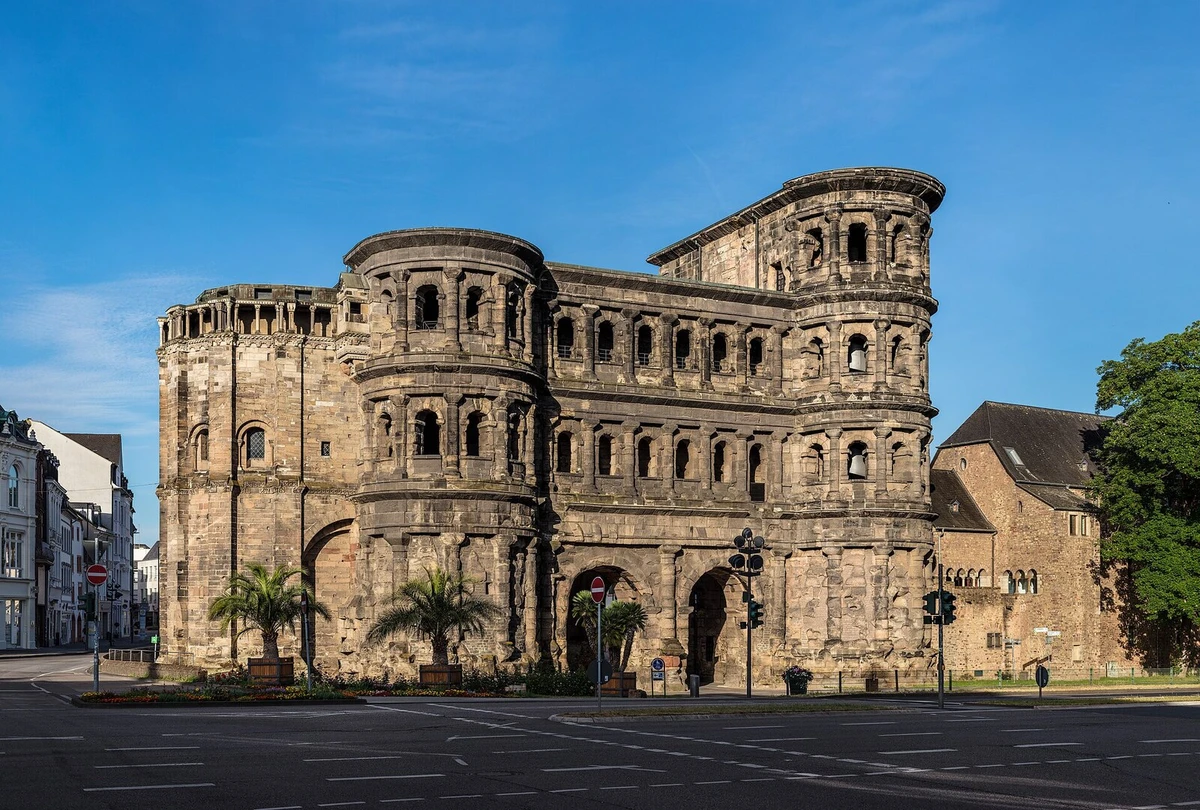
Photos show the places you visit; the boat or vehicle on the day may differ. Photos: Thomas Wolf, www.foto-tw.de (CC BY-SA 3.0 de), via Wikimedia Commons
Some images are AI-generated for illustration. While we confirm your booking, just ask and we will send you the original photos.
- Fair, honest prices
- Real people, not bots
- Confirm, then pay
- Secure payment

Overview
This Trier walking tour is a 1.5-hour journey through the history of what is often called the oldest city in Germany. An official local guide leads a shared group in English from the Tourist Information at the Porta Nigra, the great Roman city gate, through the medieval lanes of Judengasse and the Dreikönigenhaus to the Hauptmarkt, then on to Trier Cathedral, the Church of Our Lady and the vast Roman basilica known as the Aula Palatina. The walk ends in the baroque setting of the Electoral Palace and its garden. Along the way you pass four buildings that belong to Trier's UNESCO World Heritage Site. The route is wheelchair accessible, needs no tickets and suits first-time visitors who want the whole story in one easy walk.
Highlights
- Official English-speaking local guide
- The Porta Nigra, the best-preserved Roman city gate north of the Alps
- Four UNESCO-listed monuments in one walk
- Medieval Trier: Dreikönigenhaus, Judengasse and the Hauptmarkt
- Trier Cathedral and the Church of Our Lady side by side
- The Aula Palatina, the vast Roman throne hall
- Ends at the rococo Electoral Palace and its garden
- Wheelchair-accessible route of about 1.5 hours
Full Description
Porta Nigra, the Roman gate of Trier
The Porta Nigra is the symbol of Trier and the starting point of this tour. Built around 170 AD from huge sandstone blocks held together with iron clamps rather than mortar, it was the northern gate of the Roman city of Augusta Treverorum, founded in 16 BC. Its stone has darkened over the centuries, giving it the name Black Gate. In the 11th century it was turned into a church, which is one reason it survived when other Roman gates were taken apart for building stone.
Today it is the best-preserved Roman city gate north of the Alps and part of the UNESCO World Heritage Site. Your guide tells its story in front of the gate before the walk begins. If you want to climb inside, the Porta Nigra opening hours allow a visit after the tour, and the upper galleries give fine views over the old town.
Medieval Trier: Dreikönigenhaus, Judengasse and Hauptmarkt
From the Roman gate the tour moves into the Middle Ages. The Dreikönigenhaus, built around 1230, is a tall early Gothic tower house whose original entrance was on the first floor, reached by a ladder that could be pulled up in times of danger, one of the architectural tricks wealthy citizens used to protect their goods. Nearby, the narrow Judengasse recalls the medieval Jewish quarter that stood beside the market.
The Hauptmarkt is the lively main square of Trier, lined with colourful townhouses from many centuries. In its middle stands a market cross from 958 and the Petrusbrunnen, a Renaissance fountain from 1595 dedicated to St Peter, the city's patron saint. Your guide explains how citizens fought the archbishop for their independence, with stories of knights, monkeys and church towers.
Trier Cathedral and the Church of Our Lady
Trier Cathedral, the High Cathedral of St Peter, is the oldest cathedral in Germany. Its core goes back to a church complex begun in the 4th century, and its massive walls still show Roman, Romanesque, Gothic and baroque work layered together. Right next to it stands the Church of Our Lady, the Liebfrauenkirche, built in the 13th century and one of the earliest Gothic churches in Germany, with an unusual plan shaped like a twelve-petalled rose.
Both buildings are part of the UNESCO World Heritage Site, and the tour stops between them so you can compare their very different styles. Entry to the churches is free outside service times, so you can return after the walk to see the cathedral treasury and the bright Gothic interior of the Church of Our Lady at your own pace.
Aula Palatina, the Basilica of Constantine
The Aula Palatina, also called the Basilica of Constantine, is one of the most impressive Roman buildings in the world. It was built around 310 AD as the throne hall of the Roman emperor who lived in Trier, when the city was one of the capitals of the Western Roman Empire. The single hall is about 67 metres long and 33 metres high, the largest surviving single-room space from Roman times, built of brick without a single supporting column inside.
Since the 19th century it has served as a Protestant church, and its plain, vast interior leaves a strong impression. On the tour you see it from the outside with your guide's explanations of Roman Trier. Is Trier worth visiting? Standing beside these brick walls, most visitors say yes immediately.
Electoral Palace and Palace Garden
The walk ends beside the Aula Palatina at the Electoral Palace, the Kurfürstliches Palais, once the residence of the archbishops and prince-electors of Trier. Its most famous side is the rococo wing from the 18th century, painted in soft pink with white ornaments, statues and elegant windows, one of the most beautiful rococo facades in Germany. It shows the baroque splendour of modern times that followed the Roman and medieval eras of the city.
In front of the palace lies the Palace Garden, with flower beds, fountains, baroque statues and paths that lead towards the Roman Imperial Baths. It is a pleasant place to rest after the tour, and from here the Imperial Baths and the Rhineland State Museum are only a few minutes' walk away if you want to continue your Trier city tour.
Itinerary
- Porta NigraMeet your guide at the Tourist Information beside the Porta Nigra and hear the story of the Roman gate and the founding of Trier.
- Dreikönigenhaus and JudengasseWalk into the medieval town to see the early Gothic tower house and the lane of the old Jewish quarter.
- HauptmarktStop on the main market square with its market cross and Renaissance fountain, and learn how citizens fought for their rights.
- Trier Cathedral and Church of Our LadySee Germany's oldest cathedral and one of its earliest Gothic churches side by side, both UNESCO-listed.
- Aula PalatinaContinue to the vast Roman throne hall known as the Basilica of Constantine.
- Electoral Palace and Palace GardenEnd the 1.5-hour walk at the rococo palace and its garden.
What's included
- Official local guide speaking English
- Porta Nigra, the Roman city gate
- Dreikönigenhaus, Judengasse and Hauptmarkt
- Trier Cathedral and the Church of Our Lady
- Aula Palatina (Basilica of Constantine)
- Electoral Palace and Palace Garden
Not included
- Entrance inside the monuments
- Hotel pickup and drop-off
- Tips (optional)
Is this right for you?
Great for
- History and culture lovers
- First-time visitors who want the highlights
- A short visit — about 1.5 hours
Think twice if
- You need hotel pickup — you meet at the meeting point
- You want a private tour — this one is shared with other travellers
- Walking is difficult for you — expect active parts
Meeting point
Meet in front of the Tourist Information office right at the Porta Nigra in Trier city centre, about 10 minutes before the start time. This is an official city tour, and the staff at the Tourist Information can help if you have questions. The walk ends at the Electoral Palace and Palace Garden, a short walk from the Hauptmarkt.
Important information
- The tour is in English with an official local guide
- The route is wheelchair accessible
- Monuments are explained from the outside; entrance tickets are not included
- Wear comfortable shoes for cobbled streets
- Bring weather-appropriate clothing; the walk is outdoors
- Tips for the guide are not included
- Arrive at the Tourist Information by the Porta Nigra 10 minutes early
Good to know
Frequently Asked Questions
Straight answers to what travellers ask us most, before they book.
Is this a shared or a private experience?
It is a shared guided walking tour with an official local guide; you join other visitors in a group.
How long does the tour take?
About 1.5 hours from the Porta Nigra to the Electoral Palace.
Is hotel pickup included?
No. You meet at the Tourist Information beside the Porta Nigra in the city centre.
What is included?
An official English-speaking guide and a walk past the Porta Nigra, the Hauptmarkt, the cathedral, the Church of Our Lady, the Aula Palatina and the Electoral Palace.
Do we go inside the Porta Nigra or the cathedral?
The tour explains the monuments from outside. You can visit the Porta Nigra or the churches on your own afterwards.
Is the price per person or per group?
The price is per person. The booking panel on this page shows the current price of the tour.
Is it suitable for children and travellers with reduced mobility?
Yes. The route is wheelchair accessible and the pace is easy, so it suits families too.
What should I bring?
Comfortable shoes, weather-appropriate clothing, water and a camera.
Why is Trier called the oldest city in Germany?
It was founded by the Romans in 16 BC as Augusta Treverorum and later became one of the capitals of the Western Roman Empire.
Which UNESCO sites do we see?
The Porta Nigra, Trier Cathedral, the Church of Our Lady and the Aula Palatina, all part of the Roman Monuments, Cathedral of St Peter and Church of Our Lady in Trier.
What happens in bad weather?
The walk usually goes ahead in light rain, so bring an umbrella or a rain jacket.
How do I book and confirm?
Choose your date on this page and book; our team confirms your booking on WhatsApp within minutes.
More in Trier
Popular across Germany
-
-
-
-
-
-