
Trier
Plan Trier with Haqqi Tours: day tours, private airport transfers, attraction tickets and packages, run by our own team and confirmed on WhatsApp in Arabic or English.
In the late afternoon light, the great dark stones of the Porta Nigra glow almost purple. This Roman gate has stood at the northern entrance of Trier for more than eighteen centuries, its blocks held together without mortar, and today street musicians play beneath its arches while visitors stream through into the pedestrian lanes of the old town. A few minutes away, market traders pack up their stalls on the Hauptmarkt as the bells of the cathedral ring out over the rooftops.
Nothing matches those filters yet. Widen your search or message us on WhatsApp.
Trier Day Tours
View all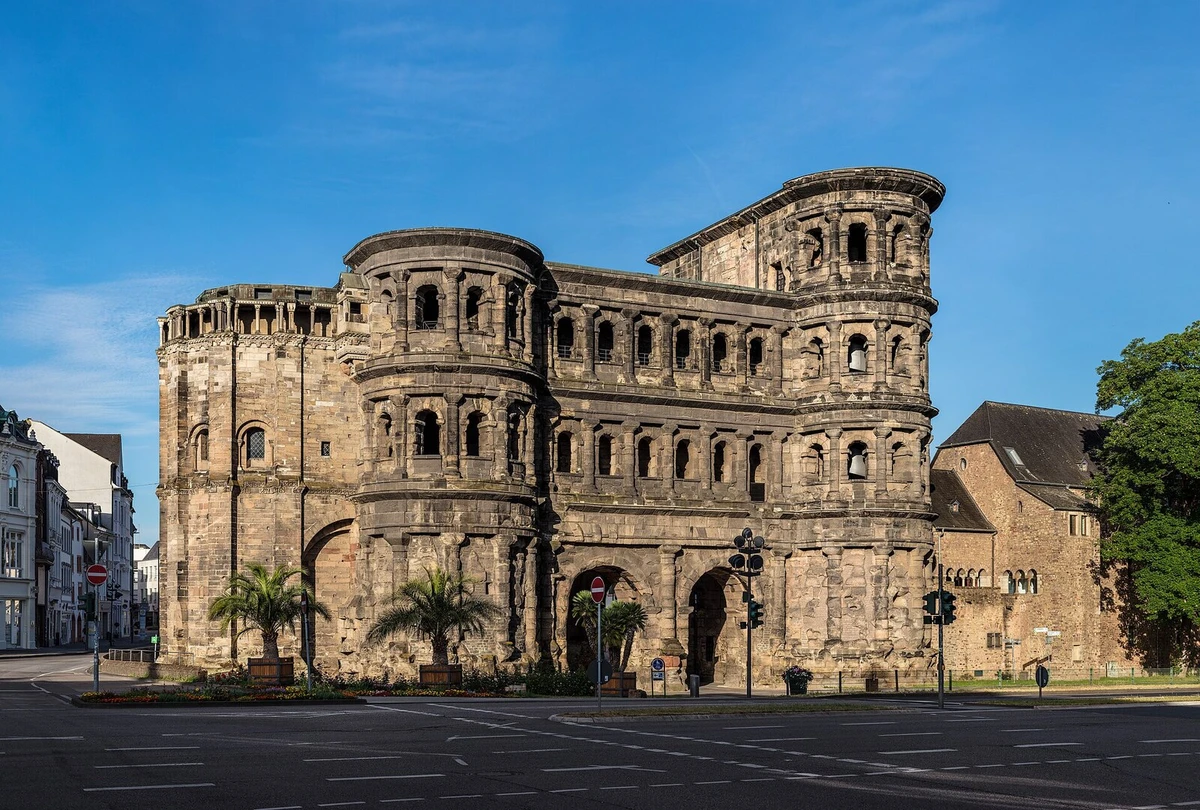
Trier at first sight
Trier is Germany's oldest city, founded by the Romans in 16 BC as Augusta Treverorum on the banks of the Moselle. By the fourth century it was one of the capitals of the Western Roman Empire, and its gate, baths, amphitheatre, bridge and vast throne hall survive in a way found nowhere else north of the Alps. Today it is a relaxed university city where Roman ruins, medieval churches and Baroque palaces stand side by side in a green and walkable centre.
Why include Trier in your itinerary?
- Rome north of the Alps. The Porta Nigra, the Imperial Baths, the amphitheatre, the Roman bridge and the throne hall of the Aula Palatina form a UNESCO World Heritage ensemble that brings ancient history vividly to life on a guided walk.
- Two thousand years of history in one compact old town. Germany's oldest cathedral, one of its earliest Gothic churches, the market square and a pink Rococo palace are all within a few minutes' walk of each other.
- A gateway to the Moselle valley. Steep green slopes, castles and half-timbered villages line the river in both directions, and the Saar loop, Cochem and Eltz Castle are all easy day trips.
Signature experiences in Trier
Old Town Walking Tour From the Porta Nigra
A local guide begins at the Porta Nigra, the best-preserved Roman city gate north of the Alps, and leads you through two thousand years of history in a single walk. You pass the Hauptmarkt with its medieval market cross and fountain, the cathedral and the Church of Our Lady, the Aula Palatina and the Electoral Palace, hearing how emperors, archbishops and merchants shaped the city. It is the perfect introduction on your first day.
The Porta Nigra
Built around 170 AD from huge sandstone blocks, the Porta Nigra owes its name, the black gate, to the dark weathering of its stone. In the Middle Ages it was turned into a church, which saved it from being dismantled, and traces of that time remain inside. Climb through its galleries and towers for views down the Simeonstraße into the old town, and look out for the clamps that once held the blocks together.
The Cathedral and the Church of Our Lady
Trier Cathedral is the oldest in Germany, with Roman walls still standing in its core and Romanesque, Gothic and Baroque additions telling sixteen centuries of history. Its treasury holds remarkable medieval objects. Right beside it, the Church of Our Lady is one of the earliest Gothic churches in Germany, built on a cross-shaped plan, with twelve columns painted with the apostles and light pouring in from every side.
The Imperial Baths, Amphitheatre and Aula Palatina
The Imperial Baths were among the largest of the Roman world, and you can walk through the dark service tunnels beneath them where slaves once kept the fires burning. A short walk away, the amphitheatre held up to eighteen thousand spectators, and its cellars under the arena can still be explored. The Aula Palatina, the vast brick throne hall of the Roman emperors, is today a church with one of the largest single rooms surviving from antiquity.
The Roman Bridge, the Museum and the Moselle
The Roman Bridge across the Moselle still rests on pillars from the second century and is the oldest bridge in Germany still in use. The Rhenish State Museum displays mosaics, carved tombstones and a glittering hoard of Roman gold coins found in the city. Then walk along the riverbank to the old fishermen's quarter of Zurlauben, or climb the Petrisberg for a view over the whole city and valley.
Neighbourhoods and quarters to know in Trier
The Old Town
The old town between the Porta Nigra, the Hauptmarkt and the cathedral is the best base for sightseeing, with hotels and guesthouses close to the Roman monuments, churches, shops and cafés. It is lively during the day, especially on the pedestrian streets, and calm and atmospheric in the evening.
Zurlauben and the Moselle
Zurlauben, the former fishermen's quarter on the riverbank north of the centre, has colourful old houses, riverside cafés and a pleasant promenade. It is peaceful, with lovely evening light on the Moselle, and the Porta Nigra is about fifteen minutes' walk away, ideal for couples and those who enjoy the water.
Around the Imperial Baths
The area around the Imperial Baths, the Electoral Palace gardens and the Südallee is green and central, with hotels and apartments a short walk from the Roman sites, the museum and the old town. It suits families and travellers who want to visit the main monuments on foot while staying in calmer streets.
Petrisberg
The Petrisberg is a modern district on the hill above the amphitheatre, with parks, a viewpoint over the city and the river valley, and a few hotels and apartments. It is quiet, green and family-friendly, with buses down to the centre in about ten minutes, and suits travellers with a car who want space and views.
How long to stay in Trier and how to pair it
Recommended stay
We recommend two to three nights in Trier. One day for a guided walk through the old town from the Porta Nigra to the cathedral and the Church of Our Lady, a second for the Imperial Baths, the amphitheatre, the Aula Palatina and the Rhenish State Museum, and a third for a trip along the Moselle to Cochem and Eltz Castle or to the Saar loop.
How to pair it
Trier pairs naturally with the Moselle valley, where the castle town of Cochem lies about one and a quarter hours downstream and Bernkastel-Kues, with its half-timbered market square, about forty-five minutes away. The Saar loop near Mettlach is around forty-five minutes south, and Eltz Castle and Koblenz about one and a half hours. A week can combine Trier, the Moselle villages, Eltz Castle, Koblenz and the Rhine valley, with private transfers arranged by our team.
Best time to visit Trier and the rhythm of the day
Best months
The best time to visit Trier is April to October, when café tables spread across the Hauptmarkt, the palace gardens bloom and the Moselle valley is green. May, June and September are especially pleasant, with mild weather and fewer crowds. Summer brings open-air performances in the Roman monuments, autumn colours the valley in gold, and from late November the Christmas market fills the Hauptmarkt and the cathedral square.
The daily rhythm
Trier wakes up gently. Mornings are the best time for the Porta Nigra and the Roman baths, before tour groups arrive. Middle of the day brings shoppers and students to the old town and the market, and afternoons suit the museum or a walk by the Moselle. Evenings are calm, with the Porta Nigra and the cathedral beautifully lit after dark.
On-the-ground logistics in Trier
Arrival
Luxembourg Airport (LUX) is the closest international airport, about forty-five minutes by road from Trier. Frankfurt-Hahn Airport (HHN) is around one hour away, Saarbrücken Airport (SCN) about one hour, and Frankfurt Airport (FRA) roughly two hours. Trier main station has regional trains to Koblenz, Saarbrücken and Luxembourg. We arrange private transfers that meet you at the airport or station and take you directly to your hotel.
Getting around
Trier's old town and Roman sites are compact and best explored on foot, with most monuments within twenty minutes' walk of each other. City buses link the centre with the Petrisberg, the station and the river districts. Riverside paths are lovely for walking and cycling, and bikes are easy to rent. For the Moselle valley, Eltz Castle or the Saar loop, a private car with driver arranged by our team is the most comfortable choice.
Local etiquette tip
People in Trier are friendly, relaxed and proud of their long history. Greet with guten Tag, be punctual for tours and keep voices low inside the cathedral and churches. Do not climb on ancient walls or remove stones from the Roman sites. Shops close on Sundays. Dress modestly in churches. Tipping is customary in restaurants, usually by rounding up or adding around five to ten percent.
Must-do things in Trier
- Join a guided walk through the old town from the Porta Nigra
- Climb through the galleries of the Porta Nigra
- Stand in the Hauptmarkt by the medieval market cross
- Visit Germany's oldest cathedral
- Admire the light inside the Church of Our Lady
- Walk the underground tunnels of the Imperial Baths
- Explore the cellars beneath the Roman amphitheatre
- Step inside the vast Aula Palatina
- Cross the Roman Bridge over the Moselle
- Take a day trip along the Moselle to Cochem
Do’s and don’ts in Trier
Do
- Do buy a combined ticket for the Roman sites
- Do visit the Porta Nigra early in the morning
- Do wear comfortable shoes for uneven ruins
- Do bring a torch or phone light for the tunnels
- Do check opening days of museums in advance
Don’t
- Don't climb on the ancient Roman walls
- Don't take stones or pieces from the sites
- Don't visit churches during services as a tourist
- Don't expect shops to open on Sundays
- Don't treat Trier as only a quick stop
Trier at a glance
Plan Trier with Haqqi Tours
Every option is confirmed by our team on WhatsApp before you pay, and delivered by our own people or by trusted local partners we work with in every city. Because we send travellers from all over the world, our partners give us special rates and priority, so you always receive the best. Prices are per person unless marked per vehicle.
About Haqqi Tours: About us Contact us Legal NoticePrivacy PolicyCookies & Marketing PreferencesTerms & ConditionsBooking, Payment & Refunds
More services in Trier
Where we operate in Germany
- Berlin
- Munich
- Dresden
- Cologne
- Hamburg
- Frankfurt
- Nuremberg
- Leipzig
- Stuttgart
- Heidelberg
- Bremen
- Düsseldorf
- Potsdam
- Sylt
- Erfurt
- Koblenz
- Regensburg
- Würzburg
- Günzburg
- Konstanz
- Lübeck
- Quedlinburg
- Bonn
- Dortmund
- Freiburg
- Görlitz
- Münster
- Rust
- Augsburg
- Bamberg
- Bremerhaven
- Cochem
- Oberhausen
- Passau
- Rostock
- Ulm
- Weimar
- Aachen
- Bayreuth
- Berchtesgaden
- Bottrop
- Cleebronn
- Fulda
- Karlsruhe
- Meissen
- Oldenburg
- Sinsheim
- Speyer
- Spreewald
Good to know
Frequently Asked Questions
Straight answers to what travellers ask most about Trier.
Where should I stay in Trier?
Most visitors stay in the old town between the Porta Nigra and the cathedral, close to the monuments, shops and cafés. Zurlauben offers riverside calm, the area around the Imperial Baths is green and central, and the Petrisberg suits families with a car who want space and views. Our team suggests the best area for your plans and arranges your private transfer.
Is Trier worth visiting?
Yes. Trier has the finest Roman monuments in Germany, including the Porta Nigra, the Imperial Baths, the amphitheatre and the Aula Palatina, together with the country's oldest cathedral, all in a compact and pleasant old town. It is also a perfect base for the Moselle valley and Eltz Castle.
What is the dress code and etiquette in Trier?
Dress is casual and practical, with comfortable shoes for cobbles and uneven ruins, and a light layer for cooler underground tunnels. Cover shoulders when visiting the cathedral and churches, keep voices low in sacred places and respect the ancient monuments by not climbing on them.
Is Trier suitable for families and Muslim travellers?
Yes. Trier is calm and safe, and children enjoy exploring the tunnels of the Roman baths, the cellars of the amphitheatre and the galleries of the Porta Nigra. Halal food is limited but available, as the city has mosques and some Turkish and Arab grills and bakeries, while fish, vegetarian dishes and pastries are easy to find. Our team can advise on suitable restaurants.
Is it safe to travel to Trier now?
Trier and Germany are generally considered very safe for travellers. Take normal care with belongings in busy places such as the Hauptmarkt and the station, and watch your footing in the Roman tunnels and on uneven ground. Check your own government's official travel advice before departure, and keep our WhatsApp line handy throughout your stay.
What are the must-do things in Trier?
The must-do things in Trier include a guided old town walk from the Porta Nigra, the Hauptmarkt, the cathedral and the Church of Our Lady, the Imperial Baths and their tunnels, the amphitheatre, the Aula Palatina, the Rhenish State Museum and the Roman Bridge, plus a day trip along the Moselle. Our private tours combine these in the best order.
How many days do you need in Trier?
Two to three days is ideal for Trier: one for the old town, the Porta Nigra and the churches, one for the Roman baths, amphitheatre, Aula Palatina and museum, and one for the Moselle valley. A single full day covers the highlights at a quicker pace, while four days allow you to add Eltz Castle and Koblenz.
What can I book in Trier with Haqqi Tours?
Day tours, including Trier Old Town Guided Walking Tour with Porta Nigra. Each has its own page, and the WhatsApp desk combines any of them into one plan with one written price.
How do I get from the airport to my hotel in Trier?
With a private transfer: a driver at arrivals, flight tracking and a fixed price for the whole vehicle, door to door. Tell the desk the flight number and the hotel.
Is there public transport from the airport to Trier?
Public options vary by airport and end at a station rather than your hotel; the private transfer starts at the arrivals door and ends at your door.
Which tours are available in Trier?
Among them: Trier Old Town Guided Walking Tour with Porta Nigra. Each page says whether the day is private or small-group, what it includes and how long it lasts.
Are the tours private or in a group?
Both exist, and each tour page says which. A private tour has a vehicle and guide for your party alone; the desk can make most group tours private on request.
How do I book?
Fill in the form on any page or message us on WhatsApp with the date, the number of travellers and the hotel. A member of our team confirms the price and the details in writing within minutes.
Are the prices fixed?
Yes - every price is agreed in writing on WhatsApp before you travel and does not change on the day.
Do the drivers and guides speak Arabic or English?
It depends on the city and the day, so we do not promise a particular language; tell us your preference and we do our best. The WhatsApp desk always works in Arabic and English.
Can I change or cancel a booking in Trier?
Yes, in the same WhatsApp conversation. The terms depend on the product and on how close to the date the change comes; the desk states them before you pay.