Highlights of Ortigia Guided Walking Tour Syracuse
- Duration2 hours
- Daily at 11:30
- Group
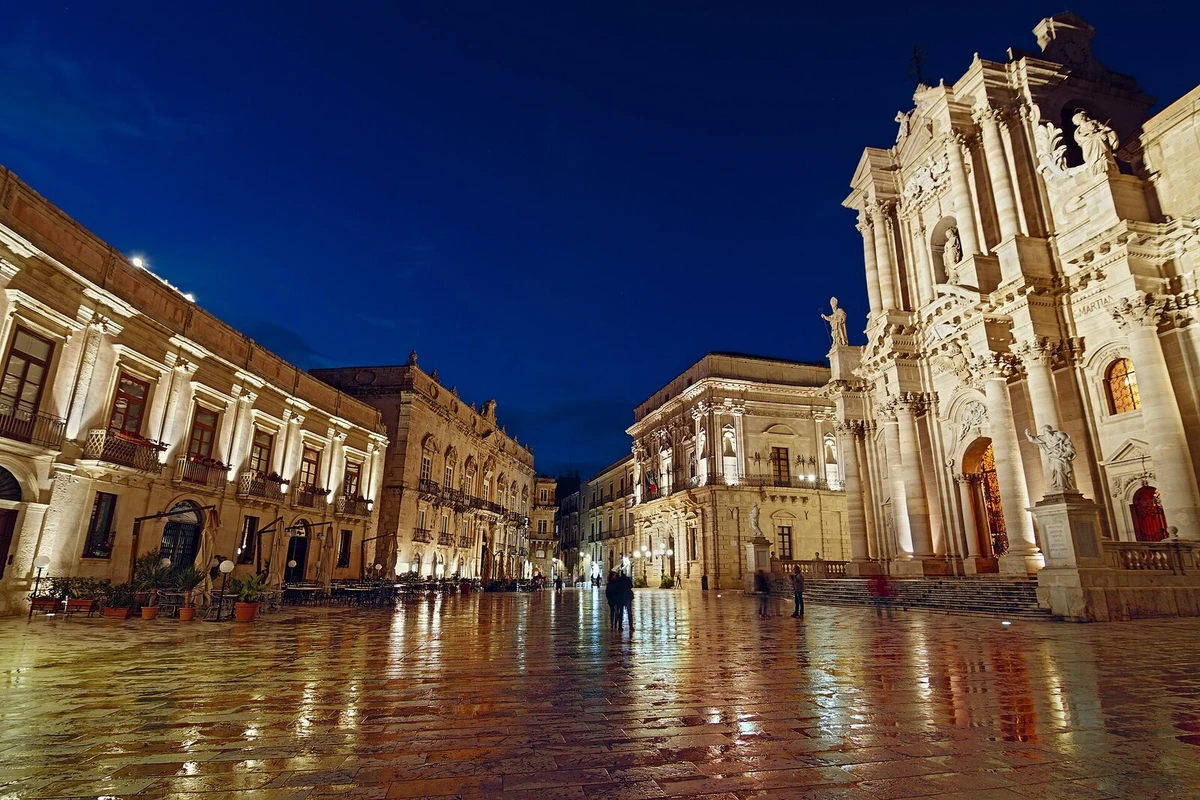
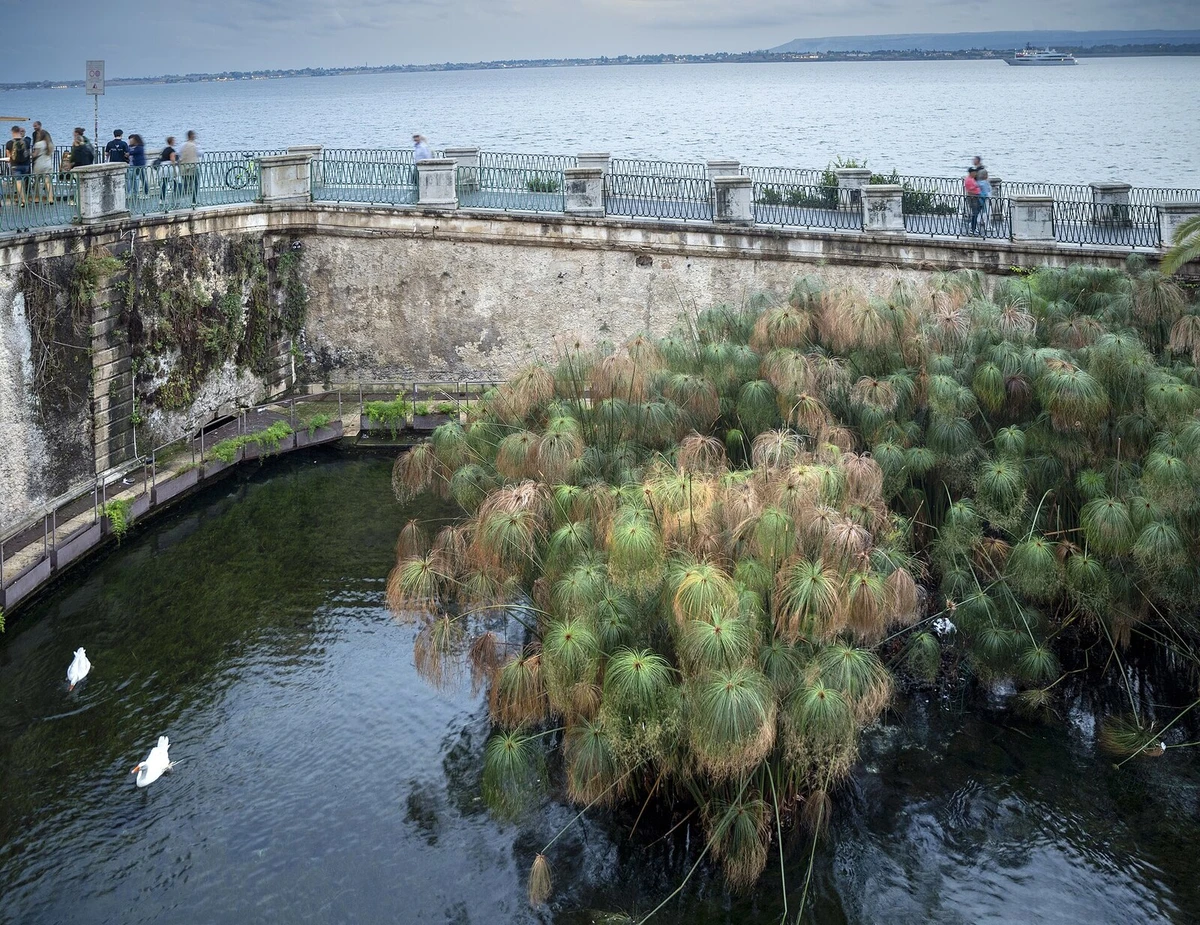
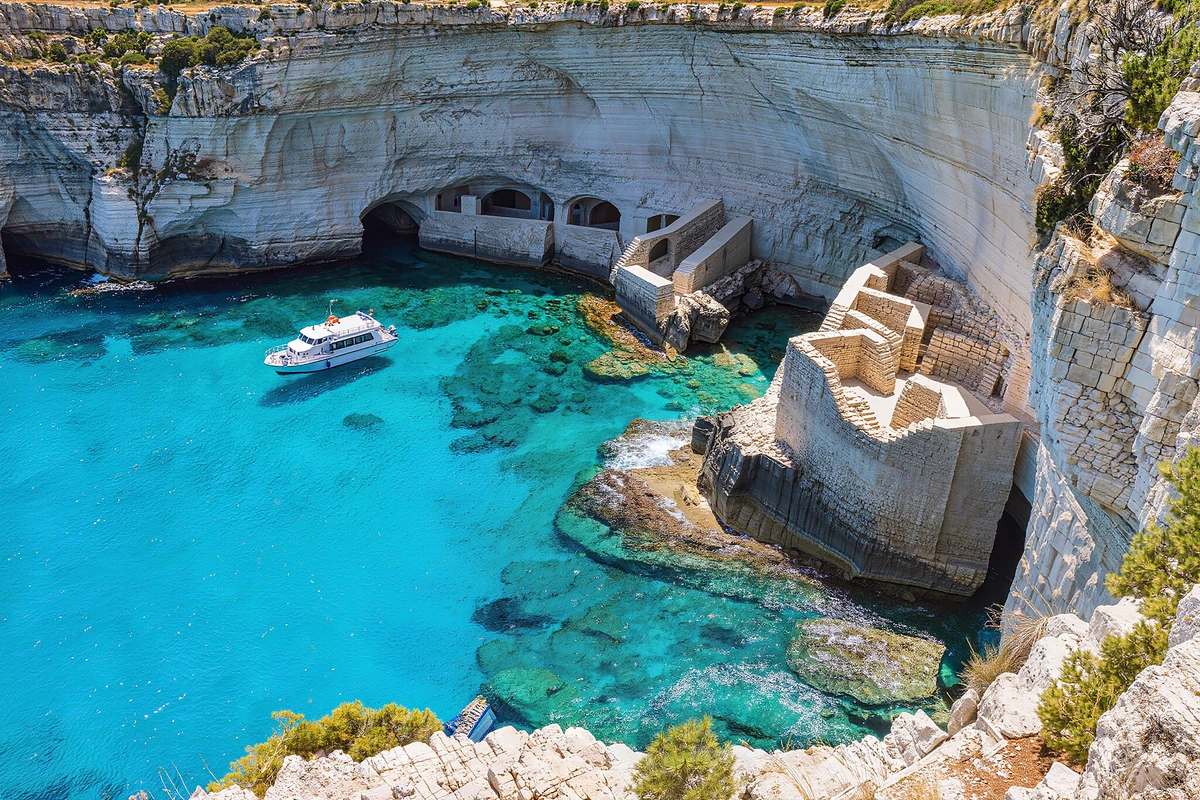
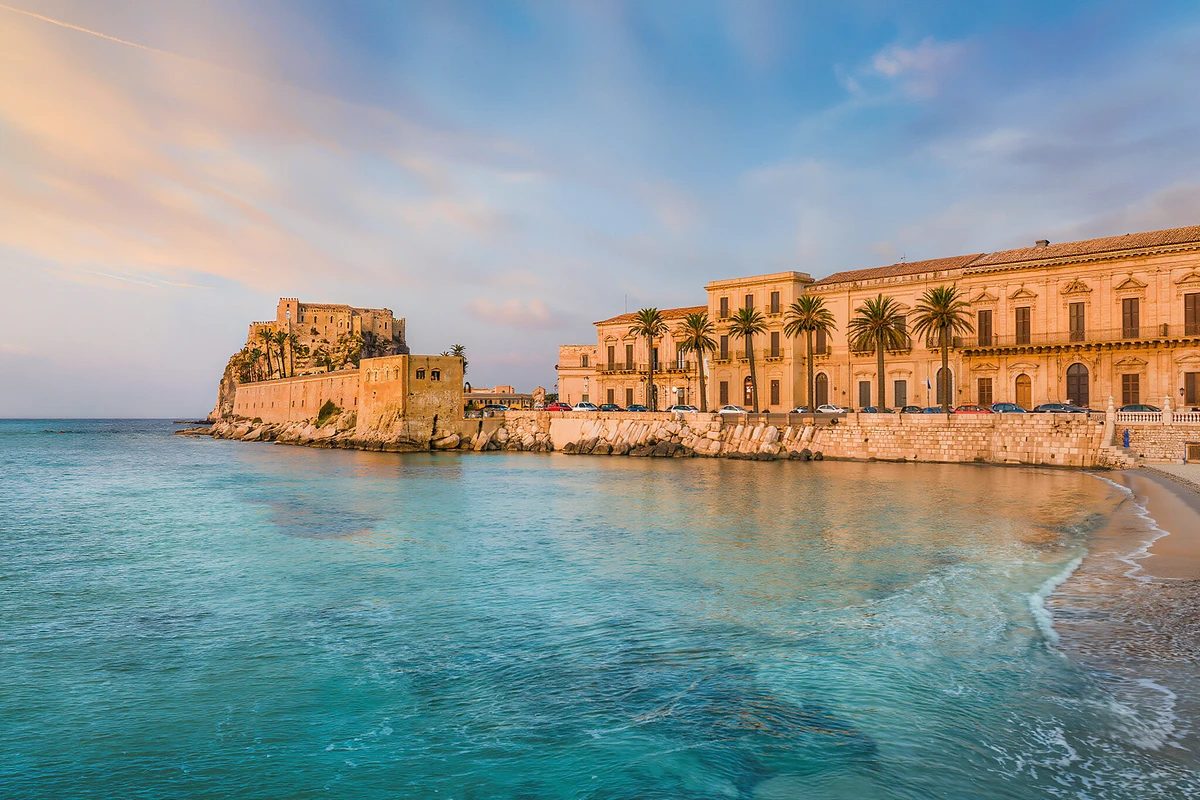
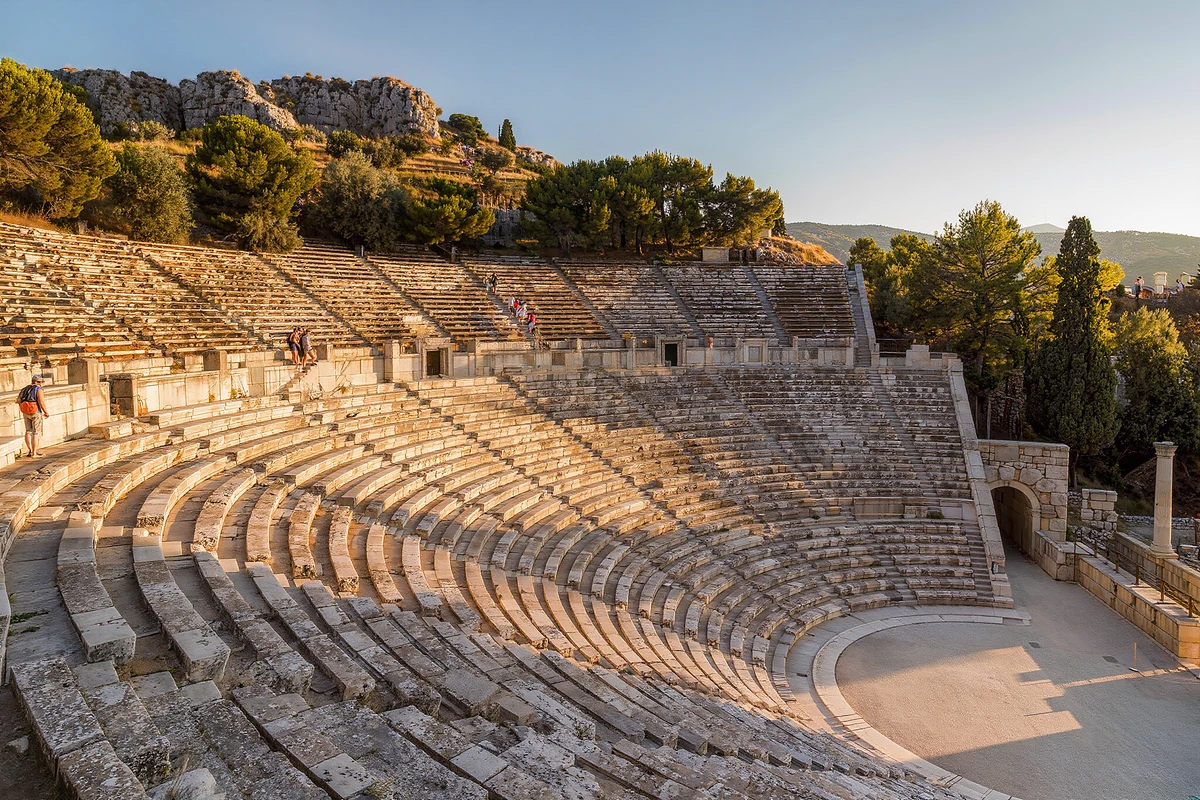
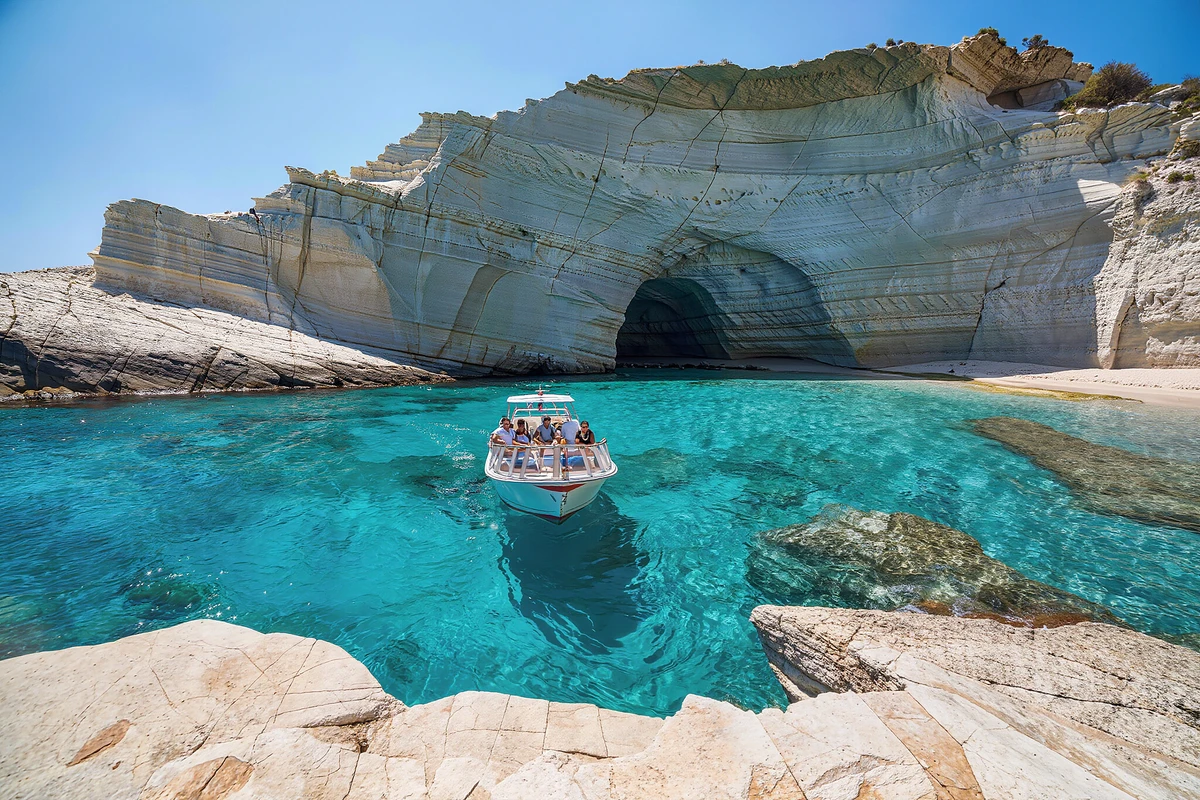
Photos show the places you visit; the boat or vehicle on the day may differ. Photos: Dario Giannobile (CC BY-SA 4.0) · Cayambe (CC BY 4.0), via Wikimedia Commons
Some images are AI-generated for illustration. While we confirm your booking, just ask and we will send you the original photos.
- Fair, honest prices
- Real people, not bots
- Confirm, then pay
- Secure payment

Overview
This 2-hour guided walking tour takes you through the highlights of Ortigia, the island where Syracuse was founded more than 2,700 years ago. Meeting at Largo XXV Luglio, a local guide leads a shared group on foot from the Temple of Apollo, the oldest Doric temple in Sicily, to Piazza Archimede and its Fountain of Diana, then to Piazza Duomo, one of the most beautiful squares in Italy, where the Cathedral was built inside a Greek temple. The walk ends at the Fountain of Arethusa, a freshwater spring by the sea wrapped in myth. The tour is in English, sometimes together with Italian. It suits history lovers and first-time visitors. There is no pickup, and the Cathedral entry ticket is paid on site.
Highlights
- Shared 2-hour guided walk in English
- Temple of Apollo, the oldest Doric temple in Sicily
- Piazza Archimede and the Fountain of Diana
- Piazza Duomo and the Cathedral built into a Greek temple
- Fountain of Arethusa and its papyrus plants
- Myths and history of ancient Syracuse
- Central meeting point at the entrance of Ortigia
Full Description
The Temple of Apollo
The walk starts at the Temple of Apollo, just inside Ortigia near the bridges from the mainland. Built in the early sixth century BC, it is considered the oldest Doric temple in Sicily and one of the oldest in the Western Greek world. Over the centuries it became a church, a mosque under Arab rule, a Norman church again and later part of a barracks.
Today you see its massive stone base, the stumps of its monolithic columns and part of the cella walls, framed by the busy market streets of Ortigia. Your guide explains how Greek settlers from Corinth founded Syracuse here in 734 BC and how it grew into one of the most powerful cities of the ancient Mediterranean. It is the perfect start to an Ortigia walking tour.
Piazza Archimede and the Fountain of Diana
Walking along Corso Matteotti, you reach Piazza Archimede, named after the great mathematician born in Syracuse. The square is surrounded by elegant palaces, some with Gothic-Catalan windows and courtyards, and at its centre stands the Fountain of Diana, created in 1906.
The fountain shows the goddess Artemis, called Diana by the Romans, with her hunting dogs, at the moment when she transforms the nymph Arethusa into a spring to save her from the river god Alpheus. Your guide tells this love story, which runs through the whole tour and ends at the real spring on the seafront. The square is also a good place to remember for a coffee break later.
Piazza Duomo and Syracuse Cathedral
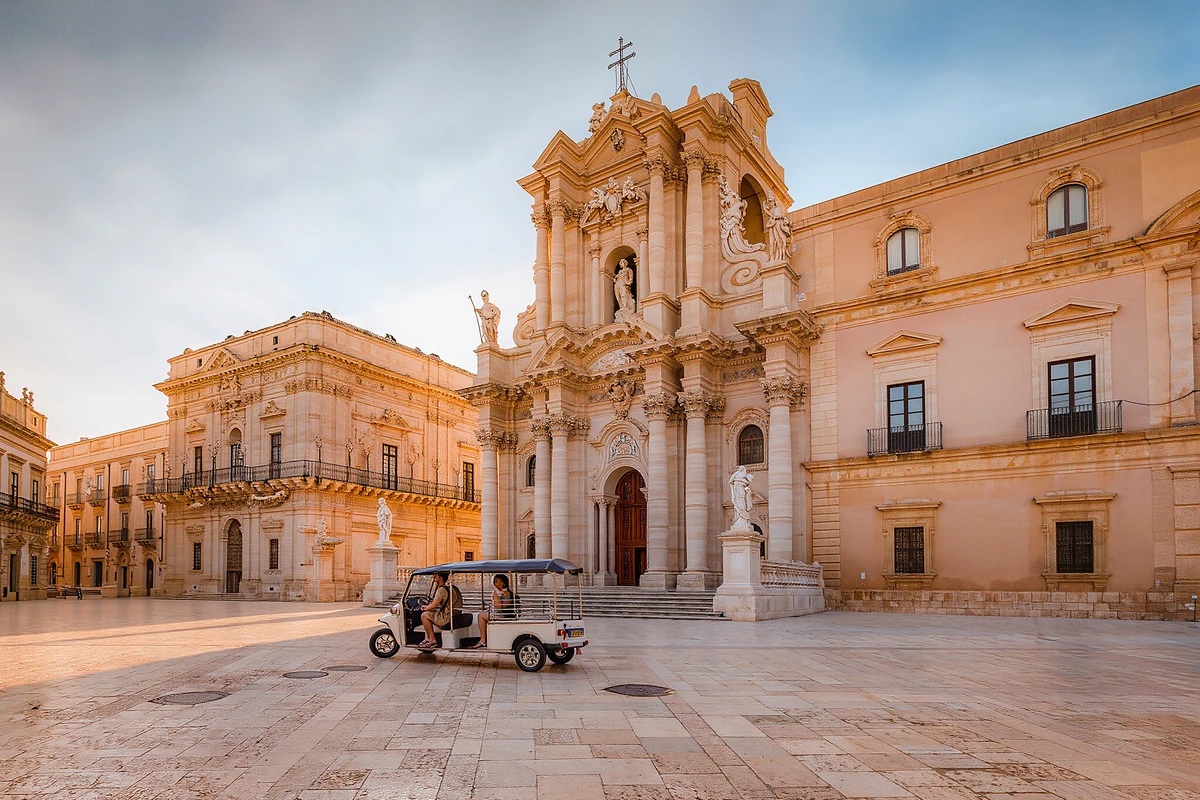
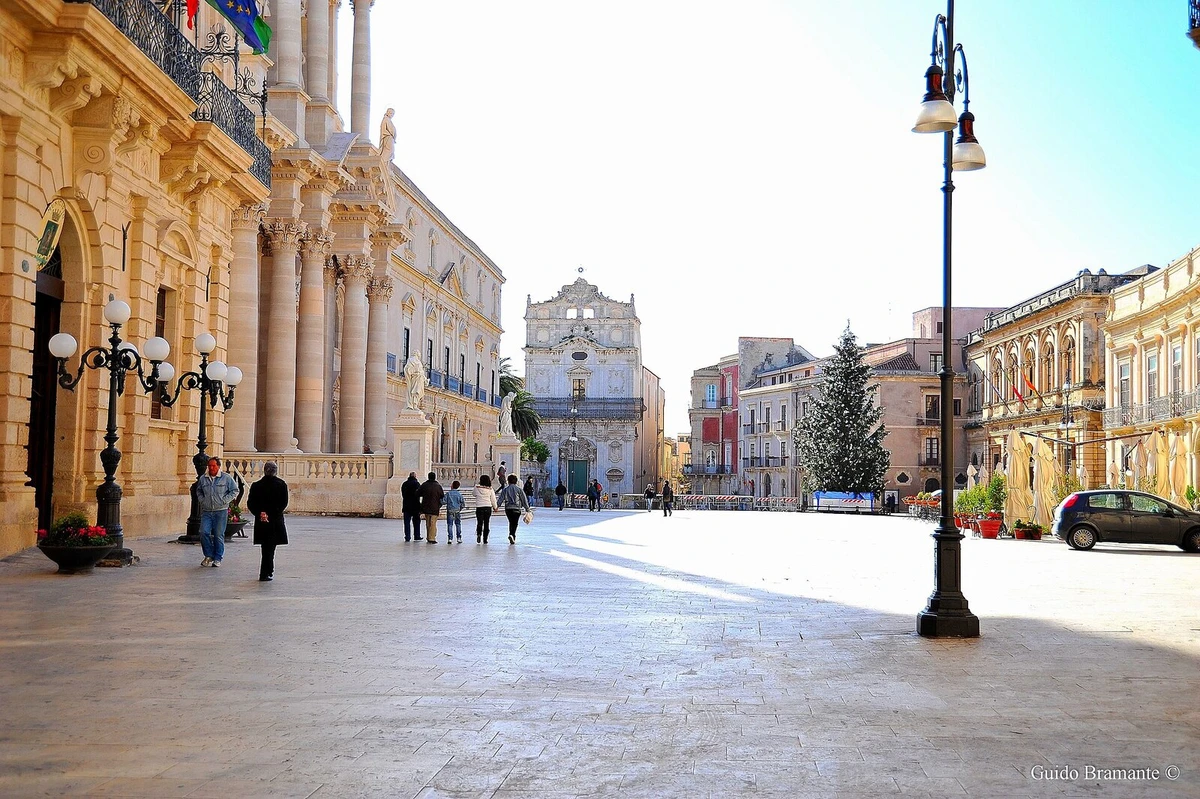
Piazza Duomo is an oval square paved in pale limestone, lined with Baroque palaces and churches rebuilt after the great earthquake of 1693. It stands on the highest point of Ortigia, the spot where the first settlers built their sacred buildings, and it glows golden in the evening light.
The Cathedral is unique: its Baroque façade hides a fifth-century BC Greek temple of Athena, whose Doric columns are still visible inside and along the outer wall, turned into a church in the seventh century. Entry requires a ticket paid on site and modest dress. Is Syracuse Cathedral worth visiting? Few places show so clearly 2,500 years of history in one building.
The Fountain of Arethusa
The tour ends at the Fountain of Arethusa, a freshwater spring that rises a few metres from the sea on the western shore of Ortigia. Its pool is planted with papyrus, said to be one of the few places in Europe where it grows wild, and ducks and fish live among the plants.
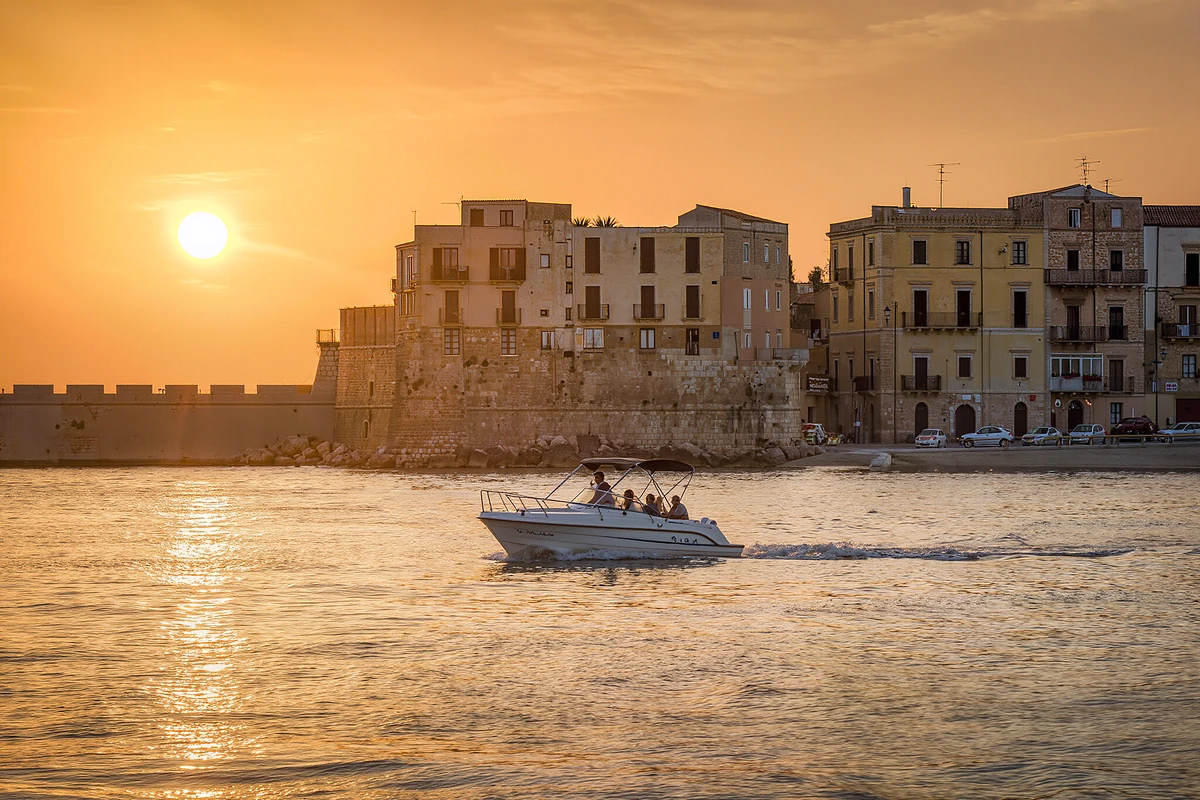
According to myth, the nymph Arethusa escaped from Greece under the sea and rose here as a spring, followed by her lover Alpheus. Your guide shares the story and points out the seafront promenade of Foro Italico and the Maniace Castle at the tip of the island. The best time to visit Ortigia is spring or autumn, and in summer the late-morning walk ends near shaded cafés.
Itinerary
- Meeting at Largo XXV LuglioMeet your guide at 11:30 under the pomegranate tree in front of the pharmacy.
- Temple of ApolloAbout 30 minutes on the oldest temple of Ortigia.
- Piazza ArchimedeAbout 20 minutes at the Fountain of Diana.
- Piazza Duomo and the CathedralAbout 45 minutes in the square and, with a ticket paid on site, inside the Cathedral.
- Fountain of ArethusaAbout 25 minutes at the spring by the sea, ending about 2 hours after the start.
What's included
- 2-hour guided walking tour in English
- Temple of Apollo
- Fountain of Diana
- Piazza Duomo and the Cathedral
- Fountain of Arethusa
Not included
- Syracuse Cathedral entry ticket (paid on site)
- Headset (bring your own or buy one on site)
- Food and drinks
Is this right for you?
Great for
- Families with children — a child price for ages 11–17
- First-time visitors who want the highlights
- A short visit — about 2 hours
Think twice if
- You need hotel pickup — you meet at the meeting point
- You want a private tour — this one is shared with other travellers
- Walking is difficult for you — expect active parts
Meeting point
Meet at Largo XXV Luglio 6 in Ortigia, near the Temple of Apollo: look for the guide with a badge under the pomegranate tree in front of the pharmacy. The tour starts at 11:30; please arrive 10 minutes early. We send the exact pin on WhatsApp. The tour ends at the Fountain of Arethusa.
Important information
- Arrive 10 minutes before the start
- The tour may be guided in English and Italian together
- The Cathedral entry ticket is paid on site
- Cover shoulders and knees to enter places of worship
- Bring your own headphones or buy a disposable set on site
- Visits may change on holidays or with opening hours
- Food and drinks are not included
Good to know
Frequently Asked Questions
Straight answers to what travellers ask us most, before they book.
Is this a shared or a private experience?
It is a shared guided walking tour with other travellers.
How long does it take?
About 2 hours on foot.
Is hotel pickup included?
No. You meet the guide at Largo XXV Luglio in Ortigia.
What is included?
A 2-hour guided walk with a local guide in English.
Is the price per person or per group?
The price is per person. The booking panel on this page shows the current price.
Is it suitable for children and people with reduced mobility?
Children are welcome. The route is flat and mostly paved, though some streets have uneven stones.
Is the Cathedral entry included?
No. The ticket is paid on site, and modest clothing is required.
In which language is the tour?
In English; the guide may also speak Italian when the group is mixed.
What should I bring?
Comfortable shoes, clothing covering shoulders and knees, headphones, water and a hat in summer.
What happens in bad weather?
The tour runs in light rain; bring an umbrella.
How to get to Ortigia?
Ortigia is connected to central Syracuse by bridges; it is about 20 minutes on foot from the railway station.
How do I book and confirm?
Choose your date in the booking panel and complete the booking. Our team confirms on WhatsApp within minutes.
More in Syracuse
Getting to & around Syracuse
Popular across Italy
-
-

-
-
-
-