Fes Medina Guided Tour with Tannery and Medersas
- Duration6 to 7 hours
- Daily
- Group
- Pickup available
Some images are AI-generated for illustration. While we confirm your booking, just ask and we will send you the original photos.
- Fair, honest prices
- Real people, not bots
- Confirm, then pay
- Secure payment

Overview
This Fes medina tour is a full day of 6 to 7 hours with a professional English-speaking guide in Fes, the oldest of Morocco's imperial cities. You explore the lanes of Fes el-Bali, its souks and artisan workshops, look down on the famous tanneries, step inside the Bou Inania Medersa and see the Nejjarine fountain, then continue by car around the ramparts to the Marinid Tombs viewpoint, the gates of the Royal Palace and the Jewish Quarter with its synagogue. The default option is a shared small-group tour that meets on Avenue de la Liberté; a private option with hotel or riad pickup is also available. It suits first-time visitors, culture lovers and families who want to understand the medina with an expert.
Highlights
- Guided visit of Fes el-Bali, a UNESCO World Heritage medina
- Lively souks and workshops of coppersmiths, weavers and leather makers
- Terrace view over the centuries-old tanneries
- Bou Inania Medersa with its carved cedar, stucco and zellige
- Nejjarine fountain and the carpenters' quarter
- Ramparts tour by car with a driver
- Panoramic view of the medina from the Marinid Tombs
- Royal Palace gates and the Mellah with its synagogue
Full Description
Fes el-Bali, the medina of Fes
Founded at the end of the 8th century, Fes el-Bali is the old walled city of Fes and one of the best-preserved medieval medinas in the Islamic world, listed by UNESCO in 1981. Its maze of lanes, covered passages and tiny squares is closed to cars, so donkeys and handcarts still carry goods, and each quarter is organised around its mosque, fountain, bakery and hammam.
With your guide you move through the souks of spices, henna, slippers and textiles, and visit workshops where coppersmiths hammer trays in Seffarine Square and weavers work at wooden looms. The guide also points out the entrance to Al-Qarawiyyin, founded in 859 and still a mosque and centre of learning. Exploring with a local guide is the best way to enjoy the old city without getting lost in its lanes.
The tanneries of Fes
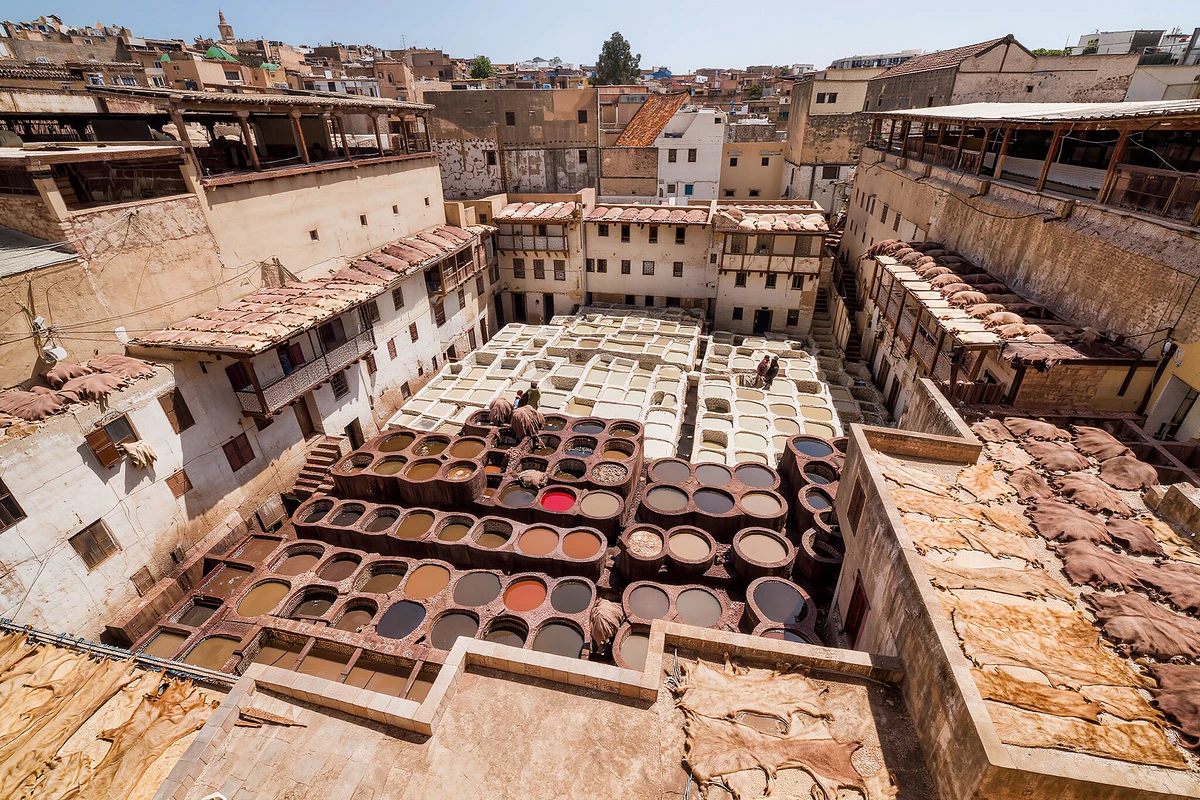
The traditional tanneries are the most famous sight in Fes, and Chouara, the largest of them, has worked in the same way for centuries. From the terraces of the surrounding leather shops you look down on a honeycomb of stone vats filled with white lime and natural dyes, where workers soak and colour hides by hand, using pigments such as poppy for red, indigo for blue and saffron for yellow.
The scene is unforgettable, and so is the smell, which is why visitors are often handed a sprig of mint at the entrance. Your guide explains each stage of the process, from cleaning the skins to drying them on the rooftops. There is no obligation to buy, but the leather shops offer bags, jackets and the colourful babouche slippers made right below. The light is best in the morning, when the vats are at their most colourful.
Bou Inania Medersa and the historic medersas
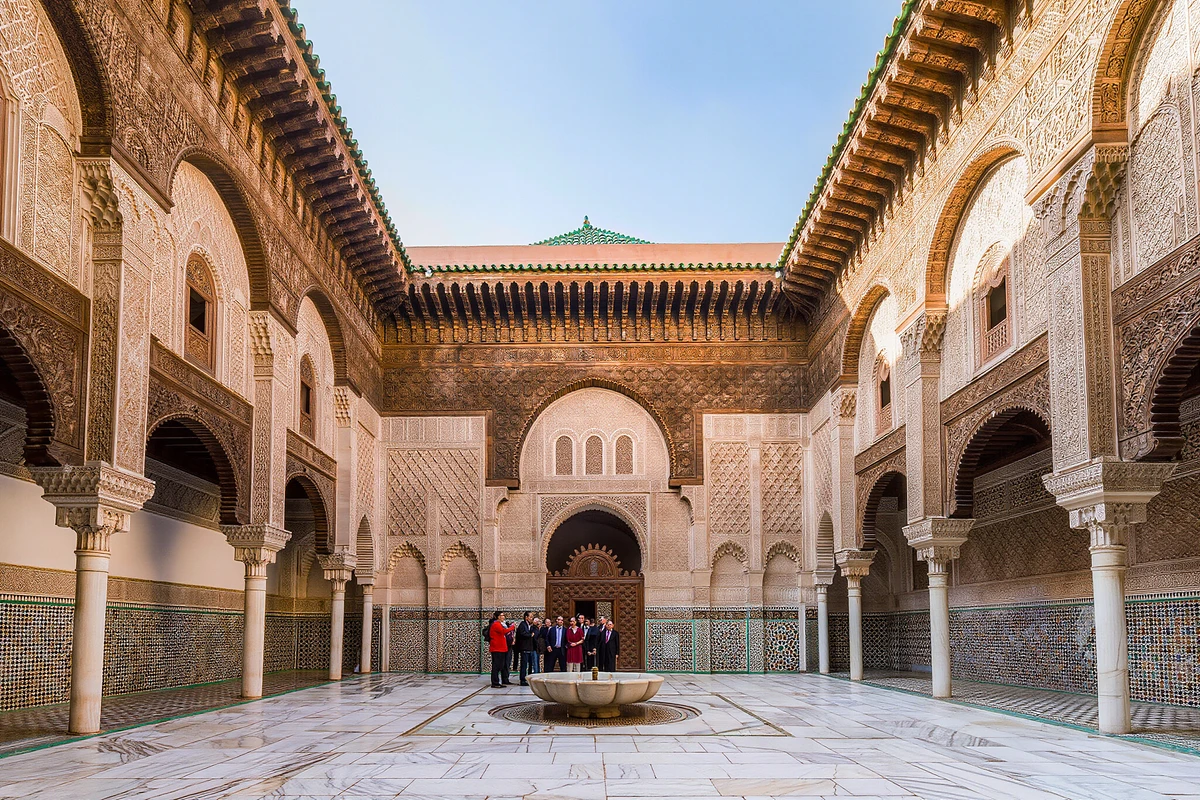
The Bou Inania Medersa was built between 1350 and 1355 by the Marinid sultan Abu Inan Faris, whose name it carries. It is the finest example of Marinid architecture in Fes and one of the few religious buildings in the city open to non-Muslim visitors. Around a marble courtyard with a central basin, every surface is decorated: geometric zellige tilework, lace-like carved stucco and screens and ceilings of carved cedar wood.
These medersas were residential colleges where students lived and studied while attending lectures at Al-Qarawiyyin, and the small rooms upstairs still show how simply they lived. Depending on time, the guide may also show you another historic medersa nearby, such as Al-Attarine beside the spice market. Medersa tickets are not included and are paid at the entrance, so keep some small change in dirhams.
Nejjarine fountain and the carpenters' quarter
Nejjarine Square takes its name from the carpenters who still work in the surrounding lanes, and the scent of cedar wood often fills the air. Its centrepiece is an 18th-century fountain covered in bright zellige tiles under a carved wooden canopy, one of the most photographed corners of the medina.
Beside the fountain stands a former funduq, a caravanserai where travelling merchants once stabled their animals on the ground floor and slept in the rooms above. Beautifully restored, it now houses a museum of wooden arts and crafts, with doors, tools, chests and musical instruments, and a rooftop terrace with views over the medina. Your guide explains how these inns were at the heart of the city's trade, and entry to the museum is optional and paid on site.
The ramparts and the Marinid Tombs viewpoint
After the medina, a car and driver take you on a tour of the ramparts that encircle Fes, passing the great city gates, including the blue-tiled Bab Boujloud, the best-known entrance to the old city. The drive gives you a sense of the scale of Fes and of how the walls protected it for centuries.
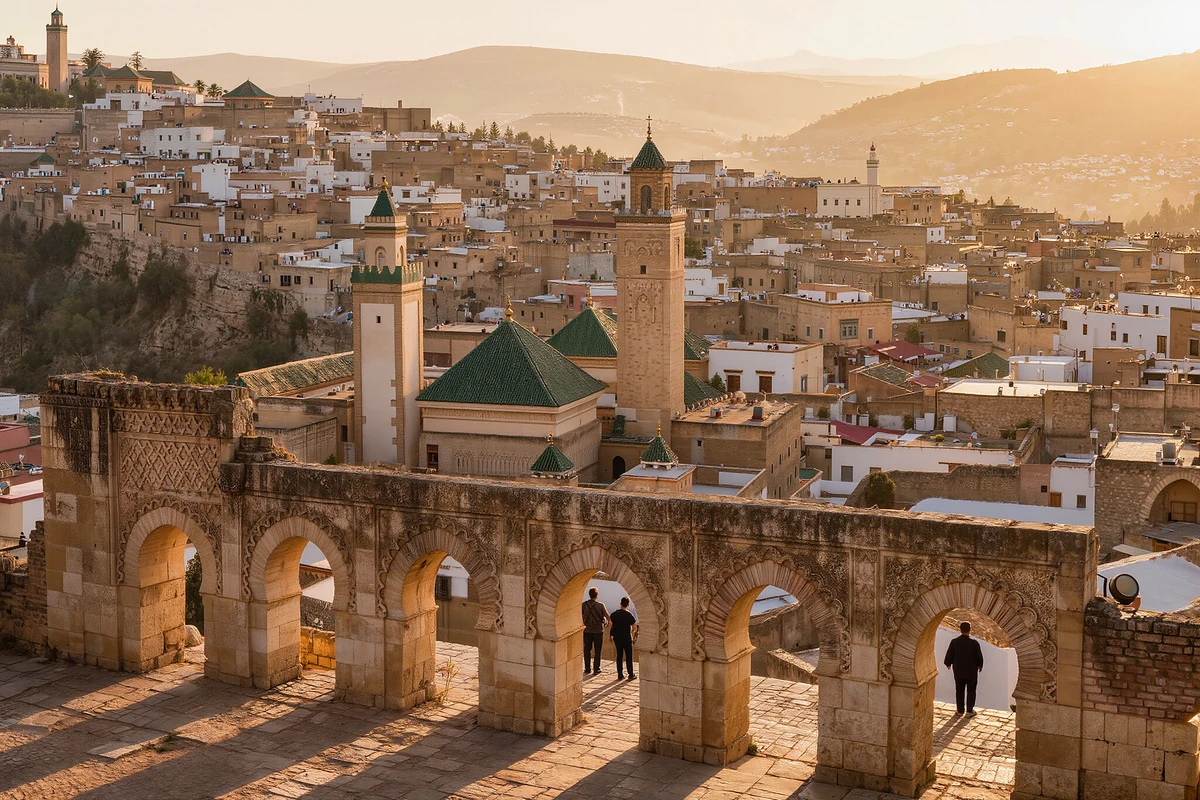
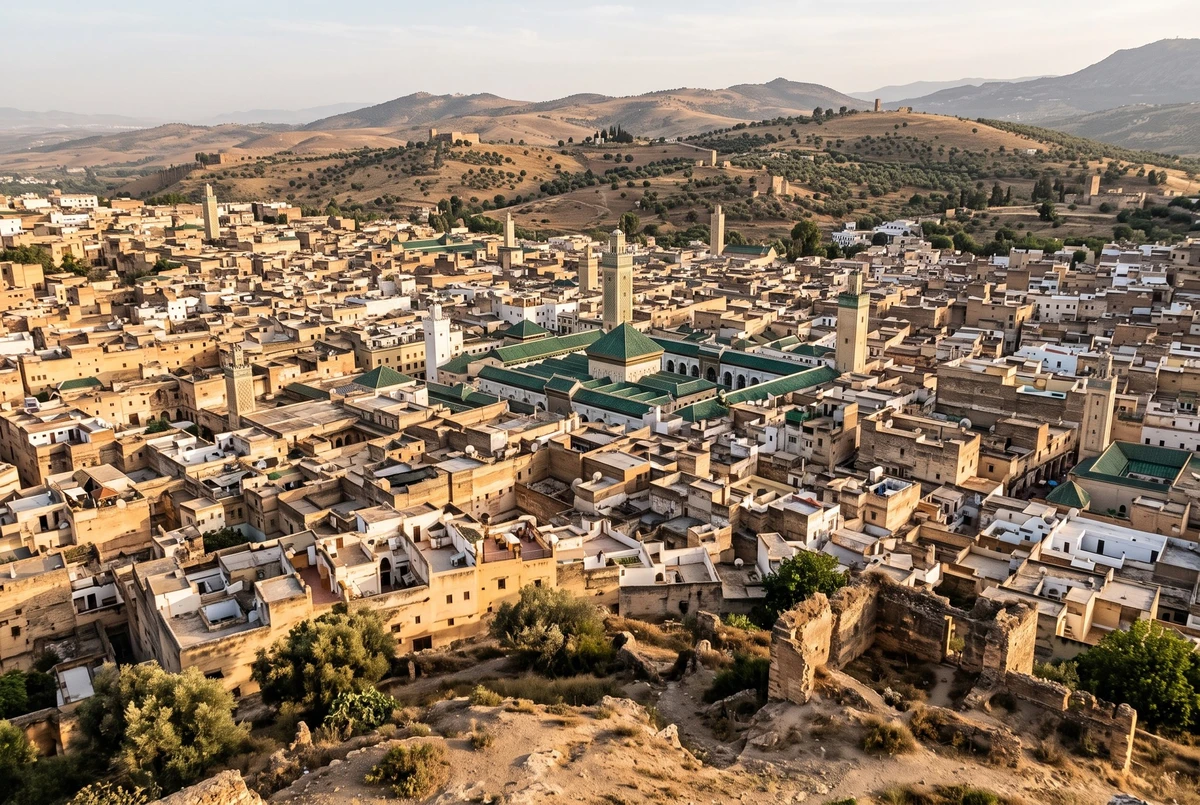
The car climbs to the hill north of the city, where the ruined Marinid Tombs, built in the 14th century for the dynasty that made Fes its capital, overlook the whole medina. From here you see an ocean of rooftops, minarets and green tiled roofs, with the Middle Atlas on the horizon. It is the classic panoramic view of Fes and the perfect place to understand the layout of everything you visited on foot.
The Royal Palace gates and the Mellah
The tour continues to Fes el-Jdid, the new town founded in the 13th century, where the Royal Palace, Dar al-Makhzen, presents a monumental façade of gleaming brass doors framed by zellige tiles and carved cedar. The palace itself is not open to visitors, but its gates are among the most photographed sights in Morocco.
Next to the palace lies the Mellah, the historic Jewish Quarter of Fes, established in the 15th century and recognised by the open wooden balconies of its houses, so different from the inward-looking buildings of the medina. Your guide shows you the restored synagogue, dating from the 17th century, and tells the story of the community that lived here. Is the Fes Mellah worth visiting? Yes, it reveals a side of the city that most visitors miss.
Itinerary
- Meeting on Avenue de la LibertéMeet your guide at 10:00 at the meeting point on Avenue de la Liberté in Fes.
- Fes el-Bali souks and workshopsGuided visit of the medina lanes, souks and artisan workshops, about 2 hours.
- The tanneriesView the traditional tanneries from a leather shop terrace and learn how hides are dyed, about 30 minutes.
- Bou Inania Medersa and NejjarineVisit the medersa and the Nejjarine fountain and museum area, with a break for lunch, about 2 hours.
- Ramparts by carDrive around the city walls and gates with a driver, stopping at the Marinid Tombs viewpoint, about 1 hour.
- Royal Palace gates and MellahSee the palace gates and visit the Jewish Quarter and its synagogue before the tour ends, about 1 hour.
What's included
- Professional English-speaking guide
- Guided visit of the Fes medina, its souks and artisan workshops
- Traditional tanneries
- Bou Inania Medersa and other historic medersas
- Nejjarine Museum area and fountain
- Tour of the ramparts by car with driver
- Marinid Tombs viewpoint, Royal Palace gates and the Jewish Quarter with its synagogue
Not included
- Entrance fees
- Food and drinks
- Tips
Is this right for you?
Great for
- Travellers without a car — hotel pickup is included
- Groups who want privacy — a private option is available
- Travellers who want a proven choice — rated 4.6/5 by past travellers
Not suitable for
- Wheelchair users
- People with limited mobility (the medina lanes are steep and uneven)
Meeting point
On the default shared tour, meet your guide at 10:00 at the meeting point on Avenue de la Liberté in Fes; please arrive 10 minutes early. Hotel pickup is not included on the shared tour. If you choose the private option, our guide collects you from your hotel or riad in Fes at the time you select. The tour ends in the city after about 6 to 7 hours.
Important information
- Entrance fees to the medersas, museums and synagogue are not included; bring small change in dirhams
- Wear comfortable shoes: the medina lanes are steep, narrow and uneven
- Dress modestly, covering shoulders and knees, out of respect for local customs
- Mosques are closed to non-Muslim visitors; the medersas are open to all
- Food and drinks are not included
- There is no obligation to buy in the shops and workshops you visit
- Some monuments may close on Friday afternoons and religious holidays
Good to know
Frequently Asked Questions
Straight answers to what travellers ask us most, before they book.
Is this a shared or a private experience?
The default option is a shared small-group tour with other travellers. A private full-day tour with hotel or riad pickup is also available in the booking panel.
How long does the Fes tour take?
About 6 to 7 hours, starting at 10:00, including the medina, the tanneries, the medersas and the ramparts tour by car.
Is hotel pickup included?
Not on the shared tour, which meets on Avenue de la Liberté. The private option includes pickup and drop-off at your hotel or riad in Fes.
What is included?
A professional English-speaking guide, the guided visit of the medina, souks, workshops, tanneries, Bou Inania and other medersas, the Nejjarine area, and the ramparts tour by car to the Marinid Tombs, the Royal Palace gates and the Mellah. Entrance fees, food, drinks and tips are not included.
Is the price per person or per group?
The shared tour is priced per person and the private tour by group size. The booking panel on this page shows the current price of each option.
Is it suitable for children and travellers with reduced mobility?
Children are welcome with an adult, though a pushchair is hard to use in the lanes. The medina is steep and uneven, so the tour is not suitable for wheelchair users.
What should I bring?
Comfortable shoes, modest clothing, small change in dirhams for entrance fees, water, sunscreen and a hat in summer.
Is lunch included?
No, but there is a break during the day and your guide can suggest a restaurant in the medina where you can buy a meal. Food in Fes is halal and Moroccan dishes such as tagine and pastilla are easy to find.
What is the best time to visit Fes?
Spring (March to May) and autumn (September to November) are the most comfortable. Summer is very hot in the afternoon, and winter days are mild but can be rainy.
Do the tanneries smell bad?
The smell is strong but bearable, and visitors are usually given a sprig of mint at the entrance. Most people find the view well worth it.
How do I book and confirm?
Choose your date and option in the booking panel and send your request. Our team confirms your booking on WhatsApp within minutes with the meeting details.
More in Fes
Popular across Morocco
-
-
-
-
-
-