Mount John Summit Stargazing Experience Lake Tekapo
- DurationAbout 105 minutes
- Daily
- Group
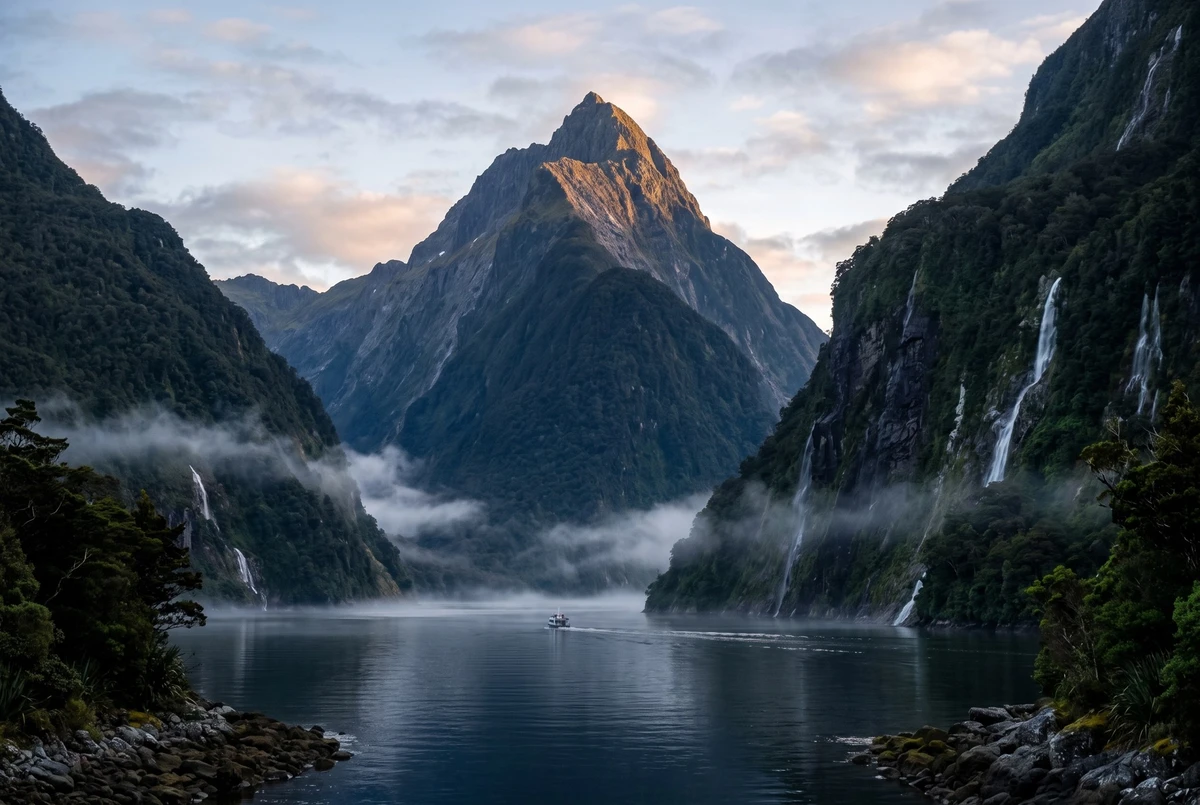
Some images are AI-generated for illustration. While we confirm your booking, just ask and we will send you the original photos.
- Fair, honest prices
- Real people, not bots
- Confirm, then pay
- Secure payment

Overview
The Mount John summit stargazing experience takes you to the top of the mountain that rises above Lake Tekapo, in the heart of the Aoraki Mackenzie International Dark Sky Reserve, for one of the clearest views of the southern night sky. You check in at the stargazing base on the Tekapo lakefront, ride the shuttle up to the summit at 1,029 metres and join an expert astronomy guide among the working observatories. The evening starts with a naked-eye tour of the constellations, planets and the Milky Way using laser pointers, then moves to high-powered telescopes and the observatory dome for star clusters, nebulae and distant galaxies. A shared 105-minute experience with an English-speaking guide, a cold-weather jacket on loan and an indoor alternative in bad weather; minimum age 10.
Highlights
- Exclusive after-hours access to the summit of Mount John at 1,029 metres
- Stargaze inside the Aoraki Mackenzie International Dark Sky Reserve, one of the darkest skies on Earth
- Naked-eye sky tour with laser pointers: Southern Cross, Milky Way, planets and more
- View star clusters, nebulae and galaxies through high-powered telescopes and the observatory dome
- Expert astronomy guide with science and Māori sky stories
- Return shuttle between the lakefront base and the summit included
- Extreme cold-weather jacket provided at check-in
- Indoor alternative or full refund if the weather closes the summit
Full Description
Lake Tekapo and the Mackenzie Basin
Lake Tekapo lies in the Mackenzie Basin of New Zealand's South Island, a high, dry plateau of tussock grassland ringed by the Southern Alps, about three hours' drive from Christchurch and under two from Mount Cook. The lake's famous turquoise colour comes from glacial rock flour suspended in the water, and the small village on its southern shore, with its lakeside stone church and summer lupins, is one of the most photographed places in the country. By night the same village becomes a gateway to the stars: the dry air, high altitude and strict lighting rules give exceptionally clear skies.
Things to do in Lake Tekapo at night revolve around stargazing, and the summit tour is the most complete option. The check-in base is on the lakefront in the village centre, a few minutes' walk from most accommodation, and the summit shuttle leaves from there.
Mount John Observatory
Mount John rises directly behind the village to a summit of 1,029 metres, and on top sits New Zealand's premier astronomical research observatory, run by the University of Canterbury since the 1960s. Its white domes house several research telescopes, including one of the largest in the country, used to study everything from planets around distant stars to the structure of our galaxy. By day the summit road and café are open to visitors; by night the mountain is closed to the public, and this tour is the only way to stand among the observatories after dark.
A Mount John Observatory tour at night is the highlight of a Tekapo visit for most travellers. The transfer from the lakefront to the summit takes about 15 minutes on a winding gravel road, and on arrival the lights of the village below are the only glow in an otherwise black landscape.
The Aoraki Mackenzie International Dark Sky Reserve
In 2012 the Mackenzie Basin and Aoraki/Mount Cook National Park became the Aoraki Mackenzie International Dark Sky Reserve, one of the largest in the world and the first in the southern hemisphere, created to protect the night sky from light pollution. Outdoor lighting in Tekapo has been controlled since the 1980s to protect the observatory, which is why the stars here look brighter than almost anywhere else you will travel. From the summit the Milky Way casts a visible glow, the Magellanic Clouds hang like faint smudges and the Southern Cross stands high above the mountains.
Your guide explains what makes a dark sky reserve, how the Māori navigated and told stories by these same stars, and how to find your way around the southern sky, so that the knowledge stays with you long after the tour ends.
The naked-eye sky tour
The first part of the evening uses nothing but your eyes and the guide's laser pointer. Standing on the summit with your extreme cold-weather jacket zipped up, you learn to identify the Southern Cross and the pointer stars, the planets visible that month, the band of the Milky Way with its dark lanes, bright stars such as Canopus and Sirius and, in the right season, the centre of our galaxy overhead. The guide moves the beam from object to object so the whole group can follow, and questions are welcome throughout.
This segment lasts around 30 to 40 minutes and is adapted to the night: every evening the sky is different, with meteors, satellites and the changing moon adding to the show. Phones and cameras are welcome, but flash photography is not allowed so that everyone's night vision is protected.
Telescopes and the observatory dome
The second half of the tour goes deeper. High-powered telescopes set up on the summit, and the observatory dome itself, bring into view what the naked eye cannot: the jewel-box colours of star clusters, the glowing gas of nebulae such as the great nebula in Orion or the Carina region, the craters of the moon when it is up, the rings of Saturn or the moons of Jupiter when the planets are placed well, and the faint spirals of distant galaxies. Guides adjust the telescopes between objects and explain what you are seeing and how far away it is.
Viewing through research-grade equipment in one of the darkest places on Earth is what sets the summit experience apart from lakeside stargazing. Allow about 105 minutes for the whole tour, including the shuttle ride each way.
Itinerary
- Check-in at the lakefront baseArrive at least 20 minutes before departure at the stargazing base on the Lake Tekapo lakefront, collect your cold-weather jacket and meet your guide.
- Shuttle to the Mount John summitRide the winding road up to the observatory at 1,029 metres while the guide introduces the night ahead (about 15 minutes).
- Naked-eye sky tourLearn the southern constellations, planets and the Milky Way with laser pointers and the guide's stories (about 35 minutes).
- Telescopes and the observatory domeView star clusters, nebulae, planets and galaxies through high-powered telescopes and inside the dome (about 40 minutes).
- Return to the lakefrontShuttle back down to the base in the village (about 15 minutes).
What's included
- Return transfer between the lakefront base and the Mount John summit
- Exclusive access to the Mount John Observatory summit at 1,029 metres
- English-speaking astronomy guide with laser-guided sky tour
- Viewing through high-powered telescopes and the observatory dome
- Extreme cold-weather jacket on loan
- Indoor alternative if the weather closes the summit
Not included
- Hotel pickup and drop-off
- Food and drinks
- Flash photography is not allowed
- Tips
Is this right for you?
Great for
- Nature and wildlife lovers
- Travellers who want a proven choice — rated 4.6/5 by past travellers
Think twice if
- You want a private tour — this one is shared with other travellers
Not suitable for
- Children under 10 years
- People with mobility impairments (gravel incline and steps in the dark)
- Guests who do not speak the tour language, for health and safety reasons
Meeting point
Check in at least 20 minutes before your departure time at the stargazing base on the Lake Tekapo (Takapō) lakefront in the village centre; the summit shuttle leaves from there and brings you back at the end. There is no hotel pickup, but the base is within walking distance of most accommodation in Tekapo. If your start time is after midnight, double-check the date you book.
Important information
- Minimum age 10 years; children must be accompanied by an adult
- Wear warm clothing in every season, including a hat, gloves and closed shoes; an extreme cold-weather jacket is provided
- You need to walk about 100 metres on a gravel incline and climb a few steps in the dark
- Flash photography is not allowed on the summit
- Check in at least 20 minutes before departure
- You must speak the tour language (English) for safety reasons
- The tour depends on the weather: if the summit closes, an indoor alternative or a full refund is offered
- Food, drinks and hotel pickup are not included
Good to know
Frequently Asked Questions
Straight answers to what travellers ask us most, before they book.
Is this a shared or a private experience?
It is a shared guided experience: you join a small group with one astronomy guide at the summit.
How long does the stargazing tour take?
About 105 minutes from departure at the lakefront base, including the shuttle to the summit and back, plus the 20-minute check-in beforehand.
Is hotel pickup included?
No, but the return shuttle between the lakefront base and the Mount John summit is included, and the base is a short walk from most accommodation in Tekapo village.
What is included?
Exclusive access to the Mount John summit, the astronomy guide, the naked-eye and telescope sessions including the observatory dome, the return summit transfer and a cold-weather jacket on loan.
Is the price per person or per group?
Per person, with the same rate for adults and children aged 10 to 17. The booking panel on this page shows the current price.
Is it suitable for children?
Children from 10 years are welcome with an adult. The minimum age is strict because the summit is dark, cold and has steps and a gravel slope.
Is it suitable for people with reduced mobility?
No. You need to walk about 100 metres up a gravel incline and manage a few steps in the dark, so the summit tour is not suitable for wheelchair users.
What should I wear?
Warm layers, a hat, gloves and closed shoes, even in summer; the summit is windy and cold at night. An extreme cold-weather jacket is provided at check-in.
What is the best time of year for stargazing at Lake Tekapo?
Winter nights (June to August) are longest and often clearest, and the centre of the Milky Way is overhead in the winter evenings. Summer has warmer but shorter nights. Dark nights around the new moon give the best views in any month.
What happens in bad weather?
Cloud or wind can close the summit. In that case an indoor astronomy alternative is offered, or a full refund; we contact you as soon as the decision is made.
Can I take photos?
Yes, phones and cameras are welcome and the guides can help with night settings, but flash photography is not allowed.
How do I book and confirm?
Choose your date and time in the booking panel on this page. Our team confirms your booking on WhatsApp within minutes and sends the check-in details.
More in Lake Tekapo
Popular across New Zealand
-
-
-
-
-
-