
Ski Plane and Helicopter Glacier Landing Combo Flight Mount Cook
- DurationAbout 45 minutes
- Daily
- Group
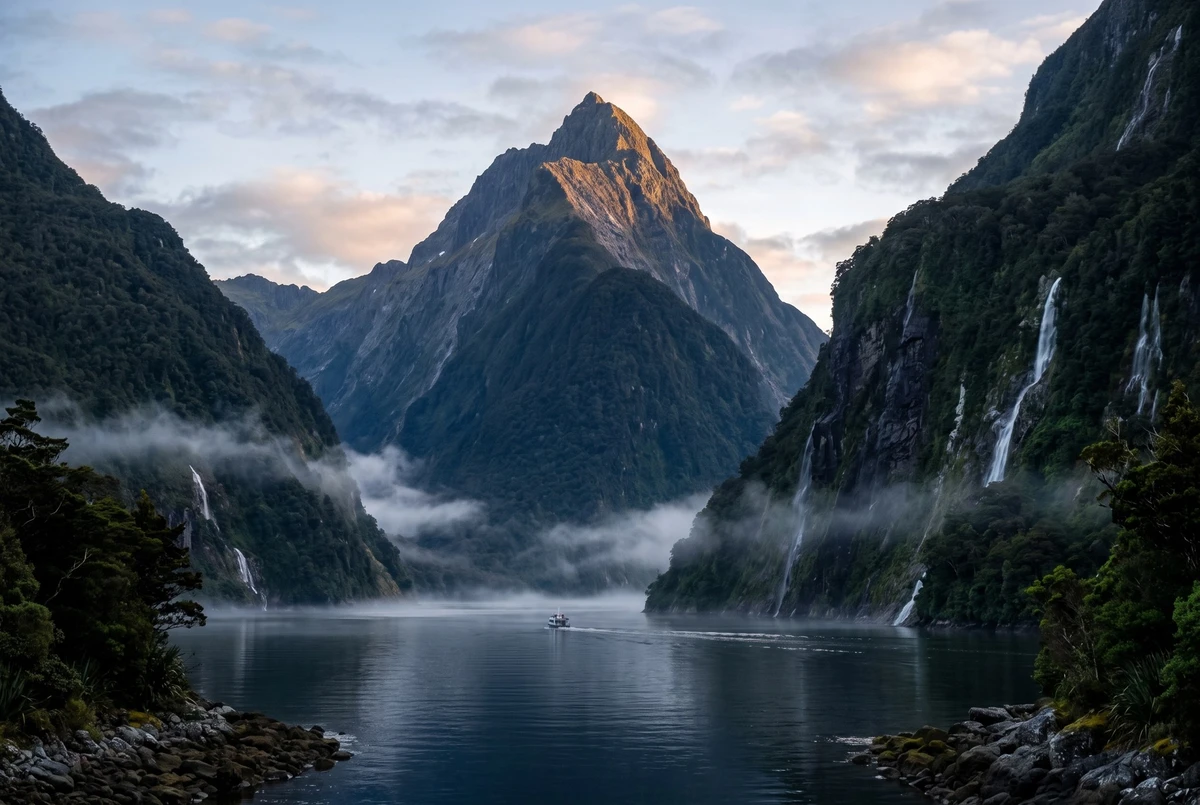
Some images are AI-generated for illustration. While we confirm your booking, just ask and we will send you the original photos.
- Fair, honest prices
- Real people, not bots
- Confirm, then pay
- Secure payment

Overview
This is a 45-minute scenic flight at Aoraki / Mount Cook that combines two aircraft in one trip: you fly out in a ski plane or a helicopter, land on the upper snowfields of the Tasman Glacier, step out onto the snow among the peaks, then swap aircraft and fly back the other way to Mount Cook Airport. From the air you follow the Tasman Valley over the blue terminal lake, along New Zealand's longest glacier, past the Hochstetter Icefall and the Grand Plateau, with Aoraki / Mount Cook rising above. Pilots give live commentary. It is a shared flight with one price for all ages, and the aircraft shut down fully on the glacier. Check-in is at Mount Cook Airport, with free parking; no hotel pickup.
Highlights
- Ski plane and helicopter on the same 45-minute flight
- Snow landing on the upper Tasman Glacier, New Zealand's longest glacier
- Hochstetter Icefall, the Grand Plateau and Plateau Hut from the air
- Aoraki / Mount Cook, the country's highest peak, seen up close
- The milky blue Tasman Terminal Lake and the braided Tasman Valley
- Aircraft fully shut down on the glacier for photos in silence
- Pilot commentary and recorded audio in English
- Free parking and wi-fi at Mount Cook Airport
Full Description
Mount Cook Airport and the Tasman Valley
The flight begins at Mount Cook Airport, the small aerodrome on the floor of the Tasman Valley about five kilometres from Mount Cook Village inside Aoraki / Mount Cook National Park. Check-in closes 45 minutes before departure, when passengers are weighed and briefed and seats are allocated to balance the aircraft. The ski plane taxis on wheels and lowers its skis only for the snow; the helicopter lifts straight off the apron.
Within a minute of take-off you are over the wide grey braids of the Tasman River and the moraine walls that mark where the glacier once reached. The valley is the main approach to the mountains, and the Mount Cook scenic flight follows it north with the Ben Ohau Range on one side and the Liebig Range on the other, climbing steadily towards the ice. Tasman Valley flights are the classic way to see the park when there is no time for long hikes.
The Tasman Glacier and its terminal lake
The Tasman Glacier is the longest in New Zealand, about 23 kilometres from its névé high in the Southern Alps to the terminal lake, and up to several hundred metres thick. From the air you see its whole length: the grey, rock-covered lower reaches, the crevassed middle section and the white snowfields at the top where you will land. At the foot of the ice lies the Tasman Terminal Lake, a milky turquoise lake that has formed since the 1970s as the glacier retreats, with icebergs calving from the terminal face.
A Tasman Glacier landing flight is the only way to stand on the upper glacier without mountaineering skills, and the pilots explain how the ice moves and why the lake is growing. Landing on the glacier takes place on the upper snowfields, where the surface is smooth and the aircraft can shut down safely.
The Hochstetter Icefall and the Grand Plateau
Above the main glacier the Hochstetter Icefall tumbles from the Grand Plateau in a chaotic staircase of blue seracs and crevasses, one of the most dramatic sights in the national park and impossible to reach on foot. The flight passes close to it, then rises over the Grand Plateau itself, the high snow basin beneath the east face of Aoraki where mountaineers camp at Plateau Hut before climbing the summit.
Seeing the Hochstetter Icefall from a helicopter or ski plane gives a sense of scale that photographs rarely capture: the blocks of ice are the size of houses and the drop below them is hundreds of metres. The pilot commentary names the peaks around the plateau, including Mount Tasman, the country's second-highest mountain, whose ice-covered summit stands beside Aoraki.
The snow landing
The landing is the heart of the trip. The aircraft sets down on the upper snowfield of the Tasman Glacier at around 2,000 metres, shuts down completely and you step out onto the snow. The mountains here are covered in snow and ice all year, so even in midsummer you stand in a white amphitheatre of peaks with Aoraki / Mount Cook, the highest mountain in New Zealand, directly above. You have several minutes to walk around near the aircraft, take photographs and listen to the silence.
Wear closed-toe shoes and sunglasses, as the glare off the snow is strong, and dress in layers; the air is cold even on sunny days. Then you board the second aircraft, so that passengers who flew out by ski plane return by helicopter and vice versa, and see the glacier again from a different height and angle on the way down.
Aoraki / Mount Cook from the air
Aoraki / Mount Cook rises to 3,724 metres and is sacred to the Ngāi Tahu people, who tell of the mountain as an ancestor turned to stone. From the ground the summit is often hidden by cloud; from the air at close range you see its three peaks, the great east face above the Grand Plateau and the ridges that mountaineers have followed for more than a century. The best time for a Mount Cook helicopter flight is the morning, when the air is calmest and the light is clearest on the ice.
Flights run through the day in good weather and are refundable if the weather closes in, with the local team helping to reschedule around your travel plans. Because the aircraft are small, passenger weights are required at booking and flight times can shift if combined weights reach the safety limit; bring only a phone or camera on board, as bags are not allowed.
Itinerary
- Check-in at Mount Cook AirportArrive at least 45 minutes before your flight for weighing, seat allocation and a safety briefing.
- Take-off up the Tasman ValleyFly north over the braided Tasman River and the Tasman Terminal Lake with pilot commentary, about 10 minutes.
- Tasman Glacier and Hochstetter IcefallFollow the full length of the glacier and pass close to the icefall below the Grand Plateau, about 10 minutes.
- Snow landing on the upper glacierLand on the upper snowfields, aircraft shut down, time on the snow for photos with Aoraki above, about 10 minutes.
- Swap aircraft and return flightBoard the second aircraft and fly back down the valley past the Grand Plateau and Plateau Hut, about 15 minutes.
- Land at Mount Cook AirportReturn to the terminal; total time about 45 minutes.
What's included
- Ski plane flight
- Helicopter flight
- Snow landing on the upper Tasman Glacier with time outside the aircraft
- Pilot commentary
- All taxes and fees
- Free car parking at Mount Cook Airport
- Free wi-fi at the terminal
Not included
- Hotel pickup and drop-off
- Food and drinks
- Gratuities
Is this right for you?
Great for
- Travellers who want the view from the air
- Travellers who want a proven choice — rated 4.7/5 by past travellers
Think twice if
- You want a private tour — this one is shared with other travellers
- You are afraid of heights
Meeting point
Check in at Mount Cook Airport, the aerodrome inside Aoraki / Mount Cook National Park about five kilometres from Mount Cook Village on the Tasman Valley road. Check-in closes 45 minutes before your flight time, so arrive early; free parking and wi-fi are available at the terminal. Flights depart hourly from 08:30 to 16:30 (no 12:30 departure). There is no hotel pickup; the airport is a few minutes by car from the village.
Important information
- Give the full name and weight of every passenger at booking; weight and balance limits apply to all aircraft
- Check-in closes 45 minutes before the flight time
- Wear closed-toe shoes, warm layers and sunglasses; it is cold on the glacier in every season
- No bags, food, drinks, drones or selfie sticks on board; phones and cameras are welcome
- If combined passenger weights reach the safety limit your flight time may be rescheduled, or refunded if no alternative suits
- Flights depend on weather; a weather cancellation is fully refundable and the local team will help reschedule
- One price for all ages; children fly at the same rate as adults
- Free parking at Mount Cook Airport
Good to know
Frequently Asked Questions
Straight answers to what travellers ask us most, before they book.
Is this a shared or a private flight?
It is a shared flight with other passengers; seats are allocated by weight for balance. Both aircraft are small, so groups stay intimate.
How long is the flight?
About 45 minutes in total, including roughly 10 minutes on the snow. Allow an extra 45 minutes before departure for check-in.
Do I fly in both the ski plane and the helicopter?
Yes. You fly out in one aircraft and return in the other, swapping at the glacier landing, so you experience both on the same trip.
Is hotel pickup included?
No. Check-in is at Mount Cook Airport, about five kilometres from Mount Cook Village, with free parking on site.
What is included?
The ski plane flight, the helicopter flight, the glacier snow landing, pilot commentary with recorded audio in English, all taxes and fees, and free parking and wi-fi at the airport.
Is the price per person or per group?
Per person, with one rate for all ages. The booking panel on this page shows the current price; our team confirms the total on WhatsApp.
Is the flight suitable for children and people with reduced mobility?
Children of all ages are welcome at the same rate. Boarding involves a step up into the aircraft and a short walk on snow; tell us about mobility needs when booking so the ground crew can assist.
Why do you need our weights?
Both aircraft have strict weight and balance limits. Accurate weights let the operator allocate seats safely; if the combined weight is too high, a different time will be offered.
What should I wear and bring?
Closed-toe shoes, warm layers, sunglasses and sunscreen. Bring only a phone or camera; bags are not allowed on board.
What is the best time of day and year for the flight?
Mornings are usually calmest and clearest. Flights run all year; winter brings the deepest snow and summer the longest days, and the glacier is white in every season.
What happens in bad weather?
If cloud or wind make flying unsafe the flight is cancelled and fully refunded, and the local team helps you rebook at another time that suits your plans.
How do I book and confirm?
Choose your date and flight time on this page, add every passenger's name and weight, and send the booking; our team confirms on WhatsApp within minutes and sends your voucher.
More in Mount Cook
Popular across New Zealand
-

-
-
-
-
-