
Hissar Fortress Tour from Dushanbe
- DurationAbout 5 hours (09:00 to 14:00)
- Daily
- Group
- Pickup available
Some images are AI-generated for illustration. While we confirm your booking, just ask and we will send you the original photos.
- Fair, honest prices
- Real people, not bots
- Confirm, then pay
- Secure payment

Overview
This half-day tour takes you from Dushanbe to Hissar Fortress, one of the most famous historical monuments of Tajikistan, about 30 km west of the capital. With an English-speaking guide you explore the monumental brick gateway and its twin towers, the Old Madrasa with its museum, the Mausoleum of Makhdumi Azam and the remains of the caravanserai and market square, in an open-air reserve that tells 3,000 years of Silk Road history. You also visit a local arts and crafts market and stop for photos on the way back. In the default option your guide meets you at your accommodation in Dushanbe and you travel together by public shared taxi; a private option is also available. Entrance fees and the tourist tax are included.
Highlights
- Hissar Fortress, one of Tajikistan's most famous monuments
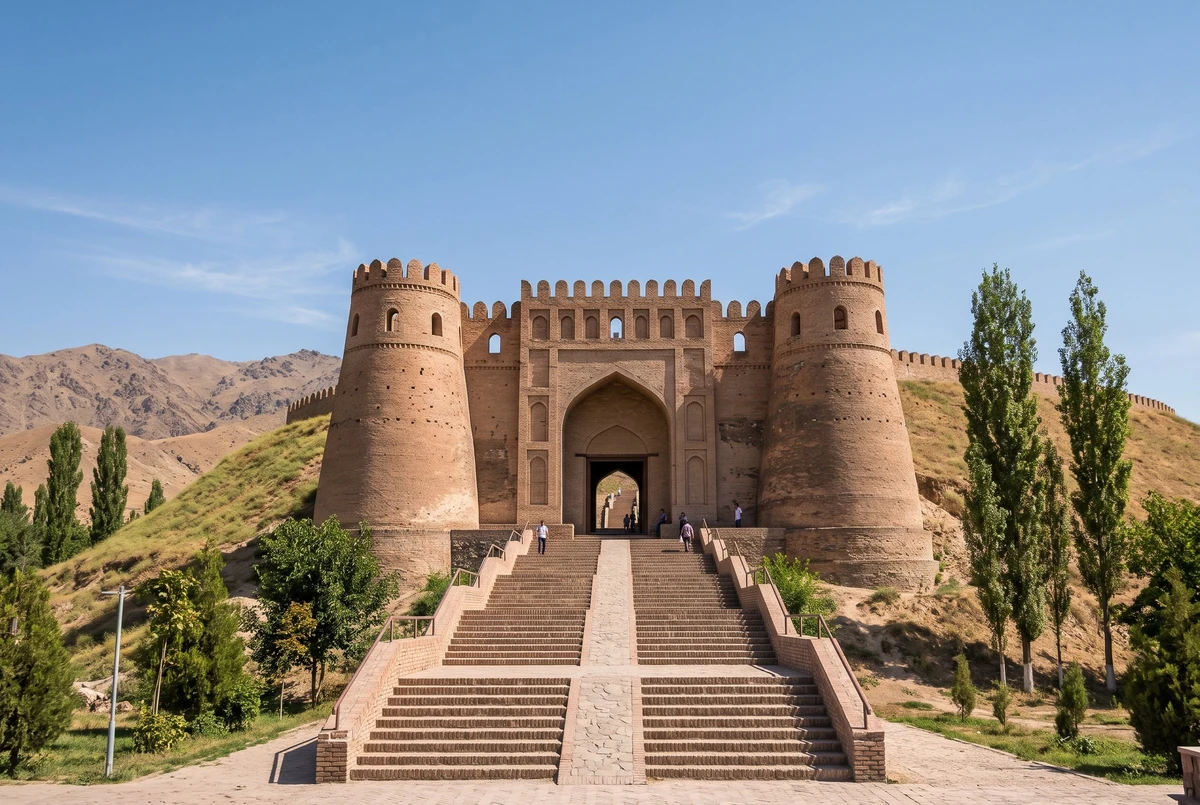
- The monumental brick gateway with its two round towers
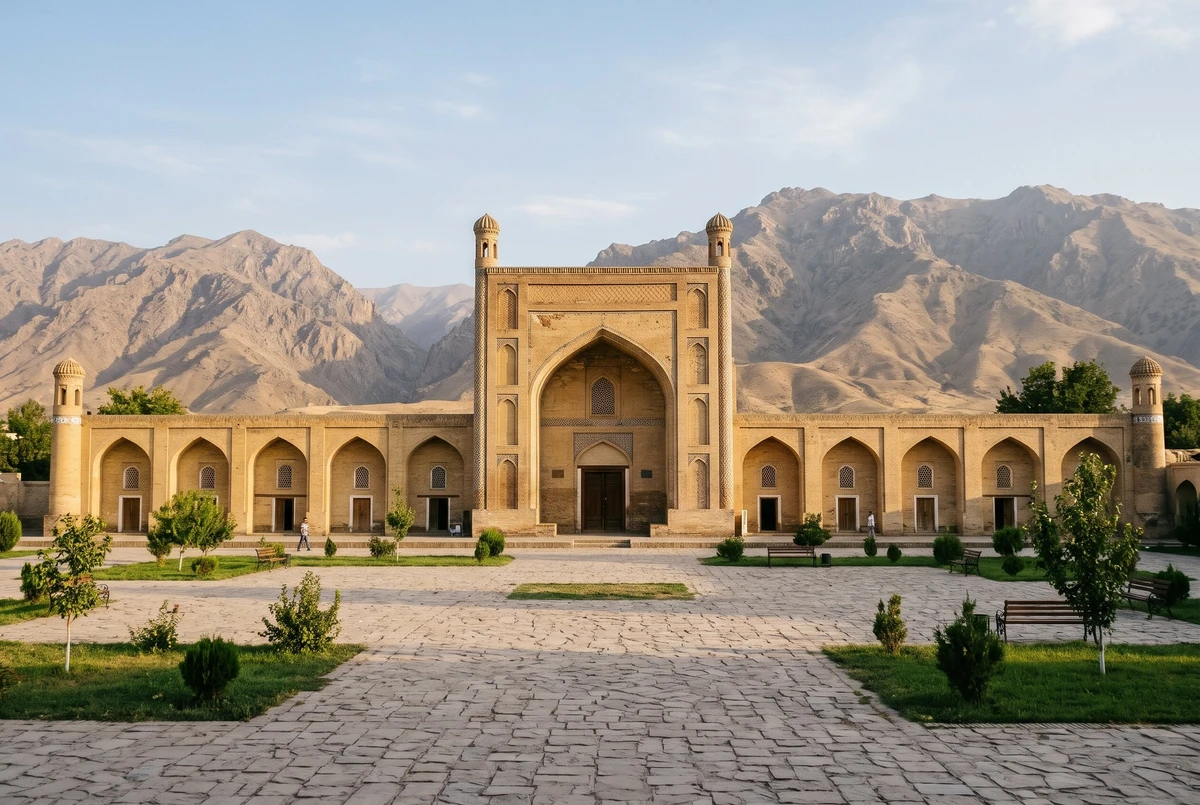
- The Old Madrasa and its museum of local history
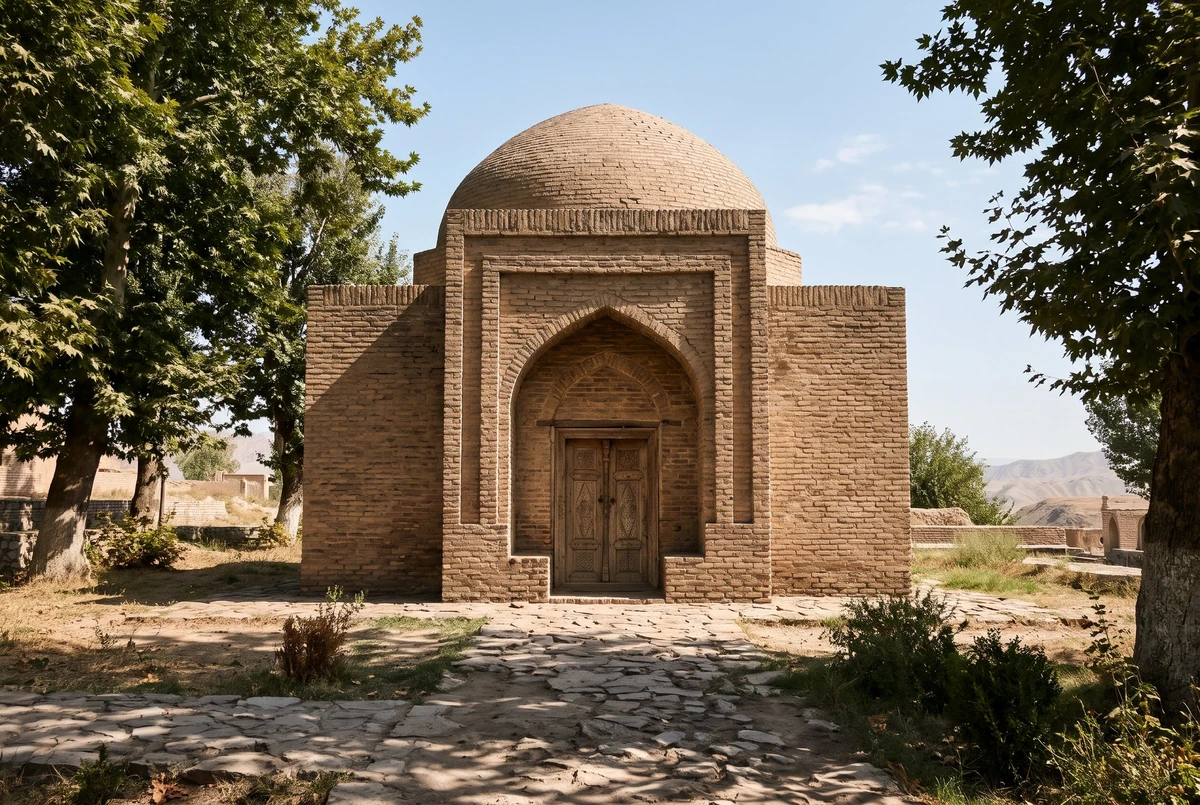
- The Mausoleum of Makhdumi Azam
- Silk Road history and local legends from your guide
- Local arts and crafts market in Hisor
- Entrance fees and tourist tax included
- Shared-taxi or private options from Dushanbe
Full Description
Hissar Fortress, a gateway on the Silk Road
Hissar Fortress stands on a hill near the town of Hisor, about 30 kilometres west of Dushanbe, at the entrance to the fertile Hissar Valley. People have lived on this site for around 3,000 years, and it grew rich because routes of the Great Silk Road passed nearby. The fortress was built to protect the local population and the trade caravans from nomad raids, and for a long time it served as the residence of the governor appointed by the Emir of Bukhara and as a base for his troops.
The best-preserved part is the monumental main gate, flanked by two massive cylindrical towers of baked brick, with a wide brick staircase leading up to it. Much of the citadel behind was lost in the early 20th century, but the gate has been carefully restored and is the symbol of the reserve. With your guide you climb to the gate, look out over the valley and hear how the fortress worked when it was the seat of local power.
The Old Madrasa and its museum
Below the fortress lies a group of historic buildings that once formed the busy heart of medieval Hissar. Two madrasas, religious schools built between the 16th and 18th centuries, faced a large market square with a caravanserai, a medieval inn for merchants, and many shops. The Old Madrasa, a long brick building with arched cells around a courtyard, now houses a museum of local history.
Inside, the museum displays archaeological finds, coins, ceramics, weapons, traditional costumes, jewellery and household objects that bring the story of the Hissar Valley to life, from ancient times to the 20th century. Your guide explains how students once lived and studied in the small cells and how the madrasa fitted into the life of the town. Allow time to look at the decorated brickwork and the doorways, and to photograph the building from the courtyard, especially in the softer morning light.
The Mausoleum of Makhdumi Azam
Close to the madrasas stands the Mausoleum of Makhdumi Azam, whose name means 'the Greatest Lord'. Built in the 16th century of baked brick, it is a simple, elegant domed building that has long been a place of respect and quiet visits for local people. It is still not known for certain who commissioned it, which adds a little mystery to the site.
Your guide tells you about the role of such mausoleums in Central Asian Islamic culture and the traditions connected with them, and points out details of the brick dome and the entrance. Visitors should dress modestly and keep their voices low, as the mausoleum is still respected as a holy place. Around it, the remains of houses and craft workshops recall the lively town that once surrounded the fortress, and the grounds of the reserve, which covers about 86 hectares, are pleasant for a short walk under the trees.
Legends of Hissar, local crafts and the way back
Hissar is rich in legends passed down for centuries. The most popular says the citadel was built by a legendary king of ancient Persian epic poetry to defend himself from a famous hero of the same tales, and your guide shares these stories as you walk. They help explain why the fortress holds such a special place in the identity of Tajikistan and why it is considered one of the oldest and largest architectural monuments of Central Asia.
The visit also includes a local arts and crafts market, where you can see embroidered textiles such as suzani, skullcaps, ceramics and other handmade souvenirs. On the way back to Dushanbe you make a 30-minute photo stop at Kharbuza before returning to the city, about five hours after you set off. Lunch is not included, but your guide can recommend a local café; as Tajikistan is a Muslim-majority country, food is halal, with dishes such as plov, shashlik and fresh round bread.
Itinerary
- Meet in DushanbeYour guide meets you at your hotel or accommodation in Dushanbe (around 09:00 for the shared-taxi option, 08:00 for the private option).
- Travel to HisorDrive west through the Hissar Valley, about 1 hour.
- Hissar Fortress and the reserveGuided visit of the fortress gate, the Old Madrasa museum, the Mausoleum of Makhdumi Azam and the reserve, with a crafts market visit, about 1.5 hours.
- Photo stop at KharbuzaA short guided stop for photos, about 30 minutes.
- Return to DushanbeDrive back to the city, about 1 hour, arriving around five hours after the start.
What's included
- Meeting at your accommodation in Dushanbe
- Transport by public shared taxi
- English-speaking guide
- Entrance fees to the sites visited
- Tourist tax
Not included
- Lunch
- Personal expenses
Is this right for you?
Great for
- Travellers without a car — hotel pickup is included
- Groups who want privacy — a private option is available
- History and culture lovers
Not suitable for
- Travellers who cannot manage brick staircases and uneven ground at the fortress
Meeting point
Our guide meets you at your hotel or other accommodation in Dushanbe at the start of the tour: around 09:00 for the shared-taxi option (tour time 09:00 to 14:00) or 08:00 for the private option. Please send us the name and address of your accommodation when you book, and we confirm the exact time with you.
Important information
- Bring your passport or ID card
- Wear comfortable shoes for the brick staircases and uneven ground
- Dress modestly for the mausoleum and the madrasa, with shoulders and knees covered
- Bring water, a hat and sun protection in summer, when the valley gets very hot
- Lunch is not included; bring some cash in Tajik somoni for food and souvenirs
- In the default option you travel by public shared taxi with your guide; a private option is also available
- Entrance fees and the tourist tax are included
Good to know
Frequently Asked Questions
Straight answers to what travellers ask us most, before they book.
Is this a shared or a private experience?
In the default option you travel with your guide by public shared taxi; a private option with pickup at 08:00 is also available in the booking panel.
How long does the Hissar Fortress tour take?
About 5 hours, including around 1 hour each way and 2 hours at the sites.
Is hotel pickup included?
Yes, the guide meets you at your hotel or accommodation in Dushanbe.
What is included?
An English-speaking guide, transport for the tour, entrance fees to the sites visited and the tourist tax. Lunch is not included.
Is the price per person or per group?
The price is per person. The booking panel on this page shows the current price of each option.
How far is Hissar Fortress from Dushanbe and how do I get there?
It is about 30 km west of Dushanbe, roughly 1 hour by road; this tour includes the transport and a guide.
Is Hissar Fortress worth visiting?
Yes. Its restored gate, madrasas and mausoleum make it one of the most important historical sites in Tajikistan and an easy half-day trip from the capital.
Is halal food available?
Yes. Tajikistan is a Muslim-majority country, and the local cafés serve halal dishes such as plov and shashlik; lunch is at your own cost.
Is it suitable for children or travellers with reduced mobility?
Children are welcome. The site has brick staircases and uneven paths, so travellers with reduced mobility should contact us before booking.
What is the best time to visit Hissar Fortress?
Spring (April to June) and autumn (September to October) are pleasant; summer is very hot, so a morning visit is best.
What happens in bad weather?
The tour runs in most weather; bring a light rain jacket in spring and warm clothes in winter.
How do I book and confirm?
Choose your option and date in the booking panel; our team confirms your booking on WhatsApp within minutes.