
French Quarter Walking and Storytelling Tour New Orleans
- Duration2 hours
- Daily
- Group
Photos show the places you visit; the boat or vehicle on the day may differ. Photos: Diego Delso (CC BY-SA 3.0) · Diego Delso (CC BY-SA 3.0), via Wikimedia Commons
Some images are AI-generated for illustration. While we confirm your booking, just ask and we will send you the original photos.
- Fair, honest prices
- Real people, not bots
- Confirm, then pay
- Secure payment

Overview
This French Quarter walking tour is a shared two-hour walk through the oldest neighbourhood of New Orleans, booked as 'French Quarter Walking and Storytelling Tour'. A local guide and storyteller leads a small group on foot from the jazz fountain in the French Market district past a convent almost three hundred years old, courtyards hidden behind eighteenth- and nineteenth-century buildings, St. Louis Cathedral and the Mississippi River, and ends in or beside Jackson Square. It is an outdoor walk with no entrance tickets, no hotel pickup and no food or drinks, with departures at 10:00, 13:00 and 16:00. The night before, your guide emails a photo, contact details and directions. It suits first-time visitors who want the history and the stories before exploring on their own.
Highlights
- Two hours on foot through the French Quarter with a local storyteller
- A small group, for a more personal and unhurried walk
- The French Market, a place of trade since colonial times
- A convent almost three hundred years old, a rare survivor of French rule
- Courtyards hidden behind eighteenth- and nineteenth-century townhouses
- St. Louis Cathedral and its three spires above Jackson Square
- The Mississippi River from the top of the levee
- Your guide's recommendations for the rest of your stay
Full Description
The French Market
The walk begins at the jazz fountain where Decatur and Dumaine Streets meet, in the French Market district. People were trading on this stretch of riverbank before the city existed, and a covered market has stood here since the Spanish period at the end of the eighteenth century, which makes it one of the oldest public markets in the United States. For generations it was where the city bought its vegetables, fish, coffee and spices, sold by vendors speaking half a dozen languages.
Today the long arcades hold food counters, craft stalls and a flea market, and the smell of fresh beignets, the square doughnuts buried in powdered sugar, drifts from the coffee stands at the upriver end. Your guide uses the market to set the scene with a brief overview of New Orleans history: founded by the French in 1718, ruled by Spain for four decades, and sold to the United States in 1803. It is the right start for a French Quarter history tour.
The Old Convent
A few blocks from the market the group stops outside a convent that is almost three hundred years old. Ursuline nuns arrived from France in 1727 to open a school for girls and care for the sick, and the building they completed in the 1750s is generally regarded as the oldest in the Mississippi River Valley. Its steep roof, plain plastered walls and rows of shuttered windows are pure French colonial design, a style that has otherwise almost vanished from the city.
The reason is fire. Two great blazes, in 1788 and 1794, destroyed most of the original French town, and the convent was among the very few structures to survive both. Standing in front of it, you can measure how much the rest of the neighbourhood changed afterwards. The tour views the convent from the street; your guide tells the stories of the women who ran it and of the role they played in the young colony.
Hidden Courtyards and Creole Architecture
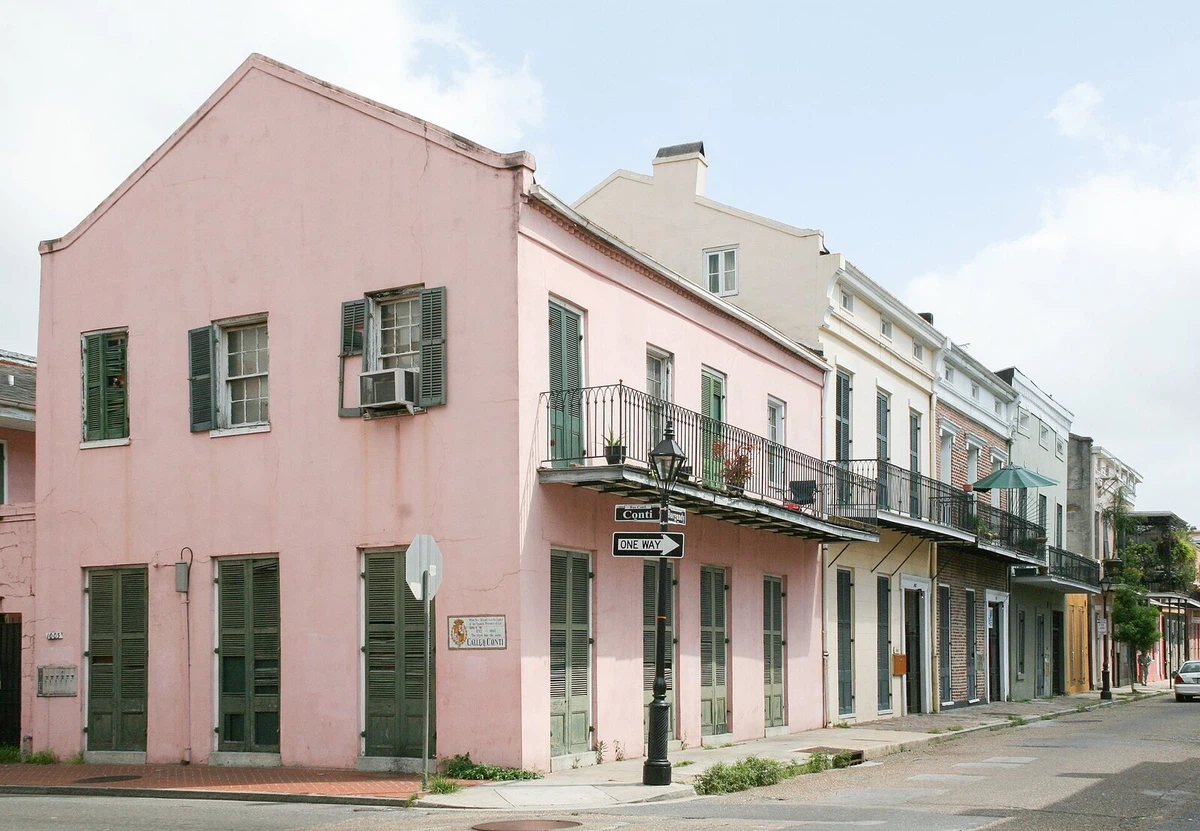
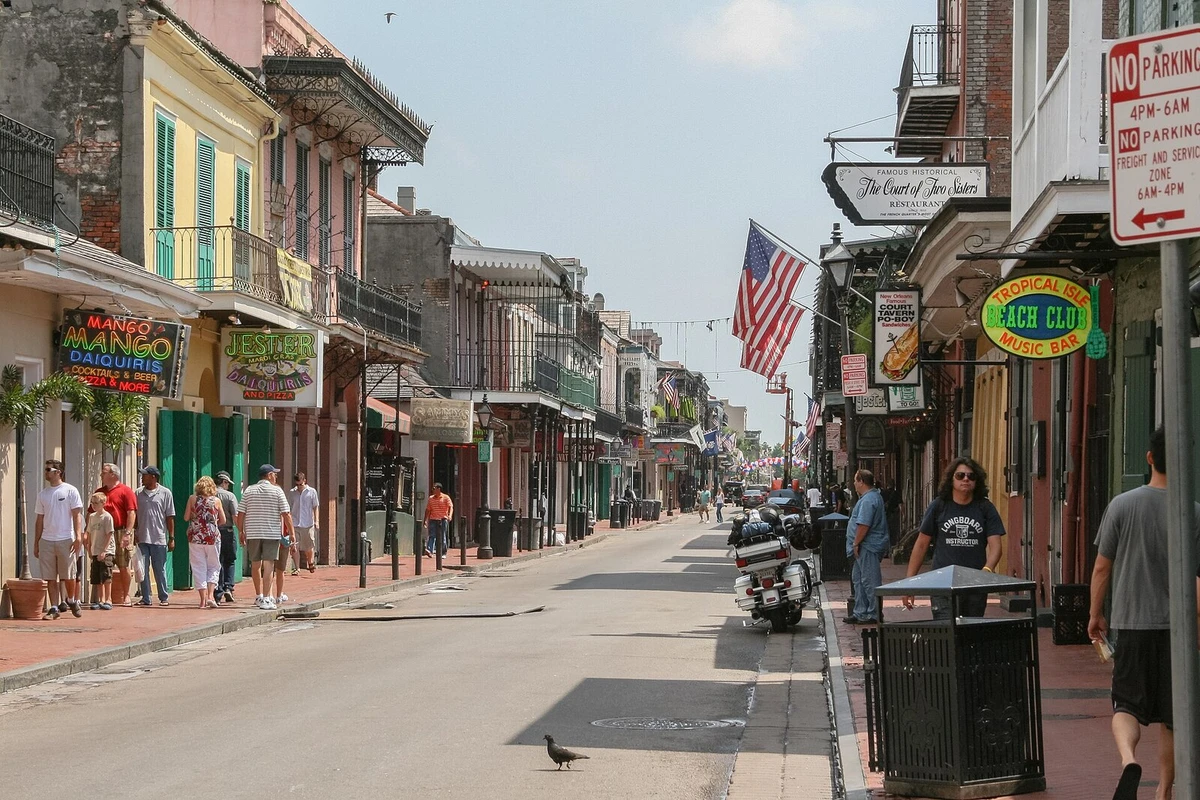
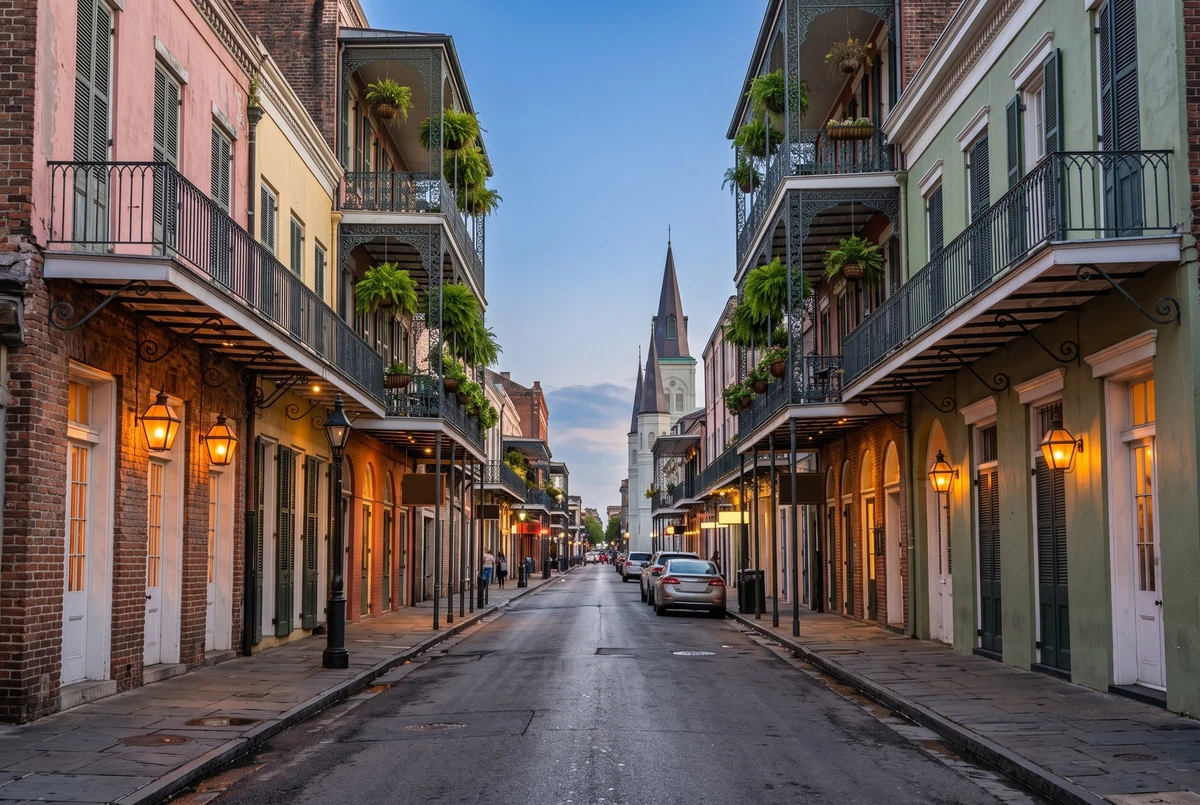
Despite its name, most of what you see in the French Quarter was built under Spanish rule or later. After the fires, new building rules called for brick walls, stucco and tiled or slate roofs, and houses were set right on the pavement with their gardens tucked behind. That is why the Quarter is full of courtyards: step through a carriageway and the noise of the street gives way to a fountain, banana trees and a staircase curling up to a gallery.
Your guide leads you past eighteenth- and nineteenth-century townhouses and low Creole cottages, and explains the difference between the delicate hand-forged balconies of the early years and the lace-like cast-iron galleries added from the 1850s. The word Creole itself, used for people born in the colony of French, Spanish and African descent, runs through every story. A New Orleans walking tour is the only way to notice these details: from a vehicle the courtyards stay invisible.
St. Louis Cathedral
The three slate spires of St. Louis Cathedral are the emblem of New Orleans. A church has stood on this spot since the 1720s; the present building, named after the sainted French king Louis IX, was completed in 1794 after the great fire and largely rebuilt around 1850, when it took the outline you see now. It is one of the oldest cathedrals in continuous use in the United States.
On either side stand two almost identical buildings from the last years of Spanish rule. The Cabildo, on the left as you face the church, was the seat of the colonial city council, and the ceremonies that transferred Louisiana to the United States took place there in 1803; its twin was built as a residence for the clergy. Both are now museums. This is an outdoor walk, so the tour admires the group of buildings from the square. St. Louis Cathedral opening hours depend on services, and your guide can advise when to return.
The Mississippi River
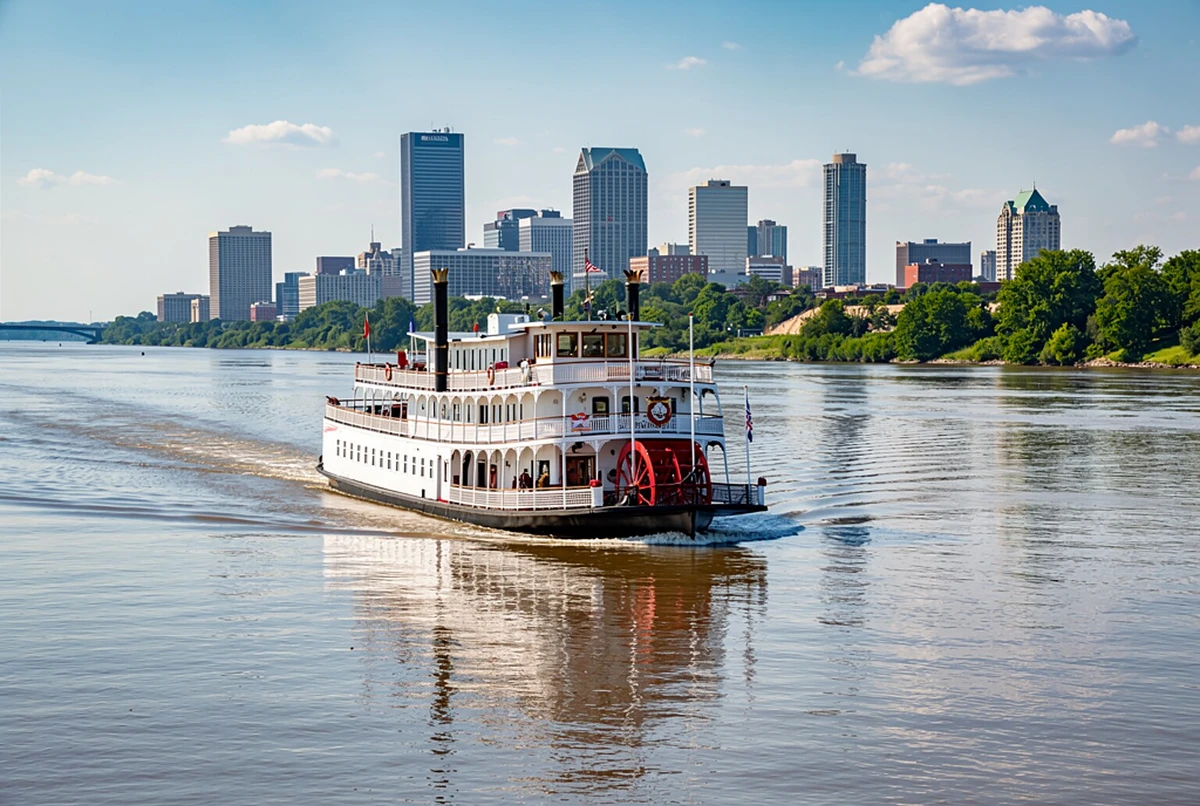
A short climb up the levee, the earth embankment that protects the city, brings the Mississippi into view. The river travels about 3,700 kilometres (2,300 miles) from Minnesota to the sea and gathers water from thirty-one states on the way. Here it is wide, brown and fast, and it swings around the old town in a great curve that gave New Orleans the nickname Crescent City.
The river explains why the city exists at all: whoever held this bend controlled trade between the interior of the continent and the ocean. It also explains the location of the French Quarter, which was laid out on the slightly higher ground beside the bank, the natural levee built up by centuries of floods. Freighters, tugs and paddle steamers still pass at close range. Is the French Quarter worth visiting for the river alone? Many guests say this view, with the cathedral behind them, is the one they remember.
Jackson Square
The tour ends in or beside Jackson Square, the heart of the old city. The French laid it out in 1721 as a military parade ground called the Place d'Armes; it was renamed in the middle of the nineteenth century after the general who defended the city in the Battle of New Orleans in 1815, and his bronze statue on a rearing horse has stood at its centre since 1856.
The long red-brick buildings that frame two sides, with shops below and apartments behind cast-iron galleries above, date from around 1850 and are often described as the oldest apartment buildings in the country. Along the iron fence local artists hang their paintings, and brass bands and street performers play on the flagstones in front of the cathedral. Before saying goodbye, your guide shares recommendations for where to eat, what to see and how to keep exploring. From here the cathedral, the museums and the river are all a few steps away.
Itinerary
- Jazz fountain, Decatur and Dumaine StreetsMeet your guide at the fountain in the French Market district for the 10:00, 13:00 or 16:00 departure and hear a brief overview of New Orleans history.
- French MarketWalk through the historic market district beside the river while the guide sets the scene.
- The old conventStop outside the convent that is almost three hundred years old and hear the stories of the French colony.
- Courtyards and Creole townhousesStroll past eighteenth- and nineteenth-century buildings, iron balconies and hidden courtyards.
- St. Louis CathedralAdmire the cathedral and the colonial buildings beside it from the outside.
- Mississippi RiverLook out over the river from the levee and learn why the city was founded on this bend.
- Jackson SquareThe walk ends in or next to the square after about two hours, with the guide's tips for exploring further.
What's included
- 2-hour guided walking tour of the French Quarter
- English-speaking local guide and storyteller
- Small-group experience
- Brief overview of New Orleans history
- Views of St. Louis Cathedral, Jackson Square, the French Market and the Mississippi River
- Your guide's photo, contact details and directions by email the night before
- Recommendations for exploring the neighbourhood after the tour
Not included
- Water (recommended, especially April to October)
- Gratuity for the guide (appreciated year-round)
- Hotel pickup and drop-off
- Food and drinks
Is this right for you?
Great for
- A short visit — about 2 hours
- Travellers who want a proven choice — rated 4.8/5 by past travellers
Think twice if
- You want a private tour — this one is shared with other travellers
Meeting point
Meet at the jazz fountain at the intersection of Decatur and Dumaine Streets (400 Dumaine Street), in the French Market district of the French Quarter, New Orleans. The night before the tour your guide emails you a photo, contact details and directions. Departures are at 10:00, 13:00 and 16:00, and the walk ends in or next to Jackson Square. There is no hotel pickup. We also send you the map pin on WhatsApp when we confirm your booking.
Important information
- Wear comfortable walking shoes: the sidewalks of the French Quarter are uneven and can be hard going.
- Bring water, especially from April to October, when it is hot and humid.
- The route is wheelchair accessible, but a sturdy wheelchair is essential because of the rough pavements.
- Pets, smoking and luggage or large bags are not allowed on the tour.
- This is an outdoor walk: entrance tickets, food and drinks are not included.
- A gratuity for the guide is not included and is appreciated all year round.
- Check your email the evening before for the guide's photo, contact details and directions.
- Bring a hat and sunscreen in summer and a light rain jacket or umbrella when showers are forecast.
Good to know
Frequently Asked Questions
Straight answers to what travellers ask us most, before they book.
Is this a shared or a private experience?
It is a shared walking tour in a small group, led by one local guide. The small size keeps it personal and makes it easy to ask questions.
How long does the walk take?
About two hours at an easy pace, with frequent stops for stories. It starts at the jazz fountain and ends in or next to Jackson Square.
Is hotel pickup included?
No. You meet the guide at the jazz fountain where Decatur and Dumaine Streets meet, which is easy to reach on foot from hotels in and around the French Quarter.
What is included?
A two-hour guided walking tour of the French Quarter with an English-speaking local guide and storyteller, a small-group experience, a brief overview of New Orleans history, views of St. Louis Cathedral, Jackson Square, the French Market and the Mississippi River, the guide's contact details by email the night before, and recommendations for afterwards. Water, food, drinks, gratuities and hotel pickup are not included.
Is the price per person or per group?
The price is per person. Children aged 5 and under join at no charge, and everyone from the age of 6 books at the adult rate. The booking panel on this page shows the current price of each option.
Is it suitable for children or travellers with reduced mobility?
Yes, with a little planning. Children are welcome, although the history suits older children best. The route is wheelchair accessible, but the pavements are uneven, so a sturdy wheelchair and comfortable shoes are a must.
Do we go inside the cathedral or any other building?
No. This is an outdoor walking and storytelling tour, and the landmarks are seen from the streets and squares. Your guide will tell you which interiors are worth returning to on your own.
Which departure time should I choose?
The 10:00 walk is the coolest and quietest, the 13:00 walk fits well after a late breakfast, and the 16:00 walk catches the softer afternoon light. From April to October the morning departure is the most comfortable.
What should I bring?
Comfortable walking shoes, water, a hat and sunscreen in the warm months, and a compact umbrella or rain jacket. Leave luggage and large bags at your hotel.
What is the best time to visit the French Quarter?
From October to April the weather is mild and ideal for walking. Late spring and summer are hot and humid, with short afternoon showers, so choose the morning departure and carry water.
What happens in bad weather?
The tour normally goes ahead in light rain, so bring an umbrella or a rain jacket. If severe weather makes walking unsafe, our team contacts you on WhatsApp to arrange another time or day.
How do I book and confirm?
Choose your date, departure time and number of travellers in the booking panel on this page and send the request. Our team confirms your booking on WhatsApp within minutes, and your guide emails you the evening before the walk.
More in New Orleans

Getting to & around New Orleans
Popular across United States
-
-
-
-
-
-