Downtown Medellin Historic Centre Walking Tour with Audio Headsets
- DurationAbout 2.5 to 3 hours
- Daily
- Group
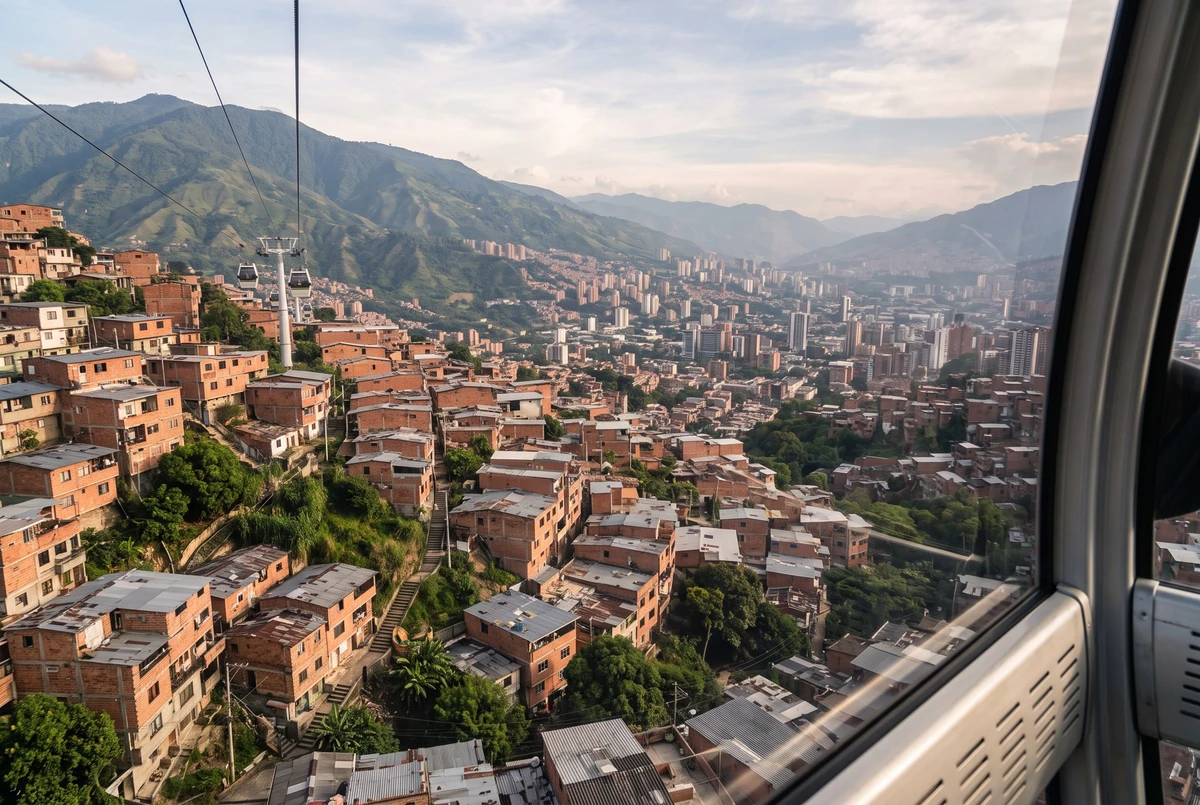
Some images are AI-generated for illustration. While we confirm your booking, just ask and we will send you the original photos.
- Fair, honest prices
- Real people, not bots
- Confirm, then pay
- Secure payment

Overview
The historic centre of Medellin is where the city's story is written in stone, bronze and brick, and this shared walking tour tells it without taboos: the Paisa culture of Antioquia, the textile industry and the railway that made the city rich, the violence of the 1980s and 1990s, and the social investment that turned it into the city of eternal spring that visitors know today. With an English-speaking local guide and, when weather allows, wireless audio receivers so you hear every word on busy streets, you walk about eight kilometres from Plaza Botero along Junín street to the Park of Lights, the old railway station and the La Alpujarra administrative centre. Departures at 10:00 and 14:00; no tickets are needed and all stops are outdoors.
Highlights
- Plaza Botero and its bronze sculptures, the reference point of downtown Medellin
- The pedestrian Junín street and the arcaded passages of the old commercial centre
- Parque de las Luces, the Park of Lights, with its forest of light poles
- The old railway station and the story of the Antioquia railway
- La Alpujarra administrative centre and the towering Monumento a la Raza
- Medellin in the 80s and 90s explained honestly by a local Paisa guide
- Wireless audio receivers so you hear the guide clearly on crowded streets
- Recommendations for lunch, coffee and souvenirs in the centre
Full Description
Plaza Botero and the Palacio de la Cultura
The walk starts in front of the Museo de Antioquia on Plaza Botero, the square where the sculptor from Medellin whose name it bears placed more than twenty of his oversized bronze figures as a gift to his native city. Horses, cats, a Roman soldier and reclining women stand on low plinths so that everyone can touch them, and the square is the meeting point of downtown life, with shoeshiners, fruit sellers and office workers crossing all day.
Across the square rises the Palacio de la Cultura, a striped black-and-white Gothic-revival palace designed by a Belgian architect in the 1920s and left unfinished for decades; its domes are the postcard of the centre. Your guide uses Plaza Botero Medellin as the opening chapter: what Paisa culture is, why Antioquia's people see themselves as traders and builders, and how the square was reclaimed from decay in the early 2000s. Allow about half an hour here before the walk moves on.
Junín street and the commercial passages
From the square the route follows Junín, the pedestrian street that was the elegant heart of the city a century ago, when strolling it was so fashionable that Medellin invented a verb for it. Today it is lined with mid-twentieth-century buildings, cafés, flower stalls and the arcaded passages where small traders sell everything from fabric to emeralds. The Medellin downtown walking tour slows here to look at the façades and at the first skyscraper of the city at the end of the street.
Junín is also where the guide explains the textile industry that made Medellin the industrial capital of Colombia in the twentieth century and the rapid growth that followed. The street is crowded and loud, which is exactly why the wireless audio receivers are handed out when the weather is dry: you can wander a few metres to take photos and still hear the story. Keep bags in front of you here, as on any busy commercial street.
Parque de las Luces and the old railway station
Parque de las Luces, the Park of Lights, is the modern face of the centre: a wide plaza planted with hundreds of tall white light poles and groves of bamboo, built in 2005 on the site of the old market square to reclaim an area that had become dangerous. The square is named after the Cuban engineer who built the Antioquia railway, and beside it stands the former Medellin railway station, a handsome early-twentieth-century building with an arched colonnade.
Together with the two red-brick commercial buildings of the 1890s that flank the plaza, this corner tells the story of the railway that connected the coffee farms of Antioquia to the river and the sea and turned a mountain town into a city. The Park of Lights Medellin is at its best in the late afternoon when the poles begin to glow; on the morning departure you see it busy with students heading to the library next door. About twenty minutes are spent here.
La Alpujarra administrative centre
A few blocks south the walk reaches La Alpujarra, the administrative centre of Medellin and of the department of Antioquia, where the governor's offices, the city hall and the regional assembly stand around a broad plaza. In the middle rises the Monumento a la Raza, a thirty-eight-metre bronze and concrete sculpture that spirals upward to tell the story of the Antioquian people, from the mountains and the mines to the struggles of the twentieth century.
La Alpujarra was built in the 1980s as a symbol of a modern, planned city, and the guide uses it to speak about the decades that followed: the drug violence of the 80s and 90s, the years when Medellin was called the most dangerous city in the world, and the collective effort, libraries, cable cars, parks and schools, that brought it back. The story is told plainly and without taking sides; it is the part of the tour that visitors say changed how they see the city.
The route, the pace and the people
The full walk covers about eight kilometres in two and a half to three hours, with rest stops and plenty of time to listen, so it is a real walking tour of Medellin's historic centre rather than a quick stroll. Everything is outdoors and no entrance tickets are needed; the guide deliberately avoids places where sudden extra charges apply. Comfortable shoes, water and a rain cape or umbrella are the only equipment you need, because afternoon showers are frequent.
The group is shared and the guides are local Paisas who grew up with the history they tell. At the end they give recommendations for lunch, coffee and souvenirs in the centre, and the final stop is a short walk from the metro so you can continue on your own. Is downtown Medellin safe to visit? With a guide, in daylight and with your belongings close, the centre is the most rewarding part of the city for anyone who wants to understand it.
Itinerary
- Meeting at Plaza BoteroFind the guides with red umbrellas in front of the Museo de Antioquia at 10:00 or 14:00; audio receivers are handed out when the weather allows.
- Plaza Botero and the Palacio de la CulturaThe bronze sculptures, the striped palace and an introduction to Paisa culture; about thirty minutes.
- Junín street and the passagesWalk along the pedestrian street and through the commercial arcades while the guide explains the industrial century of Medellin.
- Parque de las Luces and the railway stationThe Park of Lights, the old station and the red-brick buildings of the railway era; about twenty minutes.
- La AlpujarraThe administrative centre and the Monumento a la Raza, with the honest story of the 80s and 90s and the city's recovery.
- End of the tourRecommendations for lunch, coffee and souvenirs; the tour ends in the centre a short walk from the metro, two and a half to three hours after the start.
What's included
- English-speaking local guide
- Wireless audio receivers when weather allows
- Guided walk of about 8 km through the historic centre
- Stops at Plaza Botero, Junín street, Parque de las Luces, the old railway station and La Alpujarra
- Local recommendations for lunch, coffee and souvenirs
Not included
- Food, drinks and souvenirs
- Hotel transfers
- Entrance tickets (none required)
- Gratuities (optional)
Is this right for you?
Great for
- History and culture lovers
- First-time visitors who want the highlights
- Travellers who want a proven choice — rated 4.8/5 by past travellers
Think twice if
- You need hotel pickup — you meet at the meeting point
- You want a private tour — this one is shared with other travellers
- Walking is difficult for you — expect active parts
Not suitable for
- People with mobility impairments
Meeting point
Meet in front of the Museo de Antioquia on Plaza Botero in the centre of Medellin at 10:00 or 14:00 and look for the guides holding red umbrellas. Parque Berrío metro station is a short walk away. Please arrive ten minutes early so the audio receivers can be handed out; the walk ends in the centre near the metro.
Important information
- Wear comfortable shoes: the route covers about 8 km with stops
- Bring water, a rain cape or umbrella and clothing for changeable weather
- The audio receivers are a weather-dependent extra, not waterproof and not suitable for children under 15; the guide continues in person if it rains
- No food, drinks, tickets or transport are included
- Keep your belongings close; the route passes crowded commercial areas
- Smoking and littering are not allowed during the tour
- Come with an open mind: the history of the 80s and 90s is told honestly
Good to know
Frequently Asked Questions
Straight answers to what travellers ask us most, before they book.
Is this a shared or a private experience?
It is a shared walking tour in English with a local guide; you join other travellers in the group.
How long does it take?
About two and a half to three hours, covering roughly eight kilometres on foot with rest stops.
Is hotel pickup included?
No. The meeting point is Plaza Botero in the centre, a short walk from Parque Berrío metro station on Line A.
What is included?
The English-speaking guide, the guided walk through the historic centre, wireless audio receivers when the weather allows, and local recommendations for food, coffee and souvenirs.
Is the price per person or per group?
Per person. The booking panel on this page shows the current price.
Are there entrance tickets to pay?
No. All the stops are outdoors and the guide avoids places with extra charges.
Is it suitable for children?
Children who can walk for three hours are welcome with their parents, although the audio receivers are given only to participants aged 15 and over; there is no separate child rate.
Is it suitable for people with reduced mobility?
No. The route is long and includes uneven pavements and crowded streets.
What should I bring?
Comfortable shoes, water, a rain cape or umbrella, sunscreen and a camera.
What happens if it rains?
The tour goes ahead. The audio receivers are collected because they are not waterproof, and the guide continues the full tour in person.
Is downtown Medellin safe?
The centre is busy and lively in daytime; with the guide, in a group and with belongings kept close, it is safe to visit, and the tour follows a route the guides walk every day.
How do I book and confirm?
Choose the date and departure time in the booking panel and send the request; our team confirms on WhatsApp within minutes.
More in Medellin