Dublin Mythology, Folklore & Legends Walking Tour
- Duration2 hours
- Daily
- Group
Some images are AI-generated for illustration. While we confirm your booking, just ask and we will send you the original photos.
- Fair, honest prices
- Real people, not bots
- Confirm, then pay
- Secure payment

Overview
This Dublin mythology walking tour is a shared two-hour storytelling walk with an accredited local folklore expert, starting at 15:00 in Crown Alley in Temple Bar. Instead of dates and monuments, it follows the stories Ireland has told for thousands of years: the mythical peoples who first came to the island, Celtic beliefs and festivals, ancient warriors, and the fairies, the banshee, the púca and the leprechaun. The route continues through the Georgian Quarter, with its darker tales of rebellion and grave robbing, passes the Abbey Theatre and ends on O'Connell Street with the revival of the Irish language. It suits curious adults and families with children who enjoy a good story; there is no hotel pickup and no ticket to buy.
Highlights
- Ireland's mythical origins and Celtic beliefs told in the lanes of Temple Bar
- The real folklore behind the banshee, the púca, the leprechaun and the fairy forts
- Tales of ancient warrior heroes and the festival of Samhain
- The macabre side of the Georgian Quarter: rebellions and body snatchers
- The Abbey Theatre, Ireland's national theatre, and its turbulent past
- O'Connell Street and the revival of the Irish language and culture
- An afternoon walk led by an accredited folklore and mythology expert
Full Description
Temple Bar and Ireland's Mythical Origins
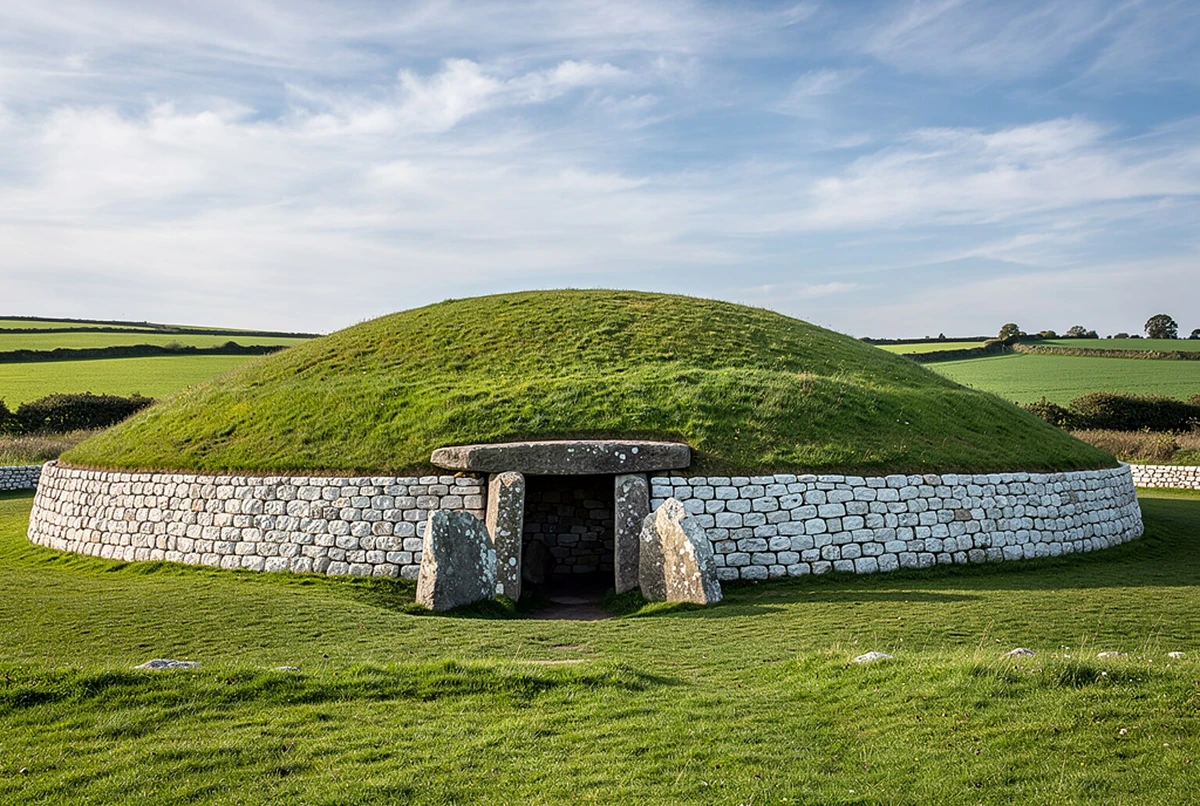
The walk begins in Temple Bar, the oldest surviving street pattern on Dublin's south bank, where the guide opens with the story of how Ireland began. Medieval scribes wrote down tales of waves of mythical settlers arriving across the sea, among them the Tuatha Dé Danann, a shining, magical people who were said to have been defeated by the Gaels and to have withdrawn into the hills and burial mounds of the land.
From that belief grew the Irish idea of an Otherworld living alongside our own. Your guide explains the Celtic year and its fire festivals, above all Samhain at the start of November, when the boundary between the worlds was thought to open, and the warrior bands and heroes whose deeds were sung in royal halls. It is the perfect introduction to Irish myths and legends before the walk moves on.
Dublin's Old Lanes: Fairies, the Banshee and the Púca
Weaving through the quieter lanes behind the quays, the guide turns to the creatures of Irish folklore. The banshee, bean sí or woman of the fairy mound, is heard keening at night before a death in certain old families. The púca is a shape-shifter that appears as a black horse, a goat or a hare and is blamed for spoiling the blackberries after Samhain, while the leprechaun is a solitary fairy shoemaker guarding hidden gold.
You also hear why farmers across Ireland still refuse to cut down a lone hawthorn or plough through a ring fort, and how a road project in County Clare was redesigned in 1999 to spare a fairy bush. These stories are told with humour, but the guide shows how seriously they were taken in rural Ireland until very recently.
The Georgian Quarter: Rebels and Body Snatchers
In the 18th century Dublin was the second city of the British Empire, and its wealthy families built the elegant brick terraces, colourful doors and fanlights of the Georgian Quarter. Behind the fine facades lies a much darker story, and this is where the tour leaves the usual tourist route. The guide tells of the rebellions plotted in these streets and of the revolutionaries hunted through them by the authorities.
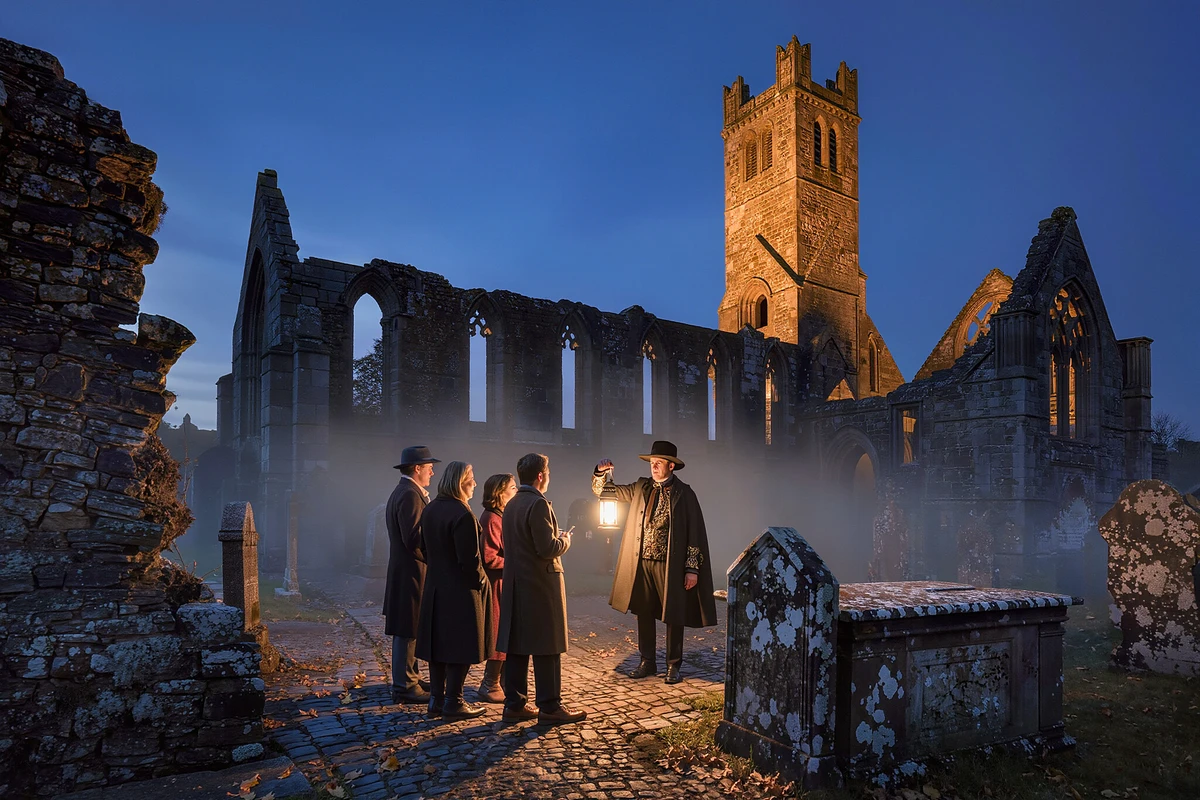
Then comes the macabre part: the body snatchers, known as resurrection men, who dug up fresh graves at night to sell corpses to the city's anatomy schools. Families paid watchmen to guard cemeteries, and some graveyards built watchtowers against the thieves. It is a gripping chapter of Dublin's past, told with enough tact to keep younger listeners interested rather than frightened.
The Abbey Theatre
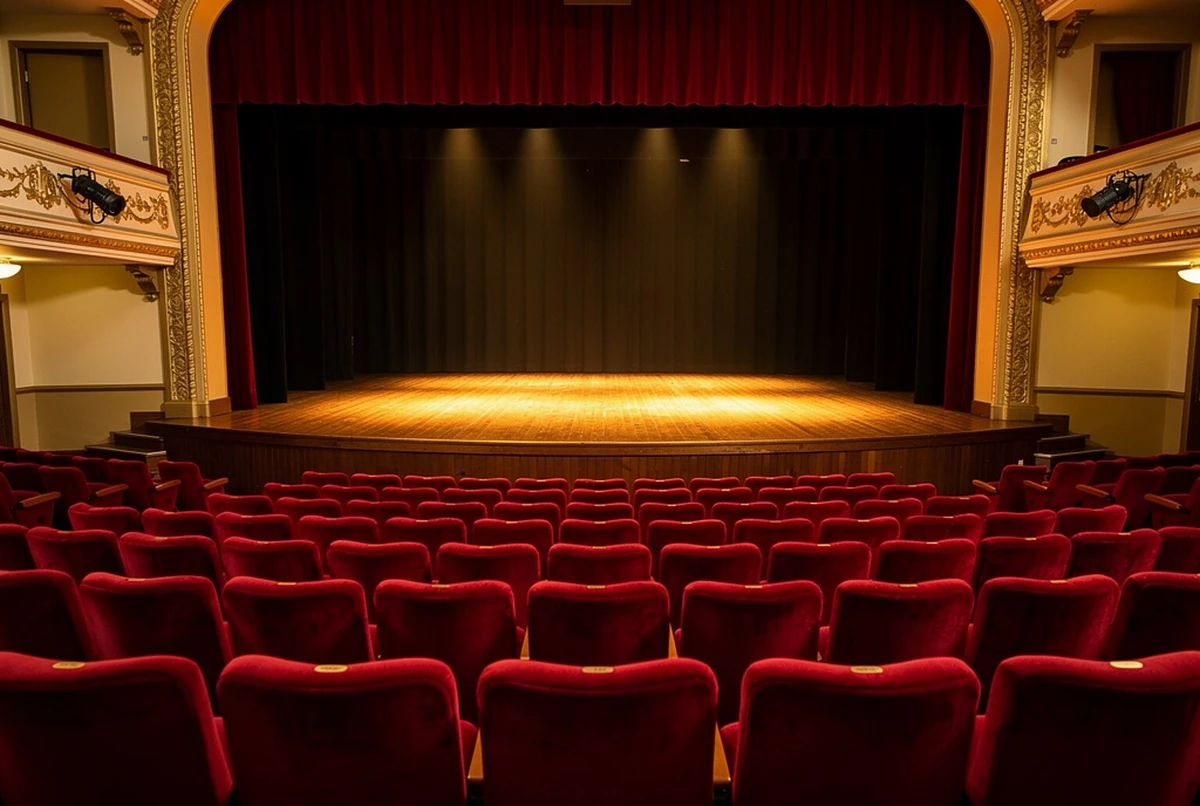
On Abbey Street stands the Abbey Theatre, the national theatre of Ireland. It opened in December 1904 as part of the movement to create a theatre of Irish stories and voices, and in 1925 it became the first state-subsidised theatre in the English-speaking world. Several of its actors fought in the 1916 Rising, and one of them was killed on the first day near City Hall.
The tragic history continued in July 1951, when fire destroyed the original building; the company played in another theatre for fifteen years until the present building opened in 1966. Your guide explains how the plays staged here, some of which caused riots in the audience, revived the old myths for a new nation, linking the folklore of the earlier stops with modern Irish identity.
O'Connell Street and the Gaelic Revival
The walk ends on O'Connell Street, the broad main avenue of the Northside, with the GPO and the tall steel Spire rising above it. Here the guide tells the story of the Gaelic revival: by the late 19th century the Irish language was disappearing, and in 1893 the Gaelic League was founded to save it, followed by a wave of interest in Irish sports, music, dance and storytelling.
That revival fed directly into the push for independence, and today Irish is the first official language of the state, seen on every street sign around you. The tour ends with a look at some of Dublin's contemporary street characters, and you are just across the river from Temple Bar and the city centre to continue your afternoon.
Itinerary
- Meet in Crown Alley, Temple BarMeet the guide with the green umbrella in Crown Alley at 15:00, arriving about 10 minutes early.
- Temple BarAbout 25 minutes on Ireland's mythical origins, Celtic beliefs and the festival of Samhain.
- Lanes of old DublinAbout 25 minutes of stories about fairies, the banshee, the púca and the leprechaun.
- The Georgian QuarterAbout 30 minutes on rebellions, revolutions and the grave robbers of Georgian Dublin.
- The Abbey TheatreA 15-minute stop outside Ireland's national theatre and its turbulent history.
- O'Connell StreetThe tour ends here after about two hours with the revival of the Irish language and culture.
What's included
- 2-hour guided storytelling walk through Dublin
- Accredited English-speaking folklore and mythology expert
- Ireland's mythical origins and Celtic traditions in Temple Bar
- Tales of fairies, the banshee, the púca and the leprechaun
- The macabre side of the Georgian Quarter and the Abbey Theatre
- Finish on O'Connell Street with the Gaelic revival
Not included
- Hotel pickup and drop-off
- Food and drinks
- Entrance fees
- Gratuities
Is this right for you?
Great for
- First-time visitors who want the highlights
- A short visit — about 2 hours
- Travellers who want a proven choice — rated 4.8/5 by past travellers
Think twice if
- You want a private tour — this one is shared with other travellers
- Walking is difficult for you — expect active parts
Meeting point
Meet your guide at 15:00 in Crown Alley in Temple Bar, Dublin 2: look for the green umbrella and arrive about 10 minutes before the start with your booking on your phone. There is no hotel pickup; Crown Alley is a short walk from Dame Street, College Green and most hotels in the city centre. The walk finishes on O'Connell Street on the Northside, a few minutes from the Liffey bridges.
Important information
- The walk starts at 15:00 and is told in English by an accredited folklore expert
- Wear comfortable shoes for cobbled lanes and city pavements
- Bring a rain jacket or umbrella, as Dublin showers come and go quickly
- No entrance fees are included and no buildings are entered
- Food, drinks and hotel pickup are not included
- Some stories are macabre but are told in a family-friendly way
- The route is wheelchair accessible
Good to know
Frequently Asked Questions
Straight answers to what travellers ask us most, before they book.
Is this a shared or a private experience?
It is a shared storytelling walk with a small group, led by an accredited folklore expert.
How long does the Dublin folklore walking tour take?
About two hours, from 15:00 in Temple Bar to O'Connell Street.
Is hotel pickup included?
No. You meet the guide in Crown Alley in Temple Bar, in the centre of Dublin.
What is included?
The two-hour guided walk with an English-speaking folklore and mythology expert. Food, drinks and entrance fees are not included.
Is the price per person or per group?
The price is per person; the booking panel on this page shows the current price for your date.
Is it suitable for children and people with reduced mobility?
Yes. Children who enjoy stories love this walk, and the route is wheelchair accessible.
Which myths and creatures does the tour cover?
The mythical settlers of Ireland, Celtic festivals such as Samhain, warrior heroes, fairies and fairy forts, the banshee, the púca and the leprechaun.
Is it a history tour or a ghost tour?
Neither exactly: it is a folklore walk. It includes some dark historical tales, but the focus is on myths, legends and storytelling.
What should I bring?
Comfortable shoes, a rain jacket or umbrella and a camera.
What is the best time of year for this tour?
It runs all year. Late October, around Samhain, gives the stories extra atmosphere, while summer afternoons are the mildest.
What happens in bad weather?
The walk runs in rain. If severe weather forced a cancellation, we would offer another date or a full refund.
How do I book and confirm?
Choose your date in the booking panel; our team confirms your booking on WhatsApp within minutes and sends the meeting details.
More in Dublin